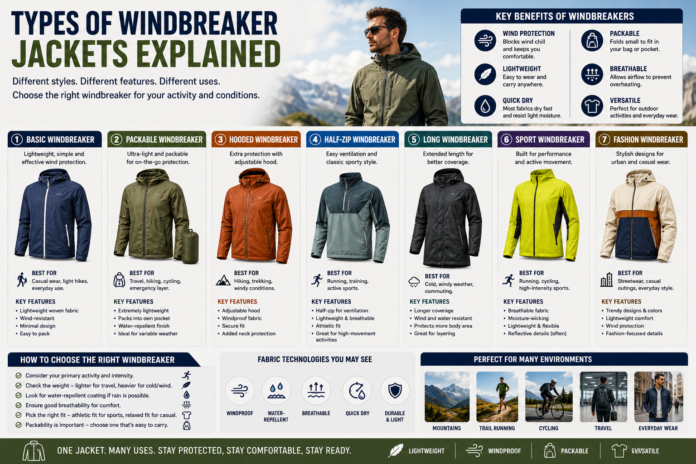
Windbreaker jackets are one of the most commercially versatile products in outdoor and fashion apparel simultaneously. They protect against wind chill, pack down compactly, and suit everything from serious trail running to casual streetwear styling. But types of windbreaker jackets vary significantly in construction, performance, and intended use — and understanding these differences helps brands build collections that genuinely serve their customers rather than offering interchangeable products with different colorways.
Here’s a clear breakdown of every major windbreaker type and what makes each one distinct.
Packable Windbreaker — Lightweight and Ultra-Portable
Packable windbreakers are the most popular windbreaker type across both outdoor and lifestyle markets. Constructed from ultra-lightweight nylon or polyester — typically 20 to 40 denier — they compress into their own chest pocket or a small stuff sack, making them genuinely portable in a way heavier jackets cannot match.
Their packability makes them the perfect emergency layer — carried constantly and deployed immediately when wind or light rain conditions demand protection. Runners, hikers, cyclists, and travelers all reach for packable windbreakers because they add meaningful protection without adding meaningful weight or pack volume to any activity.
DWR treatment provides light rain resistance — keeping wearers dry during brief showers without the waterproof membrane construction that adds weight and cost. A professional windbreaker jackets manufacturer produces packable styles with quality YKK zippers and reinforced pack pocket construction — ensuring the self-packing mechanism survives the repeated use it experiences as the jacket’s most-operated feature.
Waterproof Windbreaker — Complete Weather Protection
Waterproof windbreakers combine lightweight windbreaker construction with waterproof membrane technology — delivering complete rain and wind protection in a package significantly lighter and more packable than full hardshell jacket alternatives.
These jackets use either 2.5-layer or 2-layer membrane constructions — bonding waterproof breathable films to lightweight face fabrics without the full interior lining that adds weight to 3-layer hardshell constructions. The result is a jacket that genuinely stops rain penetration while remaining light enough for running, fast hiking, and cycling applications where weight efficiency matters critically.
Seam taping at critical construction points — shoulders, hood attachment, and sleeve insertions — prevents water entry through needle holes that waterproof face fabrics alone cannot seal. Waterproof jackets built to windbreaker weight and packability standards serve outdoor enthusiasts who need genuine waterproofing without the weight penalty of traditional hardshell alternatives.
Running Windbreaker — Performance Optimized
Running windbreakers are engineered specifically around the performance demands of runners — where weight, breathability, and freedom of movement matter more than any other performance characteristic. They use the lightest available face fabrics, minimize construction details that add unnecessary weight, and position pockets specifically for running use rather than general outdoor storage needs.
Reflective details on running windbreakers serve the genuine safety function of increasing low-light visibility during early morning and evening runs — a feature that distinguishes purpose-built running jackets from general windbreakers adapted for running use.
Stretch panels across the back and underarms allow the full arm swing motion that running requires without fabric pulling or restricting the natural movement rhythm. Brands building hiking clothing and running apparel collections find that running-specific windbreakers attract intensely loyal customers — because runners immediately feel the performance difference between jackets built specifically for their activity and general-purpose alternatives that technically work but don’t truly serve.
Insulated Windbreaker — Wind Protection With Added Warmth
Insulated windbreakers combine the lightweight wind-blocking construction of standard windbreakers with a thin layer of synthetic insulation fill — providing meaningful warmth addition without transitioning into the significantly heavier puffer jacket category.
Thin insulation fills — typically 40 to 60g synthetic batting — add noticeable warmth in cold windy conditions without the bulk and weight that heavier insulation creates. These jackets suit cool weather outdoor activities where wind chill is the primary thermal challenge — hikers in exposed mountain terrain, cyclists in cold headwinds, and outdoor workers in cold breezy environments all benefit from insulated windbreaker construction.
Puffer jackets serve genuinely cold static conditions. Insulated windbreakers serve active cold and windy conditions where full puffer warmth would cause overheating — filling the commercial gap between these two jacket categories effectively.
Softshell Windbreaker — Stretch Performance and Wind Defense
Softshell windbreakers blur the line between traditional windbreaker and softshell jacket categories — using stretch woven fabrics that provide full windproofing alongside the mobility and breathability that softshell construction delivers.
These jackets suit climbing, ski touring, and technical hiking applications where wind protection must coexist with unrestricted body movement across demanding terrain. The stretch face fabrics move naturally with athletic body positions — removing the restrictive sensation that rigid windbreaker constructions create during technically demanding activities.
Softshell jackets in windbreaker weight represent premium products within the windbreaker category — commanding higher retail prices through their performance sophistication and broader use case versatility compared to standard non-stretch alternatives.
Fashion Windbreaker — Style Meets Function
Fashion windbreakers prioritize aesthetic appeal alongside functional wind protection — making them commercially powerful products that sell across outdoor and lifestyle markets simultaneously. Bold colorways, retro-inspired color blocking, branded tape detailing, and oversized silhouettes create visually distinctive jackets that perform their wind-blocking function while making genuine style statements.
The 90s and Y2K aesthetic revival has dramatically increased fashion windbreaker demand across streetwear, youth fashion, and lifestyle markets — creating strong commercial opportunity for brands that combine genuine windbreaker performance with contemporary fashion design intelligence. Fashion windbreakers sell to customers who may never encounter serious outdoor conditions — but who want the visual language of outdoor performance clothing as part of their everyday style identity.
Cycling Windbreaker — Aerodynamic and Functional
Cycling windbreakers address the specific aerodynamic and functional demands that road and trail cycling creates. Close-fitting silhouettes minimize wind resistance during high-speed descents. Extended rear hems cover the lower back exposed by the forward-leaning cycling position that standard jacket hems leave unprotected.
Back ventilation panels manage the heat accumulation that cycling effort generates — preventing the overheating that standard windbreaker constructions cause during sustained pedaling intensity. Rear pockets positioned for jersey-style access allow storage retrieval without stopping or removing the jacket during active riding.
Hooded vs Hood-Free Windbreakers
Beyond these specific types, windbreakers divide into hooded and hood-free configurations that serve different use cases and styling preferences within every category above.
Hooded windbreakers provide complete head protection during wind and rain conditions — making them more functional for genuine outdoor use where full weather protection matters. Adjustable hoods with wire-brim peaks maintain shape in wind and improve peripheral vision compared to simple tunnel hoods.
Hood-free windbreakers suit fashion applications, mild condition outdoor use, and activities where a separate hat provides preferred head coverage. They pack more compactly and offer cleaner aesthetics that work more naturally in urban and lifestyle styling contexts.
Outdoor jackets collections that include both hooded and hood-free windbreaker options serve broader customer bases — covering customers whose primary use case demands hood functionality alongside customers whose preference or activity makes hood-free designs more appropriate.
Building a Windbreaker Collection for Your Brand
The types of windbreaker jackets each serve specific customer needs and activity requirements. Brands building windbreaker collections don’t need to cover every type simultaneously — they need to identify which types serve their specific target customer most effectively and build those styles with genuine performance credentials and strong brand identity.
Working with an experienced outdoor apparel manufacturer ensures fabric performance verification, construction quality, and feature execution that creates windbreakers customers depend on rather than simply wear occasionally when nothing better is available.
Conclusion
Understanding the types of windbreaker jackets — packable, waterproof, running-specific, insulated, softshell, fashion, cycling, and hooded versus hood-free configurations — gives brands the knowledge to build windbreaker collections with genuine commercial and performance intelligence behind every product decision. Each type serves real customers with real needs — and covering the right combination for your specific market creates a windbreaker range that performs, sells, and builds the brand reputation that keeps customers returning season after season.
FAQs
What is the most versatile windbreaker type for general outdoor use?
Packable waterproof windbreakers offer the broadest versatility — providing genuine rain and wind protection in a lightweight, portable format that suits hiking, travel, running, and casual outdoor use across the widest range of conditions.
Are fashion windbreakers functional for real outdoor use?
Quality fashion windbreakers built with genuine DWR treatment and windproof face fabrics provide meaningful wind and light rain protection — they perform adequately for casual outdoor conditions while prioritizing aesthetic appeal alongside functional performance.
What fabric weight suits most windbreaker applications?
20 to 40 denier nylon or polyester suits lightweight packable applications. 50 to 75 denier suits more durable windbreakers where abrasion resistance matters alongside weight efficiency across active outdoor use.
Can windbreaker jackets be produced under a private label?
Yes. Professional outdoor apparel manufacturers offer complete private label windbreaker production with custom fabrics, DWR treatments, colors, hardware, reflective details, labels, and packaging — giving brands full control over their windbreaker collection identity.