Cold weather skiing is an entirely different challenge from mild-condition resort days. When temperatures drop seriously, wind chill intensifies, and snow conditions become more demanding — the clothing decisions you make before stepping onto the mountain directly determine how long you last, how well you perform, and how safe you stay. Choosing the right ski wear for cold weather requires understanding layering principles, fabric technology, and specific garment features that work together as a complete protective system. Here’s exactly how to get it right.
Start With the Layering Principle
Every effective cold weather ski outfit builds from the same foundational principle — multiple functional layers that work together rather than one thick garment attempting to do everything alone. Each layer serves a specific purpose, and understanding those purposes drives every clothing decision from base layer selection through outer shell choice.
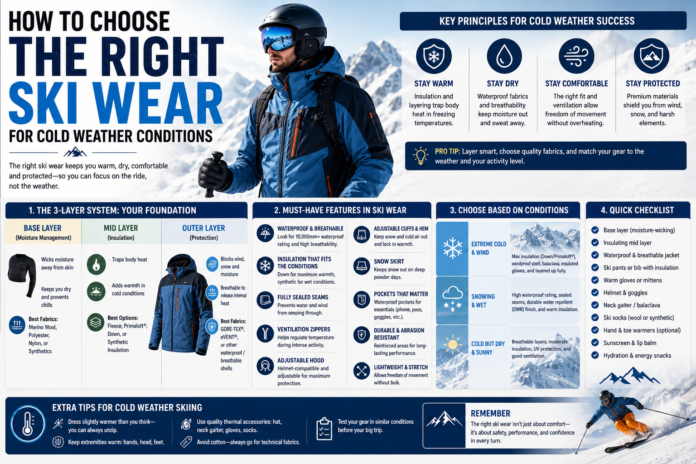
The three-layer system works as follows:
- Base layer — manages moisture directly against skin, keeping you dry from sweat
- Mid-layer — retains body heat and provides insulation against cold temperatures
- Outer shell — protects against wind, snow, and external weather conditions
Getting each layer right — and choosing layers that work together as a compatible system — is the foundation of choosing right ski wear for cold weather conditions that genuinely perform from first lift to last run.
Choosing the Right Base Layer for Cold Conditions
In genuinely cold temperatures, base layer choice matters more than most skiers realize. The base layer sits directly against your skin — and its moisture management performance determines whether every layer above it stays effective or becomes compromised by accumulated internal dampness.
Merino wool base layers suit cold weather skiing exceptionally well. Natural temperature regulation, moisture absorption into fiber rather than against skin, and natural odor resistance make merino the preferred cold weather base layer for skiers who prioritize comfort alongside performance. Heavyweight merino — 250gsm and above — provides additional warmth retention that lightweight versions cannot match in genuinely cold mountain conditions.
Base layer clothing built from quality merino or high-performance synthetic fabrics keeps skin dry and warm simultaneously — creating the stable thermal foundation that mid-layers and outer shells build their protection on top of effectively.
Mid-Layer Selection for Maximum Warmth
The mid-layer provides the primary warmth retention that cold weather skiing demands. Several options serve different performance needs depending on skiing intensity and temperature conditions.
Fleece mid-layers provide reliable warmth with excellent breathability — allowing moisture vapor from the base layer to continue moving outward rather than accumulating within the layering system. Outdoor fleece in heavyweight 300-weight construction suits genuinely cold conditions where maximum warmth retention matters more than minimal bulk.
Down or synthetic insulated mid-layers provide higher warmth-to-weight ratios than fleece — making them valuable for extremely cold conditions or for less active skiing styles where body heat generation is lower. Puffer jackets worn as mid-layers under waterproof shells deliver exceptional warmth without the bulk that multiple fleece layers would create.
Softshell mid-layers suit moderately cold conditions where wind resistance and stretch performance matter alongside warmth — providing a single layer that handles multiple environmental demands simultaneously without requiring additional outer shell coverage in lighter wind and snow conditions.
Outer Shell Requirements for Cold Weather
The outer shell is your primary defence against cold weather’s most damaging elements — wind chill, snow penetration, and external moisture. In genuinely cold conditions, outer shell performance requirements become significantly more demanding than mild-weather skiing needs.
Waterproof rating must be sufficient for sustained snow and occasional wet conditions. 20,000mm waterproofing and above ensures reliable protection across the varied precipitation that cold mountain environments regularly produce. Waterproof jackets with fully sealed seams prevent moisture penetration through every construction point — not just through the face fabric itself.
Wind protection is particularly critical in cold weather skiing. Wind chill at speed dramatically lowers effective temperature — making wind-resistant outer fabrics a non-negotiable requirement rather than an optional performance upgrade. Hardshell jackets provide maximum wind and weather protection for the most demanding cold weather skiing conditions.
Insulated ski jackets — combining outer shell and insulation in a single garment — suit recreational cold weather skiers who prefer simpler layering systems over separate shell and mid-layer combinations. A professional ski wear manufacturer builds insulated ski jackets with strategic insulation placement — heavier fill in core zones and lighter panels across high-mobility areas — delivering warmth without sacrificing the freedom of movement skiing demands.
Essential Cold Weather Ski Wear Features
Beyond the layering system, specific garment features significantly impact cold weather performance. Choosing ski wear without these features creates preventable comfort and safety vulnerabilities:
- Helmet-compatible hood with adjustable volume and cinch controls for complete head coverage in severe cold and wind conditions
- Snow gaiter system — internal powder skirts at jacket waist and ankle gaiters in pants — preventing snow entry during falls and powder runs
- Insulated collar and neck zone — high collar construction that seals neck warmth without requiring additional neckwear in moderate cold conditions
- Thermal cuffs — inner cuffs that seal around wrist and glove interfaces preventing cold air entry through sleeve openings
- Ventilation systems — underarm zip vents allowing heat dumping during high-intensity runs without removing the jacket entirely
Don’t Neglect Extremities
Cold weather skiing demands attention to extremities that core clothing alone cannot protect. Hands, feet, and face lose heat fastest in cold conditions — and inadequate protection for these areas undermines overall comfort and safety regardless of how well the main clothing system performs.
Ski masks protect the face against wind chill and cold air during high-speed descents — preventing the facial exposure that creates genuine discomfort and frostbite risk in severely cold mountain conditions. Quality ski masks use stretch fabrics that conform closely to facial contours without restricting breathing or goggle interface.
Waterproof insulated gloves, warm ski socks, and properly fitted ski boots with adequate thermal insulation complete the cold weather protection system that right ski wear for cold weather conditions demands across every exposed body area.
Matching Ski Wear to Temperature Conditions
Different cold temperature ranges demand different layering approaches. Understanding these ranges helps skiers and brands build appropriately matched systems:
Mild cold — 0°C to -10°C: Lightweight merino base, 200-weight fleece mid-layer, waterproof breathable shell provides comfortable all-day protection.
Moderate cold — -10°C to -20°C: Heavyweight merino base, 300-weight fleece or light insulated mid-layer, insulated waterproof shell delivers reliable warmth retention.
Severe cold — below -20°C: Heavyweight thermal base, premium down or synthetic insulated mid-layer, maximum-specification insulated hardshell outer provides the serious protection extreme cold demands.
A complete outdoor apparel collection built around these temperature ranges gives customers the guidance to select appropriate combinations — reducing return rates and increasing customer satisfaction by matching product performance to real-world conditions accurately.
Conclusion
Choosing the right ski wear for cold weather conditions comes down to building a complete, compatible layering system — quality base layer managing moisture, effective mid-layer retaining warmth, and protective outer shell blocking wind and weather — then adding the specific features that cold mountain environments demand. Every layer and every feature serves a purpose in genuinely cold conditions. Get the system right and cold weather skiing becomes an exhilarating, comfortable experience. Get it wrong and the mountain wins every time.
FAQs
How many layers do I need for seriously cold weather skiing?
Three layers — moisture-wicking base, insulating mid-layer, and waterproof wind-resistant outer shell — provides the complete protection system that genuinely cold mountain conditions demand for comfortable, safe skiing.
Is an insulated ski jacket better than a shell jacket with separate mid-layer for cold weather?
Both work effectively. Insulated jackets suit recreational skiers preferring simplicity. Shell jackets with separate mid-layers offer greater versatility for skiers across varied temperature conditions and activity intensity levels throughout the day.
What temperature rating should cold weather ski gloves have?
Cold weather ski gloves should be rated to at least -20°C for serious mountain use — ensuring hand warmth is maintained across the temperature drops that wind chill and high-altitude conditions regularly create on mountain environments.
Can cold weather ski wear collections be produced under a private label?
Yes. Professional ski wear manufacturers offer complete private label production with premium fabrics, certified membrane technologies, insulation systems, hardware, and packaging — giving outdoor brands complete control over their cold weather ski apparel identity.