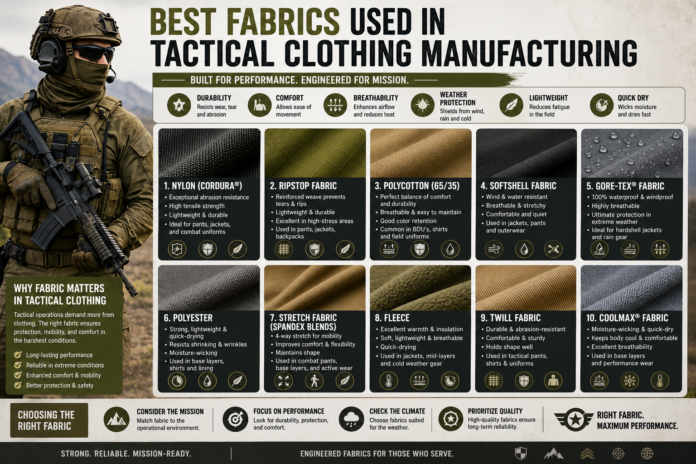
Fabric selection is the first step in achieving the performance of any tactical clothing. Material selection determines how a garment will handle abrasion, weather, moisture, and prolonged wear. Understanding the Best Fabrics Used in Tactical Clothing is crucial for brands and businesses that source tactical apparel, as the right fabric directly impacts durability, comfort, weather protection, and long-term performance in demanding outdoor environments.
Nylon Ripstop
The most common fabric used in the manufacture of tactical clothing is nylon ripstop. The grid-weave design prevents tears from spreading and is ideal for clothing that will be exposed to rough terrain and equipment friction. This is the ideal choice for outdoor pants and tactical jackets.
Polyester-Cotton blend (Polycotton)
Blends of poly-cotton combine the durability of polyester and the breathability of cotton to create a fabric that is both durable and comfortable. They are a great choice for uniforms, and everyday-wear garments in the field where comfort is important. The polyester component is wrinkle-resistant, retains color and dries quicker than pure cotton. This makes it a good choice for both branded uniforms and private label tactical line.
High-Performance Poly with Moisture Wicking Finish
Standard fabric for base layer and active tactic garments is high-performance polyester treated with moisture-wicking. The fabric pulls sweat from the skin, moves it to an outer surface and evaporates it. This keeps the wearer cool and regulates body temperature when they are doing intense physical activities. The fabric is lightweight and fast-drying. It also retains its structure after washing, making it an excellent foundation for tactical clothing.
Softshell Fabric
Softshell fabric is made up of two or three layers that are bonded together to provide stretch, wind resistance and light water repellency. It is used for softshell coats in tactical and outdoor applications, as it moves with the user without the noise or bulk of hardshell fabrics. Softshell is a flexible fabric that makes it a great choice for garments in situations where there are both static and dynamic movements, like security operations or training exercises.
Hardshell Laminate Fabric (2L & 3L)
Hardshell laminate fabrics are the best choice for weather protection. They provide the most reliable barrier to rain and wind. Hardshell Jackets with 2-layer and 3-layer membrane constructions keep moisture out through bonded fabric and taped seams. Three-layer laminates offer a durable, packable option for professional-grade water-resistant clothing used in outdoor and tactical applications.
Fleece (Polar & Micro Fleece).
Fleece is a popular choice for the mid-layer of insulation in tactical layering. The lightweight, quick-drying and warm fleece fabrics regulate temperature without adding bulk to traditional insulation. Outdoor fleece can be worn as a standalone piece in mild weather or as a mid-layer beneath waterproof coats when temperatures are colder. Polar fleece provides greater warmth in static conditions while micro fleece works better for active wear where overheating may be a problem.
Camouflage Knit and Woven Fabrics
Camouflage clothing and balaclavas are made from low-sheen fabrics that minimize sound. Camouflage clothing, and camouflage balaclavas are produced on low-sheen fabrics to reduce sound and reflectivity in the field. The camouflage pattern is printed on woven or knit fabrics, depending on the type of garment. Fabric weights are selected according to the terrain — urban, woodland, desert or alpine.
Recycled Performance Fabrics
Brands of outdoor and tactical clothing that target environmentally-conscious markets are increasingly required to be sustainable. Recycled Polyester — derived from recycled plastic bottles — can now match the performance of virgin polyester, at a competitive price. We source Eco Jersey from certified mills in order to offer recycled fabrics for brands creating outdoor clothing collections that meet performance and sustainability requirements.
Conclusion
Fabric selection is key to creating a high-performing tactical garment. Material decisions are crucial to the success of any tactical garment. Our sourcing team at Eco Jersey works closely with our clients to find the best technical fabrics for each product, from hiking trousers to outdoor tops. We also offer full tactical clothing programs. Requesting a quote will allow you to discuss fabric options and manufacturing.
FAQs
What is the toughest fabric to use for tactical apparel?
The most durable fabric is nylon ripstop, due to its grid reinforced construction which resists tearing and wear. It is used extensively in outdoor pants and tactical coats.
Does it matter if the jacket is softshell or hardshell?
That depends on your operational environment. Softshell Jackets are better for activities that require a lot of movement and flexibility. Hardshell Jackets offer superior waterproofing in severe weather conditions. Both softshell and hardshell are used in many tactical programs. Softshell is often worn for active operations, while the latter is worn as a layer during storms.
What is the best fabric for base layers?
High performance polyester with moisture wicking treatment. It is a fabric that manages moisture efficiently, dries fast, and retains its