Choosing lightweight vs heavyweight flannel shirts affects a product’s performance in every season and influences the customer’s comfort on cold mornings. Flannel is a multifaceted fabric. The weight determines the shirt’s warmth, drape, and durability. Weight affects how well the shirt sells in your target market.
This guide examines lightweight and heavyweight flannel shirts and all factors your company should consider. Prospective product development should be halted until this weight decision is finalized.
What Fabric Weight Actually Means in Flannel Shirts
Flannel shirts are measured in terms of GSM, grams per square meter. GSM explains how much woven flannel is present in each square meter. With a higher GSM, the fabric is heavier, warmer, and has more structure.
For flannel shirts, lightweight fall in the GSM range of 120–170. Heavyweight flannel starts at 180 GSM and goes to 280 GSM. GSM alone is not the entire story, however. Brushing depth, weave tightness, and fiber content will go a long way to explaining how the flannel shirt performs, despite its GSM.
Furthermore, the right GSM for your collection depends on your target season, your customer’s climate, and your brand’s aesthetic direction. A flannel shirt manufacturer with genuine fabric expertise will always discuss GSM alongside these broader context factors — not in isolation.
Lightweight Flannel Shirts — What They Offer
Performance and Feel of Lightweight vs Heavyweight Flannel Shirts at Lower GSM
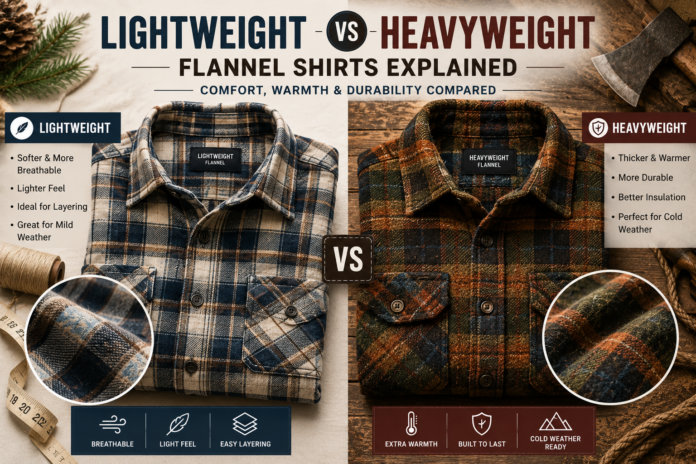
Lightweight flannel shirts come in the GSM range of 120–170 and provide breathability and softness unlike any heavier flannel. They have a beautiful drape, a gentle feel against the skin, and suit many body types. Those who run warm, live in milder climates, or need a shirt for spring and autumn readily choose lightweight flannel.
Moreover, lightweight flannel shirts layer exceptionally well. They sit comfortably under a jacket or over a base layer without adding bulk — which makes them a natural fit for brands building coordinated casualwear ranges that include hoodies, sweatshirts, and outerwear pieces designed to be worn together.
Marketing content also benefits from the use of lightweight flannel. The fabric naturally conforms to the body, moves well for action shots, and presents the relaxed and effortless style that has become popular on social media and e-commerce business photography.
Where Lightweight Flannel Falls Short
Lightweight flannel has its drawbacks. First, flannel shirts are typically built with a GSM over 140. If they aren’t, consumers with a fabric weight to quality correlation may feel like they wasted their money. Shirts made with lightweight flannel are further lacking in ability to provide insulation in cold weather. Consumers looking for warmth in their flannel purchase will be disappointed to find that a shirt made with lightweight flannel feels like just another woven cotton shirt.
Secondly, stress points on a flannel like the collar edges and cuffs can lead to excessive pilling. This is especially true if the flannel is of lower quality construction. Thus, at lightweight GSMs, quality of fabric and finish is of utmost importance
Heavyweight Flannel Shirts — What They Offer
Performance and Feel of Lightweight vs Heavyweight Flannel Shirts at Higher GSM
Flannel shirts weighing between 180-280 GSM offer warmth, durability, and a premium texture that lightweight flannel does not. They signal quality and a serious garment to customers, and that touch drives buying at a premium.*
Flannel shirts weighing 180-280 GSM insulate well. The fibers trap body heat, so shirts made from this fabric keep the wearer warm and are significantly warmer than a standard, run-of-the-mill flannel. Flannel fabric weighing 180-280 GSM is ideal for work, play, and everything in between, and provides warmth. *
Heavyweight flannel fabric features the following:
- Warmth and seasonal relevance: Heavyweight flannel shirts are genuinely suited to autumn and winter collections. Their insulation performance justifies the seasonal purchase — customers buy them specifically because they keep warm, and the fabric delivers on that promise consistently across weeks and months of wear.
- Durability and longevity: Heavier flannel construction holds up better through extended wear and repeated washing than lighter GSM options. The denser weave resists pilling, fraying, and thinning at stress points more effectively — which suits brands building casual wear collections positioned around quality and longevity rather than seasonal fast fashion.
Where Heavyweight Flannel Falls Short
There are also downsides to heavy flannels. They are limited less across seasons. A 250 GSM flannel is simply too warm for customers during the spring and early autumn. A heavier flannel will also cost the customer more as there is more fabric which affects pricing and profit.
Moreover, heavyweight flannel is more challenging to produce cleanly. Heavier fabrics require more precise handling during cutting to avoid distortion, and seam finishing must be specified carefully to prevent bulk buildup at construction joins. Brands working with ECO JERSEY on heavyweight flannel development benefit from working with a manufacturer experienced in handling dense woven fabrics — because the construction demands are genuinely different from lighter garment categories.
Lightweight vs Heavyweight Flannel Shirts — Direct Comparison
Understanding lightweight vs heavyweight flannel shirts becomes clearer when the key factors sit side by side:
- Seasonality: Lightweight flannel suits spring, autumn, and mild winter conditions. Heavyweight flannel is built for genuine autumn and winter warmth — particularly in colder climates where customers expect real insulation from a flannel shirt purchase.
- Layering: Lightweight flannel layers easily under jackets and over base layers without bulk. Heavyweight flannel works better as a standalone outer layer in cold conditions — layering under outerwear can feel restrictive due to the fabric’s structure and weight.
- Price point: Lightweight flannel suits accessible to mid-market pricing. Heavyweight flannel justifies premium pricing through superior warmth, fabric substance, and longevity — making it the right choice for brands positioning at the quality end of the fashionwear market.
- Customer profile: Lightweight flannel appeals to a broader customer base — including warmer-climate customers, younger demographics, and buyers looking for versatile year-round layering pieces. Heavyweight flannel appeals to customers who prioritize warmth, durability, and premium quality above versatility and price accessibility.
Choosing the Right Weight for Your Flannel Collection
The lightweight vs heavyweight flannel shirts decision should follow your customer and collection strategy — not trend or personal preference alone.
Choose lightweight flannel if your brand serves customers in mild climates, you are building a year-round casualwear range, or your collection includes coordinated sets and layering pieces where fabric bulk would compromise the overall look. Brands building co-ord sets and tracksuits alongside flannel shirts benefit from lightweight GSM options that coordinate visually and functionally with knit and jersey fabrications in the same range.
Choose heavyweight flannel if your brand targets colder climates, you are building a dedicated autumn-winter collection, or your brand positioning centers on premium quality and longevity. Brands building streetwear collections with heritage or outdoor influences — where heavyweight flannel overshirts and workwear-inspired shirts are core seasonal pieces — find heavyweight options align naturally with their aesthetic and customer expectations.
In addition, several successful brands place both weights within the same flannel collection. Lightweight options reside at the accessible everyday level, while heavyweight options sit at the premium seasonal pieces level. This approach encompasses various customer segments and eliminates the need for two completely different collections. ECO JERSEY supports brands that are expanding across both weight ranges in a collection. It offers fabric sourcing, guides, samples, and manages production of lightweight and heavyweight flannel styles at the same time.
Flannel Across Your Broader Range
Flannel shirts rarely exist in isolation within a fashionwear collection. They sit alongside joggers, cargo pants, knitwear, and outerwear — and the fabric weight decisions you make for your flannel shirts affect how the full range coordinates visually and functionally across the season.
A lightweight flannel shirt looks great with jersey joggers or a thin-knit sweater; they have a similar fabric drape. A heavyweight flannel shirt matches nicely with structured cargo pants, or a woven outerwear jacket; they match in fabric density and seasonal use.
Because of this, keep your lightweight and heavyweight flannel shirts in mind as part of your whole range strategy. The fabric weight of shirts is important to think about how that shirt works with the whole collection that your customer wears together.
Final Thoughts
Lightweight and heavyweight flannel shirts cater to specific customers, seasons, and brand strategies. Lightweight flannel wins on versatility and layering opportunity for year-round usage. Heavyweight flannel wins by being warmer, giving a premium feel, and lasting for extended seasonal use.
Your brand’s actual customer climate, the style of your brand, and the seasonal position of your collection determine the right choice. Get the alignment correct and your flannel shirts could be the top performers in your range.
FAQs
What GSM is considered lightweight vs heavyweight for flannel shirts?
Lightweight flannel shirts typically fall in the 120–170 GSM range. Heavyweight flannel sits between 180–280 GSM. The higher the GSM, the warmer, more structured, and more premium the shirt feels in the hand and during wear.
Can lightweight flannel shirts be worn in winter?
Lightweight flannel works in mild winter conditions — particularly when layered under a jacket or coat. However, it does not provide meaningful insulation in genuinely cold climates, where heavyweight flannel is the more appropriate choice.
Is heavyweight flannel harder to produce than lightweight?
Yes. Heavier flannel fabrics require more precise cutting to avoid distortion and more careful seam finishing to prevent bulk at construction joins. Working with a manufacturer experienced in heavyweight woven fabrics makes a significant difference in production quality.
Which flannel weight suits a streetwear brand better?
Most streetwear brands gravitate toward heavyweight flannel — particularly for overshirt and workwear-inspired styles where fabric substance and visual weight are central to the aesthetic. Lightweight flannel can work for streetwear layering pieces but is less common in heritage-influenced streetwear collections.