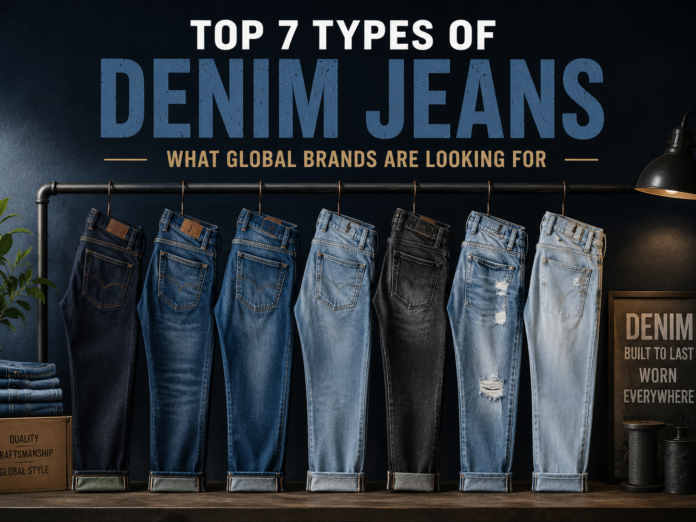
Denim jeans have remained a consistent category in global fashion for many years. Within that category, however, the styles retailers and brands actually want have changed significantly in recent years.
Some cuts are now back in demand, while others have stayed consistent across global markets. New silhouettes are also creating strong commercial opportunities for brands that stay ahead of trends. Understanding the Top 7 types of denim jeans helps brands identify the most profitable and market-driven styles for modern consumers.
This guide explains the Top 7 types of denim jeans brands seek from global manufacturers and why each style matters. It also highlights key considerations in OEM vs ODM Denim Apparel production, helping brands choose the right manufacturing approach for their denim collections.
1. Straight Leg Jeans
Straight leg jeans are the foundation of nearly every denim collection. The straight leg jean has a constant width from hips to hem, with no taper or flare, giving it a versatile, clean silhouette that can be worn by all body types.
Straight leg jeans are in the middle market. Straight leg jeans are not the most popular trend, but their lack of popularity is exactly what makes them so appealing. They are reliable, sell across seasons and appeal to a wide customer base.
Straight leg denim is the best starting point for brands who are building their own denim collection. denim jean manufacturers who have a strong straight leg experience will give you a solid foundation on which to build your other silhouettes.
2. Slim Fit Jeans
The slim fit jeans are tapered from the thigh down to the ankle. They are closer to the body compared to straight leg jeans, but have more room than skinny jeans. The clean, athletic silhouette they provide has been commercially successful across several trend cycles.
Menswear is a popular choice for slim fit. It offers a well-put together look without the extremes that come with skinny clothing or the casualness associated with relaxed clothing. Slim fit is a good option for women’s clothing, as it offers a middle ground between fitted and loose silhouettes.
Slim fit is a great option for brands that want to appeal to fashion-conscious consumers who are looking for a stylish look without sacrificing their comfort.
3. Wide Leg Jeans
In the last two to three decades, wide leg denim has evolved from a trend to a commercial staple. The loose, open silhouette from hip to hem has been adopted by all age groups and markets in a way few other trend-driven cuts have managed to maintain.
Wide leg jeans cost more per unit than slim or straight styles. To ensure that the wide leg jeans hang correctly in every size, it is important to pay attention to the pattern grading.
Wide leg denim options are sought by global brands from denim clothing manufacturers that know how to consistently produce this silhouette, not just on an occasional sample.
4. Skinny Jeans
The wide-leg trend dominated the market for a while, but skinny jeans have shown a remarkable resilience. They are now gaining popularity in certain demographics and markets.
To move comfortably in such a tight fit, skinny denim needs a high stretch content. This is usually a blend of polyester or elastane with the denim. Stretch recovery is crucial. The brand’s reputation is damaged by a skinny jean with a bagging out knee area after only a few wears.
A manufacturer who has experience in the fabrication and construction of stretch denim knows how to balance compression with recovery, which is at the core of a great skinny jean.
5. Bootcut Jeans
Bootcut jeans have experienced a commercial revival, largely due to the trend towards vintage and 70s fashion. The jeans are fitted close to the thigh, and slightly open at the knee. Originally designed to accommodate boots, they’re now valued for their elongating and balanced silhouette.
Bootcuts are a great opportunity for brands that target womenswear. The bootcut flatters all body types, and can be styled in casual or smart-casual contexts.
Bootcut jeans, when paired with denim shirt and denim jacket in coordinated wash combinations, create a cohesive denim collection that sells well.
6. Relaxed Fit Jeans
The relaxed fit trend has been growing along with the casualwear and comfort first trend, which has transformed apparel retailing since 2020. The relaxed fit gives a more comfortable and lived-in look and feel by allowing for extra room in the seat and thigh without sacrificing the width of the wide leg. This resonates strongly with the lifestyle and streetwear market.
For denim, the relaxed fit is an important product. This silhouette is perfect for oversized tops and layered styling. It’s also a youthful style.
7. Tapered Jeans
The tapered jeans are characterized by a wider opening on the thigh, which is often straight or relaxed through the hip. This widening narrows towards the ankle. The result is a shape that blends comfort on the upper half of the leg with a more structured finish near the hem.
Menswear is a popular place to find tapered denim. It offers a modern alternative to a slim fit without sacrificing the comfort that comes with a relaxed cut. This is a great option for brands that are targeting the workwear and smart-casual market, where comfort and professional finish are both important.
A strong denim clothing manufacturer has pattern grading expertise across all seven silhouettes. They can also advise you on the best cuts for your customer base and price point.
Conclusion
Global brands have a variety of styles in mind when it comes to denim jeans. From straight leg styles, known for their reliable commercial appeal, to trendy wide leg fits and the resilient comeback of bootcut designs, understanding the Top 7 types of denim jeans helps brands make smarter product decisions.
When comparing manufacturing options like OEM vs ODM Denim Apparel, knowing where each denim style fits within the commercial market allows brands to choose the right production strategy, improve product planning, and meet changing fashion demands more effectively.
Find the best production partner to help you develop your denim collection by exploring the full range denim jeans manufacturing possibilities.
FAQs
Which denim jean style is most reliable in terms of sales?
Straight-leg jeans are most consistent — they appeal to a wide range of people, sell throughout the year, and are at the core for most successful denim lines.
Why are wide-leg jeans so popular?
Wide legs have gone from a trend to a commercial staple, embraced by all age groups and markets because of their comfort and versatility.
How much fabric is needed for skinny jeans?
The jeans must have a high stretch content, usually elastane blended with polyester to maintain a tight fit and shape recovery.
How are tapered jeans different than slim fit jeans?
The width of the jeans is typically greater in the hip and thigh, providing more comfort on the upper part. They then narrow down to the ankle. Slim fit is more closely fitted throughout.