The Felted Grade C Cashmere wool strikes a balance between luxury and practicality while still being affordable. Cashmere is traditionally associated with high-end fashion, exclusivity and ultra-soft clothing. The Grade C felted cashmere is a more affordable, yet elegant alternative. This fabric is durable and comfortable, thanks to its unique finishing technique and slightly coarser classification of fibers. It has gained popularity in the fashion, textile, and upholstery industries.
This comprehensive guide covers everything you need to know about felted Grade C Cashmere Fabric — from its production and origins, to its applications, benefits, care and market relevance. It also highlights the reasons why consumers and professionals should take this fabric into consideration.
Understanding Cashmere Grades
Felted Grade C Cashmere Fabric can be classified based on their length, softness and fineness. Cashmere of Grade A is considered to be the best, while Grade C is more dense and less delicate. This does not mean that the cashmere is of inferior quality, but rather it indicates different functional features.
They are used for durable products because they are slightly coarser. They also respond extremely well to felting. The Grade C felted cashmere is now a popular choice for outerwear, structured garments and blankets.
Moreover, the fibers have a longer life span, as they are less fragile. Manufacturers looking for cost-effective luxury materials have appreciated this advantage.
What makes cashmere “felted”?
The term felting refers to the textile finishing process where fibers are compressed and moistened before being agitated. The result is a fabric that is denser, more cohesive and has a higher density. Cashmere is a good example of a fabric that benefits from the process. It increases warmth, texture stability and resilience.
Felted Grade C Cashmere Fabric natural scales are important in facilitating this bonding. The fibers are compacted by heat, moisture and pressure during processing. The fabric is thicker, and therefore less likely to fray. In colder climates, this transformation is highly valued because it increases insulation.
Felted cashmere also tends to have a smoother, more uniform surface. The garments look more refined, but still have a soft feel.
Felted Grade C Cashmere: Key Characteristics
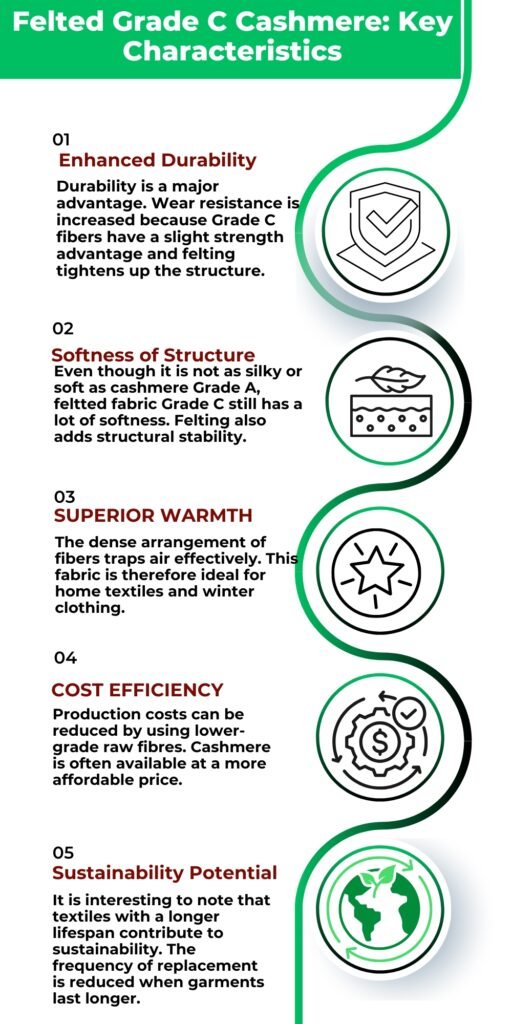
1. Enhanced Durability
Durability is a major advantage. Wear resistance is increased because Grade C fibers have a slight strength advantage and felting tightens up the structure. So, the products can be used frequently without losing their integrity.
2. Softness of Structure
Even though it is not as silky or soft as cashmere Grade A, feltted fabric Grade C still has a lot of softness. Felting also adds structural stability. Designers can therefore create garments with better shape retention.
3. Superior Warmth
The dense arrangement of fibers traps air effectively. This fabric is therefore ideal for home textiles and winter clothing.
4. Cost Efficiency
Production costs can be reduced by using lower-grade raw fibres. Cashmere is often available at a more affordable price.
5. Sustainability Potential
It is interesting to note that textiles with a longer lifespan contribute to sustainability. The frequency of replacement is reduced when garments last longer. This reduces the environmental impact.
Manufacturing Process Overview
Several stages are involved in the creation of Felted Grade C Cashmere Fabric. Cashmere fibers must first be collected, cleaned, and sorted. They are then spun into yarn, before being woven or knitted.
After fabric formation begins felting treatment. Heat, water, friction and pressure are usually used. During this process, the fibers interlock. Final finishing treatments, such as softening and dyeing or brushing, may be applied.
Fabrics are often tested to ensure they meet quality standards, including for their thickness, color consistency, and strength. The fabric is only ready for commercial use after all these steps have been completed.
Cashmere has many advantages over traditional cashmere
Felted Grade C Cashmere Fabric of high quality is renowned for its extreme softness. It can be fragile. Cashmere Grade C felt offers a unique value proposition.
First, the resilience of the system is increased. Second, the maintenance requirements can be simplified. Thirdly, the price is more accessible. This textile has therefore carved its own niche, rather than directly competing with premium grades.
Fashion brands are also increasingly attracted to versatile materials that combine luxury and practicality. This demand is met by feltted Grade C Cashmere.
Common Applications
Fashion Apparel
This fabric is often used to make outerwear, scarves and other winter accessories. Cold-weather clothing is benefited by the strong insulation of this fabric.
Home textiles
Felted cashmere blends are often used in blankets, cushions, throws and upholstery fabrics. These products offer comfort and durability.
Accessories
Felted Grade C Cashmere Fabric can be used to make bags, hats and accents for footwear. This is where the structured texture comes in handy.
Industrial Textile Use
Cashmere felted is sometimes used in acoustic or specialty insulation applications. The dense fiber structure provides sound and heat retention.
Care and Maintenance Tips
The right care will ensure longevity and maintain the fabric’s appearance. Cashmere Grade C is slightly easier to care for than the delicate grades.
First, gentle handwashing is recommended. You can also choose to have your clothes professionally cleaned. Avoid agitation because it can cause the shape to be distorted.
Also, clothes should not be hung up to dry. This will prevent stretching. It is best to store your clothes in containers that are breathable, otherwise moth damage may occur.
Fabric combs can be used to remove pilling. So, clothes can look new.
Market Demand and Industry Trends
The global textile market has shown a growing interest in luxury fabrics that are affordable. Felted Grade C Cashmere Fabric has become increasingly important in the commercial world.
Durability and value are becoming increasingly important to consumers. Material that offers both comfort and functionality is sought. In addition, the awareness of sustainability has encouraged textile purchases that are longer lasting.
Fashion brands are also experimenting with blends that combine cashmere and wool. This innovation can often make premium products more affordable while still maintaining a premium image.
Moreover, the growth of online retail has made niche fabrics easier to access. Now, smaller brands can introduce specialized fabrics without massive distribution networks.
Environmental Considerations
Cashmere production can sometimes raise environmental concerns, especially in relation to grazing. Responsible sourcing initiatives have become more widespread.
In recent years, ethical herding, better land management and traceable supply chain are being emphasized. The environmental impact is reduced.
The durability of Grade C felted cashmere contributes to sustainability indirectly. Textile waste could decrease because garments can last longer.
Recycling initiatives are being investigated. Some manufacturers are testing regenerated cashmere fibres that could enhance sustainability.
Styling Potential and Design
Designers love felted cashmere, because it provides structure without sacrificing style. This characteristic is ideal for tailored coats, structured knits and tailored accessories.
The fiber density is often responsible for excellent color absorption. Rich hues and tones are possible.
Texture versatility is also a great advantage. Fabrics can be made to look rustic or refined, depending on the finishing technique. Both classic and contemporary fashion aesthetics are supported.
Business Value Investment
Felted Grade C Cashmere Fabric offers an opportunity for manufacturers and retailers. It offers a genuine luxury feel while reducing production costs.
Moreover, the durability of a product increases customer satisfaction. When consumers are confident in the durability of textiles, they often make repeat purchases.
Sustainable sourcing, innovative design and a focus on sustainability can all help to differentiate brands. Businesses can then position themselves to be competitive.
Consumer Tips
When buying felted Grade C Cashmere products, there are several factors to consider:
- Fabric density and softness balance
- Source transparency and ethical certification
- Detailing and quality of stitching
- Clarity of instructions is important
- Pricing relative to quality
Careful evaluation helps ensure worthwhile investment.
Future Outlook
The future of Felted Grade C Cashmere Fabric looks promising. Globally, the demand for affordable luxury textiles continues its growth. Sustainability initiatives are also shaping production standards.
The technological advancements in the fiber processing industry are likely to increase softness while maintaining durability. The quality of the product may improve.
Also, the consumer’s awareness of textile grades is growing. As consumer awareness increases, the appreciation of functional luxury materials such as felted Grade C Cashmere should expand.
Final Thoughts
The Felted Grade C Cashmere Fabric is a perfect combination of affordability, luxury and practicality. This alternative is just as desirable to many customers, even though premium cashmere remains a popular choice. It offers warmth, durability and structural integrity.Felted Grade C Cashmere Fabric Felted Grade C Cashmere Fabric.
A changing market is also a big fan of textiles that offer comfort and durability. Cashmere felted Grade C meets these expectations and is gaining in popularity.
FAQs
What is felted Grade C cashmere fabric?
It is Felted Grade C Cashmere Fabricmade from slightly coarser fibers that have been felted through heat, moisture, and pressure. This process creates a denser, more durable fabric while maintaining softness and warmth.
Is Grade C cashmere lower quality?
Not necessarily Felted Grade C Cashmere Fabric. It is simply thicker and less delicate than higher grades. This makes it more durable and suitable for structured garments, outerwear, and home textiles.
How is felted cashmere different from regular cashmere?
Felted Grade C Cashmere Fabric undergoes compression and agitation so the fibers interlock. As a result, it becomes thicker, warmer, and more resistant to wear compared to untreated cashmere.