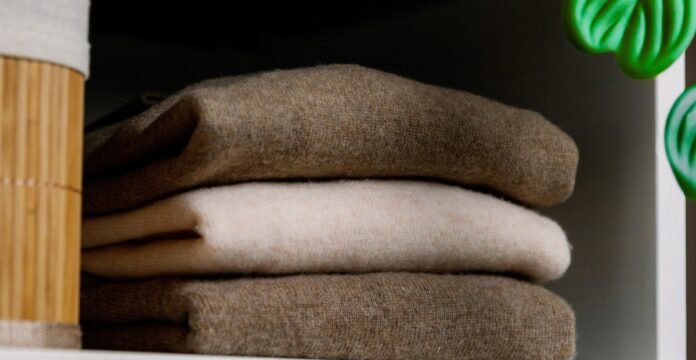
Recycled Cashmere Wool Fabric made from recycled wool is revolutionizing the textile industry. Recycled cashmere is made from old garments or scraps, unlike traditional cashmere which uses new raw materials. This method not only conserves resources but also reduces waste. Eco-conscious consumers have embraced recycled cashmere, a sustainable option that doesn’t compromise on luxury or comfort.
This article explores everything you need to know about recycled cashmere, from its production and benefits, to style and care tips. You will learn why this fabric is environmentally friendly and fashionable.
1. What is recycled cashmere wool fabric?
Recycled Cashmere Wool Fabric is made by recovering fibers from old cashmere garments or knitting remnants. These fibers are sorted, cleaned and spun into new yarns, without compromising softness or quality.
The first step is fiber separation. This involves removing unwanted materials such as polyester blends and damaged threads. The cashmere fibers are then shred and decontaminated. The fibers can then be spun into yarn, which is woven into new fabrics.
Reusing existing materials reduces the impact on the environment, making recycled cashmere sustainable luxurious.
2. Cashmere Recycled Has Environmental Benefits
a. Reduces waste
Millions of garments are thrown away every year. Cashmere recycled from these garments creates beautiful, new fabrics. This reduces textile waste.
b. Conserves Resources
Recycled Cashmere Wool Fabric is traditionally produced by goats and grazing land. Water is also required. Recycling fibers reduces water consumption and helps preserve fragile ecosystems.
c. Reduces Carbon Footprint
Cashmere recycling uses less energy than producing virgin cashmere. It reduces greenhouse gases, which contributes to a cleaner, healthier environment.
Use of transition words: Additionally, consequently, furthermore, etc.
3. Characteristics and Uses of Cashmere Recycled Wool
This fabric is recycled and retains all the qualities of cashmere. Some of the key characteristics are:
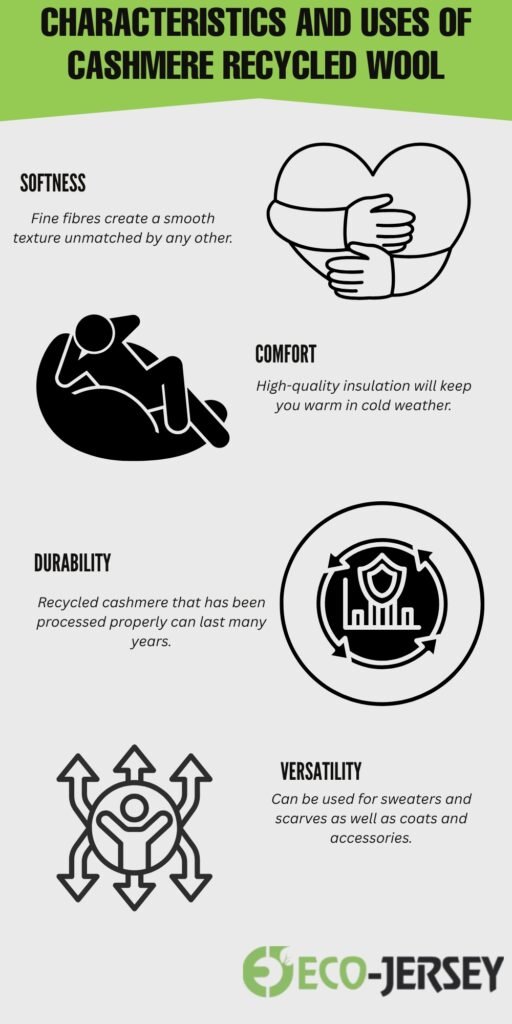
- Softness Fine fibres create a smooth texture unmatched by any other.
- Comfort High-quality insulation will keep you warm in cold weather.
- Durability Recycled cashmere that has been processed properly can last many years.
- Versatility Can be used for sweaters and scarves as well as coats and accessories.
Designers who are looking to combine style and sustainability love recycled cashmere for these reasons.
4. Cashmere Recycled Types
Recycled Cashmere Wool Fabric recycled in different types is available:
- Blended recycled cashmere: Often blended with organic cotton or lambswool for added durability.
- Recycled cashmere 100%: Pure and soft.
- Knitted fabric vs. woven fabric: Woven fabrics are more structured and formal.
The different types of bags are designed to meet the needs of each individual customer while still maintaining environmental responsibility.
5. Cashmere wool fabric recycled for various uses
Cashmere recycled is extremely versatile. Applications include:
- Sweaters & Cardigans : Warmth for every day without damaging the environment
- Shawls and Scarves: Soft luxurious accessories to elevate any outfit
- Outerwear Coats and jackets made of recycled cashmere are stylish and environmentally friendly.
- Home Textiles : Premium blankets, throws, and other textiles that are eco friendly yet cozy.
Designers are increasingly incorporating Recycled Cashmere Wool Fabric in their collections to appeal to environmentally conscious consumers.
6. How to identify high-quality recycled cashmere
Recycled Cashmere Wool Fabric made from recycled material should be soft, lightweight, and even. Here are a few tips:
- Fiber consistency Smooth and uniform fibers are a sign of careful processing.
- Resists excessive fuzzing and fuzzing: Premium recycled Cashmere.
- Blend ratio: Check the labels for the recycled percentage. 80-100% is ideal.
- Color Retention: Even dyed cashmere recycled retains its color without fading.
Quality ensures durability and reduces replacement frequency, promoting sustainability.
7. Care for Recycled Wool
Recycled Cashmere Wool Fabric garments need to be treated with care in order to prolong their life.
- Hand washing or gentle cycle: Cold water and mild detergent.
- Do not hang your clothes to dry.
- Store garments carefully: Fold clothing to maintain shape.
- Avoid prolonged exposure to direct sunlight.
These steps will preserve the softness as well as durability of recycled cashmere.
8. Cashmere has many advantages over virgin cashmere
Recycled Cashmere Wool Fabric has unique advantages.
- Eco Friendly: Minimizes the environmental impact through reusing fibers.
- Save money: New cashmere is often more expensive than used cashmere, but the quality is still excellent.
- Ethical Reduces the reliance on intensive farming and overgrazing.
Recycled cashmere is a fabric that combines luxury with sustainability.
9. Fashion Trends with Recycled Cashmere
Sustainable fashion has become mainstream. Designers use recycled cashmere to create:
- Capsule collections: Minimalist and eco-conscious wardrobes
- Statement Pieces Coats and sweaters that emphasize sustainability.
- Collaborations Eco friendly brands collaborating luxury fashion houses
Recycled Cashmere Wool Fabric from old garments is a growing symbol of style and responsibility.
10. The Industry Challenges
Recycled cashmere is not without its challenges, despite its many benefits.
- Variability in fiber quality: Sorting is required to maintain softness.
- Limited supply: It can be challenging to collect enough cashmere from post-consumer sources.
- Consumer awareness: Many people do not know the difference between virgin and recycled cashmere.
The challenges of the future are being addressed by technology, education, and certification.
11. Future of Cashmere Recycled Wool
Recycled Cashmere Wool Fabric is a promising future.
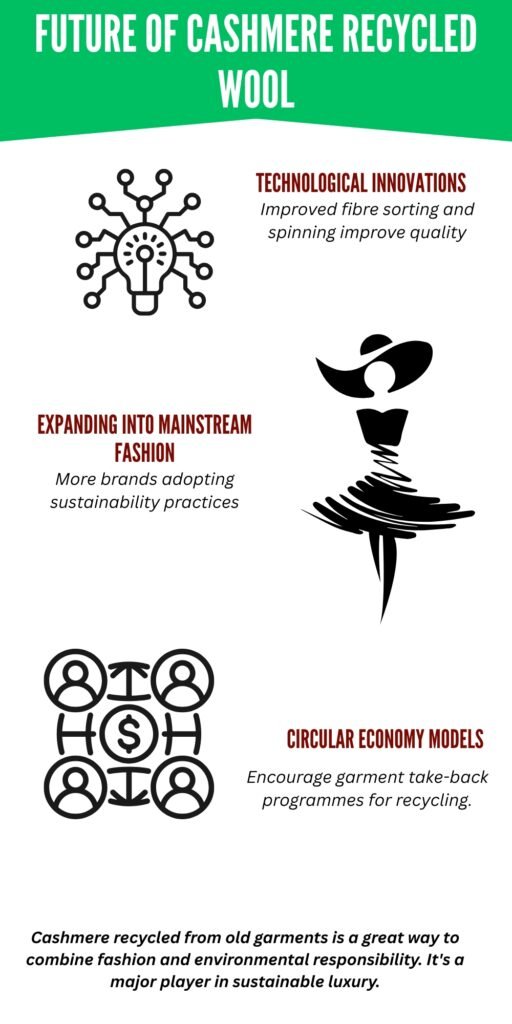
- Technological innovations: Improved fibre sorting and spinning improve quality
- Expanding into mainstream fashion: More brands adopting sustainability practices
- Circular economy models: Encourage garment take-back programmes for recycling.
Cashmere recycled from old garments is a great way to combine fashion and environmental responsibility. It’s a major player in sustainable luxury.
Conclusion
The perfect combination of style, luxury and sustainability is recycled cashmere. Recycled cashmere offers consumers premium warmth and softness while also contributing to the preservation of the environment. Recycled cashmere will redefine sustainable fashion as technology and consumer awareness grow.
FAQs
How do I wash my recycled cashmere fabric?
Use a gentle cycle, cold water and mild detergent. Dry flat to keep shape.
Can recycled cashmere fiber be blended with other fibres?
Yes. For durability and texture variations, it is usually blended with cotton, wool or synthetic fibers.
Is recycled Cashmere Eco-Friendly?
It reduces textile waste and water consumption, as well as carbon footprint, compared with virgin cashmere.