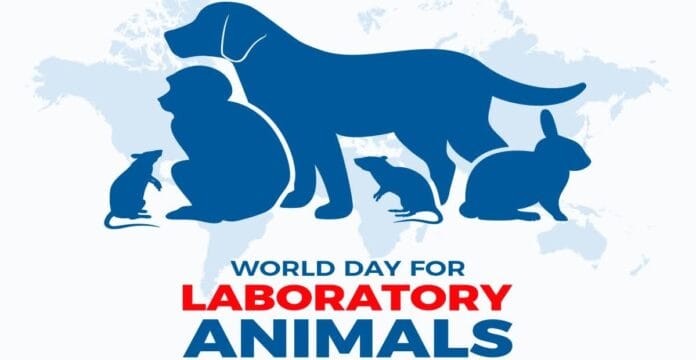
Every year on 24th April, people all over the world observe World Day for Laboratory Animals. This notable day concerns itself with the awareness of the usage of animals for scientific research. It strives to promote kindness, compassion as well as scientific ethics.
What is World Day for Laboratory Animals?
World Day for Laboratory Animals was inaugurated in 1979. It was set by the National Anti-Vivisection Society (NAVS). Ever since, a number of other societies have come out in support. They advocate for the helpless voiceless animals.
The day is not only about protest. It is also about progress. It encompasses better scientific approaches–approaches that give consideration to both human beings and animals.
Why This Day Matters
Each year, numerous animals are brought into labs and used by scientists for developing new medicines and understanding other diseases. Sadly, commercially motivated suffering goes unnoticed.
World Day for Laboratory Animals reminds us of their pain. It asks for more humane ways to study life. It promotes rethinking the conventional ways and demanding far more compassionate approaches.
The Role of Animals in Biosafety Research Found in Cosmetology and Medicine
Mice, monkeys, rats, and rabbits are a common part of practicing biosafety in relation to animal husbandry. They are involved in testing for pharmaceuticals, foods, cosmetics, and sometimes even consumer products marketed for pets.
However, there is a great examination of the percent of animals that suffer. Animals remain in cages for extensive periods of time and are unable to live any biologically relevant life. This is exactly why the subject becomes so salient.
Around The World Change Is Happening
Science is working. Today’s technology provides additional opportunities like computer models, 3D tissue cultures, and high- quality simulations. Animal testing is no longer necessary due to these alternatives.
Mikhail S. Gorbatov Day of Laboratory Animals gives support for the 3R principle:
- Replace with different means.
- Reduce animals used in the practice.
- Refine take less methods that cause damage.
These suggestions make science more humane and more effective. Since humans are animals, there is always a common denominator. However, in animal testing, there are no precision figures and checks, therefore a number of complementary assumptions will always lead to inaccuracies.
How The World Celebrates The Day
Passively, activists conduct peaceful marches. In school, people organize workshops about ethical testing while scientists social media to share important information, pictures, and calls to action.
Every change aids in broadening the knowledge base of such animals. With increase the number of namesable events people join every power leads mankind to a world without suffering for animals.
How you can help
You don’t need to be a scientist to help. Everyone can make a different in their unique ways.
- Support uses brands that do not test on animals.
- Contribute to charity that engage in the protection of animals used in laboratory testing.
- Teach other people regarding the rights of animals.
Even minimal efforts can bring about profound transformations.
A better and kinder future
Science and care must be pursued at same time. Striking research can be soft, gentle too. Striking approaches ought to be life affirming.
World Day for Laboratory Animals serves as a reminder. It tells us that animals also matter and animals do in fact matter. Their lives are also essential & should not go unnoticed.
When we are kind, we make better science and when we choose kindness. We make the world a much more better place to live in.
Takeaway
World Day for Laboratory Animals is not just any day on a calendar. Serves as a reminder on a broader spectrum calls for scientific correctness and safeguard the silent.
In unison, let’s focus on how to achieve the mix of deep understanding accompanied by genuine kindness approach.
Read more: April 24 and International Girls in ICT Day