The future of luxury wool is responsible. Cashmere fabric made from recycled cashmere. Cashmere is traditionally associated with exclusivity and elegance. It also represents premium craftsmanship. Recycled cashmere has become increasingly popular among conscious brands and consumers as sustainability is no longer optional. This innovative textile therefore combines heritage quality and environmental responsibility. It also preserves the warmth and softness that are synonymous with classic cashmere, while reducing waste.
This comprehensive guide will explain how recycled cashmere is made, why it’s important, and compare its performance to that of virgin cashmere. We will also analyze its commercial value, environmental impact, textile characteristics and care instructions. You will learn why recycled woven fabric cashmere is revolutionizing the fashion and textile industry.
What is Woven Recycled Cashmere Fabric?
Woven Recycled Cashmere Fabric are created by recovering pre- or post-consumer cashmere clothing and textile waste. The materials are sorted carefully, mechanically shred and spun into new yarn. The yarn is then woven using traditional weaving methods into high-quality fabrics.
Contrary to knitted cashmere which is flexible and loop-based, woven fabric is durable, refined, and structured. It is therefore commonly used in tailored garments like coats, scarves and blazers. The woven structure enhances durability, while maintaining softness.
It is important to note that the fibers do not dissolve chemically during recycling. They are instead mechanically recycled. The original warmth and softness are preserved. The fiber length can be reduced slightly, so recycled cashmere may need to be blended with virgin fibers as reinforcement.
Cashmere Recycled Has a Sustainable Advantage
Modern textile manufacturing has made sustainability a priority. Cashmere recycled from old garments has several environmental benefits.
1. Reduced environmental impact
Woven Recycled Cashmere Fabric virgin production requires a lot of grazing and water resources. The overgrazing of certain areas has led to desertification. Cashmere recycled from old material reduces demand for raw materials. Land pressure is reduced and carbon emissions are also lowered.
2. Waste Reduction
Textile wastes are one of the fastest growing waste streams in the world. Cashmere recycled from discarded clothing can be used to create a new, valuable fabric. Waste is diverted away from landfills.
3. Reduce Carbon Footprint
Fiber regeneration reduces energy consumption by a significant amount compared to the production of virgin fibers or raising goats. Water usage is also minimized. Cashmere woven from recycled material is a climate-conscious product.
How to Make Woven Recycled Cashmere Fabric
The production process is technical and meticulous. Quality control is therefore essential at all stages.
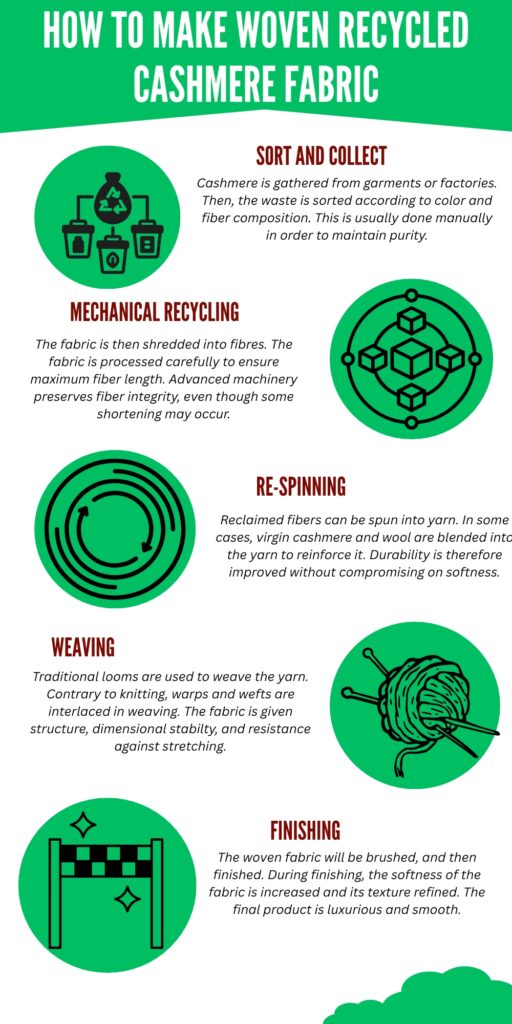
Step 1: Sort and collect
Cashmere is gathered from garments or factories. Then, the waste is sorted according to color and fiber composition. This is usually done manually in order to maintain purity.
Step 2: Mechanical Recycling
The fabric is then shredded into fibres. The fabric is processed carefully to ensure maximum fiber length. Advanced machinery preserves fiber integrity, even though some shortening may occur.
Step 3: Re-Spinning
Reclaimed fibers can be spun into yarn. In some cases, virgin cashmere and wool are blended into the yarn to reinforce it. Durability is therefore improved without compromising on softness.
Step 4: Weaving
Traditional looms are used to weave the yarn. Contrary to knitting, warps and wefts are interlaced in weaving. The fabric is given structure, dimensional stabilty, and resistance against stretching.
Step 5: Finishing
The woven fabric will be brushed, and then finished. During finishing, the softness of the fabric is increased and its texture refined. The final product is luxurious and smooth.
Characteristics Of Woven Recycled Cashmere Fabric
Designers and buyers must understand the properties of recycled woven cashmere.
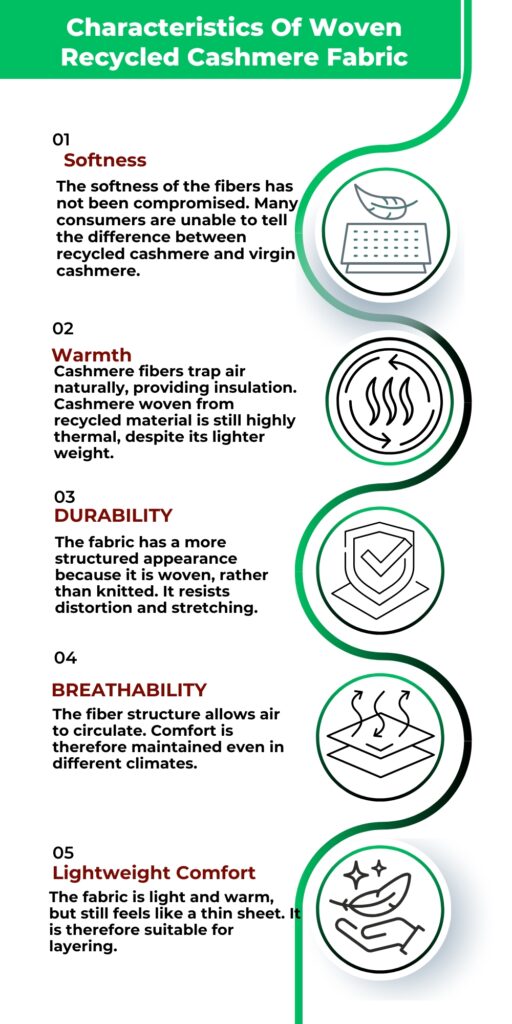
1. Softness
The softness of the fibers has not been compromised. Many consumers are unable to tell the difference between recycled cashmere and virgin cashmere.
2. Warmth
Cashmere fibers trap air naturally, providing insulation. Cashmere woven from recycled material is still highly thermal, despite its lighter weight.
3. Durability
The fabric has a more structured appearance because it is woven, rather than knitted. It resists distortion and stretching.
4. Breathability
The fiber structure allows air to circulate. Comfort is therefore maintained even in different climates.
5. Lightweight Comfort
The fabric is light and warm, but still feels like a thin sheet. It is therefore suitable for layering.
Fashion and Textiles Applications
Woven Recycled Cashmere Fabric from recycled material is highly versatile and therefore very desirable.
Luxury Outerwear
The fabric structure is ideal for coats, capes and trench styles. The fabric’s structure also provides warmth without adding bulk.
Premium Scarves
Cashmere scarves made of fine woven yarn are light and insulating. They are therefore popular on the high-end fashion market.
Blazers with Tailored Blazers
Designers love the fine surface texture. Cashmere woven from recycled material is therefore used to create sophisticated tailoring.
Home textiles
For a sustainable interior design, throws and decorative fabrics are also made from woven recycled Cashmere.
Performance in comparison to Virgin Cashmere
Woven Recycled Cashmere Fabric from recycled yarns is a great alternative to virgin cashmere.
- Softness is preserved to a large extent.
- Blending can enhance strength.
- The environmental footprint is reduced significantly.
- The cost efficiency of the company is increased.
Many luxury brands are now incorporating recycled cashmere in their premium collections.
The Blending Options and Quality Grades
Not all Woven Recycled Cashmere Fabric are the same. The quality of recycled cashmere fabrics varies according to the fiber length and processing.
Cashmere 100% Recycled
Soft and fully sustainable, but slightly less durable.
Cashmere blends made from recycled cashmere
Blending virgin cashmere and wool increases tensile strength. Fabric longevity is increased.
Premium Recycled Long-Fiber
Higher-grade input materials produce superior yarn. Softness and durability are both increased simultaneously.
Maintenance and Care
The lifespan of recycled woven cashmere can be extended with proper care.
- It is best to wash your hands gently or to dry clean them.
- When washing, use cold water.
- To dry, the fabric should be laid out flat.
- Store your clothes in ventilated garment bags.
The fabric will retain its softness for many years.
Why brands choose woven recycled cashmere
Quality and responsibility are important to luxury consumers. Brands use Woven Recycled Cashmere Fabric in order to achieve sustainability goals.
- Brand image is enhanced.
- Reduces dependence on raw materials
- The circular fashion initiative is supported by this product.
- This product meets the eco-conscious expectations of customers.
Storytelling around sustainability can also strengthen marketing appeal.
Economic Benefits
Woven Recycled Cashmere Fabric offers price stability. Recycled cashmere is more reliable because raw cashmere’s prices are volatile. Waste materials can also be turned into valuable assets. In turn, the production efficiency improves.
The Future of Recycled Cashmere
Textile recycling is evolving. The technology of fiber regeneration is improving. Recycled yarns of higher quality are produced. Luxury fashion houses are also increasingly committed to sustainable sourcing.
Circular fashion systems are expected to expand in the next few years. Cashmere fabric made from recycled yarns will be more popular. Consumer awareness is increasing, which in turn accelerates the demand.
Certifications and Transparency
Certifications like the Global Recycled Standard GRS are often sought to ensure credibility. These standards confirm recycled content and responsible handling. Buyers gain trust in claims of sustainability.
Transparency is now a key competitive advantage. Brands openly announce their initiatives to recycle cashmere.
Cashmere Recycled Production: Challenges and Opportunities
Despite the benefits, there are challenges.
- Fiber shortening reduces strength.
- The color sorting process is labor-intensive.
- It is important to monitor the quality consistency.
Nevertheless, technological advances continue to address these problems. The fabric’s performance continues to improve year after year.
Why Customers Love It
Modern shoppers appreciate ethical luxury. They can enjoy the softness of cashmere while also supporting the environment. Sustainable textiles are therefore increasingly popular among consumers.
Durability also ensures value for the long term. So, the consumer can enjoy both comfort and conscience.
Final Thoughts
The combination of tradition and innovation is achieved by using recycled cashmere to weave fabric. Woven Recycled Cashmere Fabric maintains the warmth, elegance and softness of classic cashmere. It also reduces waste and conserves resources while supporting circular fashion.
It is a symbol for modern luxury, where refinement and responsibility meet. As sustainable fashion evolves, woven recycled fabric from cashmere will continue to be at the forefront of ethical fabrics innovation.
FAQs
What is Woven Recycled Cashmere Fabric?
Woven Recycled Cashmere Fabric is made from reclaimed cashmere garments or production waste that is mechanically recycled, re-spun into yarn, and woven into structured textile.
Is Woven Recycled Cashmere Fabric as soft as virgin cashmere?
Yes, in most cases, softness is largely preserved. Although fibers are shortened during recycling, advanced processing ensures a smooth and luxurious hand-feel.
How is woven cashmere different from knitted cashmere?
Woven Recycled Cashmere Fabric is structured and stable because warp and weft yarns are interlaced. In contrast, knitted cashmere is stretchier and more flexible due to loop construction.