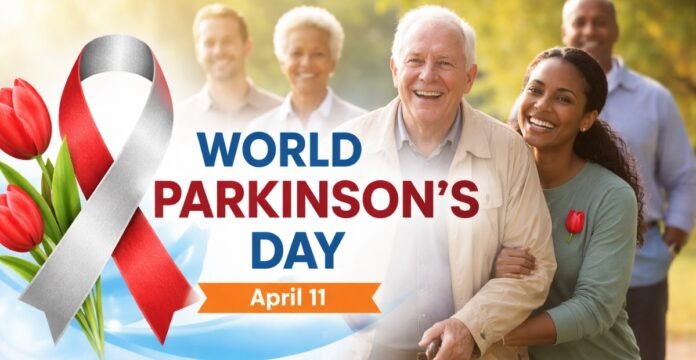
World Parkinson’s Day is observed every year on April 11. This day raises awareness about Parkinson’s disease and supports millions of people living with it. It also honors the birthday of James Parkinson, who first described the condition in 1817.Parkinson’s disease is a progressive neurological disorder that affects movement. Symptoms can vary from person to person, but often include tremors, stiffness, slow movement (bradykinesia), and postural instability. While there is currently no cure for Parkinson’s, various treatments are available to help manage symptoms and improve quality of life. These include medications, lifestyle adjustments like exercise and diet, and in some cases, surgery. Research is ongoing to better World Parkinson’s Day understand the disease and develop new therapies.
On this day, people around the world come together. They share knowledge, support patients, and promote research. As a result, awareness grows, and hope spreads. It’s a day for unity, a chance to make a difference in countless lives. Every action, big or small, adds to the global effort. World Parkinson’s Day By connecting with each other, we strengthen the bonds that tie us together in this shared cause.
What Is World Parkinson’s Day?
Parkinson’s disease is a progressive brain disorder. It mainly affects movement and coordination. The disease occurs when nerve cells in the brain lose their ability to produce dopamine. World Parkinson’s Day Many of the symptoms of Parkinson’s disease are due to a loss of dopamine. Parkinson’s disease is more common in older adults, but it can occur in younger adults as well. There is no cure for Parkinson’s disease, but there are treatments that can help to manage the symptoms.
Dopamine helps control body movement. Without enough dopamine, people World Parkinson’s Day may experience tremors, stiffness, and slow movement.Parkinson’s disease is associated with a loss of dopamine-producing cells in the brain. Treatments for Parkinson’s disease often aim to increase dopamine levels or mimic dopamine’s effects.
Common Symptoms World Parkinson’s Day
- Tremors in hands, arms, or legs
- Muscle stiffness
- Slow movement (bradykinesia)
- Balance and posture problems
- Speech and writing changes
In addition, some people may face mental health challenges. These include depression and anxiety.
Why World Parkinson’s Day Matters
World Parkinson’s Day plays an important role in society. It helps people understand the disease better. Moreover, it supports early diagnosis and proper care.It also gives a chance to those affected to share their stories. These stories create a sense of community. They also remind us that no one is alone in this fight.
Key Goals
- Raise awareness about Parkinson’s disease
- Support patients and caregivers
- Encourage medical research
- Reduce stigma and misunderstanding
Because of this day, more people learn how to help and support those affected.
History of World Parkinson’s Day
World Parkinson’s Day started to honor James Parkinson. His work laid the foundation for modern research.
Over time, health organizations and communities began observing this day worldwide. Today, it is recognized globally with campaigns, events, and educational programs.
Symbol of Parkinson’s Awareness
The red tulip is the official symbol of Parkinson’s disease. It represents hope, strength, and compassion.The red color symbolizes courage and resilience in the face of adversity. The tulip was chosen because it is a vibrant and easily recognizable flower, and the red tulip specifically because it stands out. The story goes that a Dutch horticulturist, who himself had Parkinson’s, developed a red and white tulip and named it the ‘Dr. James Parkinson’ tulip in honor of the man who first described the disease. From there, the red tulip was adopted as a symbol, a reminder of the ongoing fight against Parkinson’s and a beacon of hope for those living with it.
The flower was chosen in memory of a Dutch gardener who had Parkinson’s disease. Since then, it has become a global sign of support.Every April, Parkinson’s UK gives away free tulip bulbs – a poignant symbol of hope and resilience for those living with the condition. The bright red tulip, known as the James Parkinson tulip, serves as a vibrant reminder of the ongoing fight against Parkinson’s and the importance of continued research and support.
How People Observe the Day
People celebrate World Parkinson’s Day in many ways. These activities help spread awareness and show support. Many organize events such as walks, runs, and bike rides to raise funds for research and support programs. Others share their personal stories or those of loved ones living with Parkinson’s to educate the public and foster understanding. Social media campaigns and online forums also play a crucial role in connecting people and disseminating information about the condition.
Common Activities
- Awareness walks and charity events
- Educational seminars and workshops
- Social media campaigns
- Fundraising for research
- Community support programs
As a result, more people understand the challenges faced by patients.
Living With Parkinson’s Disease
Living with Parkinson’s disease can be difficult. However, with the right care, people can manage symptoms and live better lives.There are several options for managing Parkinson’s disease, including medication, lifestyle adjustments, and therapies. Certain drugs can aid with motor symptoms like tremors and stiffness. Physical therapy, occupational therapy, and speech therapy can all assist people maintain their independence and quality of life. Furthermore, adopting a healthy lifestyle through regular exercise, a well-balanced diet, and enough sleep can significantly improve overall well-being. Support groups and counseling can also offer emotional assistance and coping strategies for both individuals and their families.
Helpful Tips
- Follow a healthy diet
- Exercise regularly
- Take prescribed medicines on time
- Stay socially active
- Seek emotional support
In addition, family and community support play a key role.
Treatment and Research
Currently, there is no cure for Parkinson’s disease. However, treatments can help manage symptoms.These include medications, lifestyle adjustments, and in some cases, surgery. The goal of treatment is to improve quality of life for people living with Parkinson’s.
Common Treatments
- Medications to increase dopamine
- Physical therapy
- Occupational therapy
- In some cases, surgery
Researchers continue to work hard. They aim to find better treatments and, one day, a cure.
How You Can Help
Everyone can make a difference on World Parkinson’s Day.
Simple Ways to Support
- Learn and share information
- Support Parkinson’s organizations
- Volunteer in local events
- Donate to research programs
Even small actions can create a big impact.
Conclusion
World Parkinson’s Day reminds us of the importance of awareness, support, and research. It brings people together to fight Parkinson’s disease with hope and unity.
By spreading knowledge and showing compassion, we can improve the lives of millions. Together, we move closer to a future without Parkinson’s disease. Learn About: World Art Day And World Homeopathy Day