The selection of winter clothes directly influences comfort, health, and performance regarding the choice of warmest clothes. In winter, the human body becomes heatless very quickly. Hence, the choice of fabric will be a very important decision, but not a fashion one. The appropriate fabric assists in the regulation of body temperature and avoids stress caused by cold. Thick fabrics are often thought to be warmer but this is not always the case. Nonetheless, insulation is more important than thickness. Heavy fabrics are not as effective in keeping a person warm with less stuff, because some lightweight materials are superior at holding air trapped in them. Synthetic and natural winter clothes have varying effects in the cold weather.Warmest Fabrics for Winter Clothing:
History of Warm Winter Fabrics
The history of warm winter fabrics reflects humanity’s need for survival in cold climates. Long before modern technology, people relied on natural materials to protect themselves from harsh weather. Early humans observed animals and learned that fur and wool provided warmth. As a result, they began using animal skins and fibers to cover their bodies. These early fabrics marked the beginning of winter clothing designed specifically for insulation and protection.
In ancient times, wool became one of the most important winter fabrics. Sheep domestication allowed people to spin wool into yarn and weave it into textiles. Wool garments appeared in regions with cold winters, including Europe, Central Asia, and the Middle East. Wool’s ability to trap air and retain warmth made it ideal for cold weather. Therefore, wool quickly became essential for survival and daily wear.

What Makes a Fabric Warm?
Warmth of a fabric is based on the efficiency with which it retards loss of body warmth. Clothes do not produce heat, they only trap it by means of insulation. Thermal insulation is the process in which air is entrapped around the skin, which prevents cold penetration. Complicated fibers capture additional air parcels and hence are more effective in the heat trap. Warmth is also determined by the density of fabric and GSM. High GSM and heavy fabrics may be heavy, however, lacking air pockets, they may not be effective at retaining heat.
Best Fabrics for Different Winter Clothing Types
Choosing the warmest fabrics for winter clothing depends greatly on the type of garment being worn. Each winter clothing item serves a specific purpose. Some garments protect against wind and extreme cold, while others focus on comfort and moisture control. Therefore, the best fabric choice changes with clothing type. Understanding how different fabrics perform in jackets, sweaters, thermals, and accessories helps create an effective and comfortable winter wardrobe.
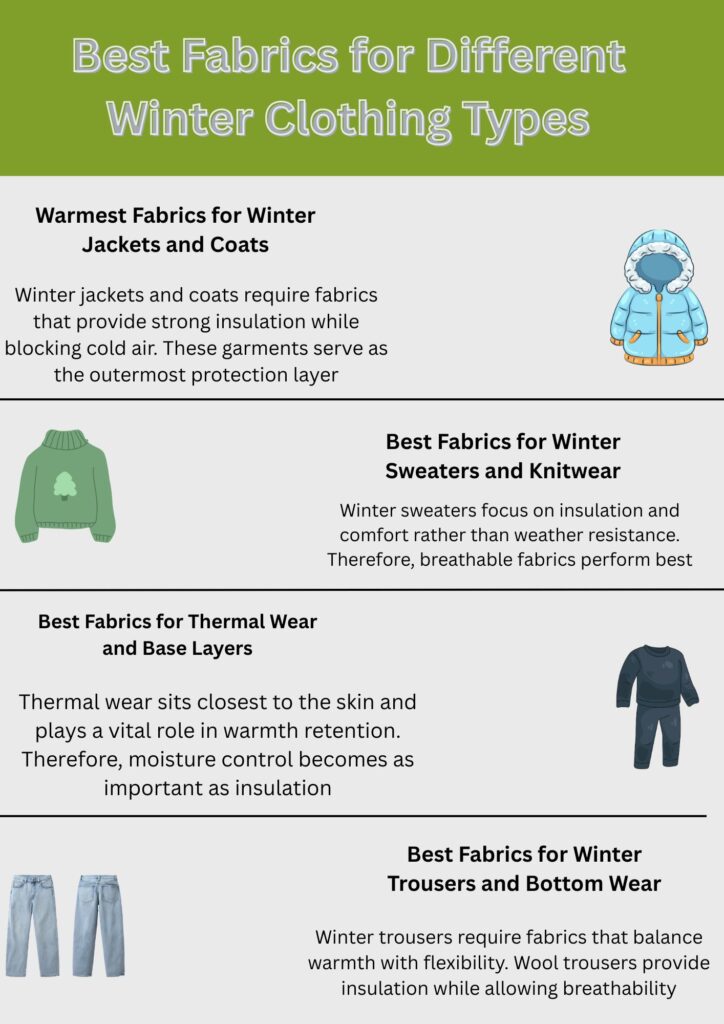
Warmest Fabrics for Winter Jackets and Coats
Winter jackets and coats require fabrics that provide strong insulation while blocking cold air. These garments serve as the outermost protection layer. Therefore, fabric choice becomes critical. Down remains one of the warmest options for winter jackets because it traps large amounts of air without adding weight. This feature allows jackets to remain lightweight yet extremely warm. However, down works best in dry cold conditions.
Best Fabrics for Winter Sweaters and Knitwear
Winter sweaters focus on insulation and comfort rather than weather resistance. Therefore, breathable fabrics perform best. Wool stands out as the most effective sweater fabric because it traps heat while allowing airflow. Merino wool feels soft against the skin and regulates body temperature efficiently. This makes it ideal for long wear indoors and outdoors.
Best Fabrics for Thermal Wear and Base Layers
Thermal wear sits closest to the skin and plays a vital role in warmth retention. Therefore, moisture control becomes as important as insulation. Merino wool performs exceptionally well as a base layer because it wicks moisture while maintaining warmth. Even when damp, merino wool continues to insulate effectively.
Best Fabrics for Winter Trousers and Bottom Wear
Winter trousers require fabrics that balance warmth with flexibility. Wool trousers provide insulation while allowing breathability. They are commonly used for formal and office wear during winter. Wool blends improve durability and reduce wrinkling, making them more practical for daily use.
The Best Winter Clothing that is Natural.
Natural fibers have been in existence to shield people against cold winters. Traditionally, animal fibers had been most dependable source of warmth and they remain very effective nowadays. Out of these, wool is regarded to be the standard of natural winter insulation. The crimped fibers of wool form air pockets which are able to trap heat effectively. Merino wool is soft and can regulate temperatures, cashmere is posh, but non-bulky, and lambswool is durable as an insulator at a low price. The breathability of wool enables it to cool down excessively heat and retain necessary warmth and hence it is also suitable in humid weather. It is popular in winter coats, sweaters, scarfs, socks and thermals.
Cashmere, a product of the undercoat of the cashmere goat offers a great level of insulation yet it is so lightweight. It has fine fibers forming warmth which is sometimes better than standard wool. Cashmere clothes are loose-fitting and soft, and thus, they are ideal in controlled climates. Cashmere, however, is a luxury that needs special care to preserve softness and insulation and hence, it is an investment and a utilitarian selection.
Top Blends of Fabrics that are the Warmest.
Blended fabrics are critical in the contemporary winter wear as they have the capabilities of both natural and synthetic fibers. Fabric blends are better, more comfortable, durable, and warmer, as opposed to using a single piece of material. Consequently, there is a large number of winter clothes using blended clothes to work well in actual conditions. These mixtures enhance insulation and minimize weakness like shrinkage, retention of moisture or overweights. Hence, mixed fabrics can be a solid source of warmth compared to pure fabrics particularly on everyday winter.
Wool and Polyester Blends to Wear All Winter Long.
Wool and polyester mixes are other popular options of winter clothes. Wool is a natural insulator that traps air and polyester gives it strength and durability. Due to this combination, the cloth will remain warm and will not be subject to wear and tear. In addition, polyester can be used to minimize wool shrinkage, as well as, enhance shape memory after washing. The blends also dry quicker than pure wool which adds comfort to the damp or cold conditions. This has seen the extensive application of wool-polyester blends in winter coats, jackets, trousers and sweaters.
Thermal Blends made of Cotton and Polyester Everyday.
Polymers and blends of cotton and polyester are typically employed in the thermal wear during mild to moderate winters. Cotton is soft and breathable and is comfortable to the skin. Meanwhile, polyester enhances moisture and humidity. Due to such balance, the fabric keeps the warmth and does not feel heavy or damp. These are appropriate mixes to use as base layers and indoor winter wear. Hence, cotton-poly thermal garments can be applied in everyday life, every day, and overly wearing in colder seasons.
Wool and Acrylic Blends as Cheap Warm Materials.
Wool and acrylic blends provide a rather inexpensive substitute to pure wool fabrics. Wool is a natural source of warmth, whereas acrylic is less expensive and provides light volume. The result of this mixture is a woolly-like fabric that is lighter. Nevertheless, acrylic reduces the breathability, and hence the mixture is effective in dry and cold climates. Notwithstanding this drawback, the wool-acrylic combinations are still in demand in the case of sweaters, scarves, and winter accessories due to their ability to keep people warm at affordable cost.
The reason behind the superior performance of blended fabrics as compared to single fibers.
Mixed fabrics are better than single fibers as they are more balanced in terms of insulating, moisture and durability. Natural fibers in isolation can either be moistened or lost in shape with time. Artificial fibers do not necessarily have breathability or can be uncomfortable. These weaknesses are minimised when mixed. Consequently, the blended fabrics keep one warmer and longer lasting in addition to being more comfortable and have a longer life. This is why blended fabrics are among the most intelligent options in winter clothes in the contemporary climate.
Comparison of Warmest Winter Fabrics
Comparing the warmest fabrics for winter clothing helps buyers understand how different materials perform in real cold conditions. Each winter fabric offers a unique balance of warmth, breathability, weight, and durability. Therefore, choosing the right fabric depends on climate, activity level, and comfort needs. Some fabrics excel in extreme cold, while others work best for daily wear or active use. Understanding these differences prevents poor fabric choices and improves overall winter comfort.
Wool Compared to Synthetic Winter Fabrics
Wool remains one of the most trusted winter fabrics due to its natural insulation ability. Its crimped fibers create air pockets that trap heat efficiently. Therefore, wool provides consistent warmth in cold temperatures. Wool also breathes naturally, allowing excess heat and moisture to escape. This balance keeps the body warm without overheating. Compared to synthetic fabrics, wool feels more comfortable during long wear. However, wool garments can feel heavier and require careful washing.
Down Insulation Versus Wool and Fleece
Down stands out as the warmest winter insulation available. It traps large amounts of air while remaining extremely lightweight. Therefore, down jackets provide exceptional warmth without bulk. Compared to wool, down offers higher insulation per gram. However, down lacks breathability and performs poorly when wet. Wool retains warmth even in damp conditions, which gives it an advantage in unpredictable weather.
Alpaca Wool Compared to Sheep Wool
Alpaca wool often feels warmer than traditional sheep wool. Its hollow fibers trap more heat while remaining lighter. Therefore, alpaca garments provide high insulation without heaviness. Alpaca wool also lacks lanolin, which reduces skin irritation. Compared to sheep wool, alpaca feels softer and more breathable. However, alpaca garments usually cost more and require gentle care. Both fabrics remain excellent winter choices, but alpaca suits premium cold-weather wear better.
Warmest Fabrics for Extreme Cold Weather
In extreme cold conditions, no single fabric is sufficient. Layering becomes essential to maintain body warmth. A base layer wicks moisture, a mid-layer insulates, and an outer layer blocks wind and moisture. For example, a merino wool base layer paired with a fleece mid-layer and a down outer shell offers comprehensive protection in sub-zero temperatures. Fabrics in combination provide a system where moisture is managed, heat is trapped, and cold air is blocked, ensuring optimal comfort and safety during outdoor activities in harsh climates.
Common Mistakes When Choosing Winter Fabrics
Many individuals select winter clothing without considering breathability, which can lead to sweating and feeling cold. Others mistakenly equate thickness with warmth, overlooking insulation efficiency. Improper layering also reduces the effectiveness of even high-quality fabrics. To maintain optimal warmth, it is essential to consider insulation, moisture management, and appropriate layering techniques when choosing winter fabrics.
How to Choose the Warmest Fabric for Your Climate
Choosing the right fabric depends on winter severity and activity type. Mild winters require breathable warmth, where wool blends offer sufficient insulation without overheating. Harsh winters demand heavy insulation, such as down or Thinsulate, for extreme cold protection. Dry cold climates benefit from natural fibers like wool and alpaca, whereas wet or snowy conditions require synthetic fabrics that repel moisture effectively. Urban wear prioritizes comfort and style, while outdoor activity requires technical performance fabrics capable of sustaining heat and resisting weather.
Care Tips to Maintain Warmth of Winter Fabrics
Proper care plays a crucial role in preserving the warmth of winter clothing. Even the warmest fabrics for winter clothing can lose their insulating power if handled incorrectly. Fibers become damaged, air pockets collapse, and heat retention decreases over time. Therefore, caring for winter fabrics correctly helps maintain insulation, comfort, and long-lasting performance. When garments receive proper care, they continue to protect the body from cold temperatures year after year.
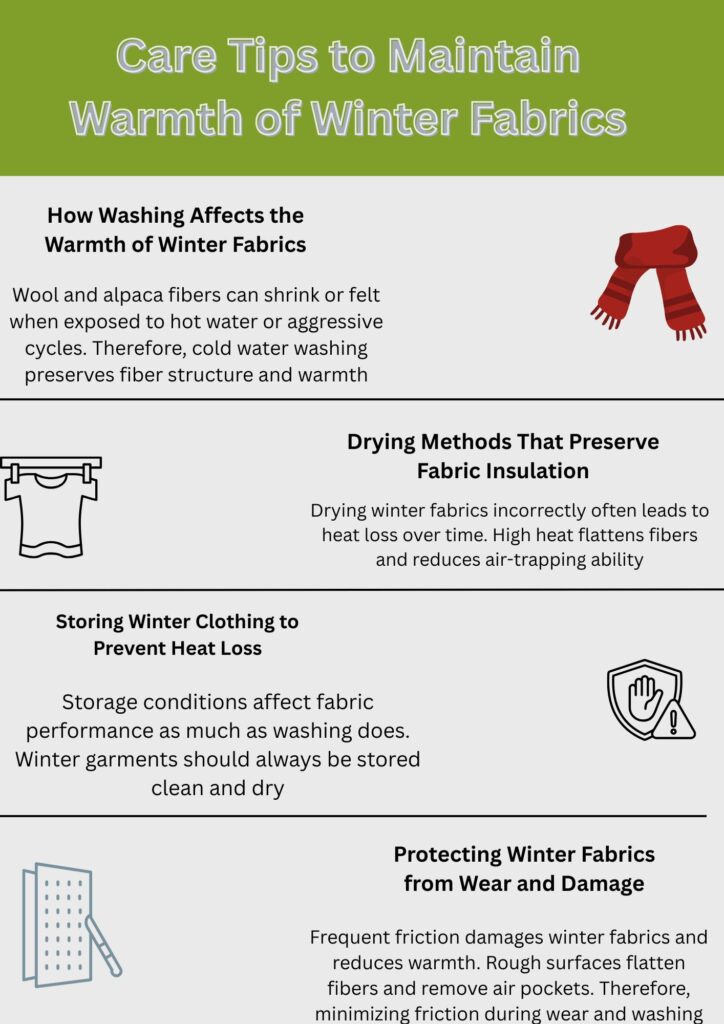
How Washing Affects the Warmth of Winter Fabrics
Washing methods directly influence fabric insulation. Harsh washing damages fibers and reduces their ability to trap air. Wool and alpaca fibers can shrink or felt when exposed to hot water or aggressive cycles. Therefore, cold water washing preserves fiber structure and warmth. Gentle detergents designed for winter fabrics protect natural oils that help retain heat. Synthetic fabrics also benefit from gentle washing because it prevents fiber breakdown. As a result, correct washing methods help winter fabrics maintain their original warmth.
Drying Methods That Preserve Fabric Insulation
Drying winter fabrics incorrectly often leads to heat loss over time. High heat flattens fibers and reduces air-trapping ability. Wool and cashmere should dry naturally to maintain softness and insulation. Synthetic fabrics tolerate machine drying better, but low heat settings work best. Air drying allows fibers to recover their shape and structure. Therefore, proper drying methods help preserve warmth and extend garment life.
Storing Winter Clothing to Prevent Heat Loss
Storage conditions affect fabric performance as much as washing does. Winter garments should always be stored clean and dry. Moisture trapped during storage causes fiber damage and odor. Wool garments benefit from breathable storage bags that allow airflow. Folding winter sweaters prevents stretching and shape loss. Hanging heavy garments for long periods can damage fiber structure. As a result, correct storage preserves insulation and prevents fabric weakening.
Protecting Winter Fabrics from Wear and Damage
Frequent friction damages winter fabrics and reduces warmth. Rough surfaces flatten fibers and remove air pockets. Therefore, minimizing friction during wear and washing helps maintain insulation. Wool garments benefit from occasional brushing to restore fiber loft. Synthetic insulation recovers shape when garments are gently shaken after washing. Simple care habits prevent long-term damage and keep fabrics warm.
Common Uses of Warm Winter Fabrics
Winter fabrics are widely used in outerwear because jackets and coats require strong insulation. Down, wool, and synthetic insulated fabrics are commonly chosen for this purpose. These fabrics trap body heat and block cold air effectively. As a result, they keep the wearer warm in freezing weather. Wool coats are especially popular for urban wear because they combine warmth with style. Down jackets dominate extreme cold environments due to their superior insulation and lightweight feel.
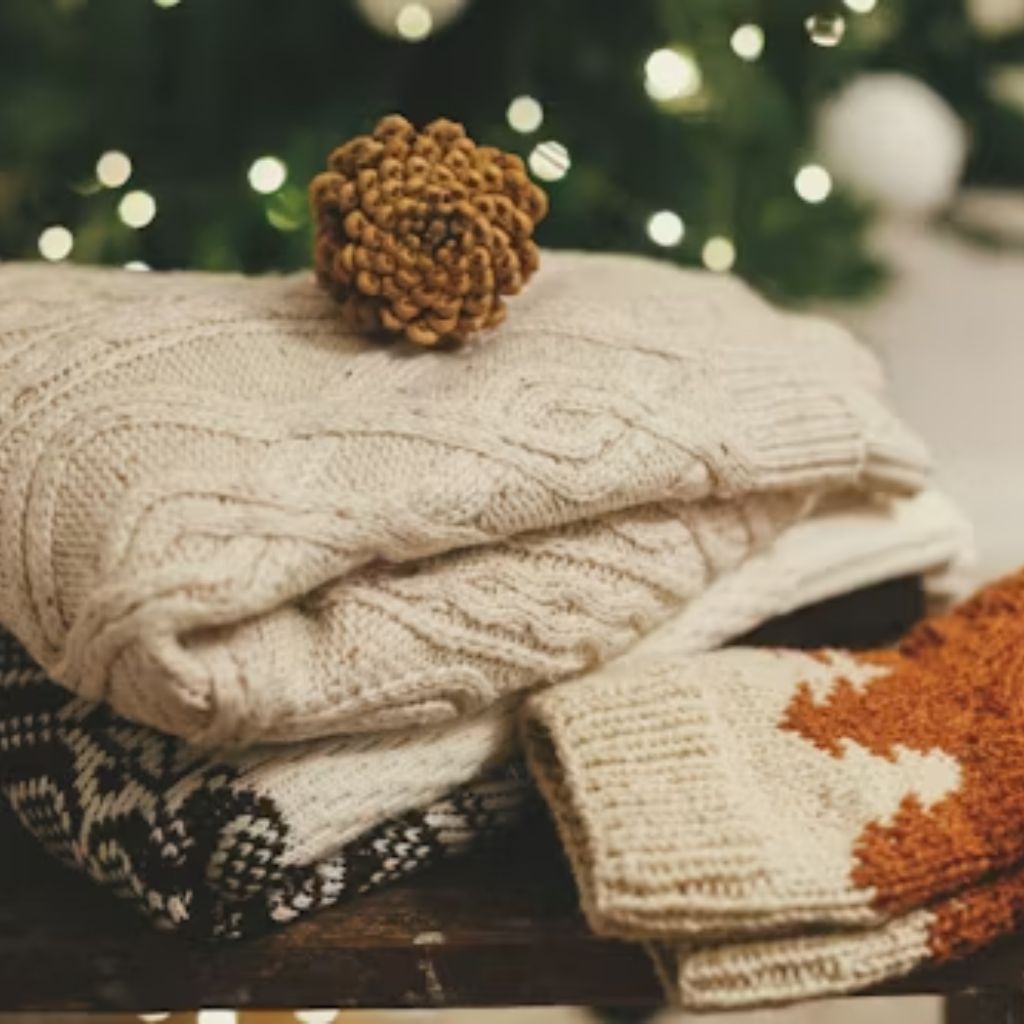
Warm winter fabrics are also used extensively in sweaters and knitwear. Wool, cashmere, alpaca, and blended fabrics provide comfortable insulation for daily wear. These garments are worn indoors and outdoors because they regulate body temperature well. They allow heat retention without causing overheating. Therefore, sweaters made from natural winter fabrics remain essential for cold seasons.
Conclusion
Choosing the warmest fabrics for winter clothing involves considering climate, activity level, and personal comfort. Natural fabrics offer breathable insulation, synthetic fabrics provide lightweight performance, and blended fabrics balance the benefits of both. Prioritizing insulation, breathability, and layering ensures effective warmth during cold conditions. Smart fabric selection enhances comfort, safety, and style, making winter clothing both functional and enjoyable.
FAQs
What is the warmest fabric for winter clothing?
The warmest fabric for winter clothing depends on climate and usage. Down provides the highest insulation in extremely cold and dry conditions. It traps large amounts of air, which slows heat loss. However, wool remains the most reliable fabric for everyday winter wear. Wool stays warm even when damp and allows the body to breathe. Therefore, both fabrics are considered among the warmest winter options.
Is wool warmer than synthetic fabrics in winter?
Wool is generally warmer than synthetic fabrics during long wear. It traps heat naturally and regulates body temperature effectively. Synthetic fabrics can feel warm initially, but they often lose insulation when moisture builds up. Wool continues to insulate even in damp conditions. As a result, wool performs better for steady warmth and comfort in cold weather.
Which fabric keeps you warm in extreme cold conditions?
Extreme cold requires high insulation efficiency. Down and advanced synthetic insulation such as Thinsulate perform best in sub-zero temperatures. These fabrics provide strong warmth with minimal weight. However, layering these fabrics with moisture-wicking base layers improves performance. Therefore, extreme cold protection depends on both fabric choice and layering strategy.