Cashmere is a luxurious, soft, warm, and long-lasting wool. Cashmere is expensive and delicate enough to be used for everyday wear. Many textile manufacturers blend cashmere and other fibers in order to create Types of Blended Cashmere Wool Fabric. These blends retain the luxurious feel of Cashmere, while increasing durability, affordability and functionality.
Cashmere blend fabrics are used widely in the modern textile and fashion industries. These fabrics are used in everything from sweaters, coats, scarves, and upholstery to provide comfort, elegance and practicality. Cashmere can be blended with other fibers such as wool, silk or cotton to enhance performance and softness.
This comprehensive guide will examine the uses of Types of Blended Cashmere Wool Fabric as well as their benefits, characteristics, and reasons for their increasing popularity in today’s market.
What is blended cashmere wool fabric?
]Types of Blended Cashmere Wool Fabric is a textile that’s made by combining fibers of cashmere with other natural fibers. The blending is done to achieve a balance between softness, durability and warmth.
Cashmere is made from the undercoat of the cashmere goat. These fibers have a soft, insulating feel. They are delicate, but also soft. Manufacturers often combine them with stronger fibres to improve fabric performance.
Blended fabrics have several benefits. They reduce the cost of the fabric. They also increase wear resistance and durability. They also provide greater flexibility for clothing and textile applications.
Blended cashmere fabrics are now a popular choice among designers, manufacturers and consumers.
Cashmere is blended with other fibers
Types of Blended Cashmere Wool Fabric has its limitations, despite being luxurious. Blending cashmere and other fibers can help overcome these challenges.
Improved Durability
Cashmere fibers are delicate. Blending cashmere with synthetic, wool, cotton or other fibers makes the fabric stronger and more resistant.
Performance Enhancement
Different fibers bring unique properties. Silk, for example, adds shine and smoothness, while synthetic fibers increase elasticity.
Cost Efficiency
Cashmere clothing made from pure cashmere can be expensive. Blending lowers production costs and makes luxury fabrics more affordable.
More Design Flexibility
Designers can create many different textures and styles by using blended fabrics.
Blended cashmere and wool fabrics are widely used for fashion and interior textiles because of their benefits.
The most common types of blended cashmere wool fabric
Each type of blended cashmere fabric has its own unique properties and uses. Explore the most popular types.
1. Cashmere-Wool Blend Fabric
The blend of cashmere and wool is a common type of blended fabric.
Cashmere and sheep wool are blended in this blend. Cashmere and wool are combined to create a blend that is soft and warm.
Key Characteristics
- Soft and warm
- Cashmere is more durable than pure cashmere
- Surface with a slight texture
- Insulation properties that are good
Common Uses
- Winter coats
- Sweaters
- Shawls
- Scarves
The blend is popular in cold weather clothing, as it combines luxury with practicality.
2. Cashmere-Silk Blend Fabric
The blend of cashmere and silk is known for its elegant look and luxurious feeling.
Cashmere and silk fibers provide warmth and softness, and cashmere adds shine to the fabric.
Key Characteristics
- Soft and lightweight
- Glossy finish with a smooth surface
- Comfortable and breathable
- Elegant drape
Common Uses
- Luxury sweaters
- High-end scarves
- Evening Wear
- Fashion Accessories
This Types of Blended Cashmere Wool Fabric is used for premium fashion collections because of its fine texture.
3. Cashmere-Cotton Blend Fabric
Blends of cashmere and cotton combine the breathability (and softness) of cashmere with the softness of cotton.
Cotton fibers are lighter and better suited to milder weather.
Key Characteristics
- Soft and breathable
- Lightweight
- Comfortable everyday wear
- Cashmere blends are less expensive than pure cashmere
Common Uses
- Casual sweaters
- Lightweight cardigans
- Spring Clothing
- Loungewear
Types of Blended Cashmere Wool Fabric is perfect for those who prefer the warmth and comfort of cashmere, but without the excessive heat.
4. Cashmere-Polyester Blend Fabric
Blends of cashmere and polyester are designed to enhance durability, wrinkle resistance.
The fabric is stronger and easier to maintain with polyester.
Key Characteristics
- Durable and resilient
- The wrinkle resistant fabric
- Buy Tickets Online
- Long-lasting
Common Uses
- Clothing for everyday wear
- Knitwear
- Travel Clothing
- Fashion basics
Types of Blended Cashmere Wool Fabric is more practical with polyester, even though it’s synthetic.
5. Cashmere and nylon blend fabric
Cashmere is sometimes enhanced with nylon to increase its strength, elasticity.
The nylon in the blend helps knitted fabrics retain their shape.
Key Characteristics
- Stretchable and flexible
- Cashmere is stronger than pure cashmere
- Shape retention
- Lightweight
Common Uses
- Knit sweaters
- Socks
- Active winterwear
- Stretch garments
The combination of these two materials allows designers to create clothing that is both comfortable and durable.
6. Cashmere-Viscose Blend Fabric
The semi-synthetic rayon fiber is made from wood pulp. Blended with cashmere it produces a smooth, breathable fabric.
Key Characteristics
- Silky texture
- Lightweight and breathable
- Soft drape
- Comfortable on the skin
Common Uses
- Fashion tops
- Lightweight sweaters
- Dresses
- Fashion scarves
Types of Blended Cashmere Wool Fabric provides the elegance of silk for a lower price.
7. Fabric Blended with Cashmere and Acrylic
In affordable fashion, cashmere-acrylic blended garments are commonly used.
Acrylic fibers are soft and similar to wool, but they reduce production costs.
Key Characteristics
- Soft and warm
- Budget-friendly
- Lightweight
- Maintainable
Common Uses
- Budget sweaters
- Winter Accessories
- Knit hats
- Everyday knitwear
It is still comfortable and warm, even though it’s less luxurious than the natural blends.
8. Cashmere-Alpaca blend fabric
Alpaca fibers are made from alpacas and are known to be soft and warm. Combining them with cashmere creates a premium fabric.
Key Characteristics
- Soft texture ultra-soft
- Excellent insulation
- Lightweight and warm
- Durable natural fibers
Common Uses
- Luxury Coats
- Premium scarves
- Winter shawls
- Designer knitwear
This blend is used often in the high-end winter collections.
Benefits of blended cashmere wool fabrics
Designers and consumers alike are attracted to the benefits of blended cashmere fabrics.
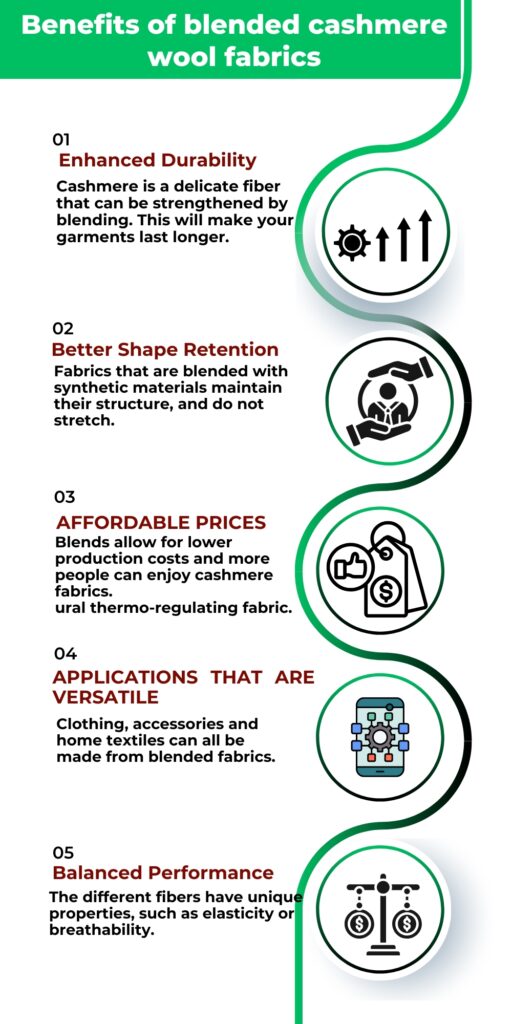
1. Enhanced Durability
Cashmere is a delicate fiber that can be strengthened by blending. This will make your garments last longer.
2. Better Shape Retention
Fabrics that are blended with synthetic materials maintain their structure, and do not stretch.
3. Affordable Prices
Blends allow for lower production costs and more people can enjoy cashmere fabrics.
4. Applications that are versatile
Clothing, accessories and home textiles can all be made from blended fabrics.
5. Balanced Performance
The different fibers have unique properties, such as elasticity or breathability.
Blended Cashmere Fabrics
Types of Blended Cashmere Wool Fabric to their versatility, blended cashmere fabrics can be found in a wide range of industries.
Fashion Industry
Designers use these fabrics for:
- Sweaters
- Coats
- Dresses
- Scarves
- Gloves
Luxury Accessories
Cashmere blends can be used to:
- Shawls
- Fashion Wraps
- Premium scarves
Home textiles
Blended fabrics can also be used to:
- Throws
- Blankets
- Upholstery
- Textiles for decoration
These fabrics are luxurious because of their softness, elegance and luxury.
How to care for blended cashmere wool fabric
To maintain the quality, it is important to take care of your blended cashmere fabric.
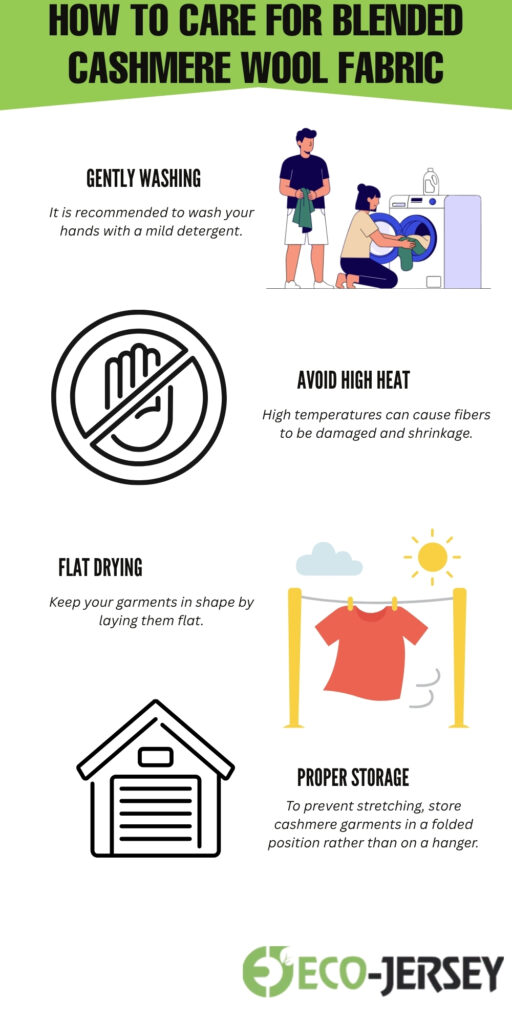
Gently Washing
It is recommended to wash your hands with a mild detergent.
Avoid High Heat
High temperatures can cause fibers to be damaged and shrinkage.
Flat Drying
Keep your garments in shape by laying them flat.
Proper Storage
To prevent stretching, store cashmere garments in a folded position rather than on a hanger.
Types of Blended Cashmere Wool Fabric clothing can last many years with proper care.
Future of blended cashmere fabrics
Global textile demand continues to increase for Types of Blended Cashmere Wool Fabric.
The future of these fabrics is shaped by several trends:
Sustainable Blending
Recycling and eco-friendly products are being used by more manufacturers.
Innovative Textile Technology
The softness of the yarn is improved by using advanced spinning techniques.
Affordable Luxury
Blended fabrics allows brands to offer luxurious products at more affordable prices.
Types of Blended Cashmere Wool Fabric are a must-have for modern fashion as sustainability and innovation evolve.
Conclusion:
Types of Blended Cashmere Wool Fabric are the perfect combination of luxury and durability. Cashmere is combined with other fibers, such as silk, wool, cotton, polyester nylon, viscose acrylic and alpaca to create fabrics of superior performance and versatility.
These blends offer the softness and warmth that cashmere provides, while also improving strength, flexibility, and cost-efficiency. They are used widely in home textiles, fashion accessories and clothing.
Types of Blended Cashmere Wool Fabric are comfortable and sophisticated. They can be used to make elegant scarves or cozy sweaters. These fabrics will continue to be an important part of modern fashion as textile innovations progress.
FAQs
What is blended cashmere wool fabric?
Types of Blended Cashmere Wool Fabric is a textile made by combining cashmere fibers with other natural or synthetic fibers such as wool, silk, cotton, polyester, or nylon. This blending improves durability, affordability, and performance while maintaining the softness of cashmere.
Why is cashmere blended with other fibers?
Cashmere is blended with other fibers to increase strength, reduce cost, enhance elasticity, and improve the overall performance of the fabric. Blending also allows manufacturers to create fabrics suitable for different seasons and clothing styles.
What are the most common cashmere blends?
Some of the most popular cashmere blends include:
Cashmere–wool blend
Cashmere–silk blend
Cashmere–cotton blend
Cashmere–polyester blend
Cashmere–nylon blend
Cashmere–viscose blend
Each blend offers unique benefits depending on the intended use.