
Sustainable fashion has evolved from a niche trend into a global movement. People increasingly want clothing that looks good and reduces environmental impact. Among winter wear, the Sustainable Wool Winter Coat stands out as a perfect choice. It combines warmth, durability, style, and environmental responsibility.
The rising demand for eco-friendly winter wear reflects growing awareness of climate change and ethical manufacturing. Buyers now care about more than style—they consider production, sourcing, and environmental impact. Choosing a Sustainable Wool Winter Coat is a conscious step toward greener fashion.
History Of Sustainable Wool Winter Coat
The story of wool as a fabric dates back thousands of years. Humans first began domesticating sheep around 10,000 years ago in the Fertile Crescent, recognizing the insulating properties of their fleece. Early societies quickly discovered that wool could be spun into threads and woven into warm garments, providing essential protection against cold climates. For centuries, wool was a staple material in clothing, valued not only for its warmth but also for its durability and versatility. Across Europe, Asia, and the Middle East, wool became central to both everyday wear and specialized outerwear, laying the foundation for what would eventually evolve into the modern wool coat.

What Is a Sustainable Wool Winter Coat?
A Sustainable Wool Winter Coat is more than just a stylish garment for cold weather; it represents a thoughtful and responsible approach to fashion. Unlike conventional winter coats, which are often mass-produced with minimal concern for the environment or animal welfare, sustainable wool coats prioritize ethical sourcing, ecological impact, and long-lasting quality. Sustainable Wool Winter Coat:At its core, sustainable wool comes from sheep that are raised under strict ethical standards. These sheep are treated humanely, provided with adequate nutrition, and protected from harsh or harmful farming practices. By choosing wool that is ethically sourced, the coat not only ensures the well-being of animals but also supports farmers who adopt responsible and environmentally friendly practices.
Sustainable wool differs significantly from traditional wool in several ways.Sustainable Wool Winter Coat: Conventional wool often involves chemical treatments to enhance durability, whiteness, or softness, and in some cases, it comes from sheep subjected to painful procedures like mulesing. In contrast, sustainable wool avoids unnecessary chemicals, reducing water contamination and soil degradation while preserving the natural qualities of the fiber.Sustainable Wool Winter Coat: The production process also emphasizes minimal waste and renewable energy use, creating a garment that is genuinely eco-friendly from start to finish.
Types of Sustainable Wool Used in Winter Coats
Choosing the right type of wool impacts warmth, softness, and sustainability.
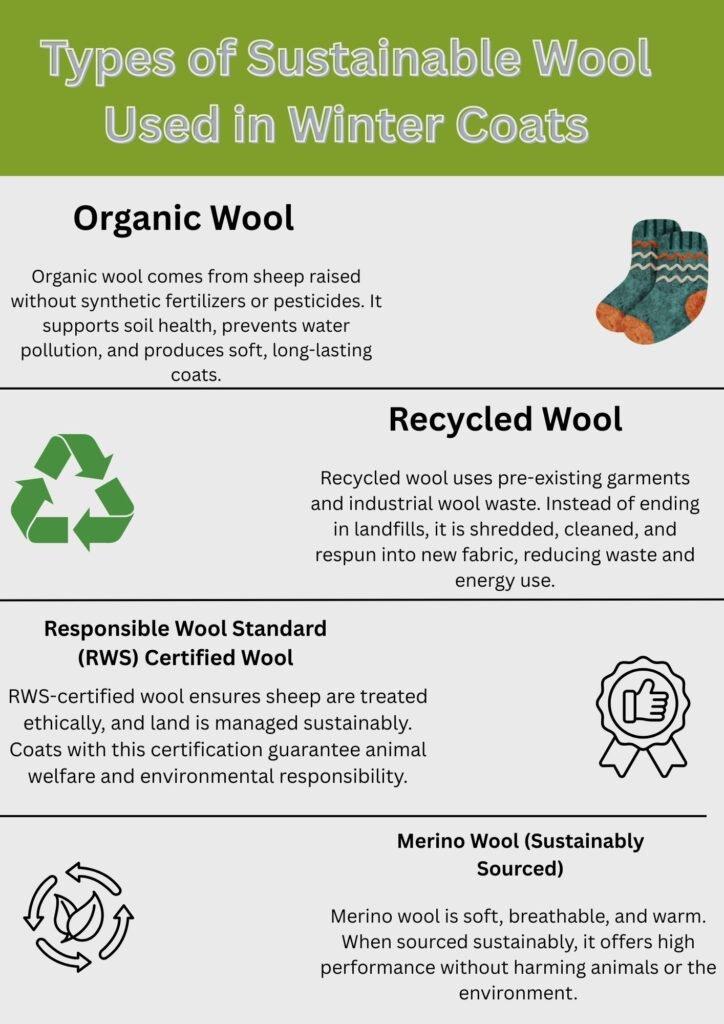
Organic Wool
Organic wool comes from sheep raised without synthetic fertilizers or pesticides. It supports soil health, prevents water pollution, and produces soft, long-lasting coats.
Recycled Wool
Recycled wool uses pre-existing garments and industrial wool waste. Instead of ending in landfills, it is shredded, cleaned, and respun into new fabric, reducing waste and energy use.
Responsible Wool Standard (RWS) Certified Wool
RWS-certified wool ensures sheep are treated ethically, and land is managed sustainably. Coats with this certification guarantee animal welfare and environmental responsibility.
Merino Wool (Sustainably Sourced)
Merino wool is soft, breathable, and warm. When sourced sustainably, it offers high performance without harming animals or the environment.
How Sustainable Wool Winter Coats Keep You Warm
A Sustainable Wool Winter Coat is widely celebrated not only for its ethical and environmental qualities but also for its exceptional ability to keep the wearer warm in cold weather. Wool, as a natural fiber, has remarkable insulating properties that make it one of the most effective materials for winter outerwear.Sustainable Wool Winter Coat: Each wool fiber contains tiny air pockets, which act as natural insulators, trapping body heat and preventing it from escaping into the surrounding cold air. This structure creates a microclimate around the body, allowing the coat to provide consistent warmth even in freezing temperatures.
Another reason wool coats maintain warmth so effectively is their inherent breathability. Wool fibers can absorb up to 30 percent of their weight in moisture without feeling wet, which helps regulate body temperature by drawing sweat away from the skin. This moisture management prevents the uncomfortable clammy feeling that often occurs with synthetic coats. It also allows the body to stay warm without overheating. Sustainable Wool Winter Coat:In addition, wool can release moisture back into the air as it evaporates, maintaining a balanced internal temperature. For people living in climates with fluctuating winter conditions, this ability to regulate heat and moisture makes a Sustainable Wool Winter Coat particularly practical and reliable.

Environmental Benefits of Sustainable Wool Coats
Sustainable wool coats are not only stylish and warm but also significantly better for the environment compared to conventional wool or synthetic winter wear. From reducing carbon emissions to preventing microplastic pollution, these coats contribute to a greener, more eco-conscious wardrobe. Choosing a Sustainable Wool Winter Coat goes beyond personal comfort it’s a meaningful way to reduce your ecological footprint and support environmentally responsible fashion.
Reduced Carbon Footprint
One of the primary environmental benefits of sustainable wool coats is their lower carbon footprint. Farms producing ethically sourced wool often follow regenerative practices that enrich soil, promote biodiversity, and reduce greenhouse gas emissions. Sheep grazing on well-managed pastures contribute to soil health by naturally fertilizing the land and maintaining vegetation. Additionally, many sustainable wool producers rely on renewable energy sources in the processing and manufacturing stages, further minimizing carbon emissions. Compared to synthetic coats made from petroleum-based materials, which require significant energy and emit high levels of greenhouse gases, a sustainable wool coat is a much cleaner and eco-friendly option.
Biodegradable and Renewable Material
Unlike synthetic winter coats that can persist in landfills for decades, wool is 100% biodegradable. When a wool coat reaches the end of its life, it naturally decomposes and returns nutrients to the soil, making it a renewable resource.Sustainable Wool Winter Coat: Wool production is also renewable because sheep can be shorn annually without harm, producing a steady supply of fiber year after year. This renewable and biodegradable nature ensures that a sustainable wool coat leaves a minimal environmental footprint throughout its lifecycle, unlike synthetic alternatives that contribute to long-term waste and pollution.
Less Microplastic Pollution
A growing concern with synthetic coats is the shedding of microplastics during washing and wear. These tiny fibers often end up in rivers and oceans, harming aquatic life and entering the food chain. Wool, being a natural fiber, does not shed harmful microplastics. By choosing a Sustainable Wool Winter Coat, consumers help reduce this type of pollution, supporting healthier ecosystems and cleaner waterways. Additionally, wool fibers can be recycled or repurposed at the end of the coat’s life, further reducing waste and environmental impact.
Water and Energy Conservation
The production of sustainable wool coats also tends to use less water and energy compared to conventional methods. Organic or responsibly sourced wool farms avoid chemical fertilizers and pesticides, which reduces water contamination and promotes better water management on the farm. Moreover, energy-efficient manufacturing processes and low-impact dyeing techniques further reduce the environmental footprint of the final garment. This contrasts sharply with synthetic coats, which often rely on energy-intensive production, chemical processing, and water-heavy treatments that strain ecosystems.
Animal Welfare and Fair Labor
A Sustainable Wool Winter Coat is not only beneficial for the environment but also carries significant ethical advantages, particularly concerning animal welfare and fair labor practices. The fashion industry has long been criticized for exploiting both animals and workers, often prioritizing speed and profit over ethics. Conventional wool production has sometimes involved inhumane practices such as mulesing, poor living conditions for sheep, and unsafe or underpaid labor in manufacturing facilities.Sustainable Wool Winter Coat: Sustainable wool coats, on the other hand, address these issues by ensuring that both the animals and the people involved in producing the garment are treated responsibly, making ethical considerations a central feature of these coats.
One of the primary ethical benefits of a sustainable wool coat is the avoidance of mulesing, a controversial procedure in which strips of skin are removed from a sheep to prevent parasitic infestations. While mulesing has been common in some wool production systems, it causes significant pain and stress to the animals.
Sustainable Wool vs Synthetic Winter Coats
| Feature | Sustainable Wool | Synthetic Coats |
| Warmth | High | Medium–High |
| Breathability | Excellent | Low |
| Eco-impact | Low | High |
Sustainable wool offers superior warmth, durability, and eco-consciousness compared to synthetic coats.
Key Features to Look for in a Sustainable Wool Winter Coat
When choosing a Sustainable Wool Winter Coat, understanding the key features can make a significant difference in both comfort and long-term value. Sustainable wool coats are an investment, and selecting the right one ensures that the garment will provide warmth, style, durability, and environmental benefits for many years.Sustainable Wool Winter Coat: Unlike conventional coats, which may prioritize aesthetics or low cost over quality and sustainability, a truly sustainable wool coat integrates ethical sourcing, functional design, and eco-conscious materials. Paying attention to these features allows buyers to make informed decisions that benefit not only themselves but also the planet and the people involved in producing the garment.
One of the most important features to consider is certification. Look for coats made from wool that carries recognized ethical and environmental certifications, such as the Responsible Wool Standard (RWS), Global Organic Textile Standard (GOTS), or Fair Trade. These certifications confirm that the wool comes from farms and producers that adhere to strict standards for animal welfare, sustainable land management, and fair labor practices. Choosing a coat with verified certification ensures transparency in the production process and reassures the buyer that the garment meets high ethical standards. Sustainable Wool Winter Coat:Certification also often guarantees that the fibers are free from harmful chemicals, making the coat safer and more comfortable to wear.

Best Sustainable Wool Winter Coat Styles
Sustainable wool coats are not only eco-conscious and warm but also incredibly versatile in style. Today’s fashion combines ethical production with timeless designs, allowing individuals to express their personal style while making environmentally responsible choices. A Sustainable Wool Winter Coat comes in a variety of styles, each offering different benefits in terms of warmth, fit, and versatility. Understanding the most popular and functional designs can help you select a coat that complements your lifestyle, wardrobe, and climate.
Long Wool Coats
Long wool coats are a classic choice for those seeking full-body coverage and maximum warmth. They typically extend below the knee or even to the ankles, providing superior insulation during harsh winter months. Long coats are ideal for city living, commuting, or walking outdoors in cold weather. The extra length protects against wind and snow while maintaining elegance and sophistication.Sustainable Wool Winter Coat: They pair seamlessly with boots, scarves, and layered outfits, making them versatile for both casual and formal occasions. Sustainable long wool coats are often designed with clean lines and neutral colors, ensuring they remain fashionable year after year.
Wool Trench Coats
Wool trench coats combine functionality with professional style. Traditionally inspired by military outerwear, the trench coat features a tailored fit, belted waist, and buttoned front, which provides a structured yet comfortable silhouette. Wool trench coats are perfect for office wear, business meetings, and formal events, as they effortlessly complement suits, dresses, or dress pants. The combination of wool’s natural insulation and the trench coat’s design allows for warmth without excessive bulk. Many sustainable trench coats use certified organic or responsibly sourced wool, making them an ethical choice that does not compromise on style.
Wool Pea Coats
Wool pea coats are shorter, double-breasted coats that typically reach the hips or mid-thigh. Originally worn by sailors for their practicality and warmth at sea, pea coats are now a fashionable option for casual and semi-formal winter wear. They offer a cozy, structured fit that works well for layering over sweaters, shirts, or light jackets. Pea coats are often made from heavy, densely woven wool that provides excellent insulation, making them suitable for cold city winters.Sustainable Wool Winter Coat: Choosing a sustainable wool pea coat ensures you enjoy both comfort and ethical production practices, including mulesing-free wool and environmentally responsible manufacturing.
Minimalist and Timeless Designs
Minimalist wool coats focus on simplicity, clean lines, and versatility. These designs often avoid excessive embellishments, trendy colors, or seasonal patterns, allowing the coat to remain stylish for years. Timeless coats work well with a variety of outfits, from casual to professional, making them a practical and sustainable choice. Neutral shades such as black, gray, beige, or navy enhance their adaptability while reducing the likelihood of replacing the coat due to changing fashion trends. By choosing a timeless, minimalist sustainable wool coat, buyers maximize both wearability and environmental responsibility.
How to Care for a Sustainable Wool Coat
A Sustainable Wool Winter Coat is an investment in both warmth and ethical fashion. Proper care ensures that the coat remains soft, durable, and stylish for many years, while also supporting sustainability by reducing the need for frequent replacements. Unlike synthetic coats, which may wear out quickly or require harsh chemicals to maintain, wool is naturally resilient when treated correctly. By following careful care routines, you can protect your coat, extend its lifespan, and keep it looking fresh season after season.
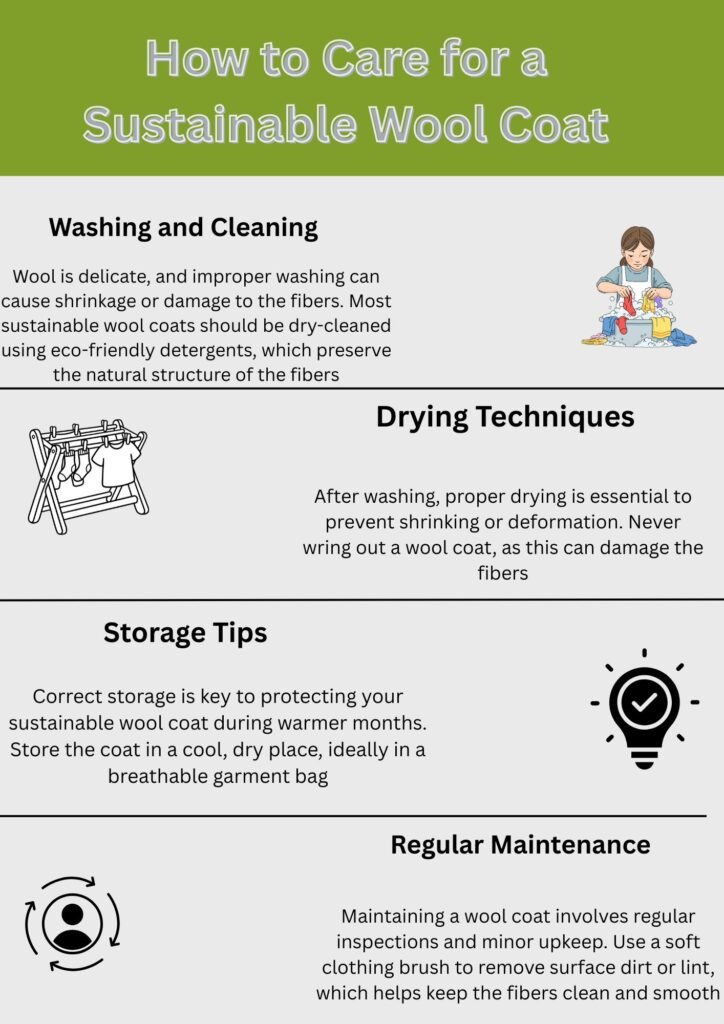
Washing and Cleaning
Wool is delicate, and improper washing can cause shrinkage or damage to the fibers. Most sustainable wool coats should be dry-cleaned using eco-friendly detergents, which preserve the natural structure of the fibers. If washing at home, use cold water and gentle wool-specific detergents, avoiding bleach or harsh chemicals. Hand washing is recommended for small stains, using light motions rather than scrubbing. Avoid frequent washing; often, airing out the coat is enough to maintain freshness. By cleaning your coat carefully, you maintain both its appearance and its insulating properties.
Drying Techniques
After washing, proper drying is essential to prevent shrinking or deformation. Never wring out a wool coat, as this can damage the fibers. Instead, gently press out excess water and lay the coat flat on a clean towel to air dry. Keep it away from direct sunlight or heat sources, such as radiators, which can weaken the fibers and cause fading. For coats that are only lightly soiled, hanging the coat in a ventilated area and shaking it out can refresh the fibers without washing. Proper drying preserves the coat’s warmth, texture, and longevity.
Storage Tips
Correct storage is key to protecting your sustainable wool coat during warmer months. Store the coat in a cool, dry place, ideally in a breathable garment bag. Avoid plastic bags, as they trap moisture and increase the risk of mildew. Wool is also susceptible to moth damage, so consider using natural repellents like cedar blocks or lavender sachets. Hanging the coat on a wide, padded hanger helps maintain its shape, preventing shoulder dimples or stretched seams. Proper storage ensures the coat stays in pristine condition and ready to wear each winter.
Regular Maintenance
Maintaining a wool coat involves regular inspections and minor upkeep. Use a soft clothing brush to remove surface dirt or lint, which helps keep the fibers clean and smooth. If pills form on the surface, gently remove them with a fabric comb or shaver designed for wool. Check seams, buttons, and zippers periodically for loose threads or wear, repairing minor issues promptly. Routine maintenance prevents small problems from becoming permanent damage, extending the coat’s lifespan and maintaining its aesthetic appeal.
Are Sustainable Wool Winter Coats Worth the Price?
Though expensive upfront, sustainable coats provide long-term value.
Cost vs Longevity
High-quality wool coats last 10–15 years, reducing the need for replacements.
Cost-Per-Wear
Dividing the price by usage shows that sustainable coats are economical compared to synthetics.
Long-Term Benefits
Durable, stylish, and eco-friendly coats save money and support sustainability over time.
Common Myths About Sustainable Wool Coats
Misconceptions prevent some from choosing wool coats.

Wool is Itchy
Modern Merino and organic wool are soft and comfortable against skin. Proper lining adds extra comfort.
Eco-Friendly Coats Aren’t Warm
Wool naturally traps heat, keeping you cozy without synthetic insulation.
Sustainable Fashion is Too Expensive
Higher initial cost is offset by durability, timeless design, and eco-conscious value.
Conclusion
A Sustainable Wool Winter Coat combines warmth, style, and eco-conscious responsibility. Wool provides natural insulation, breathability, and long-lasting durability. Beyond personal comfort, sustainable coats reduce environmental impact, support fair labor, and promote animal welfare. Choosing a sustainable wool coat is not just a fashion statement it is a commitment to the planet. Investing in a responsibly sourced, high-quality wool coat embraces a greener lifestyle while keeping you warm, stylish, and comfortable all winter.
FAQs
Are sustainable wool winter coats warm enough?
Yes, they trap heat naturally and regulate temperature effectively.
Is wool environmentally friendly?
Sustainably sourced wool is biodegradable, renewable, and low impact.
How long does a wool winter coat last?
With proper care, it can last 10–15 years.
Can wool coats be worn in heavy snow?
Yes, especially with layering or water-resistant treatment.
Is recycled wool durable?
Yes, recycled wool retains strength, warmth, and long-term usability.
Do sustainable wool coats support animal welfare?
Yes, they come from mulesing-free and ethically managed sheep farms.