
Snow-resistant fabric is a special textile designed to repel snow and prevent moisture buildup. It helps keep clothing dry when snow touches the surface. Unlike normal winter fabric, it does not absorb snow easily. Instead, it pushes snow away and reduces wetness. That is why many winter coats use it for protection.
Snow-Resistant Fabric Explained in simple words means fabric that resists snow sticking and melting into water. Snow can melt quickly when it touches body heat. Snow-Resistant Fabric Explained:As a result, it can soak clothing if the fabric absorbs moisture. However, snow-resistant fabric slows this process. It keeps you comfortable for a longer time outdoors.Snow-Resistant Fabric Explained:
Snow resistance matters because wet clothing causes heat loss. Additionally, damp fabric feels heavy and cold. Therefore, snow-resistant clothing helps maintain warmth.Snow-Resistant Fabric Explained: It also improves comfort during winter sports and daily use.
Many people confuse snow-resistant and water-resistant fabrics. However, they are not the same. Water-resistant fabric handles light moisture like drizzle. On the other hand, snow-resistant fabric focuses more on repelling snowflakes and slush. It works best in snowy climates rather than rainy ones.
History Snow-Resistant Fabric
Snow-resistant fabric has a history that begins with basic human survival in cold and snowy climates. Long before modern technology existed, people living in harsh winters understood that warmth alone was not enough. They quickly learned that wet clothing could become dangerous because moisture pulls heat away from the body. Because of this, early humans depended on natural materials like animal hides and fur. These materials helped block wind and also reduced the direct contact of snow with the skin. Snow-Resistant Fabric Explained:Fur was especially useful because it trapped warm air and allowed snow to sit on the surface instead of soaking in quickly.
As communities developed, wool became one of the most valuable winter textiles. Wool naturally contains lanolin, which is an oily substance that repels water. This gave wool a natural advantage in snowy environments. Even when wool became slightly damp, it still held warmth better than cotton or plant-based fibers.
How Snow-Resistant Fabric Works (Snow-Resistant Fabric Explained Clearly)
Snow-resistant fabric works through smart fabric structure and surface treatments. Firstly, manufacturers create tight weaves that block snow particles. These weaves reduce the spaces between threads. As a result, snow cannot enter easily. Instead, it stays on top of the fabric.Snow-Resistant Fabric Explained:
Additionally, many brands apply chemical coatings like DWR. Snow-Resistant Fabric Explained:DWR means Durable Water Repellent. This coating creates a hydrophobic layer on the surface. Therefore, snow and moisture form beads rather than soaking in. This bead effect helps snow slide off quickly.
Secondly, some snow-resistant fabrics use laminates or membranes. These layers sit inside the fabric system. They act as a barrier between outer fabric and inner insulation. As a result, melting snow does not reach your body. This improves comfort during heavy snowfall.
Moreover, the fabric surface often feels smooth and slick. This design prevents snow from sticking. Snow cannot grip the fabric fibers strongly. Therefore, it falls away with movement or wind. This is very useful for skiing and hiking.

History Of Snow-Resistant Fabric
Snow-resistant fabric has a long history that connects directly with human survival in cold climates. Since ancient times, people living in snowy regions understood that staying dry was just as important as staying warm.Snow-Resistant Fabric Explained: Early winter clothing was made from animal skins, fur, and thick wool because these materials naturally provided insulation. However, even though they offered warmth, they often became heavy when exposed to snow. As a result, people started searching for better solutions that could prevent snow from soaking into clothing.
In early civilizations, especially in Northern Europe and parts of Central Asia, wool became one of the most important winter materials. Wool fibers have natural oils that help repel moisture. Because of this, wool clothing stayed warmer even when it became slightly damp. Additionally, fur garments were commonly worn because fur could trap heat and also reduce snow contact with the skin. Still, these materials were not perfect. Snow could melt and enter the fabric, which caused discomfort and heat loss. Snow-Resistant Fabric Explained:Therefore, the need for more snow-resistant clothing continued to grow.
Key Features of Snow-Resistant Fabrics (Featured Snippet Section)
Snow-resistant fabrics include several important features that improve winter performance. Firstly, they repel snow and reduce wetness. Secondly, they block cold wind and keep heat inside. Additionally, they dry faster than normal fabrics. These features make them practical for daily winter life.
Hydrophobic Surface (Snow-Resistant Fabric Explained Feature)
A hydrophobic surface pushes water and melted snow away. It prevents moisture from sinking into fibers. As a result, snow stays on the surface. This keeps the fabric dry for longer.
Moisture Repellency
Moisture repellency means the fabric resists wet snow and slush. It reduces soaking during outdoor movement. Therefore, your jacket feels lighter. Additionally, it reduces cold discomfort.
Wind Protection
Snow often comes with strong winter winds. Therefore, snow-resistant fabrics often include wind-blocking layers. This reduces heat loss from your body. As a result, you stay warmer.
Breathability
Breathability allows sweat vapor to escape from inside. This prevents dampness from building up. Additionally, it reduces overheating during activities. Therefore, breathable snow-resistant fabric improves comfort.
Lightweight vs Heavy-Duty Options
Some snow-resistant fabrics are light and flexible. They suit casual wear and daily walking. However, heavy-duty versions use stronger coatings and thicker weaves.Snow-Resistant Fabric Explained: These options work better for skiing and extreme conditions.
Types of Snow-Resistant Fabrics (Very Important for SEO)
Understanding fabric types helps you choose the best winter gear.Snow-Resistant Fabric Explained: Each type offers a different balance of warmth, comfort, and protection. Therefore, knowing these categories improves buying decisions. Additionally, it helps you match fabric with your activity level. Below are the most common types used today.
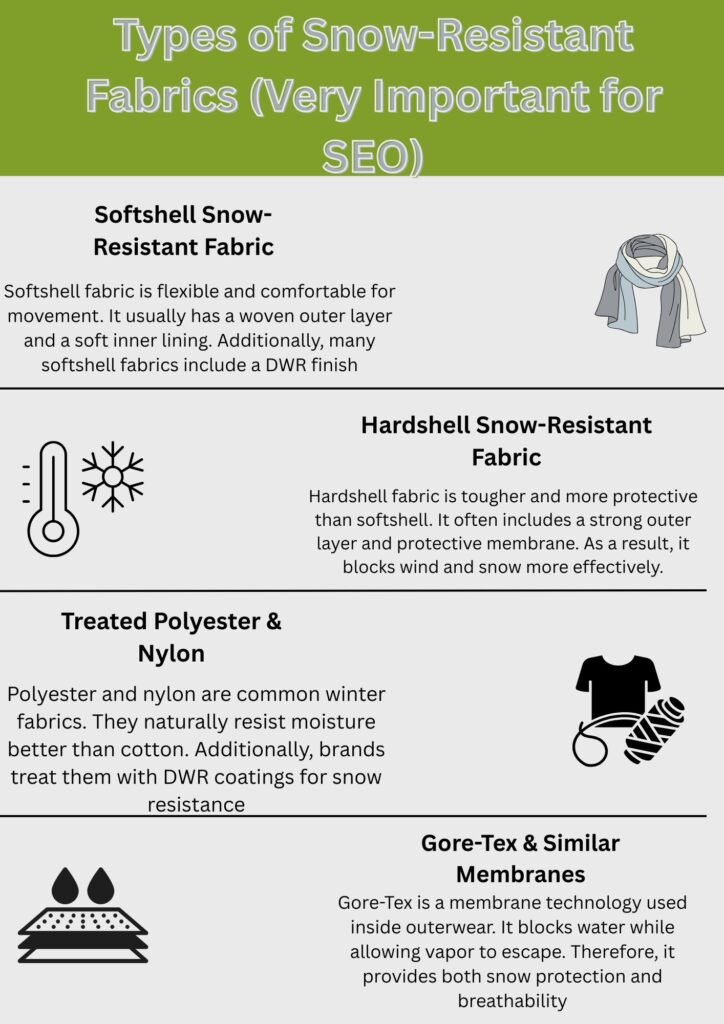
Softshell Snow-Resistant Fabric
Softshell fabric is flexible and comfortable for movement. It usually has a woven outer layer and a soft inner lining. Additionally, many softshell fabrics include a DWR finish. This helps repel snow during light snowfall.
Softshell works well for hiking and active winter use. It stretches easily and feels breathable. However, it may not handle heavy wet snow for long. Therefore, it suits dry snow conditions best.
Hardshell Snow-Resistant Fabric
Hardshell fabric is tougher and more protective than softshell. It often includes a strong outer layer and protective membrane. As a result, it blocks wind and snow more effectively.Snow-Resistant Fabric Explained: It also resists abrasion from rocks or ski edges.
Hardshell is common in ski jackets and mountaineering gear. It works well in harsh weather. However, it can feel stiff and less breathable. Therefore, people often use layering with hardshell clothing.
Treated Polyester & Nylon
Polyester and nylon are common winter fabrics. They naturally resist moisture better than cotton. Additionally, brands treat them with DWR coatings for snow resistance. This improves performance in snowy environments.
Treated nylon is strong and durable. Therefore, it is used in jackets and snow pants.Snow-Resistant Fabric Explained: Polyester is slightly softer and cheaper. As a result, it appears in casual winter coats and kids’ wear.
Gore-Tex & Similar Membranes
Gore-Tex is a membrane technology used inside outerwear. It blocks water while allowing vapor to escape. Therefore, it provides both snow protection and breathability.Snow-Resistant Fabric Explained: Similar membranes include eVent and other waterproof-breathable layers.
Snow-Resistant vs Waterproof vs Water-Repellent Fabric (Comparison Table)
Many buyers confuse these fabric terms. However, each fabric type has a different performance level. Snow-resistant fabric focuses on snow protection. Waterproof fabric handles heavy rain and pressure. Water-repellent fabric works for light moisture only. Therefore, comparing them helps you choose correctly.
| Feature | Snow-Resistant Fabric | Waterproof Fabric | Water-Repellent Fabric |
|---|---|---|---|
| Snow Resistance | High | High | Medium |
| Water Pressure Handling | Low to Medium | Very High | Low |
| Breathability | Medium to High | Medium | High |
| Best Use Cases | Snowy weather, winter coats | Rainstorms, extreme snow | Light drizzle, casual wear |
Snow-resistant fabric performs best in cold snow environments. Snow-Resistant Fabric Explained:Additionally, it feels lighter than full waterproof fabric. Waterproof fabric offers stronger protection but may trap heat. Water-repellent fabric works for quick outdoor use only.
Best Uses of Snow-Resistant Fabric (Where It Works Best)
Snow-resistant fabrics are widely used in winter clothing and outdoor gear. They provide comfort, warmth, and protection during snowfall. Additionally, they reduce clothing weight by keeping moisture out. This makes them useful for both adults and children.

Winter Jackets & Coats
Snow-resistant fabric is perfect for winter coats. It prevents snow buildup on shoulders and sleeves. As a result, the coat stays dry and warm. It also reduces the need for heavy waterproof layers.
Ski & Snowboard Apparel
Ski jackets and pants often use snow-resistant shells. These fabrics help snow slide off while moving downhill. Additionally, they protect against wind chill. Therefore, they improve comfort in cold ski resorts.
Hiking & Trekking Gear
Hiking in winter requires breathable fabric. Snow-resistant softshell gear works well for trekking. It allows sweat to escape while blocking snow. As a result, hikers stay warm without overheating.Snow-Resistant Fabric Explained:
Gloves, Pants & Footwear
Snow-resistant gloves prevent wet fingers in snowy conditions. Pants with treated fabric resist snow when kneeling or sitting. Additionally, snow-resistant footwear uppers reduce slush soaking. Therefore, they improve daily winter comfort.
Kids’ Winter Clothing
Kids play directly in snow for long periods. Therefore, snow-resistant fabric is very useful for them. It keeps their jackets and pants drier during playtime. As a result, children stay warm and active longer.
Is Snow-Resistant Fabric Good for Extreme Cold? (Snow-Resistant Fabric Explained for Harsh Winters)
Snow-resistant fabric works well in extreme cold when paired correctly. Firstly, it prevents snow from melting into your clothing. This keeps your outer layer dry. As a result, you lose less body heat. This matters greatly in freezing temperatures.
In heavy snowfall, snow-resistant fabric performs better than regular fabric. However, wet snow can still soak through over time. Therefore, waterproof fabric may be better for constant wet exposure. Still, snow-resistant fabric works well in most dry snow climates.Snow-Resistant Fabric Explained:
Layering compatibility is another big advantage. Snow-resistant shells work perfectly with insulation layers. You can wear fleece, down, or synthetic insulation underneath. Additionally, you can adjust layers based on temperature changes.Snow-Resistant Fabric Explained: This gives better flexibility during outdoor activities.
For insulation pairing, choose synthetic insulation for wet snow areas. Synthetic fill stays warm even when slightly damp. Down insulation offers better warmth but loses performance when wet. Therefore, snow-resistant fabric combined with synthetic insulation works best for unpredictable snow.
Overall, snow-resistant fabric is good for extreme cold if you layer smartly. Additionally, it works best in dry snow climates and windy regions.
Pros and Cons of Snow-Resistant Fabric
Snow-resistant fabric offers many benefits for winter users. However, it also has limitations. Therefore, you should understand both sides before buying. This helps you avoid disappointment later. Additionally, it ensures you choose the right fabric type.
Pros of Snow-Resistant Fabric
Snow-resistant fabric feels lightweight and comfortable. It allows easy movement during sports and daily walking. Additionally, it dries quickly after snow exposure.Snow-Resistant Fabric Explained: This prevents heavy, wet clothing issues.
It is also more affordable than fully waterproof fabric. Therefore, many people choose it for casual winter use. It provides good protection without high cost. As a result, it becomes a smart budget-friendly option.
Cons of Snow-Resistant Fabric
Snow-resistant fabric is not fully waterproof. Therefore, it may fail in heavy rain or wet slush. After long exposure, moisture can soak through. This can reduce warmth and comfort.
It also needs re-treatment over time. DWR coatings wear off after washing and use. Therefore, maintenance becomes necessary. Without care, the fabric may lose its snow resistance.
How to Choose the Best Snow-Resistant Fabric (Buyer Guide)
Choosing the best snow-resistant fabric depends on your climate and lifestyle. Firstly, consider how much snowfall your area receives. Dry snow climates allow lighter fabrics. Snow-Resistant Fabric Explained:However, wet snow areas require stronger coatings. Therefore, climate is the first deciding factor.
Activity level also matters. If you walk casually in the city, a softshell coat works well. It feels comfortable and breathable. However, if you ski or hike often, you need stronger hardshell fabric. Additionally, membranes like Gore-Tex provide better performance for sports.Snow-Resistant Fabric Explained:
Breathability needs should guide your choice too. Active users sweat more during movement. Therefore, breathable fabrics prevent moisture buildup inside. If you ignore breathability, you may feel damp and cold later.
Budget is another important factor. Premium snow-resistant fabrics cost more due to membranes and advanced coatings. However, treated polyester jackets offer affordable protection. Therefore, choose based on how often you will use the clothing.Snow-Resistant Fabric Explained:
Common Myths About Snow-Resistant Fabric
Many myths confuse buyers and reduce trust. Therefore, clearing these myths helps people choose correctly. Additionally, it improves understanding of fabric performance. Below are the most common misunderstandings.

Myth 1: “Snow-resistant means waterproof”
Snow-resistant fabric repels snow but does not block strong water pressure. Therefore, it is not the same as waterproof fabric. It works best in snowy conditions, not heavy rain.
Myth 2: “It doesn’t need maintenance”
Snow-resistant coatings wear down over time. Washing and friction reduce DWR performance. Therefore, re-treatment is necessary for long-term protection.
Myth 3: “Only for skiing”
Snow-resistant fabric works for many uses beyond skiing. It suits daily winter wear, kids’ clothing, and hiking gear. Therefore, it is a practical option for everyone.
How to Care for Snow-Resistant Fabrics (Care Tips That Matter)
Snow-resistant clothing can last for many winters if you care for it properly. However, many people damage the fabric without realizing it. Harsh detergents, wrong washing cycles, and heat can reduce snow protection quickly. Snow-Resistant Fabric Explained:Therefore, you must follow correct cleaning and maintenance methods. Additionally, proper care helps the fabric stay breathable and lightweight. Snow-Resistant Fabric Explained:As a result, your jacket, pants, or gloves will keep repelling snow effectively.
Snow-resistant fabric usually depends on a surface coating like DWR. This coating slowly wears off due to washing and daily use. Because of this, the fabric may start absorbing moisture over time. Still, with simple steps, you can restore its performance easily. If you treat your gear well, it will stay dry, warm, and reliable for longer.
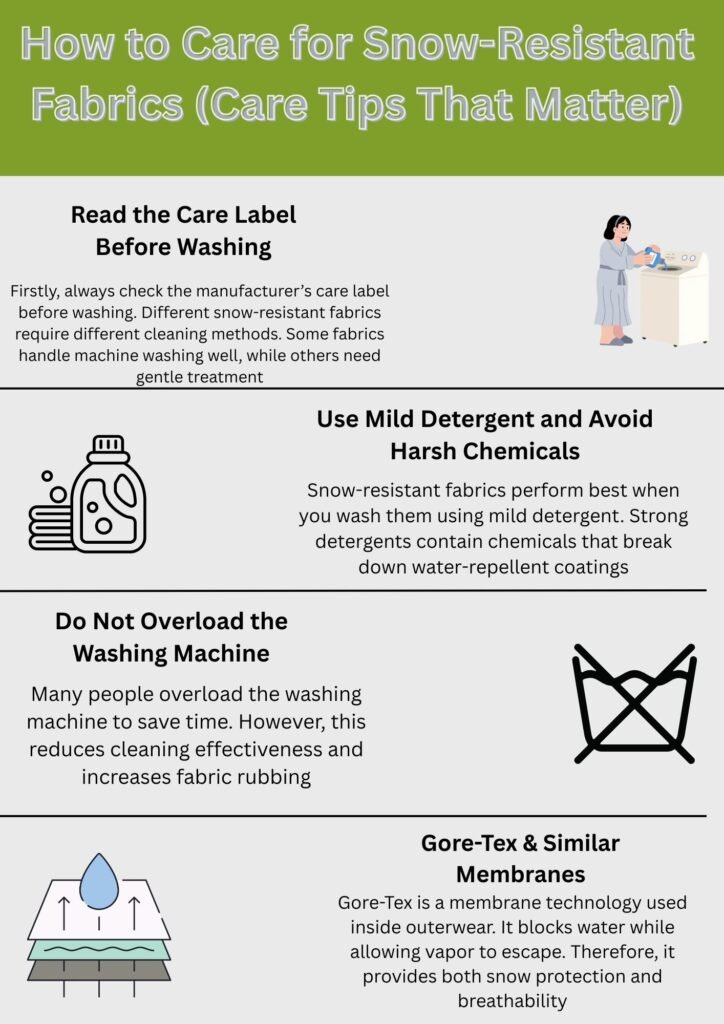
Read the Care Label Before Washing
Firstly, always check the manufacturer’s care label before washing. Different snow-resistant fabrics require different cleaning methods. Snow-Resistant Fabric Explained:Some fabrics handle machine washing well, while others need gentle treatment. Therefore, reading instructions prevents accidental fabric damage.
Use Mild Detergent and Avoid Harsh Chemicals
Snow-resistant fabrics perform best when you wash them using mild detergent. Strong detergents contain chemicals that break down water-repellent coatings. Therefore, your fabric may lose its snow-blocking ability faster.
Wash on a Gentle Cycle with Cold or Warm Water
Secondly, always choose a gentle washing cycle. A rough cycle causes friction that wears out DWR coating quickly. Therefore, the fabric may begin soaking snow instead of repelling it.
Do Not Overload the Washing Machine
Many people overload the washing machine to save time. However, this reduces cleaning effectiveness and increases fabric rubbing. Therefore, snow-resistant clothing may lose its protective layer sooner.
Conclusion
Snow-resistant fabric is a smart winter choice for many people. It repels snow, reduces moisture buildup, and keeps clothing lighter. Additionally, it blocks wind and improves comfort in cold weather. That is why it is widely used in winter jackets and outdoor gear.
Snow-Resistant Fabric Explained clearly shows that it works best in snowy climates. It performs well for casual winter wear and outdoor sports. However, it does not replace waterproof fabric in heavy rain. Therefore, buyers should match fabric choice with weather conditions.
FAQs
Is snow-resistant fabric waterproof?
No, snow-resistant fabric is not fully waterproof. It repels snow and light moisture. However, heavy rain can soak through. Therefore, waterproof fabric works better in wet storms.
Can snow-resistant fabric handle rain?
It can handle light rain for a short time. However, it struggles against long rainfall exposure. As a result, water may enter through seams. Therefore, it is better for snow than rain.
How long does snow resistance last?
Snow resistance can last months or years depending on use. Frequent washing reduces coating strength. Therefore, reapplying DWR helps extend performance. Proper care can keep it effective longer.
Is it suitable for daily winter wear?
Yes, snow-resistant fabric is great for daily winter wear. It feels comfortable, lightweight, and warm. Additionally, it protects well in snowfall. Therefore, it is ideal for everyday winter coats.