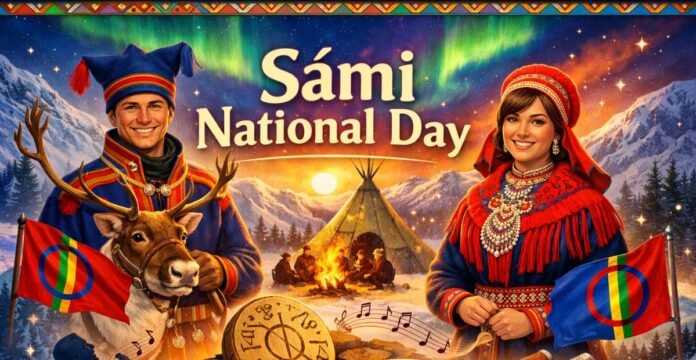
Sámi National Day happens every February 6. It is a day that honors the people and history of the Sámi, an indigenous group who live in the northernmost parts of Norway, Sweden, Finland, and Russia. It is a time to celebrate and to raise awareness of the Sámi people, their culture, and their rights and heritage.
WHAT IS THE HISTORY OF SÁMI NATIONAL DAY?
The first Sámi National Day was celebrated in 1993 after an agreement was reached at the Sámi Conference in Helsinki. Each year on February 6, the Sámi celebrate the anniversary of the first Sámi congress that took place in Trondheim, Norway, in 1917. This was the first time the representatives of the Sámi people from Norway and Sweden met to discuss their interests and issues.
The Sámi people and their culture have been an important part of history, and to celebrate them is an important part of history as well.
Traditions and Celebrations
Sámi National Day is celebrated with a mix of traditional and modern activities. Some common ways of celebrating include:
- Wearing the Sámi costume (Gákti): Colorful traditional costumes, Gáktis, of the Sámi people vary by region and Gákti family heritage.
- Flag-raising ceremonies: Across Sámi communities, the Sámi flag with its circular sun and moon representation is ceremoniously raised.
- Cultural events: Celebrations especially emphasize the art of Sámi singing, joik, and other parts of the music and dance traditions.
- Food & Craft Shows: Sámi communities and people enjoy local traditional foods (cloudberries, fish and reindeer) and crafts.
Norway, Sweden, and Finland culturally and educationally engage the Sámi history and people through special events and programs in public entities and schools.
The Sámi People and Their Culture
The Sámi National Day have been living in Northern Europe for thousands of years, and have a history as an indigenous people of the region. The Sámi people are culturally, linguistically, and ethnically distinct, with unique ways of dressing and subsisting. Traditionally, most communities engaged in reindeer herding, fishing, hunting, and handicrafts.
Sámi history is full of legends, stories, and other exciting forms of art! One of these artistic manifestations is joik, a type of musical performance which is one of the globally awed and still lived musical practices in Europe today!
Why is Sámi National Day Important?
For the Sámi people, it is a celebration of their strength and resilience over the years, as well as a celebration of all the injustices they continue to face and the injustices they continue to face. In the past, the day of celebration has garnered the following types of advocacy:
- Proponents of recognition of the existing and threatened rights of Indigenous peoples.
- Advocates for the preservation and protection of culture and the teaching of culture.
- Advocates for the preservation and protection of culture and the teaching of culture.
It is through the celebration of the day of the Sámi, that people of all walks of life appreciate and honor the people of the Sámi and all the other Indigenous peoples of Europe!
What Can I Do to Celebrate Sámi National Day?
If you would like to honor the Sámi people during their day, all people, here are some activities to engage in.
- Discover the history of the Sámi People: You can go to the library and get some history books or go to the Video Store and get some history Videos!
- Participate in communal activities: Attend community activities such as history storytelling!
- Savor the traditional Sámi dishes: Have a stomach full of delicious Sámi* such as roasted reindeer and dessert.
- Encourage native crafts: Buy Sami crafts such as jewelry, clothes, and other handmade goods.
- Promote activism: Teach people the Sami way of life and how they live and what they do.
With celebration of Sami National Day, we celebrate the native and the fusing of diversified culture.
Conclusion
To the people, Sami Day is not just a holiday but also a time to be with family and to celebrate the heritage and the togetherness of the family. The clothes, the Sami laderhosen, the music, the Saami singing, and the Samische Lieder. All of this brings forward the anthem of the Sami togetherness, The Sami Fells. Celebrating this day is to celebrate the togetherness of the Sami people and as well the togetherness of all people.
Samuche Kille Sami Saame, This is a way to celebrate the togetherness of all people and the culture of Sami people and also brings the positive energy of the all Samu of the World. Learn About: International Days Today – 5 February And International Days Today