In the fashion world of today wool, luxury can no longer be defined by smoothness alone. Instead, the new world of premium is one that’s now defined by sustainability, responsibility and innovation. The point that Recycled Grade A Cashmere Fabric comes in. It provides an unparalleled soft feel that is easy on the environment. Additionally, those brands and their customers get to have luxe feel without adding to waste. This fabric is the future of responsible luxury textiles then, not just a flash-in-the-pan trend.
What is Recycled grade A cashmere Fabric?
Recycled Grade A Cashmere Fabric is a derived fabric that has been used or left over the high quality cashmere. This fiber is meticulously reclaimed, processed and respun to create new yarn. Hence, the glorious feel is maintained. Meanwhile, waste gets slashed.
Recycled Grade A Cashmere Fabric is so-named because its ultra-fine fibers are usually 15 microns in diameter or less. As a result, clothing produced from it is perceived as very soft and comfortable. This premium fiber retains some core properties when recycled. But the environmental impact plummets.
Why Recycled Cashmere Matters Today
The power-hungry textile industry isn’t new. The water and land demands are substantial, as are CO2 emissions. Therefore, innovation is essential. Grade A Cashmere recycled fills this gap.
First, less of the raw materials are needed. Second, landfill waste is minimized. Third, you can save energy when producing it. In addition, there is a promotion of ethical production. These benefits are why sustainable fashion labels everywhere are turning to recycled cashmere.
How Recycled Grade A Cashmere Is Made
It sounds complicated, but the whole point is to keep cabling fibers in one piece.
Collection -Pre-consumer and post-consumer cashmere waste is collected.
Grading – Fibers are sorted by colour and quality.
Cleaning — The material is scrubbed to remove excess dirt.
Shredding – a method in which fabric is reduced to fiber.
Respining – Fibers are re-spun into fresh yarns.
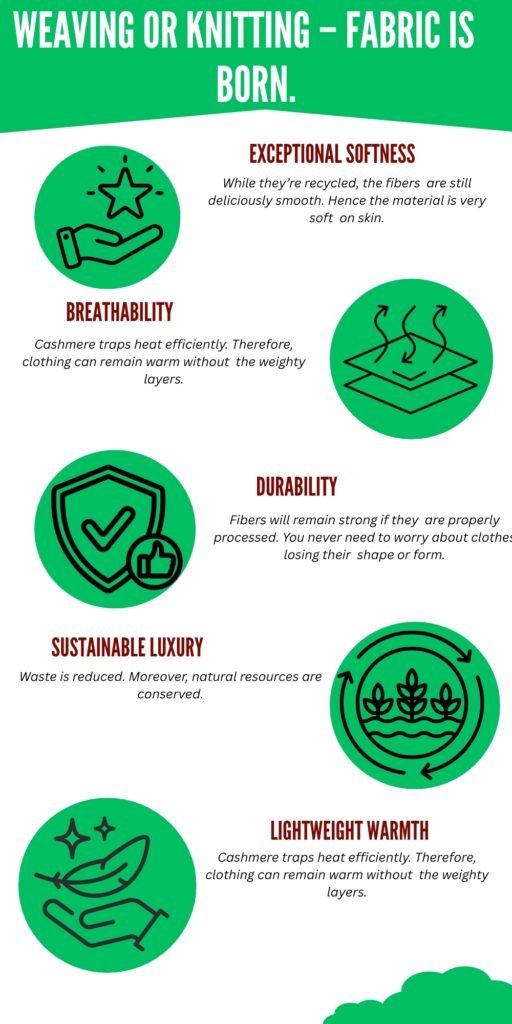
Weaving or Knitting – Fabric is born.
Quality control is ensured during the entire course of these processes. Therefore both softness, durability and elegance is maintained.
Relevant Characteristics of Recycled Grade A Cashmere Fabric
Exceptional Softness
While they’re recycled, the fibers are still deliciously smooth. Hence the material is very soft on skin.
Lightweight Warmth
Cashmere traps heat efficiently. Therefore, clothing can remain warm without the weighty layers.
Breathability
Air circulation is supported. So the material is confortable throughout season.
Durability
Fibers will remain strong if they are properly processed. You never need to worry about clothes losing their shape or form.
Sustainable Luxury
Waste is reduced. Moreover, natural resources are conserved.
Environmental Benefits
Many sided by side and sustainability is the key benefit of recycled from cashmere.
Less Land used – Less goats are needed for fiber output.
Less Water Usage – There is often a reduced water requirement for processing recycled fibers.
Reduced Carbon EmissionsE – nergy requirements are usually reduced.
Less Waste – Textile waste is kept out of landfills.
Due to the aforementioned advantages, this fabric is largely welcomed by environment-friendly labels.
Recycled vs. Virgin Cashmere
Feature Recycled Grade A Cashmere Fabric Virgin Grade A Cashmere Softness Silky soft Super-soft Sustain ability Very high High Resource Usage Less More Environmental Impact Lighter Heavier Luxury Feel That of a premium That of a super-premium
While virgin cashmere is luxurious, recycled cashmere includes environmental responsibility. That’s why it so attracts consumers today.
Applications in Fashion
This Recycled Grade A Cashmere is versatile. It is used more and more by designers throughout their collections.
Sweaters
Scarves
Cardigans
Coats
Loungewear
Accessories
Silhouettes look polished and elegant because the fabric drapes so nicely.
Comfort Meets Responsibility
Comfort is never compromised. Indeed, many consumers can’t tell Recycled Grade A Cashmere Fabric from virgin. But they also value the garment’s sustainability story. As a result, emotional value go up with physical comfort.
The Role of Innovation
Innovative textile technologies allow for high-quality recycling. Fibers are now processed gently. This serves to minimize breakage. Furthermore, mixing with a small amount of virgin fibers will occasionally contribute to intensity. This maintains its robustness and yet retains the sustainable benefits.
Care and Maintenance
Proper care extends garment life.
Hand wash or Gentle cycle
Use mild detergents
Avoid wringing
Dry flat
The fabric stays super-soft for years, if cared for correctly.
Why Brands Choose Recycled Cashmere
Modern consumers demand transparency. Therefore, brands must adapt.
Enhances sustainable brand image
Meets eco-conscious market demands
Reduces production footprint
Adds storytelling value
That is why recycled cashmere also enhances brand identity.
Economic Advantages
Eco-friendly materials are not just good for the planet, they can also save businesses and entrepreneurs money.
Production waste is reduced. Inventory management improves. On the other hand, customers are often willing to pay a premium for sustainable products. Hence, profitability aligns with responsibility.
Luxury Without Guilt
Today’s consumers want indulgence, but not at the expense of the planet. This we achieve with our Recycled Grade A Cashmere. Softness is enjoyed. Style is maintained. Meanwhile, ecological impact is reduced.
Global Market Growth
The demand for eco-friendly fabrics is growing. According to news, environmentally frindly fabrics are capturing vast market share. So recycled cashmere is set for high growth.
Ethical Production
Responsible sourcing practices are encouraged. Many of the workers are treated under decent conditions. And, as an added benefit, trust is built through transparent supply chains. Therefore, ethical worthiness increases product attractiveness.
Texture and Appearance
The surface is smooth and polished. Fibers take color well and colors appear rich. And advanced finishing technology prevents pilling.
Performance Benefits
Excellent insulation
Moisture regulation
Odor resistance
Soft touch
Thus, functionality complements elegance.
Future of Recycled Luxury Fabrics
Sustainability is no longer optional. It is a quality characteristic of expensive fabrics, not the other way around. Recycled Grade A Cashmere Fabric is beginning the charge. Innovations will continue. Processes will improve. So, quality and sustainability will develop together.
Conclusion
Recycled Grade A Cashmere Fabric offers a testament to the fact that luxury and sustainability can co-mingle. It provides remarkably soft warmth with an elegant appearance. At the same time, environment is not damaging. Hence, it’s the next-generation of luxury sustainable fashion. Brands benefit. Consumers feel confident. The planet gains relief. Indeed, this fabric is the true meaning of luxury.
FAQs
What is Recycled Grade A Cashmere Fabric?
It is premium cashmere made from previously used or surplus fibers, processed to maintain softness and quality.
What are the environmental benefits of Recycled Grade A Cashmere Fabric?
It reduces waste, lowers water and energy consumption, and conserves natural resources.
How is Recycled Grade A Cashmere Fabric made?
Fibers are collected, sorted, cleaned, shredded, respun, and then woven or knitted into new fabric.