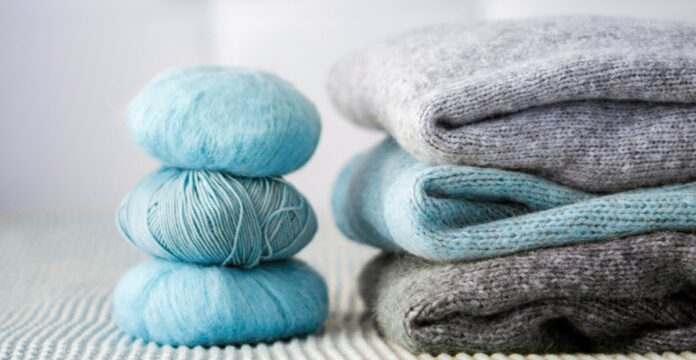
Pure Grade A Cashmere Wool Fabric for Premium Fashion Wear is the ultimate in textile luxury. This premium fabric is renowned for its softness, warmth and durability. Designers, luxury brands and discerning customers have long favored it. Cashmere is the only fabric that truly offers unmatched comfort and style. Understanding its benefits, characteristics, and production process is important for anyone looking for the best fabric.
This comprehensive guide will show you how to produce Pure Grade A Cashmere Wool Fabric and why this fabric continues to dominate the luxury market.
What is pure Grade A Cashmere wool fabric?
The finest undercoat fibres of the cashmere goat are used to make this fabric. It is sourced mainly from Mongolia, Inner Mongolia and selected regions in Central Asia. These fibers are collected carefully during the natural molting period, to ensure that the goats do not suffer any harm.
The Pure Grade A Cashmere Wool Fabric for Premium Fashion Wear are much thinner and lighter than lower grades. They measure between 14-15 microns. This fabric is incredibly soft and smooth on the skin.
Moreover, the durability of the fabric is greatly improved by selecting only fibers that are long and strong. The fabric will retain its beauty over many years.
Cashmere Grade A: What Does it Mean?
Pure Grade A Cashmere Wool Fabric for Premium Fashion Wear is crucial. The highest classification is Grade A, while Grade B or Grade C represents coarser fibers.
Cashmere Grade A: Key Characteristics
- The diameter of the fibers is extremely fine
- Longer staple length
- Softness and warmth are superior
- Minimal pilling over time
- Enhance durability and resilience
Pure Grade A Cashmere Wool Fabric for Premium Fashion Wear is used for high-end garments like coats, scarves and shawls.
Cashmere wool is a pure grade A.
Cashmere’s quality begins at the source. Cashmere goats that live in harsh climates have a thick undercoat so they can survive the freezing temperatures. Colder climates naturally produce finer fibres.
Ethical and Sustainable Harvesting
Hand-combing is a traditional, ethical way to collect cashmere. During the process, loose fibres are removed gently. The fiber quality and animal welfare are preserved.
A growing number of herding practices that are sustainable are being adopted. Cashmere Grade A Fabric is now in line with modern environmental standards.
Cashmere fabric is manufactured using pure grade A cashmere.
From raw fibers to luxurious fabrics, the journey involves many meticulous steps. To maintain high quality, each stage is closely monitored.
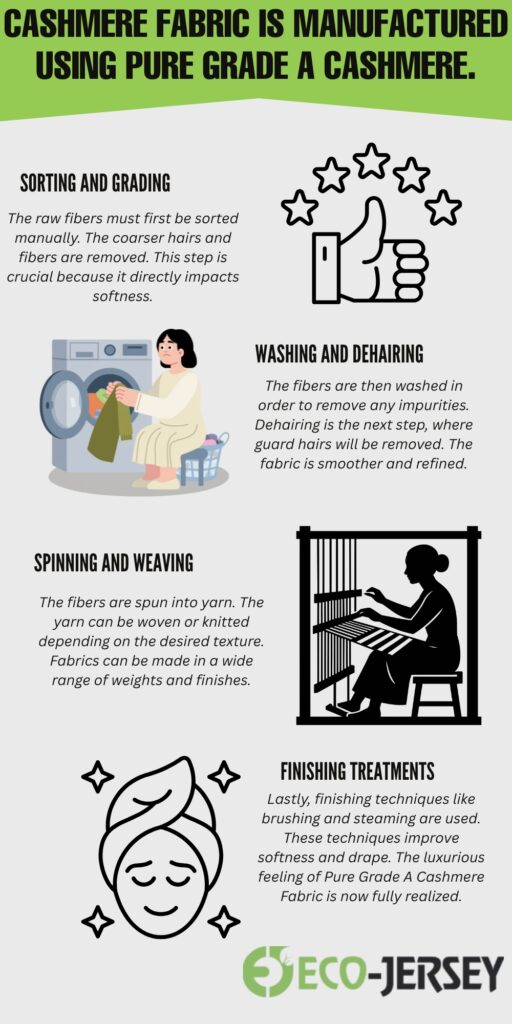
1. Sorting and Grading
The raw fibers must first be sorted manually. The coarser hairs and fibers are removed. This step is crucial because it directly impacts softness.
2. Washing and Dehairing
The fibers are then washed in order to remove any impurities. Dehairing is the next step, where guard hairs will be removed. The fabric is smoother and refined.
3. Spinning and Weaving
The fibers are spun into yarn. The yarn can be woven or knitted depending on the desired texture. Fabrics can be made in a wide range of weights and finishes.
4. Finishing Treatments
Lastly, finishing techniques like brushing and steaming are used. These techniques improve softness and drape. The luxurious feeling of Pure Grade A Cashmere Fabric is now fully realized.
Cashmere Wool Fabric Grade A: Key Features
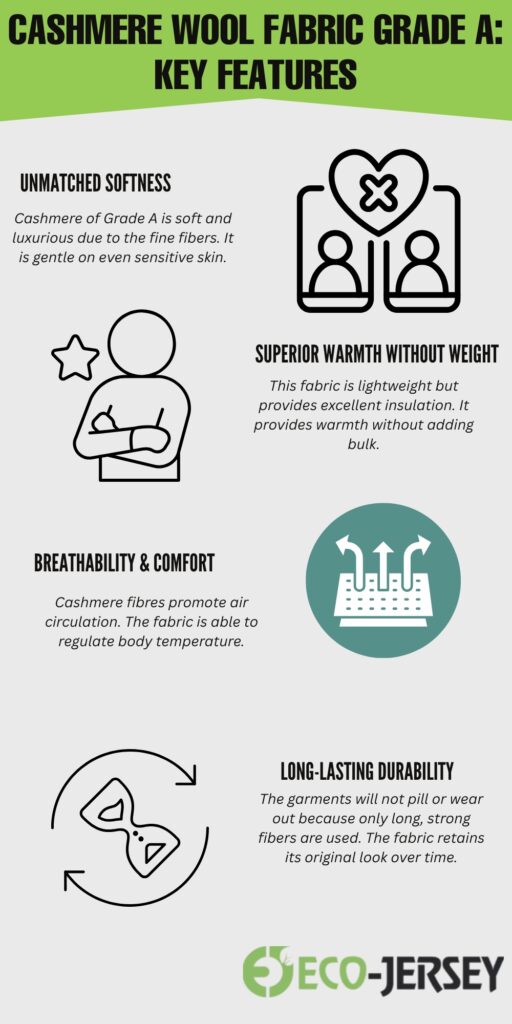
Unmatched Softness
Cashmere of Grade A is soft and luxurious due to the fine fibers. It is gentle on even sensitive skin.
Superior Warmth without Weight
This fabric is lightweight but provides excellent insulation. It provides warmth without adding bulk.
Breathability & Comfort
Cashmere fibres promote air circulation. The fabric is able to regulate body temperature.
Long-Lasting Durability
The garments will not pill or wear out because only long, strong fibers are used. The fabric retains its original look over time.
Cashmere Grade A vs. Other Wool Fabrics
Cashmere vs Merino wool
Cashmere is much finer than Merino. Cashmere is therefore more luxurious.
Cashmere vs Lambswool
Lambswool is thicker and warmer. Cashmere is lighter and warmer than lambswool.
Cashmere and Blended Wool
Although blended fabrics are affordable, they do not have the same purity. They do not provide the same performance and prestige.
Cashmere wool fabric – pure grade A
Pure Grade A Cashmere Wool Fabric is very versatile. Cashmere wool is used for:
- Overcoats and luxury coats
- Scarves and Shawls of Premium Quality
- Designer cardigans and sweaters
- High-end blankets, throws and other accessories
- Winter suits and tailored suits
It is particularly popular for its fine texture in couture and bespoke clothing.
Designers prefer pure Grade A cashmere
Designers use this fabric both for aesthetic and functional purposes. It drapes beautifully. It enhances the structure of garments without making them stiff. Its natural sheen also enhances the overall appearance.
Cashmere of Grade A is a favorite in fashion houses around the world.
Cashmere fabric of pure grade A: Seasonal performance
Cashmere is not just for winter.
- Winter: provides exceptional insulation
- Autumn: Provides Breathable Warmth
- Spring: Lightweight blends ensure comfort
It is not just cold weather.
Cashmere wool fabric of pure grade A: How to maintain it
To maintain quality, it is important to take proper care.
Cleaning Guidelines
- Handwash in cold water
- Use mild detergent
- Avoid wringing
Drying and Storage
To dry, clothes should be laid out flat. Also, the garments should be folded instead of hung. This prevents stretching.
Sustainability and Eco-Friendly Value
Pure Grade A Cashmere Wool Fabric 100% natural and biodegradable. In addition, initiatives to improve sustainability are being taken in the ethical sourcing. It appeals to consumers who are environmentally conscious.
Cashmere Wool Fabric Grade A: Investment Value
This fabric is a long-term investment, even though it’s expensive. Its durability and timeless appeal ensure that it will remain stylish for many years. It is therefore considered an investment, rather than a price.
Cashmere Grade A: How to identify the real thing
To ensure authenticity:
- Check fiber fineness
- Softness is the key.
- Check for minimal shine
- Verify certifications
Also, reputable suppliers are transparent about the sourcing of their products and the grading.
Cashmere Grade A is in High Demand Worldwide
The demand for luxury goods in Europe, America, and Asia continues to grow. Cashmere of Grade A remains a highly sought-after material worldwide.
Cashmere wool fabric: Future trends
Pure Grade A Cashmere Wool Fabric future is shaped by innovation. The popularity of eco-friendly dyes and recycled cashmere is increasing. The fabric is evolving while still maintaining its heritage.
Final Thoughts
Pure Grade A Cashmere Wool Fabric is a symbol for elegance, comfort and quality. It is the standard for luxury textiles because of its softness, warmth and durability. It is a timeless classic that can be used for fashion and home decor.
FAQs
What is Pure Grade A Cashmere Wool Fabric?
Pure Grade A Cashmere Wool Fabric is made from the finest cashmere goat fibers, known for exceptional softness, warmth, durability, and lightweight comfort.
How is Grade A cashmere different from other grades?
Grade A cashmere has the finest fiber diameter (14–15 microns), making it softer, stronger, and more durable than Grade B or Grade C cashmere.
Does Pure Grade A cashmere pill over time?
High-quality Grade A cashmere pills far less because longer and stronger fibers are used during production.