The Printed Grade B Cashmere Fabric wool combines elegance, affordability, and creativity in a way which feels timeless yet modern. Printed cashmere adds visual storytelling to the natural softness. Due to, designers, home textile companies, and boutique labels are increasingly choosing printed Grade B Cashmere in collections that feel luxurious, without being expensive.
Printed Grade B Cashmere Fabric contains fine fibers and is therefore comfortable, warm, and gentle against the skin. is durable, and its fiber structure is slightly thicker. This makes it ideal for printing. Patterns, colors and motifs are vibrant and vivid while maintaining the fabric’s soft drape.
What is Printed Grade B Cashmere Fabric?
The secondary cashmere fibres from goats are used to producePrinted Grade B Cashmere Fabric. The fibers, although slightly thicker than those of Grade A provide warmth and softness. This fabric is a good option for textile and fashion manufacturing.
Modern textile printing techniques are used to print designs onto the surface. Thanks to improved technology patterns are absorbed more evenly and colors retain their vibrancy. The structure of Grade B Cashmere is compatible with both screen and digital printing.
This fabric is used in many garments that need to be both beautiful and durable. is therefore popular in scarves and shawls as well as sweaters, wraps and statement outerwear.
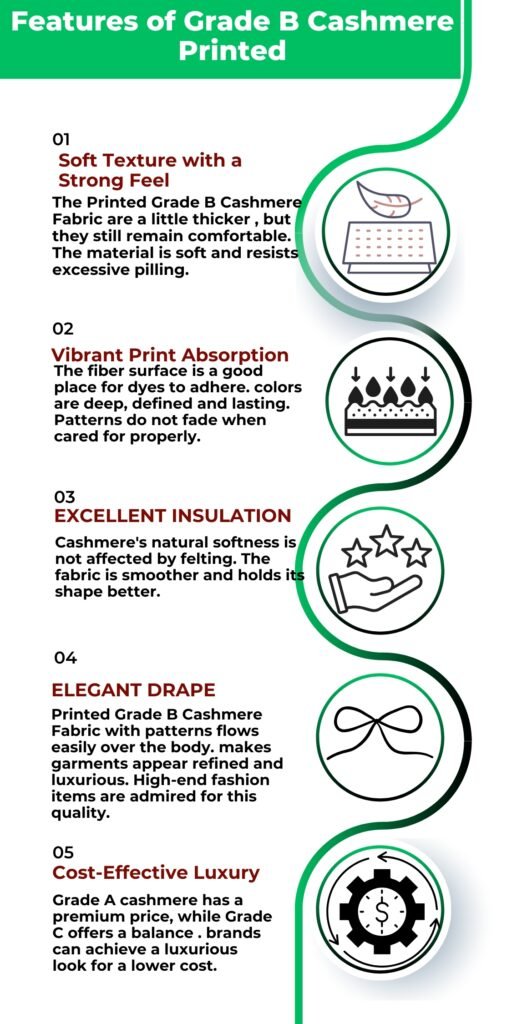
Features of Grade B Cashmere Printed
1. Soft Texture with a Strong Feel
The Printed Grade B Cashmere Fabric are a little thicker , but they still remain comfortable. The material is soft and resists excessive pilling.
It’s suitable for printed fabrics that are handled regularly.
2. Vibrant Print Absorption
The fiber surface is a good place for dyes to adhere. colors are deep, defined and lasting. Patterns do not fade when cared for properly.
3. Excellent Insulation
Natural insulation can be preserved even at grade B. provides warmth without a heavy weight. This feature is especially useful in colder climates.
4. Elegant Drape
Printed Grade B Cashmere Fabric with patterns flows easily over the body. makes garments appear refined and luxurious. High-end fashion items are admired for this quality.
5. Cost-Effective Luxury
Grade A cashmere has a premium price, while Grade C offers a balance . brands can achieve a luxurious look for a lower cost.
Why Printing on Cashmere Grade B Works so Well
A stable, yet absorbent surface is required for printing. Grade B fibers provide a solid base for pigments because they are slightly thicker. allows for greater design precision.
modern digital printing also reduces fiber stress. Softness is therefore preserved. Patterns are produced with high detail. This includes florals, geometrics and abstract art.
Certifications of Cashmere Prints
Floral Prints
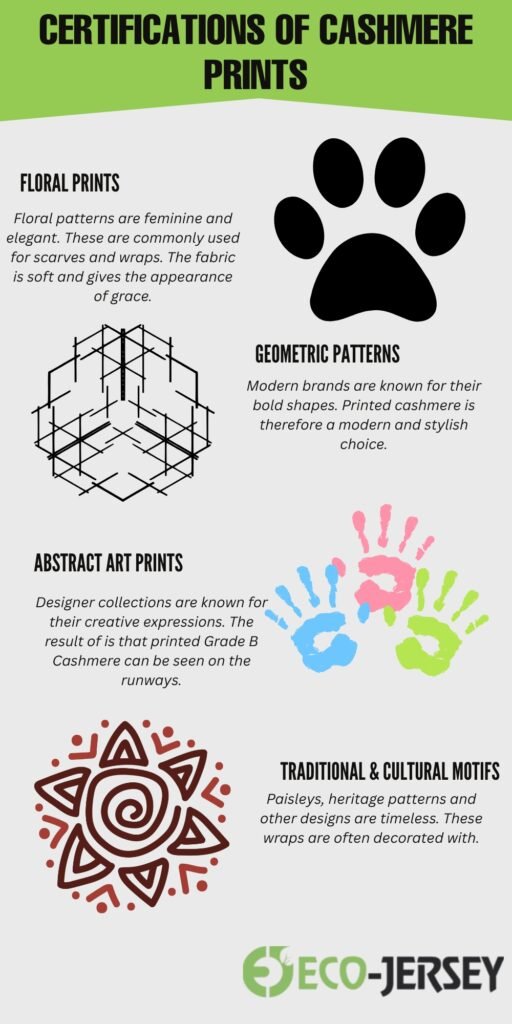
Floral patterns are feminine and elegant. These are commonly used for scarves and wraps. The fabric is soft and gives the appearance of grace.
Geometric Patterns
Modern brands are known for their bold shapes. Printed cashmere is therefore a modern and stylish choice.
Abstract Art Prints
Designer collections are known for their creative expressions. The result of is that printed Grade B Cashmere can be seen on the runways.
Traditional & Cultural Motifs
Paisleys, heritage patterns and other designs are timeless. These wraps are often decorated with.
Production Process of Printed Grade A Cashmere
- Fiber Collection Cashmere is collected during the molting season.
- Sorting and Grading– Fibers are classified. Selecting Grade B fibers.
- Spinning Yarn is spun with care.
- Fabric is made by weaving or knitting
- Surface preparation– The fabric has been cleaned before printing.
- Printing– Designs are applied by digital or screen methods.
- Heat setting – Colors are fixed.
- Finishing– Brushing and softening the surface enhances texture.
Quality checks are carried out throughout the process. maintains consistency.
Fashion
Printed Grade B Cashmere Fabric is used widely. For example:
- Designer scarves
- Fashion shawls
- Winter dresses
- Statement coats
- Luxury loungewear
is a versatile that can be worn for both casual and formal clothing.
Home Textile Uses
This fabric is used in many other products besides clothing.
- Throws Decorative
- Premium Cushions
- Interior textile accents
By using, you can make your home more elegant and warm.
Care Instructions
The longevity of your car is dependent on the care you give it.
- Handwash gently
- Use mild detergent
- Avoid wringing
- Dry flat
- Store folded
When maintained correctly, the prints will remain bright and the texture soft.
Sustainability Factors
Cashmere fiber is natural. Reduces environmental impact when is sourced responsibly. Long product lives also reduce waste.
Market Demand
Globally, the demand for luxury printed fabrics is growing. Customers are looking for individuality and printed cashmere offers that. is therefore a trend in premium markets.
How designers use it
Designers combine art and softness. Designers often layer-printed cashmere on neutral outfits. The fabric is the focus of the outfit.
Future of Printed Grade B Cashmere Fabric
The innovation in eco-dyes, digital printing and other technologies is progressing. Prints are therefore becoming more sustainable. It is expected that the fabric will be used more in creative industries.
Conclusion
The Printed Grade B Cashmere Fabric is at the intersection between luxury and creativity. It is affordable but does not compromise on elegance. It continues to influence modern interiors and fashion. This fabric is a premium choice for its warmth, softness and design versatility.
FAQs
What is Printed Grade B Cashmere Fabric fabric?
Printed Grade B Cashmere Fabric is a soft, warm fabric made from slightly thicker cashmere fibers, enhanced with vibrant printed designs for stylish fashion and textile uses.
Is Grade B cashmere still soft?
Yes, it is softer than most wool fabrics. Although fibers are slightly thicker than Grade A, comfort and insulation are still provided.
Why is printing suitable for Grade B cashmere?
Because the fiber structure is stronger, dyes are absorbed well, and patterns are held clearly without damaging the fabric softness.