Home Blog Page 93

Travel Topcoat Stylish Comfort for Every Journey & Adventure

0

When it comes to traveling in style, comfort, and functionality, the travel topcoat is an indispensable wardrobe staple. Unlike regular coats, travel topcoats are designed to provide versatility, durability, and elegance, making them ideal for globetrotters, business travelers, and fashion-conscious individuals alike. In this comprehensive guide, we’ll explore everything from the key features of travel topcoats, styling tips, fabrics, and packing strategies, to help you make the perfect choice for your next journey.

What is a Travel Topcoat?
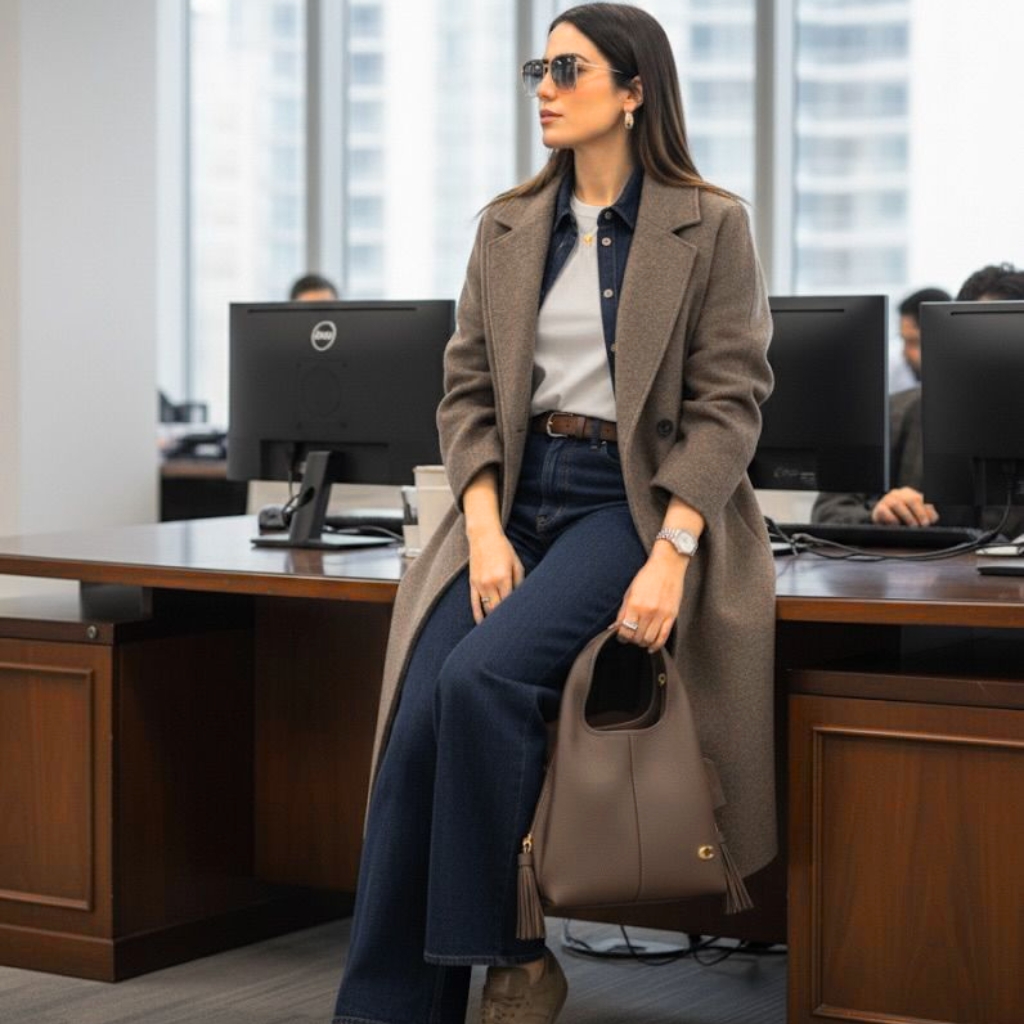
A stylish woman sits on the edge of a wooden desk in a modern office, wearing a long tan coat, dark blue denim, sunglasses, and holding a taupe handbag.
Effortless office chic: a tailored coat, denim, and a structured tote on a contemporary workspace backdrop.

A travel topcoat is a type of outerwear specifically crafted for travel. It strikes the perfect balance between style, comfort, and practicality. Typically made with lightweight yet warm fabrics, these coats are designed to protect you against unpredictable weather while remaining wrinkle-resistant and easy to pack.

Travel topcoats often have:

  • Robust fabrics for all surface and environmental conditions
  • Light insulation for temperature regulation and easy layering
  • Water and Rain Protection for wet weather
  • Pockets for easy access
  • Pleasing Design for all lines and weather

Unlike heavy winter coats, travel topcoats will help in any situation or climate, making help making them perfect for travel.

Key Benefits of a Travel Topcoat
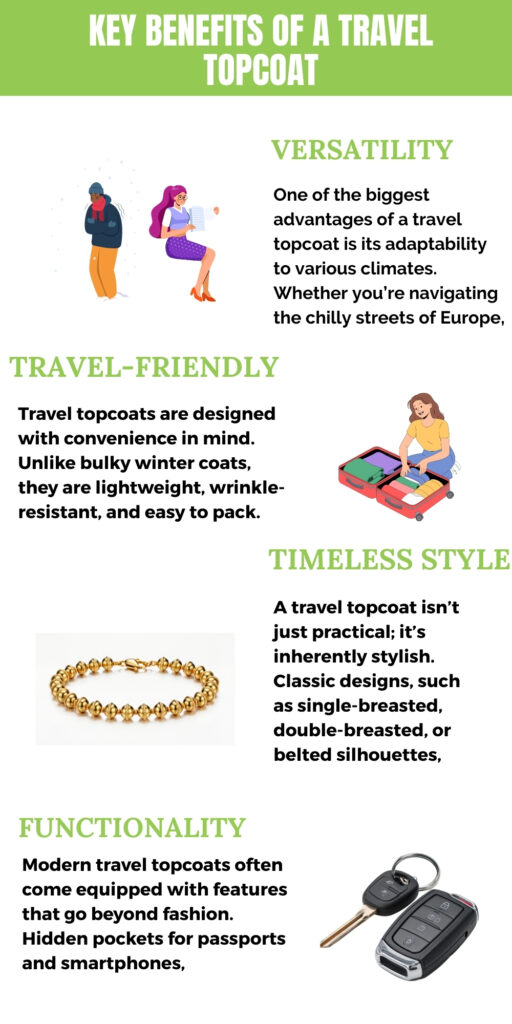
A vertical infographic titled “Key Benefits of a Travel Topcoat” with sections: Versatility, Travel-Friendy, Timeless Style, and Functionality. Each section includes small illustrations: travelers with a coat, a packed suitcase, a bracelet, and car keys/phone. The text highlights the benefits of a travel topcoat: adaptable to climates, lightweight and packable, stylish designs, and modern features like hidden pockets.
Key benefits of a travel topcoat: versatile for any climate, travel-friendly and packable, timeless style, and functional pockets and tech features.

Travel topcoats have many benefits that go beyond simply keeping you warm and looking stylish. Let’s go over the benefits in more detail.

1. Multiple use in different weather conditions

Travel topcoats have the benefit of different weather conditions and climates. Travel topcoats are versatile and can keep you warm in a cold European country. If you are traveling for business, you can wear the travel topcoat to give you a professional look and keep you warm. Travel topcoats are perfect for getting cold with the warm coastal breezes.

Travel topcoats use fabrics such as wool blends, synthetic fabrics, and cashmere. Oftentimes, they have breathability and they retain warmth.

2. Easy Packing and Travel-Friendly

No more uncomfortable and bulky coats whilst traveling. Travel Top Coats are comfortable and prepared for packing. Many Travel Top Coats are made with fabrics that are wrinkle resistant, save for when you are getting ready to board or leave, and make you look polished.

Some coats have hoods that can even be packed, along with pockets that can be packed, foldable jackets, and removable liners.

3. Timeless Style

Travel Top Coats are also very stylish. Many of them have the same aesthetic, meaning you could potentially have a total of a few Travel Top Coats to fit your mood or vibe. They make Travel Top Coats that are double, single, and fully belted down. The easiest to fit with an outfit are the neutral shades as they can fit with any outfit (formal or casual), like black, camel, navy, grey, or a more casual outfit with some jeans.

4. Enhanced Functionality

There are always some extra layers that can be added into a Travel Top Coat, and some of them are the best of the best. Some of them are the best of the best, and thats what makes a Travel Top Coat more than a fashion statement.

Choosing the Perfect Travel Topcoat

1. Fabric Types

Wool is a great option as it is insulated and suitable for the colder months of travel. Unfortunately, it can also be a bit pricey. Cashmere is soft and lightweight, but expect to spend a bit more money. If you are traveling and expect varying weather, a topcoat made of a blend of synthetic and wool would serve as a great option, as it is warm, durable and lightweight. If the climate of your destination is more unpredictable, a coat made of water resistant fabric would work great.

Takes into consideration the weight of the top coat. If you are traveling places that are expected to be warmer, a coat of medium weight will do. However, for colder places, a coat that is heavier made of wool is your best bet.

2. Silhouette and Fit

A travel topcoat will best serve its purpose if it allows for easy and comfortable layering. If you relax and are frequently on the go, you may be better off with a travel topcoat that has a relaxed fit. If you prefer to look a bit sharper, a tailored fit will do the trick. Here are some classic style options you can choose from:

  • Single-Breasted: Good for a minimalist option, versatile.
  • Double-Breasted: If you are looking for something a bit more bold, you can try out this structure.
  • Belted: A bit more flexible as you can adjust the fit to be more snug, but also adds an elegant detail.

Make sure the sleeves are long enough to cover the wrists when layering over jackets or sweaters.

3. Choosing Colors

If you want shades that are easy to mix and match, then consider black, navy, camel, and gray. On the other hand, a bold color or pattern can make your travel wardrobe more exciting. Keep in mind that darker shades tend to hide stains, which can be useful on long trips.

4. Consider the Topcoat Lengths

Travel topcoats come in different lengths. Selecting the right length depends on your typical activities, climate, and personal style.

  • Hip-length: Casual, lightweight, and easy to pack.
  • Knee-length: A classic style that is versatile and great for urban and business settings.
  • Full-length: Maximum coverage and warmth, best for cold climates.

Styling Your Travel Topcoat

Illustration of people wearing different travel topcoats with headings for Casual Travel Looks, Business Travel Attire, and Special Evening Attire.
Styling Your Travel Topcoat: Casual Travel Looks, Business Travel Attire, and Special Evening Attire

A travel topcoat can elevate almost any outfit. Topcoats are great for versatile looks, whether that’s adding an outfit to elevate it or keeping it casual during your travels.

1. Casual Travel Looks

For a relaxed urban look, travel topcoats can be paired with jeans, sweaters, and sneakers. A scarf or beanie can be added for warmth, or style.

For airport comfort, consider layering a hoodie or lightweight jacket underneath your insulated topcoat. You will be versatile and comfortable on the flight.

2. Business Travel Attire

When traveling for work, a tailored travel topcoat over a suit or a blazer makes you look sleek and professional. Pair with leather shoes or boots for an even more sophisticated look.

For formal settings, a single-breasted coat in a neutral color is best.

3. Special Occasions and Evening Attire

For evening activities and special events, a double-breasted or belted layering topcoat in wool or cashmere adds a touch of class. A scarf or leather gloves complete the look.

Darker neutral shades work well for more formal events, as they work well with the more formal attire, and they also ensure you look great too.

Packing Your Travel Topcoat

To keep your travel topcoat from getting wrinkled and to maintain its structure, you should use the following techniques:

  1. Be Careful When Folding: Lay the coat completely flat, and fold the sleeves in towards the middle and roll the coat up to avoid getting creased.
  2. Use a Garment Bag: A garment bag will protect your coat, and will also keep it clean.
  3. Be Careful When Layering: Place your coat on top of your other items in your suitcase so it doesn’t get crushed.
  4. Hang It When You Get There: coat in a humid bathroom or one with a steamer will bring its shape back even if it is slightly wrinkled.

By following these tips, your travel topcoat will stay clean and ready for you to wear, no matter where you travel.

Maintenance and Care

With the right care, your travel topcoat can last a long time. Here are a few things to remember for the best topcoat care:

  • Dry Clean Sparingly: Only dry clean your urban topcoat when you have to, to keep the fabric from losing its quality.
  • Brush Off Dirt: Use a soft clothing brush to remove any dust or debris that may have collected on the coat.
  • Store Properly: Use wide hangers and sturdy hangers to hang your coat so the shape of the topcoat fabric is preserved.
  • Protect from Moisture: Spray topcoats that are wool and cashmere blends with moisture proof spray to protect the coat from moisture.

With a little effort, a travel topcoat can last for many years, offering both durability and great looks.

Top Travel Topcoat Trends for 2026

The topcoat and travel and travel topcoat industry is fast evolving and 2026 looks set to bring a host of new travel topcoat trends including:

  • Sustainable Fabrics: wool blends that are eco-friendly and fabric made from recycled plastic.
  • Smart Coats: coats that have little pockets for storage.
  • Bold Colors & Patterns: Along with classic looks, many expressive enclosed stylish looks are set to be on the travel topcoats.
  • Convertible Styles: coats that have linings that zip out or hoods that can be unclipped.

Why A Travel Topcoat Is Necessary

Any seasoned traveler knows the trials and tribulations of inclement weather, time zone shifts, and culture shock–all common in our everyday journeys. A travel topcoat can remedy all of these inconveniences by providing refined:

  • Versatility: capabilaity in many different climates and occasions
  • Functionality: Rfach coat has unique durable features and pockets
  • Style: A clean, chic, and professional look is always in fashion Comfort: The travel top coat is lightweight, and breathable, and can be easily layered.

A travel top coat is not just another piece of clothing, it is an essential piece of attire for any discerning nomad. On top of all it adds an air of self-assurance.

Conclusion

A top coat that is of good quality and expensive style is the thrill of achieving freedom and venturing into the unknown. From this day forward the coat is the new soul of the traveler made of sophisticated fabrics, refined exotic style, and adventure. What is the soul of the traveler made of, dirt and blood? No–from this day forward it is made of high quality wool.

FAQs

What makes a topcoat ideal for travel?

Travel topcoats are lightweight, wrinkle-resistant, and versatile, designed to adapt to different climates and activities.

Can I wear a travel topcoat casually and formally?

Yes. Neutral colors and classic silhouettes make travel topcoats suitable for both casual and business settings.

How should I pack a travel topcoat?

Fold carefully, use a garment bag, place on top of other clothes, and hang upon arrival to maintain its shape.
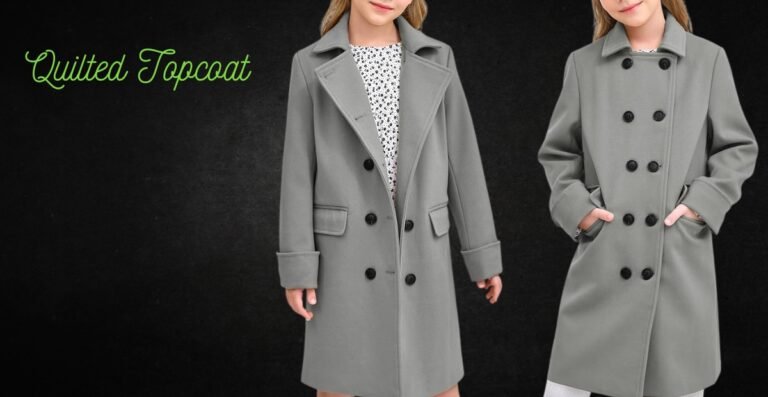
Why Quilted Topcoat Are the Perfect Blend of Style & Comfort

0

When winter arrives, warm layers become more than a need, but a statement. Among the many options available, quilted topcoats have captured the attention of consumers. Functional, refined, and effortlessly versatile, quilted topcoats have become a staple for the consumer of the present day.

Topcoats have always embodied the spirit of formal wear and tailoring; structure and style. However, the addition of the quilted design allowed for the insulation of the fabric, and the retention of its softness. The most contemporary looks of the season also have the modern practicality that consumers want, making this style a must-have.

Let’s get started on why quilted top coats deserve their own place in your wardrobe. First, we need to look at what makes a quilted topcoat special, then the design, how to style (yes, there is a list of outfit ideas), and finally, why they are a smart investment for building a winter wardrobe to last.

What Is a Quilted Topcoat?

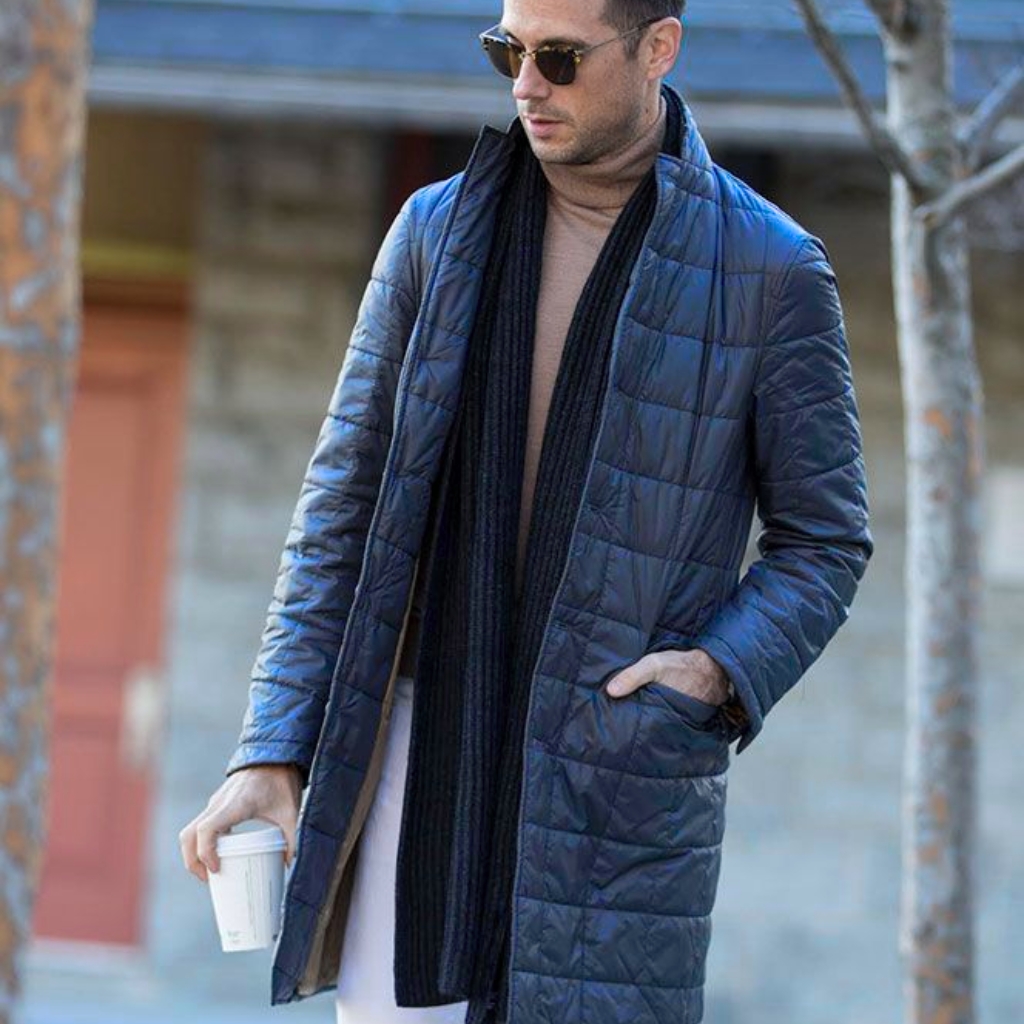
 A stylish man wearing a knee-length, quilted blue coat, tan turtleneck, dark scarf, sunglasses, and holding a takeaway coffee cup while walking outdoors.
Dressed for chilly weather in a quilted blue overcoat, tan sweater, and scarf, he strolls city streets with a coffee in hand.

A quilted topcoat is an outerwear piece that combines the structure of a traditional topcoat with a quilted inner lining. A quilted lining is made by sewing several layers of fabric together with an insulating material in a patterned design. When constructed this way, they trap more air and, therefore, more warmth. This means that the topcoat retains warmth while feeling light and unbulky.

Despite being constructed with multiple layers of fabric, the top coat is lightweight and more versatile than an overcoat. When layered over a suit, knitwear, or a casual outfit, the versatile top coat maintains a sleek, lightweight, and comfortable fit.

A traditional style of quilting, a diamond pattern, offers a classic finish, while a box quilt has a more modern feel. A variety of quilting patterns means that versatile topcoats can lace outfits of any style.

The Evolution of Quilted Outerwear

Firemen, soldiers, and other workers were the original wearers of quilted outerwear. When more modernized and adapted, the utilitarian design made its way into the fashion world.

In time, the creation of the quilting process developed and was refined into tailored garments. This led to the creation of quilted coats and jackets that were manufactured for luxury collections. Presently, quilted topcoats represent the perfect fusion of modern innovation and heritage craftsmanship.

Advancements in fabric technology have developed towards the seamless integration of modern advancements within quilted coats. They have developed towards becoming more durable, and water-resistant, as well as more breathable. Topcoats are now more than just a style statement. They have developed towards possessing functional features as well.

Why are quilted topcoats popular?

Light & Warm

One of the most important features of a quilted topcoat is the lightweight warmth. The construction of a top coat is to fill the jacket with strengthened insulation to prevent the entrance of outside cold air, and, as a result, keep the wearer warm. Then the construction of the top coat is to keep the wearer warm. Heat is trapped between the layers of the coat, and modern synthetic insulating materials work to maximize warmth while reducing construction bulk.

Versatility Across Occasions

Since quilted topcoats can be paired with just about anything, they make great options for everyday winter topcoats. The neutral options make it easy to match with existing closet items.

Modern Aesthetic Appeal

The quilted texture adds depth and visual interest to an outfit. A simple outfit can be made to look really put together with a quilted top coat.

Designers combine quilting with clean lines and minimal detailing for a more modern look. The result is a coat that looks and feels modern yet is a timeless style.

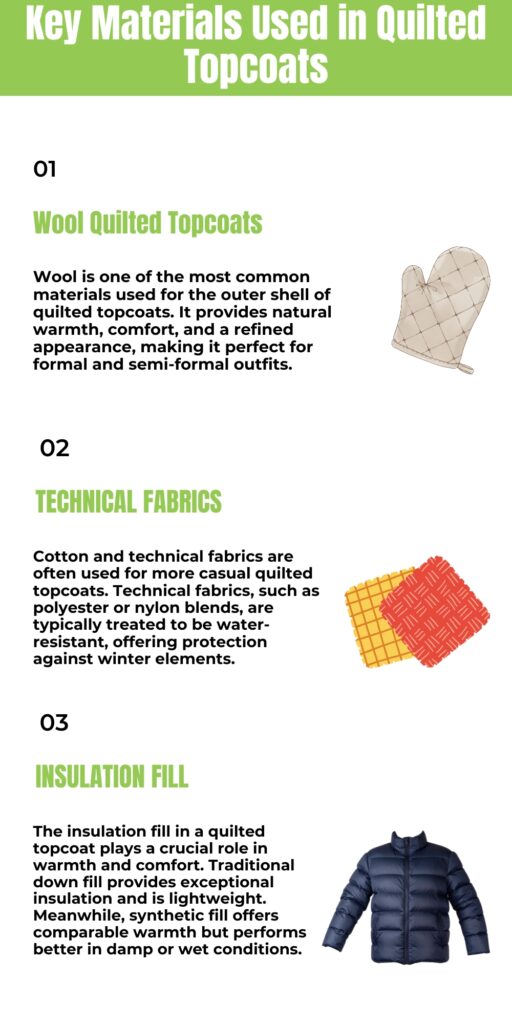
Key Materials Used in Quilted Topcoats

Infographic titled ‘Key Materials Used in Quilted Topcoats’ listing three materials: 01 Wool Quilted Topcoats with a beige quilted glove illustration, 02 Technical Fabrics with red and yellow fabric swatches, and 03 Insulation Fill with a navy puffer jacket image.
Key materials used in quilted topcoats: wool, technical fabrics, and insulation fill.

Wool Quilted Topcoats

Wool is frequently used as the outer shell of quilted coat because it is warm and comfortable. It also has a very well refined look for more formal and semi-formal looks.

These coats are popular for work and city style looks because they look fitted and professional.

Cotton and Technical Fabrics

These are more of a casual look. Tech fabrics are great for the winter because they are treated to be water resistant. These fabrics are great for the winter because of their water resistance and breath-ability.

In many contemporary designs, performance fabrics are adopted to provide long-lasting quality. This means quilted topcoats are adaptable to urban and outdoor environments.

Insulation Fill

The insulation fill in a quilted topcoat can either be insulating down fill, or synthetic. Insulating down fill has great warmth, while synthetic fill has a down fill comparable performance, but excels in wet environments. Advanced synthetic insulations fill many quilted topcoats.

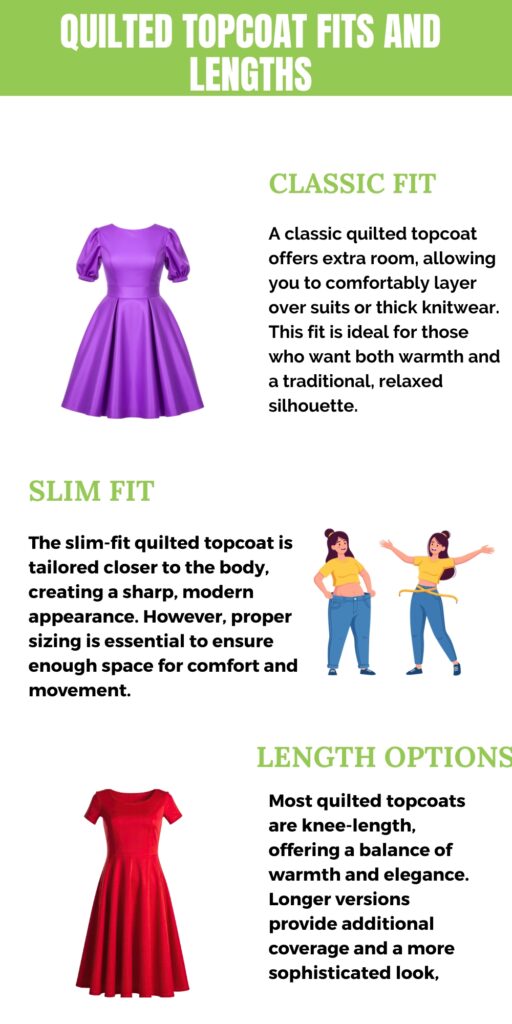
Quilted Topcoat Fits and Lengths

Infographic about quilted topcoat fits and lengths with images of a purple classic-fit coat, two women measuring for a slim fit, and a red knee-length dress under length options.
Quilted Topcoat Fits and Lengths

Classic Fit

A classic quilted topcoat fit has extra space designed to allow the addition of extra layers. This applies to those who often wear suits or thick knitwear underneath.

Slim Fit

With a slim fit, quilted topcoats, the tailoring comes in closer towards the body. This means that a sharp, modern silhouette is created. However, proper sizing is critical to ensure enough space for comfort.

Length Options

Usually, quilted topcoats are manufactured to be knee length, while more extended options are in offer to provide additional warmth and length sophistication. More petite quilted top coats are favored for a sporty, more casual vibe.

Styling a Quilted Topcoat

Formal and Business Looks

When it comes to formal appearances, a quilted topcoat needs to be sophisticated and understated. For example, wearing a men topcoat over a navy suit or over a charcoal suit presents a professional look. The outfit can be finished off with a wool scarf and some leather dress shoes.

Darker tones are generally suggested to be worn in professional situations. This makes the outfit look sophisticated and seamless.

Smart Casual Outfits

When smart casual is the dress code, a quilted topcoat can be worn with a pair of chinos, a turtleneck, and some leather boots. This look is easy going, but thoughtful.

Textured knitwear pairs well with a quilted Top coat, creating visual balance and a cohesive look.

Casual and Weekend Styling

On the weekends, quilted top coats can be paired with some denim, and some sneakers or hoodies. The coat gives the outfit a more intentional look, while the outfit is still casual.

You can also use bright colors or make a statement with some patterns. This can add a little more to your outfit.

Seasonal Wearability

Fall and Mild Winter

When choosing a coat in the fall, a quilted top coat is really good at providing insulation. It is good to layer a light sweater underneath. When it is not too cold and not too warm, a quilted top coat over any outfit is better than a heavy overcoat.

Deep Winter

In colder locations, quilted topcoats may be worn over thermal knitwear, along with a scarf. This combination provides additional warmth while keeping a fashionable appearance.

The rougher the weather, the better the quilted topcoat. This is because the fabrics in them are wind resistant.

Traditional Topcoats vs. Quilted Topcoats

In contrast to the standard topcoat, which only uses fabric weight to create warmth, a elegant topcoat with a quilted design uses insulation, meaning that they can make a topcoat warmer without the extra weight.

In addition to this, many view the quilted design as more contemporary, giving them a more modern look.

Of course, for strictly formal occasions the standard topcoat will always be more appropriate, but many topcoats that are quilted have been made with enough sophistication to be used for formal occasions as well.

Finding the Right Topcoat

Different factors that should be taken into consideration when buying a winter topcoat. To start, insulation is heavily reliant on the climate. Find ranges that are lighter for moderate winters, while for colder areas, a thicker insulation is better.

Also, don’t forget to look for the perfect fit. A good fitting topcoat can make right coat improve your posture and will make you look better overall. Right shoulders make the coat sit well, and sleeves should sit just right.

Lastly, neutral tones provide versatility and can be paired with just about anything, while bold colors can add character and stand out. A good combination of these is based on personal style.

Caring for a Quilted Topcoat

Proper care of a coat ensures its longevity. Most quilted topcoats are made of durable material, however, care instructions should always be followed.

Dry cleaning is often needed for wool-based topcoats, however, some quilted topcoats made with technical fabrics can be washed using machines. Therefore, consulting the label is always a good idea.

Also, designate a place to store the coat out of view during warm months to keep the coat from becoming out of shape. This way, it will look new for years to come.
Why Quilted Topcoats Are a Smart Investment

Investing in a quilted topcoat means investing in versatility, comfort, and style. Topcoats can be worn on numerous occasions which means the cost-per-wear will go down.

Quilted topcoats also have a timeless design. This means that the topcoat will remain in style as years go by. Many things can go out of style as trends change, but the quilted topcoat will always retain its classic and appealing design.

A good quilted topcoat is not just seasonal. It is a long-term essential.

Final Thoughts

Winter fashion has been changed for the better with the introduction of quilted topcoats. They have insulation along with a tailored design, so it is practical as well as stylish. This has made them very popular for men who appreciate elegance and practicality.

Quilted topcoats can be worn for work, weekends, and fancy occasions, and they will always be stylish and perform well. So if you are interested in updating your winter wardrobe, you have to consider getting a quilted topcoat.

FAQs

What is a quilted topcoat?

A quilted topcoat is a long coat that features stitched padding for insulation. It combines the elegance of a traditional topcoat with added warmth and comfort.

Are quilted topcoats suitable for winter?

Yes, quilted topcoats are ideal for winter. Because insulation is built into the design, body heat is retained while the coat remains lightweight.

Can a quilted topcoat be worn over a suit?

Absolutely. Quilted topcoats are designed to be layered over suits. As a result, they are perfect for business and formal winter wear.

Distaff Day (1 January) – Honoring Women’s Skills & Heritage

Observance of Distaff Day takes place on 7 January. Distaff is a tribute to women and their labor, particularly in the areas of spinning and other fiber arts. Women have played an instrumental role in the formation of families and society, and this day provides recognition for that.

Distaff is a celebration of dexterity, industriousness, and imagination.


What Is Distaff Day?

The term “Distaff” originates from a specific tool known as the distaff. This tool held significant importance in the historical process of textile production. Its primary function was to aid in the transformation of raw fleece, the woolly coat of sheep or similar animals, into usable threads or yarn. These threads, once created, could then be woven into cloth or used for other textile purposes. In earlier times, the activity of spinning, which involved using tools like the distaff to create thread, was traditionally and almost exclusively carried out by women. It was a task deeply associated with the female role in society and household economies.

This contribution is what Distaff honors.


History of Distaff Day

The history of Distaff can be traced back to the medieval period in Europe. During this era, spinning was a common task for women, and this activity was deeply interwoven with the rhythms of daily life. Specifically, the period following the Christmas festivities marked a return to these essential duties. Once the holiday celebrations had concluded, women would resume their spinning work with diligence. Over time, this widespread custom became so ingrained in the culture that it eventually evolved into what is now known as Distaff Day, a specific day that recognized and commemorated this traditional female occupation.

This day eventually took on a more abstract meaning.


Distaff Day and the History of Textiles

Textiles have had a revolutionary impact on societies across the globe. Distaff delves into the multifaceted world of clothing, exploring its production, distribution, and consumption. It also examines the intricate networks of trade that have arisen around textiles and the skilled craftsmanship involved in their creation. Furthermore, Distaff highlights the pivotal and often overlooked contributions of women throughout history in these vital sectors, emphasizing their central role in the creation, trade, and artistry of textiles. Their involvement has been essential to the development and evolution of textile industries and related commercial activities.


Distaff Day and the Value of Women’s Work

Distaff recognizes:

  • Women’s craft
  • The work done in the home
  • The work done in the community

These contributions are often invisible.


Distaff Day in the Present Context

Distaff is an organization dedicated to the empowerment of women, acknowledging and celebrating the multifaceted contributions women make to society. It recognizes that women have historically held, and continue to hold, significant roles both within the domestic sphere and as active participants in the broader community. This recognition of women’s dual roles, encompassing their responsibilities at home and their engagement in community life, is central to Distaff’s mission. Furthermore, Distaff, under Day’s advocacy, strongly supports the principle of equal rights for women in all aspects of life.


Distaff and the Celebration of Spinning and Weaving

In the past, spinning and weaving were thought of as highly creative practices. Day celebrates the creativity that is involved in the use of textiles.


Observing Distaff Today

Distaff can be celebrated by:

  • Learning a craft that involves textiles
  • Buying from women who are artisans
  • Telling the stories of women who have done important things

Conclusion

Distaff expresses the idea that the work we do on a daily basis can change the world. It is a Day that celebrates the strength, creativity, and the patience of women. Read more: Old Rock Day and Orthodox Christmas Day

Old Rock Day– Meaning, History, and Old Things Still Matter

Every year on January 7, people celebrate Old Rock Day. Rock Day is a day to remind people to appreciate the old, including history, and memories. In a world that is obsessed with the new, Rock Day is a reminder that with age, things can become more valuable.

On the surface, Old Rock Day appears to be simple, but the meaning it carries is profound.


What is Old Rock Day?

Rock Day, in essence, is a celebration dedicated to the appreciation of relics from the past. It’s a day to cherish objects and concepts that have stood the test of time. This can encompass a wide array of things, from the ancient rocks that form the very foundation of our world, to valuable antiques that offer glimpses into bygone eras. Heirlooms, passed down through generations, also find their place in the Rock Day spotlight, representing tangible connections to our personal histories. Furthermore, the celebration extends beyond the physical realm to embrace old traditions, the customs and rituals that have shaped societies and cultures, and old memories, the recollections and experiences that enrich our lives and define who we are.


Historical review to Old Rock Day

For all we know, the first Rock Day was celebrated in the 1980’s, the year people started appreciating and valuing history and heritage more. The exact origin of Rock Day is still unknown, however, the history and message clearly support the origins of Rock Day from the steadily growing awareness of sustainability and preservation.


Rock Day Symbolic Meaning.

Rocks, in a symbolic legal sense, embody the very essence of strength and lasting permanence. This is why they are used to represent Rock Day. The selection of rocks as a symbol highlights their inherent qualities of steadfastness and unyielding endurance, characteristics that resonate deeply with the holiday’s message. Rock Day serves as an opportunity to educate and encourage individuals to cultivate and embrace virtues such as increased patience and enhanced resilience in their daily lives. By associating these admirable traits with the tangible and enduring nature of rocks, the Day effectively communicates the importance of developing inner fortitude and a calm, unwavering spirit when facing life’s inevitable challenges and obstacles.

Rock Day is a reminder that new additions don’t always need to be made.


Importance of Old Day

Rock Day teaches people modern society value the importance of :

Valuing and respecting the past.

Reducing and cutting down on present-day waste.

Preserving the past.

Valuing and creating memories.

Socially all the above mentioned are crucial.


Old Rock Day and Sustainability

Rock Day is about encouraging people and helping focus more on the importance of repairing and reusing old items, possessions and belongings. All of these hold value and relevance to environmental awareness. Old Rock Day supports the cause and is aimed to be promoting the need of reducing waste.


Celebrating

People can celebrate the day by

  • Visiting museums
  • Restoring antiques
  • Sharing stories about old items from the family
  • Collecting rocks

All the activities mentioned above hold value.


Old Rock Day in Education

Rock Day is an educational opportunity dedicated to exploring history and geology in tandem. It serves as a special day for students to delve into the interconnectedness of these two fascinating fields. The central idea behind Rock Day is to illustrate how the study of rocks and geological formations can provide valuable insights into historical events and periods. Students are encouraged to understand that ancient rocks and geological features hold stories and clues that help us decipher the past.


Conclusion:

Rock Day is a reminder that with age comes wisdom. Observing Rock Day teaches people the values of patience, respect, and gratitude. Read more: Orthodox Christmas Day and Distaff Day

Blankets and Bedding Fabric Guide for Comfort and Warmth Up

Bedding material and blankets are critical factors that help in establishing the homely, welcoming, and comfortable sleep atmosphere. The selection of the fabric can also impact the quality of sleep and wellbeing, as well as warmth and comfort. Of the natural fibers like cotton and wool and the synthetic ones like fleece or microfiber, the range of blankets and other bedding cloths may seem daunting initially. Knowing their differences may assist you to make good decisions that will bring comfort during the year. This guide will cover the most popular types of bedding material, their advantages and the process of choosing the most appropriate material to use so that you can get a soothing and cozy sleep experience.

History of Bedding and Blankets Fabric.

The history of Bedding fabric and blankets can be traced thousands of years and its history mirrors the need of people to survive. Old civilization used natural materials to safeguard themselves against cold and the bad weather. The first versions of a bedding were represented by the skins of animals, fur, and woven plant fibers used by ancient people. The early blankets concentrated on warmth rather than comfort but they formed the basis of the contemporary bedding fabrics.

With the advancement of the weaving techniques, the ancient Egyptians started using flax fabric as the bedding cloth made of linen. Linen was breathable and comfortable during hot weather, and this made it suitable to sleep. In the colder areas, early people depended on wool blankets in the meantime. Wool was very insulating and was not useless even in wet weather. This saw wool being a useful tool of bedding and clothing.

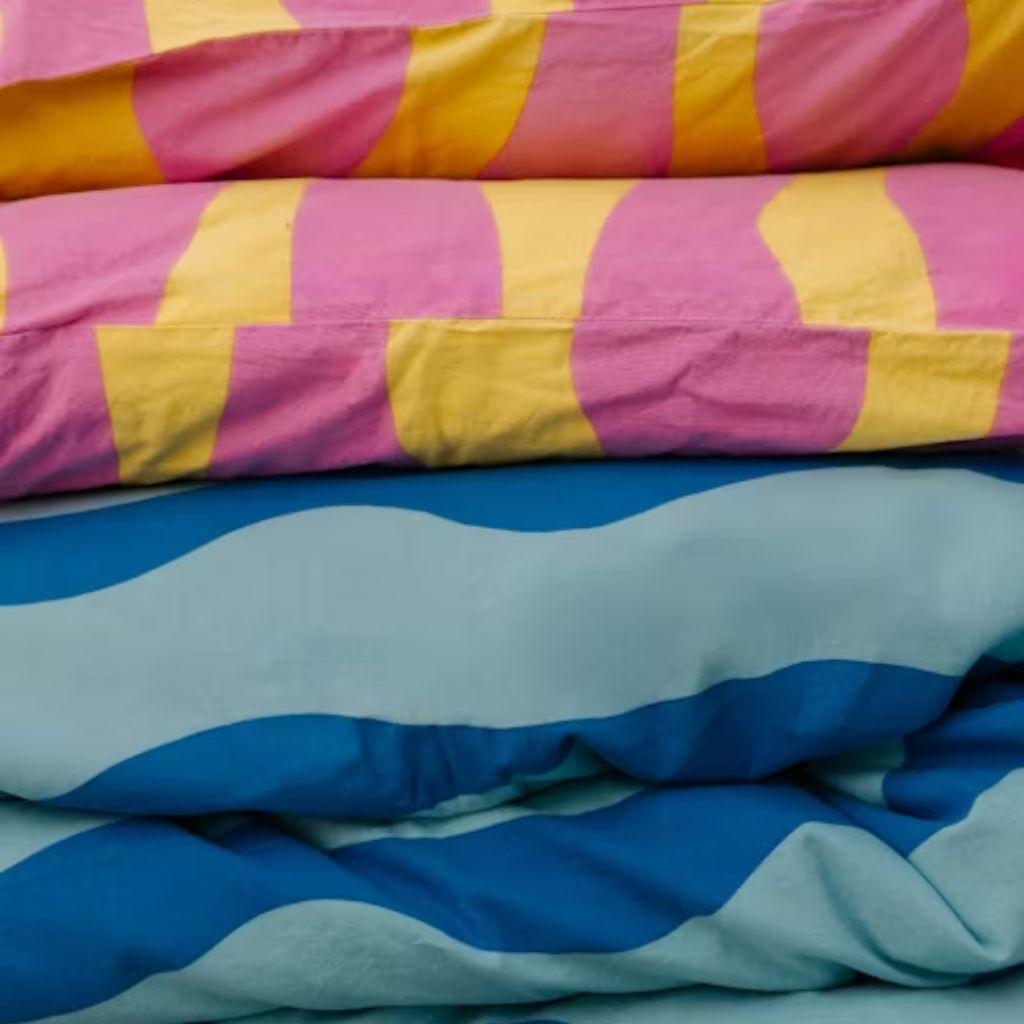
Close-up of stacked colorful bedding: pink and yellow striped blanket on top, followed by a blue and turquoise wave-patterned comforter.Blankets and Bedding fabic
Bright, patterned bedding stack with vibrant pink, yellow, and blue tones.

Why Blankets and Bedding Fabric Matter

Bedding cloth and blankets are important as they have a direct influence on the comfort, warmth, and the quality of sleep. The material that comes into contact with your skin the whole night determines how well your body rests and recuperates. An appropriate bedding cloth assists in maintaining body temperature and avoids sleeping disorders. The body is able to relax better when the fabric is comfortable, thus helping to promote deeper and long sleeps.

The bedding cloth and right blankets are also important in keeping warm and not overheated. Insulating clothes help retain the body heat and avoid cold in cold weather. During hot weather, breathable clothing permits air circulation and sheds off heat. This equilibrium makes the body relaxed at night and will lessen insomnia.

Another need that makes the choice of bedding fabric significant is the health of the skin. Fabrics of substandard quality can irritate, sweat or result in allergy. Hypoallergenic and natural bedding clothes minimize friction and enable the skin to breathe. This is particularly necessary to individuals who have sensitive skin, children or those with allergy. A light fabric enhances comfort and preserves the health of the skin.

What Are Blankets and Bedding Fabric

Blankets and bedding fabric are defined as the materials that are utilized to produce items that are comfortable to use and offer warmth when one is sleeping. These are the base materials of blankets, bed sheets, duvets, comforters and mattress covers. They are primarily meant to control body temperature besides providing a smooth and comforting touch to the skin. The comfort and relaxation of sleep and relaxation highly depends on the quality of bedding material.

Blankets: Bedding products that are insulated are known as blankets that are meant to keep the warmth in, therefore they insulate. They are usually worn in cold climate or in air-conditioned places. Bedding fabric, however, contains lighter materials that are applied to sheets and covers which are in direct contact with the body. Blankets and bedding fabric are together in such a way that they form a system that allows thermal balance during sleep.

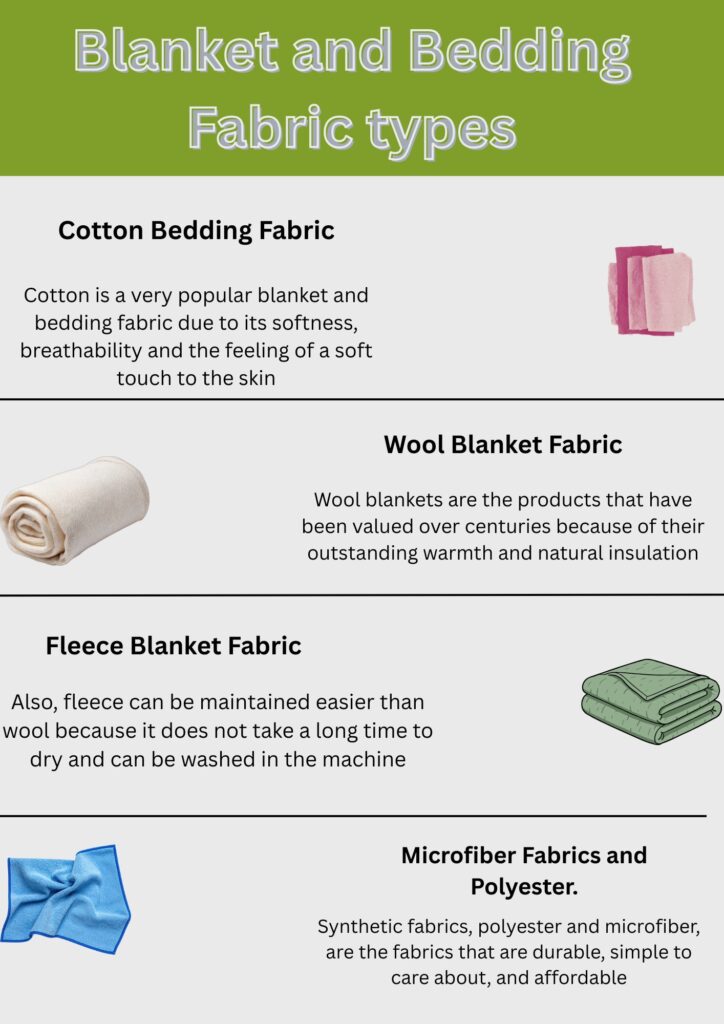
Blanket and Bedding Fabric types.

Blankets and bedding cloth differ greatly in their texture, warmth and nursing needs. Both types have their purpose, and they are appropriate in various climates and sleeping patterns. The choice of the appropriate fabric will guarantee a combination of the comfort, durability, and fashion.

An infographic titled “Blanket and Bedding Fabric types” listing different fabric types: Cotton Bedding Fabric with a small pink stack icon, Wool Blanket Fabric with a rolled beige blanket icon, Fleece Blanket Fabric with a stacked green blanket icon, and Microfiber Fabrics and Polyester with a blue cloth icon. Each section includes a brief description.Blankets and Bedding fabic
Blanket and Bedding Fabric Types: quick overview of common fabrics and their characteristics.

Cotton Bedding Fabric

Cotton is a very popular blanket and bedding fabric due to its softness, breathability and the feeling of a soft touch to the skin. The natural fabrics also permit air to pass freely thus keeping you cool during the summer seasons whilst keeping moderate coolness in the cool seasons. Cotton does not allow any dampness and thus one does not feel uncomfortable due to sweat. This is what makes cotton bedding the best choice of persons with sensitive skin or allergies. Cotton is very tough and simple to maintain, yet it wrinkles easily and can even shrink in case of improper treatment, that is why it should be carefully washed and dried.

Wool Blanket Fabric

Wool blankets are the products that have been valued over centuries because of their outstanding warmth and natural insulation. Wool fibers are very effective in trapping air and forming a barrier which retains body heat without making one feel bulky and stuffy. This is what makes wool blankets a good fit in colder climates, where it is essential to be warm when spending night during winter. Wool is also naturally moisture wicking so that it absorbs sweat to keep a person cool during the night without getting wet. Although wool should be treated with more attention than cotton or synthetic clothes, its warmth and comfort last longer and make it one of the favorite winter blankets.

Fleece Blanket Fabric

Synthetic fibre fleece blankets are also known to be lightweight, soft and warm. They are good to wear over the other beddings or apply in a casual environment like living room and traveling because of their heat retaining properties. Also, fleece can be maintained easier than wool because it does not take a long time to dry and can be washed in the machine. It is however non-breathable as compared to natural fibers and pilling may occur over time hence impacting on its softness. These small disadvantages notwithstanding, fleece is a common wear in the name of cheap, comfy comfort.

Microfiber Fabrics and Polyester.

Synthetic fabrics, polyester and microfiber, are the fabrics that are durable, simple to care about, and affordable. They can maintain their form and they do not shrink, stretch or wrinkle hence can be used regularly. A soft texture of microfiber resembles natural fibers and can be used as the bedding of everyday comfort. These fabrics, however, do not breath as well as cotton or wool, and are likely to become hot during sleep, becoming uncomfortable in warmer weather. However, they offer a cost-effective and durable alternative and are popular among households.

Close-up view of soft white fabric with gentle folds and shadows, suggesting a bedsheet or towel.
Blankets and Bedding fabic
Soft white fabric with graceful folds and textures.

Common Uses of Blankets and Bedding Fabric

Blankets and bedding fabric are used in many settings where comfort, warmth, and hygiene are essential. These fabrics serve both functional and aesthetic purposes across different environments. Their versatility makes them suitable for everyday living as well as specialized needs.

Home Bedding and Everyday Comfort

In homes, blankets and bedding fabric are mainly used for sleeping and relaxation. Bed sheets, quilts, and comforters provide softness and temperature control during rest. Different fabrics are chosen based on climate and personal comfort needs. Warm fabrics improve winter comfort, while breathable fabrics support summer sleep. Home bedding fabrics also enhance bedroom style and overall comfort.

Hotel and Hospitality Industry

Hotels rely heavily on blankets and bedding fabric to provide consistent guest comfort. Durable and easy-care fabrics are preferred due to frequent washing. Soft textures and clean finishes create a luxurious sleeping experience for guests. Bedding fabric quality directly affects customer satisfaction and hotel ratings. This makes fabric selection crucial in the hospitality industry.

Baby and Children’s Bedding

Blankets and bedding fabric are widely used in baby and children’s products. Soft and gentle fabrics protect delicate skin and prevent irritation. Breathable materials help regulate body temperature and reduce discomfort. Parents often choose hypoallergenic bedding fabric for safety and comfort. These fabrics support healthy and peaceful sleep for infants and children.

Medical and Healthcare Settings

In healthcare environments, blankets and bedding fabric provide warmth and comfort to patients. Hospitals use fabrics that support hygiene and frequent cleaning. Comfortable bedding helps patients rest and recover more effectively. Specialized bedding fabrics may also assist in temperature control and moisture management. These uses highlight the importance of fabric performance and durability.

Natural vs Synthetic Bedding Fabrics

Choosing between natural and synthetic bedding fabrics is an important decision for comfort and long-term use. Both fabric categories offer unique benefits and limitations. Understanding their differences helps in selecting blankets and bedding fabric that match climate, lifestyle, and sleep preferences.

Natural Bedding Fabrics

Natural bedding fabrics come from plant or animal sources such as cotton, wool, linen, and bamboo. These fabrics feel breathable and gentle against the skin. They allow airflow and help regulate body temperature during sleep. Natural fibers absorb moisture effectively, which keeps the body dry and comfortable throughout the night.

Synthetic Bedding Fabrics

Synthetic bedding fabrics are created using man-made fibers such as polyester, fleece, and microfiber. These fabrics are designed for durability and easy care. They resist wrinkles, shrinking, and fading, even after frequent washing. This makes them practical for everyday use and busy households.

Which Bedding Fabric Is Better for Blankets

The better bedding fabric for blankets depends on personal comfort needs and climate conditions. Natural fabrics work well for breathability and temperature balance. Synthetic fabrics perform better for durability and cost efficiency. For cold environments, wool or fleece provides reliable warmth. For moderate climates, cotton or blended fabrics offer balanced comfort.

Best Blanket and Bedding Fabric for Each Season

Choosing the best blanket and bedding fabric for each season plays a major role in sleep comfort and overall well-being. Seasonal temperature changes affect how the body regulates heat during rest. Therefore, selecting the right blankets and bedding fabric helps maintain comfort throughout the year. A fabric that feels perfect in winter may feel uncomfortable in summer. Understanding seasonal needs allows better decisions that support restful sleep.

During winter, warmth and insulation become the top priorities. Heavy and heat-retaining blankets help protect the body from cold temperatures. Wool blankets work especially well because they trap body heat while still allowing airflow. Fleece is another popular winter option because it provides strong insulation without excessive weight. Flannel bedding fabric also adds warmth due to its brushed surface, which holds heat close to the body. These fabrics create a cozy sleeping environment that supports deep and uninterrupted sleep in cold weather.

How to Choose the Right Blanket and Bedding Fabric

Choosing the right blanket and bedding fabric is essential for achieving comfort, warmth, and restful sleep. The fabric you select directly affects how your body feels throughout the night. Therefore, understanding key factors before buying helps avoid discomfort and frequent replacements. A thoughtful choice improves sleep quality and supports overall well-being.

Comfort should always come first when selecting blankets and bedding fabric. The fabric must feel soft and pleasant against the skin. Rough or stiff materials can cause irritation and disturb sleep. Natural fabrics like cotton, bamboo, and linen offer gentle textures that suit most skin types. Synthetic fabrics may feel soft at first but can become uncomfortable if they trap heat or moisture.

Warmth and breathability must remain in balance. Some people need extra warmth, while others feel hot easily. Wool and fleece provide strong insulation and work well for cold sleepers. Cotton and bamboo allow air to flow freely and prevent overheating. Choosing a fabric that matches your body temperature needs ensures uninterrupted sleep.

Blanket and Bedding Fabric Weaves Explained

Weave patterns in blankets and bedding fabric influence softness, durability, and warmth. Percale offers a crisp and airy feel, while sateen provides a silky, smooth texture. Flannel blankets feature brushed fibers that create softness and thermal insulation, making them excellent for cold weather. Knit fabrics offer flexibility and stretch, adding comfort for casual bedding, whereas woven fabrics provide structure and long-term durability. Understanding weave characteristics allows you to select fabrics that balance comfort, appearance, and performance.

Eco-Friendly and Sustainable Bedding Fabrics

Sustainability is a growing concern in the bedding industry. Organic cotton, grown without harmful pesticides, provides a safe, eco-conscious option. Recycled polyester repurposes plastics while maintaining durability, reducing environmental impact. Bamboo and Tencel fabrics are renewable, biodegradable, and soft, offering both comfort and ecological responsibility. Choosing sustainable blankets and bedding fabric benefits the environment, supports ethical manufacturing, and contributes to healthier living spaces.

A person in a white shirt lifts and smooths a large white fabric or blanket over a bed, with a soft, textured surface visible in the foreground.Blankets and Bedding fabic
Person adjusting a white blanket on a bed, showcasing care and attention to bedding.

Latest Trends in Blankets and Bedding Fabrics

Modern bedding trends focus on comfort, performance, and style. Minimalist textures with natural colors and simple designs are increasingly popular, providing a serene and sophisticated bedroom aesthetic. Temperature-regulating fabrics that adjust to body heat ensure a more restful sleep. Smart textiles are also emerging, offering moisture-wicking, hypoallergenic, and anti-odor properties. As 2026 approaches, these innovative blankets and bedding fabric options continue to attract attention for their practicality and aesthetic appeal.

Common Mistakes When Buying Blankets and Bedding Fabric

A major mistake in choosing blankets and bedding fabric is prioritizing price over comfort and quality. Selecting fabrics without considering climate or season can lead to discomfort, such as using heavy wool in summer or lightweight cotton in winter. Ignoring fabric blends may overlook the advantages or disadvantages of hybrid textiles. Finally, poor care habits, like incorrect washing or improper storage, reduce fabric lifespan and performance. Avoiding these errors ensures a satisfying purchase and prolonged enjoyment of your bedding.

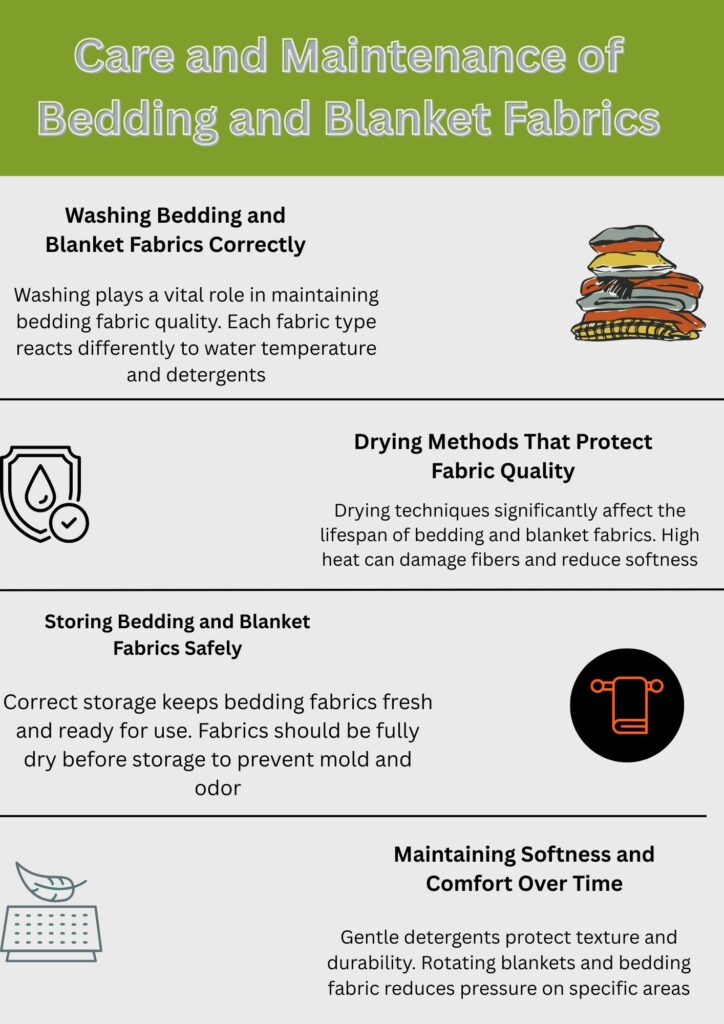
Care and Maintenance of Bedding and Blanket Fabrics

Proper care and maintenance of bedding and blanket fabrics help preserve comfort, softness, and durability. When fabrics receive the right treatment, they remain fresh and supportive for longer periods. Understanding how to wash, dry, and store different materials prevents damage and maintains sleep quality.

“Care and Maintenance of Bedding and Blanket Fabrics” with sections on Washing Bedding and Blanket Fabrics Correctly, Drying Methods That Protect Fabric Quality, Storing Bedding and Blanket Fabrics Safely, and Maintaining Softness and Comfort Over Time. Includes simple icons: a stack of folded fabrics, a water/droplet shield, a towel/clipboard, and a leaf with a keyboard.Blankets and Bedding fabic
Care and Maintenance of Bedding and Blanket Fabrics: practical tips for washing, drying, storing, and preserving softness.

Washing Bedding and Blanket Fabrics Correctly

Washing plays a vital role in maintaining bedding fabric quality. Each fabric type reacts differently to water temperature and detergents. Cotton and bamboo bedding fabrics usually perform best in cool or warm water. Wool blankets require gentle washing with mild detergent to avoid shrinking. Synthetic fabrics tolerate regular machine washing, but harsh chemicals can weaken fibers. Washing fabrics correctly protects texture and comfort.

Drying Methods That Protect Fabric Quality

Drying techniques significantly affect the lifespan of bedding and blanket fabrics. High heat can damage fibers and reduce softness. Air drying works best for natural fabrics like wool and linen. Low heat settings suit cotton and synthetic fabrics. Gentle drying prevents shrinkage and preserves the original shape. Proper drying also reduces fabric wear over time.
Storing Bedding and Blanket Fabrics Safely

Correct storage keeps bedding fabrics fresh and ready for use. Fabrics should be fully dry before storage to prevent mold and odor. Cool and dry spaces protect blankets from moisture damage. Natural fabrics benefit from breathable storage covers. Avoiding plastic bags helps maintain airflow and fabric quality.

Maintaining Softness and Comfort Over Time

Softness defines bedding comfort and sleep quality. Fabric softeners may provide temporary results but can weaken fibers. Gentle detergents protect texture and durability. Rotating blankets and bedding fabric reduces pressure on specific areas. Proper maintenance ensures fabrics remain comfortable night after night.

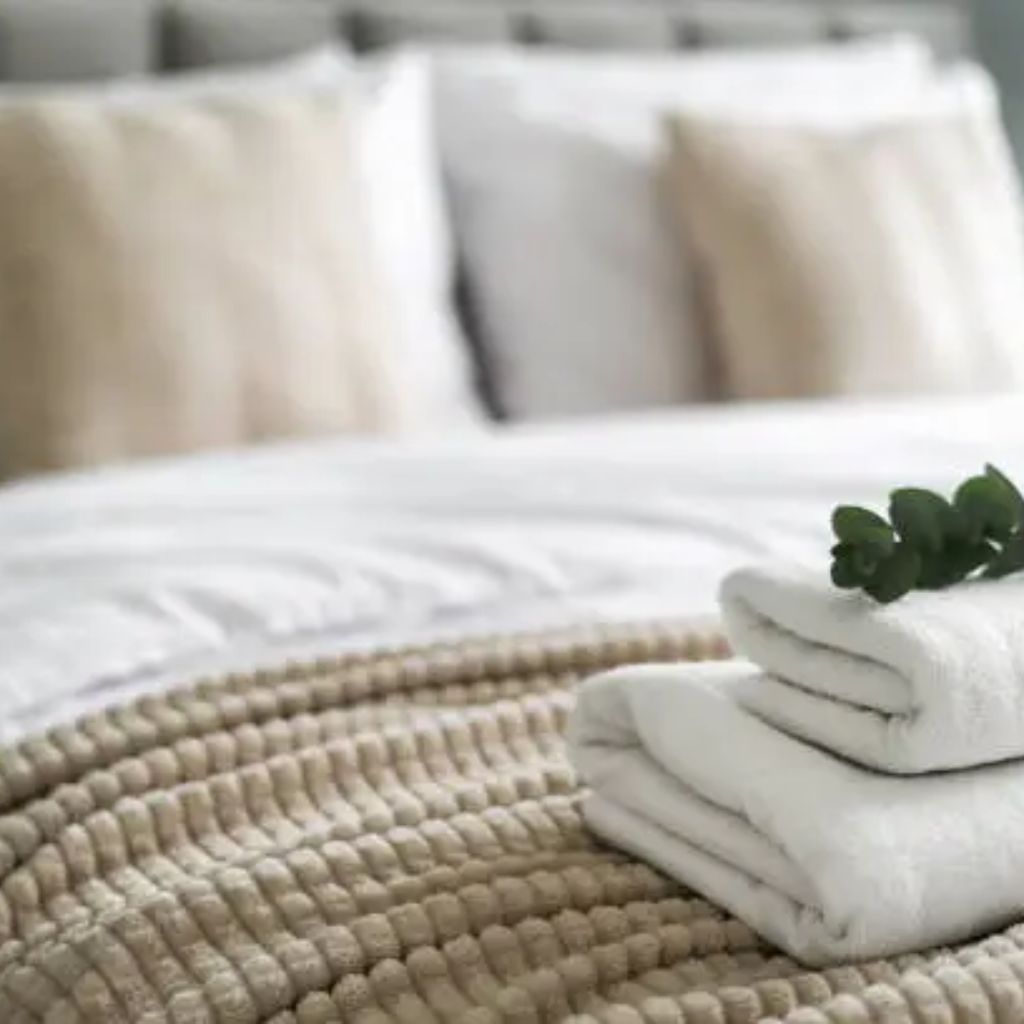
A neatly made bed with piles of white towels stacked on a textured beige blanket, with a small green plant resting on top. The background shows soft neutral pillows.
Blankets and Bedding fabic
Cozy, minimalist bedding setup with folded towels on a textured throw.

Conclusion

Selecting the right blankets and bedding fabric is crucial for warmth, comfort, and better sleep. Natural fabrics provide softness, breathability, and eco-conscious choices, while synthetics offer durability and low maintenance. Seasonal needs, sleeping habits, and personal preferences should guide your selection. Understanding fabric types, weaves, care, and sustainable options allows informed decisions that enhance comfort and ensure long-lasting quality. Prioritizing comfort, climate suitability, and care over price ensures your blankets and bedding fabric provide restful, cozy nights every time.

FAQs

What is the best fabric for blankets?

The best fabric for blankets depends on climate and comfort needs. Wool offers excellent warmth and insulation for cold weather. Cotton provides softness and breathability for everyday use. Fleece works well for affordable warmth and casual comfort. Choosing the right fabric improves sleep quality and comfort.

Which bedding fabric is best for sleeping?

Cotton, bamboo, and linen are ideal for sleeping. These fabrics allow airflow and help regulate body temperature. They feel gentle against the skin and reduce night sweats. Their breathable nature supports deeper and more comfortable sleep.

Are synthetic blanket fabrics safe to use?

Synthetic blanket fabrics are safe for regular use. Polyester and microfiber offer durability and easy maintenance. However, they may trap heat and reduce airflow. Hot sleepers should balance synthetic warmth with breathable bedding layers.

Orthodox Christmas Day – Traditions, and Global Significance

Orthodox Christmas Day is one of the most important holidays for Christians all over the world. Every year on 7 January millions of followers rejoice and remember the day when baby Jesus was born. The occasion is a celebration of a beautiful miracle and is accompanied with a lot of customs and traditions. Christmas is the time of the year to promote joy, peace and love to all.

The Orthodox Day celebration is done in a number of ways. These ways, are unlike the celebration of Christmas in the West, and provide Christians today with a direct connection to many hundreds of years of Christian customs and practice.


What is Orthodox Christmas Day all about?

Orthodox Christmas Day is the day to celebrate the birth of of Jesus Christ, and to remember the occasion as described in the Julian calendar. Although the majority of the world is following the Gregorian calendar, the Orthodox Christian churches are still in the practice of following the Julian calendar. As a result, Orthodox Christmas Day is celebrated on the 7th day of January.

The 7th of January is recognized as Orthodox Christmas Day, which is observed by members of the Orthodox Christian faith worldwide. Many nations recognize this date as a public holiday.


The Origin of Orthodox Christmas Day

The observance of Christmas Day has a long and rich history, as Christians have been commemorating the birth and baptism of Jesus Christ as early as the 1st century. The Christian Church later made Christmas an official holiday.

Among all the Christian denominations, the Orthodox Church is the only Church that has maintained the historically based Christian calendar. The observance of Christmas Day and the ecclesiastical calendar in the Orthodox Church is a reflection of this practice.

This lengthy history is the reason Orthodox Christmas Day is of such great importance to the Church.


Why Orthodox Churches Celebrate Christmas on 7 January

As stated earlier, the Orthodox Church celebrates Christmas on the 7th of January. The reason for this celebratory date is due to the predominance of the Julian calendar, which is a calendar system utilized by the Orthodox Church. The Julian calendar is 13 days behind the Gregorian. Because of this Julian-Gregorian calendar disparity, Christmas is considered by the Orthodox Church to be a holiday that commemorates a unique historical date.


Countries That Celebrate Orthodox Christmas Day

The countries which recognize and celebrate Orthodox Christmas Day include:““

  • Russia
  • Ukraine
  • Greece
  • Serbia
  • Georgia
  • Armenia
  • Ethiopia
  • Egypt

In the aforementioned countries, Orthodox Christmas Day is recognized as a public holiday.


Christmas Traditions Related to Orthodox Christianity

Attending church

During Orthodox Christmas Day, church services are very important. People attend church, pray, light candles, and sing songs.

Christmas Fasting

Before Christmas, Orthodox Christians fast for 40 days. This fast is meant to prepare for the day spiritually.

Eating together

After family members attend church, they eat festive meals together. Every region has different meals.


Meaningful Christmas Symbols

The Orthodox Christmas has a lot of important symbols.

  • Candles are a reminder of Jesus’ light.
  • Stars are a reminder of the Bethlehem star.
  • Icons are a reminder of Jesus’ birth.

All of these symbols are important and are meant to give deeper meaning to the day.


Reason Orthodox Christmas Day is Significant

The values of Orthodox Christmas are still very important today.

  • Faith
  • Peace
  • Kindness
  • Unity

With the busyness of the world, Orthodox Christmas reminds us to be grateful and to reflect on the important things.


Observing Orthodox Christmas Day

Some ways to observe Orthodox Christmas Day include:

  • Understanding the Orthodox Christmas traditions.
  • Appreciate the Christian communities.
  • Post messages promoting peace.

Final Thoughts: Orthodox Christmas Day is Love, Humility, and Hope

Orthodox Christmas Day is not just a day on the calendar. It is a day to celebrate the values that anchored the ancient faith – love, humility, and hope. Read more: Old Rock Day and Distaff Day

International Days Today (7 January): Why They Matter

Each day on the universal calendar has significance. International days are a means for people to think, educate, and empathize. International days today, 7 January range from religious observances, and cultural holidays, to traditional festivities. These days reminisce values that are still relevant today.

Let us examine international days today and their significance.


Orthodox Christmas Day – A Celebration of Faith and Tradition

Orthodox Christmas Day is among the most significant international days today. An estimated three million Orthodox Christians commemorate the birth of Jesus Christ on International Days Today

Why is Orthodox Christmas Day On the 7th of January?

The Orthodox church observes the Julian calendar as opposed to the Gregorian calendar. Hence, Christmas is celebrated on the 7th of January in comparison to the 25th.

How Christmas Day is Celebrated in the Orthodox Tradition

There are many traditions for Christmas day in the Orthodox tradition, which include many family religious traditions. Families go to church, light candles, and sing Christmas Day hymns. Many families participate in fasting prior to Christmas Day. Following this, families share a meal together.

The Significance of Christmas Day in Orthodox Tradition

Christmas Day in the Orthodox tradition exemplifies peace and comes with an emphasis on the importance of faith. It helps remind people how important it is to show sacrifice, and kindness to one another. Of all the international days celebrated, this day holds a unique significance.

Old Rock Day: Celebrating the Beauty of the Past

Old Rock Day, celebrated on January 7, is an interesting and fun day that encourages people to value older things.

What is Old Rock Day?

Old Rock Day is about appreciating historical items. This can include antique items, heirlooms, and memories as well as old stones. This day also reminds us that things don’t get worse with age; they get better.

The Significance of Old Rock Day

Old Rock Day is helpful in that it promotes a slower lifestyle in a world that is fast paced. It helps teach people that we ought to respect the past and promotes the idea of sustainability through the idea of reusing and not wasting.

What Can You Do to Celebrate Old Rock Day?

Many people enjoy collecting stones. Some enjoy visiting museums, while others like to reflect on the history of their family. Old Rock Day has a meaningful message that is in line with many international days celebrated today.

Aside from International Days Today , Distaff Day is one more unique cultural event taking place today.

What is Distaff Day?

Distaff Day is associated with the spinning and textile-making women. The term distaff is a tool used for spinning yarn and dates back to medieval Europe.

Why Distaff Day Still Matters

Distaff Day demonstrates the importance of the skills that have been handed down from one generation to the next. It also shows the significance of women’s roles and the value of their work in both families and the communities.

Present Significance of Distaff Day

With the passage of time, Distaff Day has come to symbolize the empowerment of women along with a strong association with textile history, craftsmanship and creativity.

Importance of International Days Today

International Days Today is more than merely a date in a calendar. It is a source of knowledge, a means of preservation, and a unifying bridge across the world. Each holiday on 7 January represents a different value. Distaff Day is a tribute to the skills and heritage of women.

These International Days Today demonstrate the values that we as a world posses.


Ways to Participate in Before International Day Events

Here are some suggestions to help you practice international day activities today:

  • Research the customs associated with the Christmas holiday of the Eastern Orthodox Church.
  • Honor the history represented in artifacts and reminiscences.
  • Respect and recognize the skills and artistry of women.
  • Advocate and raise awareness on social media.
  • Explain the significance of the day to children.

Individual efforts matter and make a difference.


Conclusion: The Importance of International Days Events

With the greatest of appreciation and love, the days of January 7 and the many International Days are a celebration of due appreciation to anti people the other the let.

With international days, we help keep old and dead collections of indifferent and meaningless traditions alive and beautiful

Wool Thermal Fabric Explained: Warmth, Benefits, and Uses

0

Wool thermal fabric explained is a necessity in winter comfort. The cold season requires a garment that is warm but not uncomfortable. Wool thermal cloth is a good solution to this need. It retains the body heat and the natural airflow. Consequently, wearers will be comfortable all day long. This percentage makes wool thermal fabric very dependable,Wool Thermal Fabric Explained:

Wool thermal is a very popular product since it has self-working qualities with the body. It does not trap a lot of heat and is therefore insulating. Meanwhile, it is also efficient in moisture control. Sustainable fashion preferences are also backed by this garment. Thus it will attract comfort and environmentally conscious customers. Clothing used during winter will not be complete without it.

History of Wool Thermal Fabric.

Thousands of years have passed and wool has been used by humans to keep them warm. The ancient people relied on wool in order to survive during snowy seasons. With time, spinning and weaving techniques were enhanced. This advancement enabled the wool fabrics to be soft and strong. At one time, thermal wool was invented to provide warmth. That invention transformed the winter wear.

Wool thermals were refined in the industrial development. Manufacturers got to know how to fill fibers with air. Consequently, clothes were more warm and lightweight. Wool thermal fabric was further enhanced by the modern science of textiles. At present, it is a mixture of nature and modern technologies. There is innovation and tradition in its history.

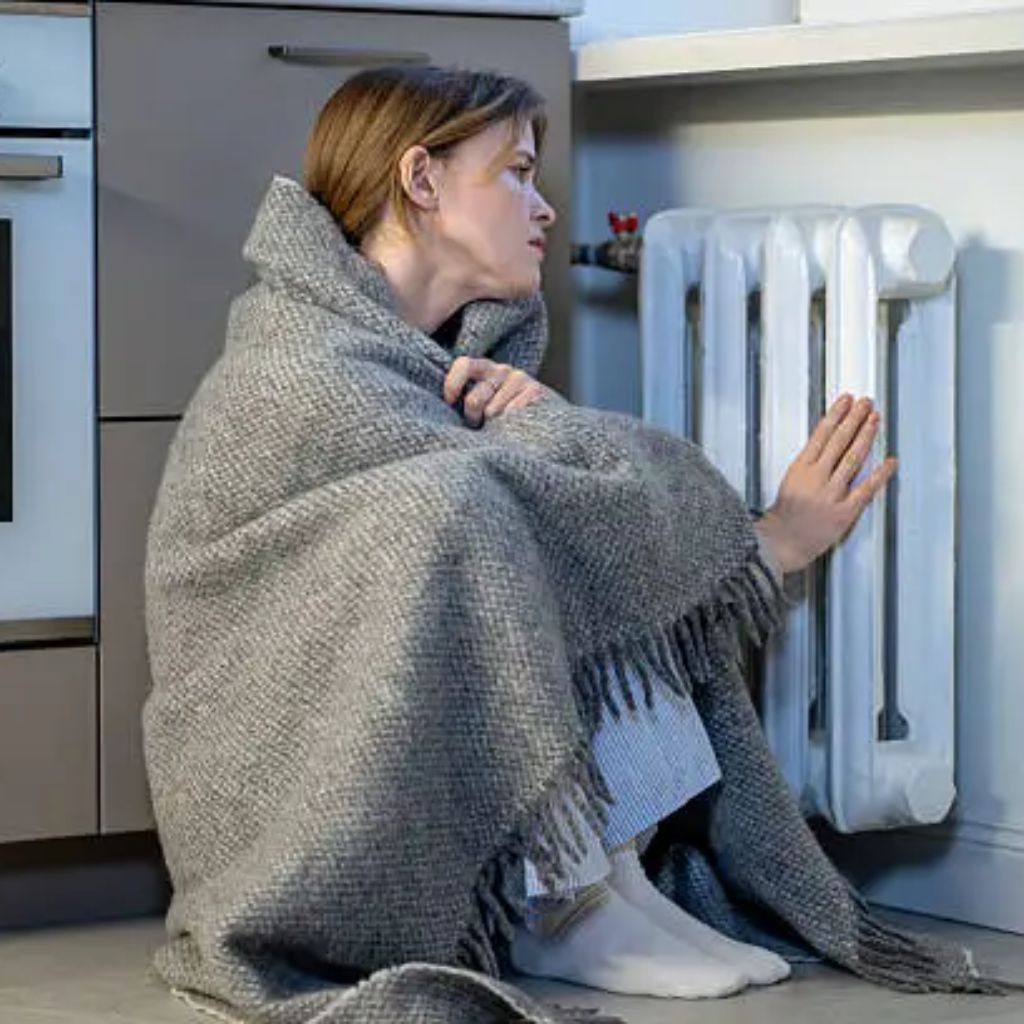
“Woman sitting on the floor by a radiator, wrapped in a thick gray woven blanket with fringe, appearing cold.”Wool Thermal Fabric Explained:
“Woman bundled in a gray fringe blanket beside a radiator.”

What Is Wool Thermal Fabric?

Wool thermal fabric is a wool fabric that has been designed specifically. It is made in such a way that it keeps the body heat. It does not emphasize looks and appearance, as regular wool does. Consequently, it suits underwear and innerwear. This material assists in the preservation of warmth in low temperatures. It does not introduce unwarranted bulk.

The structure wool thermal material is different to normal wool fabric. It incorporates even smaller fibers and certain knitting techniques. Such methods enhance retention of air in the cloth. Enclosed air is a natural heat resistant. Due to this purpose, it qualifies as a thermal fabric. Wool thermal clothes material provide comfort and dynamism in keeping one warm.

The operation of Wool Thermal Fabric.

Wool thermal fabric is an insulation that uses the enclosed air. These air sacs decrease the loss of heat in the body. Consequently, warmth remains near to the skin. The process forms a natural layer of insulation. Even lighter clothes are cozy and warm. That makes wool thermals special because of its efficiency.

Wool also controls the body temperature. When required it releases excessive heat. In the meantime, it will keep warm in lower temperatures. Wool possesses the ability to absorb moisture without becoming wet. Notably, even when wet it keeps insulating. Such a property renders wool thermal fabric reliable in winter.

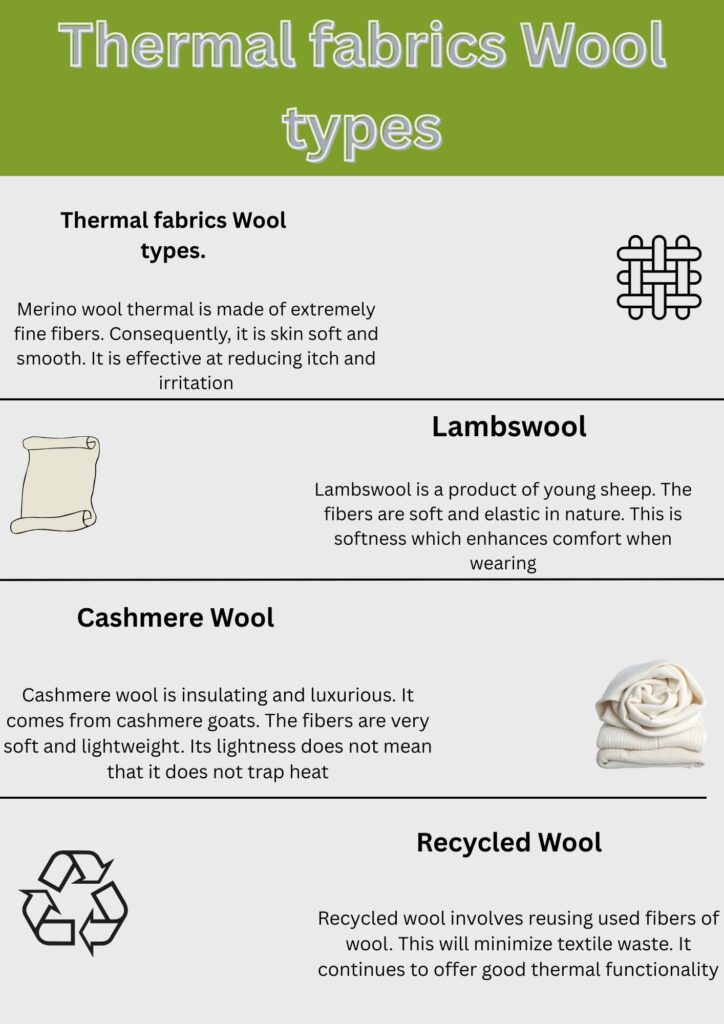
Thermal fabrics Wool types.

Infographic titled ‘Thermal fabrics Wool types’ listing Lambswool, Cashmere Wool, Recycled Wool, and Merino wool with simple icons and short descriptions.”Wool Thermal Fabric Explained:
“Types of wool thermal fabrics: Merino, Lambswool, Cashmere, and Recycled Wool with icons.”

Merino Wool Thermal Fabric

Merino wool thermal is made of extremely fine fibers. Consequently, it is skin soft and smooth. It is effective at reducing itch and irritation. Moreover, it does not lose moisture easily. These attributes render it the best thermal apparel.

Merino wool is good to use in active and everyday style. It adjusts to changes in body temperature. This has made merino wool be used in premium thermals. The major strengths that Comfort and performance have are still the strengths.

Lambswool

Lambswool is a product of young sheep. The fibers are soft and elastic in nature. This is softness which enhances comfort when wearing. Lambswool gives cozy and constant warmth.

It is suited to winter day thermostats. It is rather thick but warm. Lambswool is used by many people to keep them comfortable in their day to day lives.

Cashmere Wool

Cashmere wool is insulating and luxurious. It comes from cashmere goats. The fibers are very soft and lightweight. Its lightness does not mean that it does not trap heat.

Cashmere thermals are non-slippery to the skin. They provide high quality comfort during cold weather. They tend to be however, more expensive than others.

Recycled Wool

Recycled wool involves reusing used fibers of wool. This will minimize textile waste. It continues to offer good thermal functionality. Hence, it embraces sustainability objectives.

Thermals made of wool that is recycled are a bit firmer. Nevertheless, they are cozy and strong. The green customer commonly chooses this one.

Manufacturing Process of Wool Thermal Fabric

The manufacturing process of wool thermal fabric begins with responsible wool sourcing. Farmers shear sheep carefully to protect animal health. This step usually happens once a year. Proper shearing ensures long and strong fibers. High-quality fibers directly affect warmth and comfort. Therefore, ethical sourcing plays a major role in final fabric performance.

After shearing, raw wool contains dirt, grease, and plant matter. Manufacturers clean the wool thoroughly using gentle washing methods. This process removes lanolin and impurities. Clean fibers feel lighter and softer. At the same time, careful cleaning prevents fiber damage. As a result, the wool remains strong and flexible.

Next, the cleaned wool goes through carding. Carding aligns fibers in one direction. This step creates a smooth and even structure. Proper alignment improves insulation ability. It also helps trap air more effectively. Therefore, carding directly improves thermal performance.

Once carded, fibers are spun into yarn. Spinning controls yarn thickness and strength. Fine yarns create lightweight thermal fabrics. Thicker yarns produce heavier insulation. Manufacturers adjust spinning based on intended use. This flexibility allows wool thermals for different climates.

“A person sitting on the floor next to a radiator, wrapped in a gray woven blanket with fringe, appears cold.”Wool Thermal Fabric Explained:
“ person huddled in a gray blanket beside a radiator.”

Why Wool Thermal Fabric Is Beneficial

Wool thermal fabric offers multiple benefits that make it ideal for winter wear. Its natural structure works in harmony with the human body. Unlike many synthetic fabrics, wool adapts to changing temperatures. This adaptability makes it suitable for daily use in cold seasons. Comfort, performance, and sustainability come together in one fabric. That is why wool thermal fabric remains a trusted choice.

Natural Insulation for Lasting Warmth

Wool thermal fabric provides natural insulation without heaviness. The fibers trap air within their structure. This trapped air slows down heat loss from the body. As a result, warmth stays close to the skin. Even thin wool thermals feel effective in cold weather. This insulation works consistently throughout the day.

Unlike artificial materials, wool does not rely on coatings. Its fibers naturally retain heat. Therefore, the fabric performs well over time. This makes wool thermals dependable for long winters. The body stays warm without feeling restricted.

Excellent Breathability for Daily Comfort

Breathability is one of wool’s strongest advantages. Wool thermal fabric allows air to move through the fibers. This airflow prevents overheating indoors. At the same time, it keeps warmth stable outdoors. The body remains balanced in changing conditions.

Because of this breathability, wool thermals feel comfortable for long wear. They suit both active and relaxed settings. Unlike synthetic thermals, they do not trap excessive heat. This balance improves overall winter comfort.

Moisture Management That Keeps Skin Dry

Wool thermal fabric absorbs moisture efficiently. It pulls sweat away from the skin. This process keeps the body dry and comfortable. Even when moisture is present, wool continues to insulate. This feature makes it ideal for cold environments.

Unlike cotton, wool does not feel cold when damp. It maintains warmth even in humid conditions. Therefore, it suits outdoor activities and daily wear. Moisture control also reduces discomfort during temperature changes.

Natural Odor Resistance for Fresh Wear

Wool thermal fabric resists odors naturally. The fiber structure prevents bacteria growth. This reduces unpleasant smells during extended wear. As a result, garments stay fresher for longer periods.

This benefit makes wool thermals practical for daily use. They require less frequent washing. Reduced washing also extends garment life. Therefore, wool thermals combine hygiene with convenience.

Softness and Skin-Friendly Comfort

Modern wool thermal fabric feels soft and gentle. Fine fibers, especially merino wool, reduce irritation. This softness makes wool suitable for sensitive skin. Proper processing further improves comfort.

Unlike traditional coarse wool, thermal wool feels smooth. It sits comfortably against the body. This comfort encourages all-day wear. Many people now prefer wool over synthetic options.

Wool Thermal Fabric Compared to Other Thermal Fabrics

Wool Thermal Fabric vs Polyester Thermal Fabric

Wool thermal fabric provides natural insulation through fiber structure. Polyester thermal fabric relies on synthetic fibers for warmth. Because of this difference, wool regulates temperature more effectively. Polyester often traps heat without releasing excess warmth. This can cause discomfort indoors.

Wool allows airflow while retaining heat. This balance prevents overheating during daily wear. Polyester lacks breathability in comparison. It may also hold odors after prolonged use. Wool resists odor naturally, which improves freshness. Therefore, wool thermals suit long hours of wear better.

Moisture behavior also differs significantly. Wool absorbs moisture without feeling wet. Polyester pushes moisture outward but cools quickly. When damp, polyester may feel cold. Wool remains warm even in humid conditions. This makes wool thermals more reliable for winter.

Wool Thermal Fabric vs Fleece Fabric

Fleece fabric is popular for warmth and softness. However, fleece is entirely synthetic. It provides insulation by trapping air between fibers. While this works initially, fleece lacks adaptability. Wool adjusts to body temperature naturally.

Fleece tends to overheat in mild conditions. Wool maintains balance in both cold and indoor environments. Additionally, fleece loses insulating ability when wet. Wool continues to insulate even with moisture present. This gives wool a practical advantage in unpredictable weather.

Durability also differs. Fleece pills over time and loses texture. Wool thermal fabric maintains structure longer with proper care. This longevity adds to wool’s overall value.

Wool Thermal Fabric vs Cotton Thermal Fabric

Cotton thermal fabric feels soft and breathable. However, cotton absorbs moisture quickly. Once wet, it loses insulation. This makes cotton unsuitable for cold climates. Wool manages moisture far better.

Wool pulls sweat away while keeping warmth intact. Cotton becomes cold and heavy when damp. Therefore, cotton thermals feel uncomfortable in winter. Wool continues to perform in fluctuating conditions. This difference makes wool the stronger choice.

Cotton works better in mild weather. Wool suits true winter conditions. That distinction matters when warmth is essential.

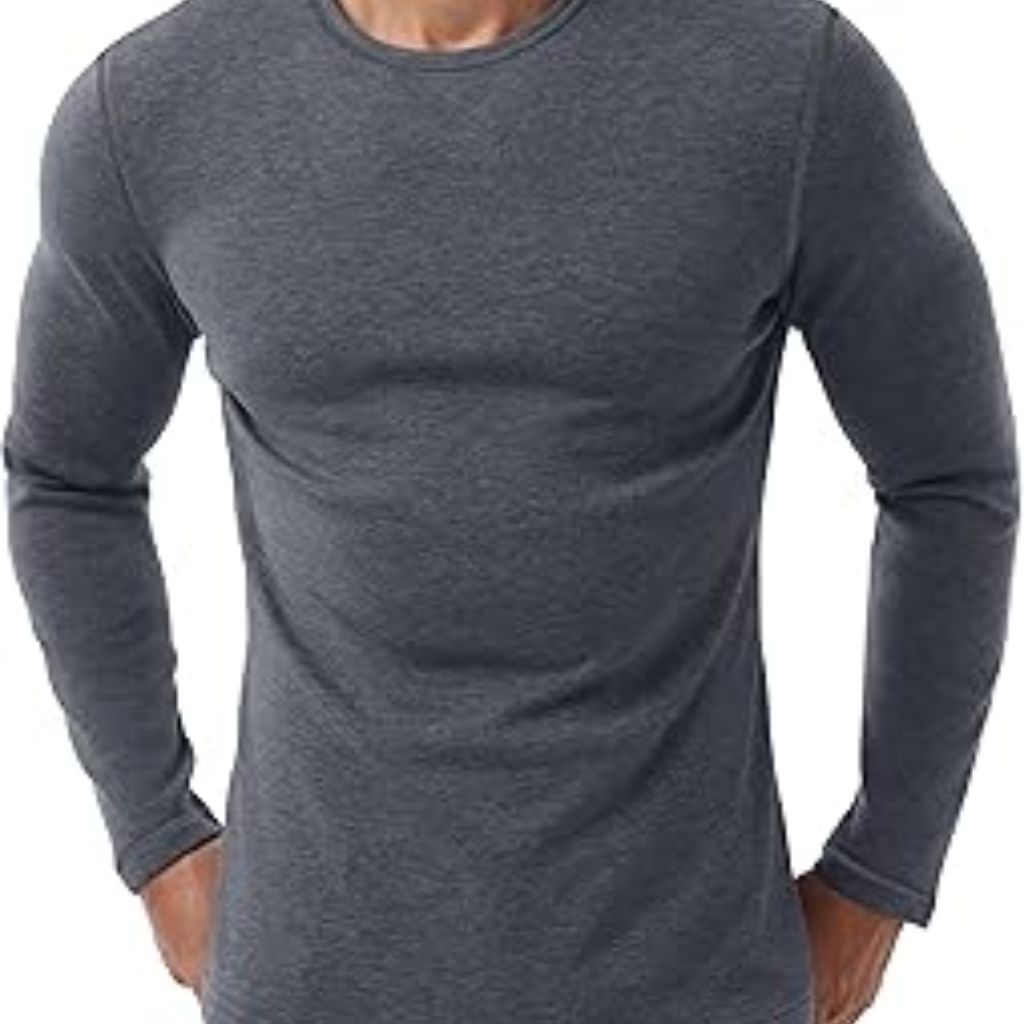
“Man wearing a dark gray long-sleeve crewneck shirt, shown from the waist up with hands in pockets.”Wool Thermal Fabric Explained:
“Dark gray long-sleeve crewneck shirt on a man.”

Is Wool Thermal Fabric Good for Winter?

Wool thermal fabric works exceptionally well during winter. It provides steady warmth without making the body feel heavy. The natural structure of wool fibers traps heat close to the skin. This trapped warmth helps maintain a stable body temperature. As a result, the body stays protected against cold air. Even in fluctuating winter conditions, wool performs consistently.

Wool thermal fabric adapts to different temperature levels. It keeps the body warm outdoors while remaining comfortable indoors. This adaptability prevents overheating in heated spaces. At the same time, it protects against sudden drops in temperature. Therefore, wool thermals suit daily routines in winter. People can move between environments without discomfort.

This fabric also performs well in varying winter climates. It suits mild winters as well as extreme cold. In moderate weather, lightweight wool thermals feel breathable. In colder regions, thicker wool thermals offer stronger insulation. When layered properly, wool provides excellent cold protection. This versatility makes it suitable across regions.

Moisture control adds to its winter performance. Wool absorbs sweat while keeping warmth intact. Even when damp, wool continues insulating. This feature becomes important during outdoor winter activities. Unlike cotton, wool does not feel cold when wet. Therefore, comfort remains consistent throughout the day.

Common Uses of Wool Thermal Fabric

Wool Thermal Fabric in Thermal Innerwear

Thermal innerwear remains the most common use of wool thermal fabric. It sits close to the skin and traps body heat efficiently. This close fit improves insulation without adding bulk. As a result, wearers stay warm throughout the day. Wool innerwear also feels soft and comfortable. It allows easy movement during daily activities.

Because wool manages moisture well, innerwear stays dry. Sweat moves away from the skin naturally. This prevents chills during cold weather. Therefore, wool thermal innerwear suits long winter wear. It performs well during both rest and activity.

Wool Thermal Fabric in Winter Base Layers

Winter base layers often rely on wool thermal fabric. These layers form the foundation of winter outfits. They help maintain body warmth under outer clothing. Wool base layers regulate temperature effectively. This balance prevents overheating when layered.

Wool base layers work well under jackets and coats. They improve overall insulation without heaviness. Because of their breathability, they remain comfortable indoors. This makes them ideal for daily winter routines.

Wool Thermal Fabric in Socks and Leggings

Socks and leggings frequently use wool thermal fabric. Feet and legs lose heat quickly in cold weather. Wool helps retain warmth in these areas. At the same time, it allows airflow to prevent sweat buildup.

Wool socks stay warm even when damp. This feature benefits winter travel and outdoor use. Wool leggings provide insulation without restricting movement. They work well under trousers or skirts. This combination improves winter comfort.

Wool Thermal Fabric in Jackets and Coats

Many winter jackets and coats include wool thermal fabric. It often appears as a lining or inner layer. Wool lining enhances warmth without increasing weight. This improves garment comfort significantly.

Wool-lined outerwear also feels breathable. It prevents moisture buildup inside the jacket. As a result, wearers feel dry and warm. This makes wool ideal for long winter wear.

Care and Maintenance of Wool Thermal Fabric

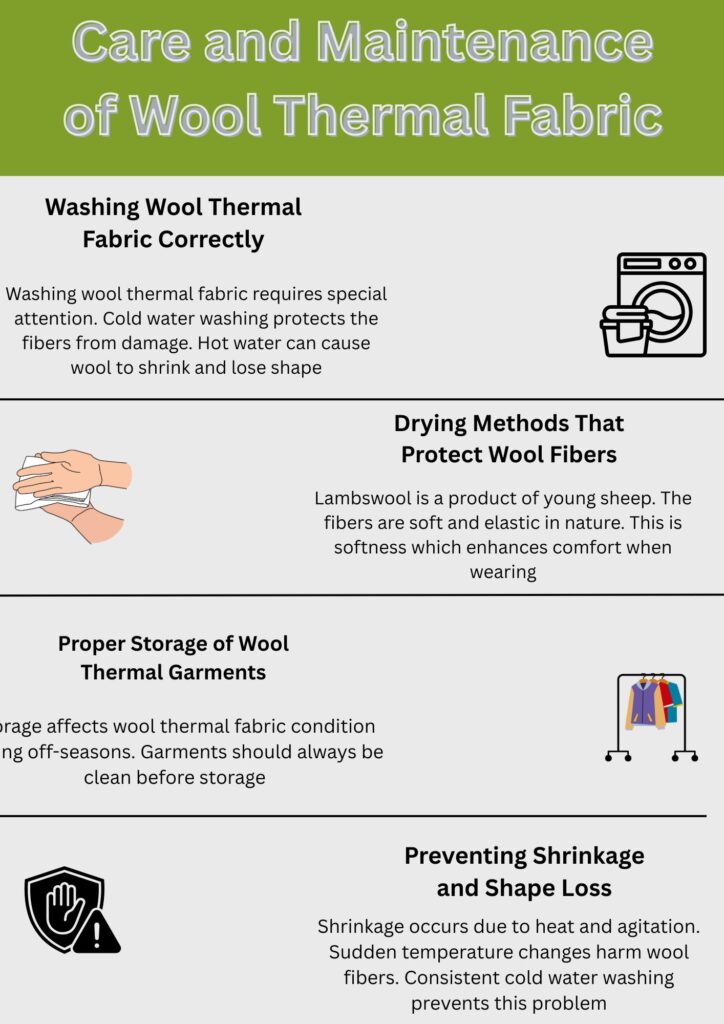
Proper care and maintenance keep wool thermal fabric warm and comfortable for years. Wool is a natural fiber, so it reacts differently than synthetic materials. Gentle handling helps preserve its structure and insulation ability. When cared for correctly, wool thermals maintain softness and shape. This also prevents early wear and damage. Therefore, correct care routines are essential for long-term use.
Infographic on care and maintenance of wool thermal fabric, with sections on washing, drying, storage, and prevention of shrinkage, and simple icons.”Wool Thermal Fabric Explained:
Care and Maintenance of Wool Thermal Fabric: washing, drying, storage, and shrinkage prevention.

Washing Wool Thermal Fabric Correctly

Washing wool thermal fabric requires special attention. Cold water washing protects the fibers from damage. Hot water can cause wool to shrink and lose shape. Mild detergents designed for wool work best. They help maintain the fiber’s natural oils. These oils support warmth and softness.

Drying Methods That Protect Wool Fibers

Drying plays a major role in fabric longevity. Wool thermal fabric should always air dry. Laying the garment flat helps maintain its original shape. Hanging may stretch the fabric over time. Direct sunlight can weaken fibers.

Proper Storage of Wool Thermal Garments

Storage affects wool thermal fabric condition during off-seasons. Garments should always be clean before storage. Folding helps prevent stretching and distortion. Breathable storage allows air circulation.

Preventing Shrinkage and Shape Loss

Shrinkage occurs due to heat and agitation. Sudden temperature changes harm wool fibers. Consistent cold water washing prevents this problem. Gentle handling maintains the garment’s original size.

How to Choose the Best Wool Thermal Fabric

Fabric thickness matters when choosing thermals. Higher GSM means more warmth. Lightweight options suit layering better. Climate conditions should guide selection.

Pure wool provides excellent insulation. Blends offer durability and stretch. Sensitive skin benefits from merino wool. Proper fit improves heat retention. These factors help ensure comfort.

Common Mistakes When Buying Wool Thermal Fabric

Many buyers ignore fabric blend ratios. This affects warmth and durability. Others overlook fabric thickness. As a result, comfort suffers.

Poor washing habits damage wool fibers. Climate mismatch reduces effectiveness. Informed decisions prevent these mistakes.

Is Wool Thermal Fabric Sustainable?

Wool comes from renewable sources. Sheep naturally regrow fleece each year. Therefore, wool remains sustainable. It decomposes without harming the environment.

Recycled wool thermal fabric reduces waste further. It lowers environmental impact significantly. Compared to synthetic materials, wool biodegrades faster. This makes it an eco-friendly choice.

“Two women outdoors wearing oversized plaid ponchos with fur collars, standing side by side on a grassy path.”Wool Thermal Fabric Explained:
“Women wearing cozy plaid ponchos with fur collars during a walk outside.”

Conclusion

Wool Thermal Fabric Explained highlights warmth, comfort, and sustainability. It provides insulation while remaining breathable. Therefore, it suits modern winter needs.

Wool thermals support effective layering systems. They adapt to changing temperatures. As a result, winter dressing becomes easier. Choosing wool means choosing comfort, durability, and responsibility.

FAQs

Is wool thermal fabric itchy to wear?

Wool thermal fabric does not always feel itchy. The comfort depends on fiber quality. Fine fibers like merino wool feel soft and smooth. They bend easily against the skin. This reduces irritation significantly. Modern processing methods also improve softness. As a result, most people find wool thermals comfortable.

Can wool thermal fabric be worn every day in winter?

Wool thermal fabric works well for daily winter wear. It regulates temperature naturally. This prevents overheating and chilling. Wool also resists odor buildup. Therefore, frequent washing is unnecessary. With proper airing, wool thermals stay fresh for repeated use.

Is wool thermal fabric suitable for sensitive skin?

Wool thermal fabric can suit sensitive skin if chosen carefully. Merino wool is the best option for sensitivity. Its fibers are very fine and soft. Coarse wool types may cause discomfort. Checking fabric labels helps avoid irritation. Proper fit also improves comfort.

Cozy Jacket for woman – Everyday Comfort Winter-Ready Style

0

Fashion changes, but comfort is timeless. A Cozy Jacket for Woman brings warmth and softness together with confidence. As seasons shift, jackets become more than clothing. They become comfort, protection, and personal expression. Gentle jackets spread with style. A Cozy Jacket for Woman does this and more.

Understanding the Definition of Cozy in Relation to Women’s Fashion

Woman wearing a light brown oversized quilted jacket with a high collar, paired with a patterned knit sweater and light-wash jeans.Cozy Jacket for woman
Cozy vibes in a plush quilted jacket.
Cold-day essential: the perfect oversized cocoon coat.
Soft, structured warmth meets casual chic.

There is a common misconception that the expression of cozy in women’s fashion is synonymous with dullness and oversized garments that completely drown the wearer. Contrary to the expression of cozy as dullness, cozy in the fashion industry is used to convey warmth, comfort, as well as emotional assurance. For instance, in women’s modern fashion, a Cozy Jacket, is a perfect example of a garment that embodies the seamless combination of softness and stylish an attribute that is sought after in contrast to the fast pace of modern fashion. Besides, psychological studies indicate emotional wellbeing nurtures self confidence, and increases self esteem in the presence of a person.Read more hooded shell jacket

What is the Reason Women Love Cozy Jackets?

A cropped, oversized gray quilted jacket with a front zipper, rolled cuffs, and a relaxed fit worn by a woman with a long braided ponytail.
Stay warm and chic in our cozy quilted jacket — the perfect everyday layer for chilly days.

The contemporary world is fast shocking and equally demanding in the scope and variety of tasks that women must perform on a daily basis. For instance, women must go to work, and then travel, after which they must dedicate time to the family, and socialize. All the subsuming tasks mentioned above, must be executed using clothes that are easy to modify and are extremely adaptive to the bodily movements of the wearer, moreover, clothes that are easy to layer. It must be noted that in performing the tasks mentioned above, women must be comfortable in order to eliminate the stress that is caused by heavy and tight garments they are wearing.Read more shell jacket for man

How Cozy Jackets Suit Every Season

 A cozy, cream-colored sherpa jacket with a high collar and two large front pockets, made from soft, fluffy fleece.
Cozy Jackets That Suit Every Season

Every season has its own personality with some showing a bright and vibrant character and others appearing cold and moody. Jackets are often associated with the winter season, yet a cozy jacket for women is versatile enough to cater to every season personality. During the fall, a cozy jacket for women serves to keep the chilly wind at bay. It is insulating yet breezy. During winter, a cozy jacket for women can be layered over a warm sweater. An early spring jacket is the light cozy jacket which keeps the cool breezes at bay. Because of this versatility, cozy jackets are year-round favorites, rather than a summer staple or a winter necessity.Read more heavy leather jacket

Fabric Choices That Define Comfort

“A person wearing a oversized brown sherpa jacket with a full front zipper and large pockets.”
Cozy and chic: this plush brown sherpa jacket delivers effortless warmth and cushioning for everyday wear.

Comfort is often found wrapped in layers of thick wool yet several layers combined with a warm insulating jacket can be uncomfortable on the skin. J jackets made of fleece, wool blends, cotton linings, and padded textiles can be rubbed over the skin and can trap the insulating heat and keep the cold at bay. It can be combined with modern fabric which allows the wool and cotton to breathe and reduces the weight. Such fabrics will make sure jackets remain warm without the discomfort of outside woolen layers combined with cozy jackets for women.

Cozy Jackets for Versatile Wear

Versatility is a key component for all women and everyday fashion. A jacket designed to be cozy is perfect for these everyday needs. Cozy jackets are perfect for walking to work, running around completing errands, and meeting friends. They can be worn with jeans, dresses, and sporty footwear, and are all women will need to wear for the entire length of the day. One cozy jacket allows for the completion of a range of activities while looking polished and sophisticated.Read more leather overshirt jacket

The Ideal Combination of Indoor and Outdoor Attire

Indoor loungewear is often associated with the term cozy, yet a cozy women’s jacket incorporates this feeling and allows it to be brought outdoors. Soft linings, similar to those in indoor soft clothing, are now available for outdoors. A cozy jacket allows women to feel comfortable and relaxed in outdoor and unfamiliar surroundings. Cozy jackets are perfect for this unique combination of comfort and style.read more leather jacket

How Cozy Jackets Build Confidence

A Cozy Jacket for woman instills confidence when it’s wraps your body gently. Confidence is a byproduct of feeling supported. Women can go throughout their day without thinking of their uncomfortable layers or making clothing adjustments. Jackets like these are trusted, confidence boosters. Each flattering layer improves posture, self-assuredness, and self-expression.Read more Pullover Down Jacket

Color Choices That Feel Warm and Calm

The colors you surround yourself with have an impact on your mood. Pleasing neutral hues like beige, cream, warm gray, and soft gray are cozy and enhance the feeling of the clothing. Warm colors such as deep green, soft pink, and light blue add character. Cozy Jackets for Women are constructed with colors that are easy on the eyes and create a calm and soothing feeling.read more Cargo Overshirt Jackets

Cozy Jackets and Modern Lifestyle

Today, modern life is fast paced, yet there is a longing for comfort. A Cozy Jacket for woman is a true reflection of this need. It allows for seamless travel, work, and leisure. With its flexible nature, it meets the demands for simple, stylish, and relaxed attire demanded by social media. Cozy jackets are a true reflection of the current state of modern fashion.Read more Oversized Overshirt Jacket

Travel Made Easier with Cozy Jackets

Travel is characterized by ever-changing temperatures, and long hours spent on the road. A Cozy Jacket for women is a great travel companion which keeps you warm during flights and comfortable during long walks. Soft fabrics help alleviate fatigue. Cozy jackets are also wrinkle-resistant and are easily washable. Travelers also enjoy the functional style of a cozy jacket.Read more western overshirt jacket

Workwear Comfort Without Losing Style

Workwear is no longer characterized by stiffness and formality. A lot of workplaces allow relaxed styles that are also professional. A Cozy Jacket for women adds softness to office wear while maintaining the office structure of the outfit. A cozy jacket is best layered on top of clean and structured office basics to achieve the desired balanced aesthetic. Women cozy jackets enhance the feeling of comfort without looking too casual and unprepared for the Cozy Jacket for woman office.

Cozy Jackets for Social Moments

Social events feel better when clothes feel right. A Cozy Jacket for woman supports relaxed conversations and movement. It removes the worry Cozy Jacket for woman of feeling cold or restricted. Stylish designs allow women to feel present and confident. Whether meeting friends or attending social events, cozy jackets enhance social comfort and functionality.

How Cozy Jackets Aid Mental Health

A sense of comfort contributes to positive mental health. When clothing is soft, it diminishes stress. A woman’s cozy jacket provides warmth that feels like a protective hug. This experience can elevate spirits. When a woman’s cozy jacket is combined with style, it indicates that looking good is just as important as feeling good.

Cozy Design and the New Sustainable Fashion

The growing trend of sustainable fashion is now embraced by many Cozy Jackets for women. Sustainable styles made with eco-friendly materials and responsible production methods can be found. Sustainable styles made with eco-friendly materials and responsible production methods can be found. Longer-lasting materials reduce waste, and classic styles reduce the lure of fast fashion. Choosing cozy jackets that are made with sustainability in mind, offers personal COMFORT and supports environmental sustainability.

Why Cozy Jackets Never Go Out of Style

Trends come and go, but cozy remains constant. Cozy Jackets for women are always a great fashion choice because feeling cozy is always in style. Cozy Jackets for women are always a great fashion choice because feeling cozy is always in style. Jackets that gentle to the touch always provide value to the consumer. This is a value that other styles simply Cozy Jacket for woman cannot provide.

How to Maintain a Cozy Jacket

The right care keeps a jacket looking good and feeling good. cleaning a jacket in a gentle way will help the fabrics stay soft. Jacket stay in better shape and help maintain their warming properties if they are air dried. A woman’s cozy jacket will last longer if proper care is taken. After a great deal of time, and with continued good care, jackets will soften Cozy Jacket for woman even more, and increase emotional bonds with their jackets.

The Emotional Bond with Favorite Jackets

A powerful sentimental bonds develops between women and their jackets. A woman’s cozy jacket is a likely item she incorporates into her outfit every day. It is a product that contributes to the memories, she makes, on her, with every, for her, walk, travel, and entire jacket. The older the product gets, the more it gives her a sense of warm, protected and familiar. This is one of the factors that makes cozy jackets keep their value for many women for many years Cozy Jacket for woman.

Cozy Jackets and Personal Identity

The woman’s cozy jacket and her outfit gives off a personality and an impression. A woman’s cozy jacket is a piece of clothing that exudes a strong sense of confident self-awareness. It tells the people around that they are self aware and confident woman that prioritize comfort over the current trend. It breaks the clog of over instructions to focus on the true needs Cozy Jacket for woman.

Future of Cozy Jackets in Fashion

Fashion is a world with no limits and the world of cozy jackets will continue to broaden with time. The world is a fast paced world that will have technological advances to improve a product’s incentive, including cozy jackets’, style and material. The core of a woman’s cozy jacket will always be the same. The comfort, warmth, and emotional ease that it gives to a woman to this day will still remain guiding influences to a woman’s cozy jacket when the world surrounds it with improvements.

Final Thoughts

A Cozy Jacket for Women is more than just outerwear, it is a representation of comfort, confidence, and care throughout the day. From busy mornings to relaxed evenings, it supports women through every moment. As fashion continues to evolve, cozy jackets remain a necessity. They remind us that real style starts with feeling good.

FAQs

What is a cozy jacket for women?

A cozy jacket for women is designed to provide warmth, softness, and comfort while maintaining a stylish appearance. It is often made with insulated or plush materials that feel comfortable for everyday wear.

Is a cozy jacket suitable for winter wear?

Yes, a cozy jacket is ideal for mild to cold winter conditions. Many styles include insulation or fleece lining that helps retain body heat during chilly weather.

Which fabric is best for a cozy women’s jacket?

Common fabrics include fleece, wool blends, padded polyester, and soft cotton linings. These materials are chosen because they feel comfortable on the skin and help keep the body warm during chilly days.

Modern Track Jacket Outfits Stylish Everyday Wear Guide.

0

Modern fashion is moving towards clothing that feels flexible, natural and expressive. Versatility becomes more important as rigid dress codes disappear. Modern track jacket outfits are now a staple of everyday style. Track jackets, once confined to the athletic world, have been transformed into fashion essentials that combine comfort and confidence.

Track jackets are becoming more popular because they can be easily adapted to modern lifestyles. Track jackets are not worn just for their function. They are now styled to reflect individual taste. Understanding how to create Modern track jacket outfits will allow you to style your jackets in a way that feels effortless, rather than forced.

The Evolution of Modern Track Jacket Outfits

 A young woman with long dark hair wearing a light gray, full-zip athletic jacket and matching pants stance facing forward against a neutral gray background.
Sporty elegance: a sleek light-gray zip-up jacket paired with coordinating leggings.

Originally, track jackets were designed for performance jacket. As fashion evolved, however, they began to be appreciated for their aesthetic potential. They were transformed into staples through refined cuts, updated materials, and minimal detailing.

Modern track jacket outfits became more popular than sportswear as street style jacket started to influence mainstream fashion. Modern track jacket outfits began to appear in urban environments, creative environments, casual social spaces, and informal social settings. The desire to be comfortable without sacrificing fashion was the driving force behind this evolution.

Modern interpretations also place a strong emphasis on balance. Classic track jackets look polished thanks to their clean silhouettes and proportions. They now seamlessly fit into modern wardrobes.

Why Modern Track Jacket Outfits Are So Popular

A woman wearing a dark blue pinstripe zip-up jacket with a high collar and matching pinstripe pants. She carries a small burgundy clutch under her left arm and wears white pearl earrings against a soft, blurred light-gray background.
Sleek pinstripe ensemble with a bold burgundy clutch.

Modern track jacket outfits are popular because they reflect current fashion trends. The emphasis is on comfort, but the visual impact is still maintained. The jacket provides structure to the outfit, which makes it feel more intentional.

Versatility is also important. Modern track jackets can be worn multiple ways – layered, or as a standalone piece. Outfit possibilities are increased without having to overcomplicate styling.

Confidence is another important factor. Modern track jackets convey ease. The style is chosen with care and not aggressively. They are therefore in tune with the modern fashion sensibility.

Choosing the Right Track Jacket for Modern Outfits

A light blue-green zip-up jacket with a high collar and large white abstract panels on the front, featuring long sleeves and ribbed cuffs and hem.
Modern color-block zip-up jacket with oversized white panels.

Selecting the right jackets essential to creating modern track jacket ensembles. Fit should be relaxed, but controlled. Ideal is a silhouette that maintains shape while allowing movement.

Fabric quality is also important. Material refinement is important, as modern styling emphasizes subtle details. Structured fabrics and lightweight textures add versatility while light textures are versatile. The craftsmanship is more apparent because the details are minimal.

The color selection can also influence the flexibility of an outfit. The neutral and muted colors are often preferred because they blend well with other items. The jacket is no longer a restriction but a base.

Everyday Modern Track Jacket Outfits

Modern track jackets are a great addition to any outfit. Pairing track jackets with essentials creates a wearable and balanced look. The jacket gives structure to the outfit, so it is best to wear simple pieces beneath.

Harmony is created by a clean top and a relaxed bottom. The outfit will feel more natural than over-styled. Comfortable footwear complements an overall aesthetic.

Modern track jackets are also ideal for those with busy schedules. Practicality is increased because movement is not restricted. Style remains constant throughout the day.

Casual Looks Elevated by Modern Track Jackets

A man wearing a white zip-up jacket with a light gray horizontal stripe across the chest, standing against a soft gray background.
Minimalist white zip-up jacket with a subtle gray stripe.

A modern track jacket instantly elevates casual outfits. The clean, modern design adds sophistication without sacrificing comfort. The jacket frames your outfit so even casual pieces look intentional.

Layering is visible when worn open. Texture and contrast create depth, while still maintaining simplicity. These subtle elements add visual interest to modern fashion, which values nuance.

Moreover, modern track jackets are adaptable to different settings. These outfits are suitable for casual gatherings, but still polished enough to wear in social settings.

Street Style Inspired Modern Track Jacket Outfits

A person model wearing a dark navy windbreaker jacket with white piping, maroon cap, and blue leggings, standing with hands on hips.
Sporty windbreaker look: oversized navy jacket with white piping, paired with a maroon cap and blue leggings.

The street style has been a major influence on the modern track jacket. The jacket has become an essential streetwear jacket item through creative layering, confident combinations and confidence.

The jacket structure often pairs well with relaxed silhouettes. The outfit is balanced because the proportions have been carefully considered. The jacket can be kept central by using minimal accessories.

Modern outfits are inspired by streetwear, but they avoid excess. Refinement is the priority. Modern track jackets are therefore more contemporary than trendy.

Modern Track Jacket Outfits for Urban Environments

Person with dark hair wearing a light blue and white color-block windbreaker with a black zipper and black detailing, standing against a warm, orange-brown gradient background.
Bold in a color-block windbreaker with sporty flair.

Fashion that is both functional and stylish is essential for urban life. This need is easily met by modern track jacket outfits. They create a polished look when styled with streamlined items.

Contrast is created by the clean silhouettes underneath the jacket. The outfit does not look formal because the jacket is relaxed. The neutral palettes add sophistication.

Modern track jackets are ideal for urban life. Comfort is maintained, enhancing confidence. They are therefore a perfect fit for modern urban lifestyles.

Layering Techniques for Modern Track Jacket Outfits

A tall man stands facing forward wearing a brown bomber jacket over a navy sweater, gray dress pants, and dark brown shoes.
Smart-casual look: brown bomber jacket, navy knit, and tailored trousers.

Modern track jackets are characterized by their ability to layer. The jacket is constructed so that layers can be easily added to it without adding bulk. The jacket is ideal for changing weather conditions.

Lightweight garments underneath maintain comfort. As the temperature changes, you can add layers as needed. The outfit looks refined because the jacket has a neat profile.

You can incorporate scarves or soft textures subtly. Layering is important in modern fashion, which values cohesion. Function and style can coexist without difficulty.

The Role of Fabric and Texture in Modern Outfits

Modern track jackets are dominated by fabric and texture. Surface details are more visible because the designs are minimal. The look is elevated by using high-quality materials.

While subtle textures give depth to the look, smooth finishes are a great way to create a sleek aesthetic. Outfits look more considered than plain. Fabrics that breathe also make clothing more comfortable.

Comfort is essential for modern clothing, as it’s often worn over long periods of time. Fabric choice affects both the appearance and functionality.

Accessorizing Modern Track Jacket Outfits

Accessorize modern track jackets to enhance them without overdoing it. Restraint is important because simplicity defines style. Accessorize with functional, clean accessories.

Structured bags enhance the silhouette of the jacket. Shoes with fine details enhance cohesion. If jewelry is included, it should be subtle and functional.

The jacket design can be highlighted by limiting the excess. The outfit is balanced and modern.

Common Mistakes to Avoid in Modern Track Jacket Outfits

Modern track jackets are versatile, but they can be ruined by incorrect styling. Overly loose pieces can give the appearance of a shapeless outfit. Always maintain balance.

Branding or other bold elements that are excessive can ruin the modern aesthetic. Subtlety is important, since clean design should be the priority. Fabric quality can also have a negative impact on the overall look.

These mistakes can be prevented by focusing on texture, proportion and cohesion. Modern track jacket outfits are polished as a result.

Why Modern Track Jacket Outfits Are Timeless

Adaptability is the key to timeless fashion. Modern track jacket outfits achieve simplicity and functionality. They are timeless because they don’t overdo it.

The ability to adapt to different environments adds to the longevity of their lifespan. They adapt easily to any environment, whether it’s casual or urban. Modern wardrobes continue to embrace them.

Versatile outfits are becoming more valuable as fashion shifts towards intentional consumption. Modern track jacket outfits are designed with thoughtfulness to support this trend.

Modern Track Jacket Outfits as Personal Expression

Modern track jackets are minimalistic in design but allow for individuality. Subtly expressing personality through styling choices is possible. The jacket is easily adaptable, so experimentation can be encouraged.

The jacket’s flexibility adapts to changing tastes. The jacket will remain relevant as preferences change. It becomes a long-lasting piece.

Modern track jackets are a reflection of confidence, but without being excessive. These track jackets communicate simplicity, authenticity, and clarity.

Last Thoughts

The modern track jacket outfits are the future of fashion. They meet modern needs through their clean design, comfort and adaptability.

These outfits are elevated by choosing quality pieces, maintaining a balance and styling them with intention. They are timeless because of their understated style.

Modern track jackets are all about a well-executed simplicity. When they are styled with care, they can be a powerful statement of modern style.

FAQs

What are modern track jacket outfits?

Modern track jacket outfits combine contemporary track jackets with casual, athleisure, or streetwear pieces. These outfits focus on clean design, comfortable fits, and versatile styling suitable for everyday wear.

How can I wear a modern track jacket casually?

A modern track jacket can be paired with jeans or joggers, a simple T-shirt, and sneakers for an easy casual look. Neutral colors help keep the outfit clean and balanced.

Are modern track jacket outfits suitable for all seasons?

Yes, modern track jacket outfits work well year-round. Lightweight jackets are ideal for spring and summer evenings, while layering makes them suitable for fall and mild winter weather.