While heading into the mountains, the environments can change rapidly and without warning. One moment there could be gorgeous views, and the next moment, the views can be obstructed by rain, wind, or fog. This makes having the right gear more than a comfort choice, it is a necessity. Outwear designed for mountain environments is designed to perform in these conditions. They are the best choice for keeping you dry, warm, and offering full range of motion.
In the following, you will learn the most valuable elements for making a mountain rain jacket worth it, how to determine the most mountain rain jacket, and the practical elements to paying for a mountain rain jacket for the outdoors. We will discuss things like the various materials, the different features, the different types of fits, and offer some tips for caring for your outdoors mountain rain jacket so you can get the most value for your money.
What Is a Mountain Rain Jacket?
The technical attributes of a mountain rain jacket make it different from the attributes of a rain coat. A technical rain coat is built to withstand the elements (i.e. rain, wind, extreme cold and high altitude conditions of the mountains). The regular rain coat attributes are not designed to withstand the conditions anywhere close to as well to these conditions.
Furthermore, mountain rain jackets are usually lightweight and durable. This combination enables freedom of movement and protection. They are often used as the outer shell in a layering system, giving them the flexibility to be used in different seasons.
Why Mountain Rain Jackets Are Important
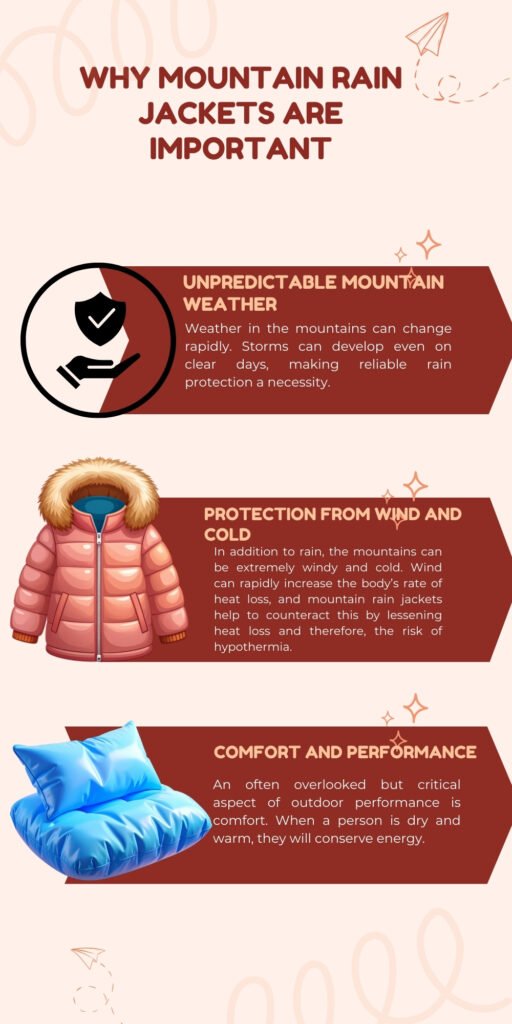
Unpredictable Mountain Weather
Weather in the mountains can change rapidly. Storms can develop even on clear days, making reliable rain protection a necessity. Quality mountain rain jackets will keep rain and snow out, even in the heaviest of downpours.
Protection From Wind and Cold
In addition to rain, the mountains can be extremely windy and cold. Wind can rapidly increase the body’s rate of heat loss, and mountain rain jackets help to counteract this by lessening heat loss and therefore, the risk of hypothermia.
Comfort and Performance
An often overlooked but critical aspect of outdoor performance is comfort. When a person is dry and warm, they will conserve energy. This means they can hike and climb more and enjoy the experience even more.
Characteristics of Mountain Rain Jackets
Waterproof Technology
As rain is outjacket’s primary enemy, waterproofing is of main importance to an effective mountain rain jacket. Most high-performance jackets use high-end technology — waterproof membranes. These membranes use layers like Gore-Tex, eVent, or some unique brand proprietary layers. They block incoming water while letting water vapor out, creating a microclimate that allows sweat to evaporate onto the membrane. Most high-performance jackets have balanced moisture management, an essential feature for activities like trekking where maintaining a high comfort level while sweating is key.
Breathability
A jacket that is not breathable will not let moisture escape, making it very uncomfortable to wear. Mountain rain jackets use specially engineered fabrics that allow sweat and moisture to escape while keeping the water out.
Ventilation is an added feature many high-end jackets have that help to manage heat and moisture. These jackets have underarm zippers or panels that can be opened to allow moisture to escape.
Seam Sealing
Sealing ironed lines is often aesthetically pleasing, and can be considered high-end fashion. For mountain rain jackets, this is a critical feature. Taped or welded seams ensure that they will let no water through the stitching, keeping the waterproofing intact.
Outer Fabric
The mountains are tough. Rocks, branches, and even some gear can damage weak fabrics. Therefore, abrasion resistant tough outer layers are necessary. Outer layers are often made of rip stop nylon and extra reinforced panels.
Different Types of Mountain Rain Jackets
Hardshell jackets
Hardshell jackets provide the most protection. They are fully waterproof, fully windproof, and very durable. They provide the most protection but are very stiff and can be less breathable. They are very good in extreme conditions. They are good for alpine climbing and heavy storms.
Softshell Rain Jackets
Softshell jackets provide good protection and are somewhat flexible. They are water resistant, and are more breathable than hardshell jackets, but provide less protection. They are good in light rain and good for activities where a lot of movement and energy are involved. Softshell jackets are good for mild conditions in the mountains.
Lightweight Packable Jackets
These jackets are designed for weight and how much space they take up. They are good for fast travel and hiking even though they are not very durable and packable. They can be quickly put on when it rains and are very good to carry.
Mountain Rain Jacket Materials
Gore-Tex and Comparable Membranes
One of the most trustworthy technologies for waterproofing remains Gore-Tex. It has high waterproofness, breathability, and durability. For its reliability, it has become a common choice for premium mountain rain jackets.
Competitors sell other membranes that offer similar performance for a variety of costs.
Nylon and Polyester Shell Materials
Most jackets have an outer shell made of nylon or polyester. Nylon is chosen for its strength and resistance to abrasion. Polyester is less expensive and offers a good durability and retains color well.
In a variety of instances, an outer fabric is coated with a durable water repellent or DWR. This coating causes water to bead and roll off rather than absorb into the fabric.
Design and Fit Factors
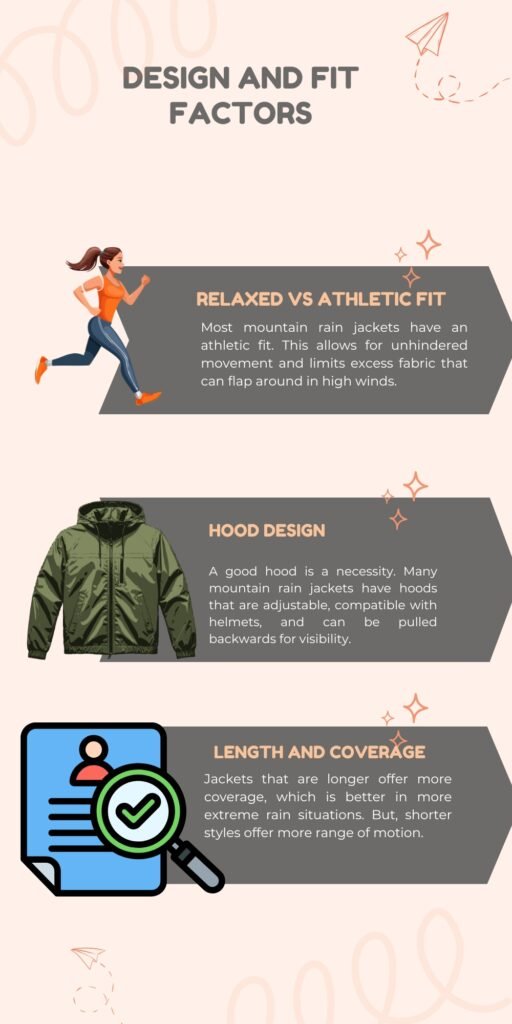
Relaxed vs Athletic Fit
Most mountain rain jackets have an athletic fit. This allows for unhindered movement and limits excess fabric that can flap around in high winds. Additionally, there should be enough room for layering.
Hood Design
A good hood is a necessity. Many mountain rain jackets have hoods that are adjustable, compatible with helmets, and can be pulled backwards for visibility. This provides unimpeded coverage while still allowing an unobstructed view.
In many models, stiffened brims are added to stop rain from running down the face.
Length and Coverage
Jackets that are longer offer more coverage, which is better in more extreme rain situations. But, shorter styles offer more range of motion. Striking the right balance is largely dependent on your activity and your personal preference.
How to Decide on the Best Mountain Rain Jacket
Consider Your Activity
Varied activity requires varied features. For example, for climbers, the focuses are on hoods that are compatible with a helmet and overall durability. While hiker, there is more of a preference for lightweight construction so that they can pack it.
Therefore, your dominant use is the most important factor that steers your decision.
Climate and Conditions
When hiking, the most important can be extreme rain and snow, so I recommend going for a fully waterproof hardshell. If the weather is more mild, a soft shell that is breathable is perfectly fine.
Weight vs Durability
When it comes to a jackets’ durability, lightweight can be a double edged sword. On one hand, it is easier to take with you when you undergo an expedition, but nothing is more frustrating than a jacket that wears out. Finding a good balance is key.
The Benefits of Quality Mountain Rain jackets
Long-Term Reliability
The best quality jackets are made to withstand severe weather for many years. For people who tend to weather many storms out in the mountains, investing in a quality rain jacket can help save money in the long run.
Ensured Safety
Keeping warm and dry while outdoors in exposed to the elements is critically important for safety. With the rapid drop in temperature in high altitudes while in the mountains, the exposed rain protection is a necessity for your safety.
Increased Enjoyment while Outdoors
Keeping warm and dry during your outdoor adventures increases their enjoyment by allowing the participants to focus on the hike or activity, rather than the discomfort. With discomfort comes increased risk for encounters with the elements.
How to Care for Your Mountain Rain Jacket
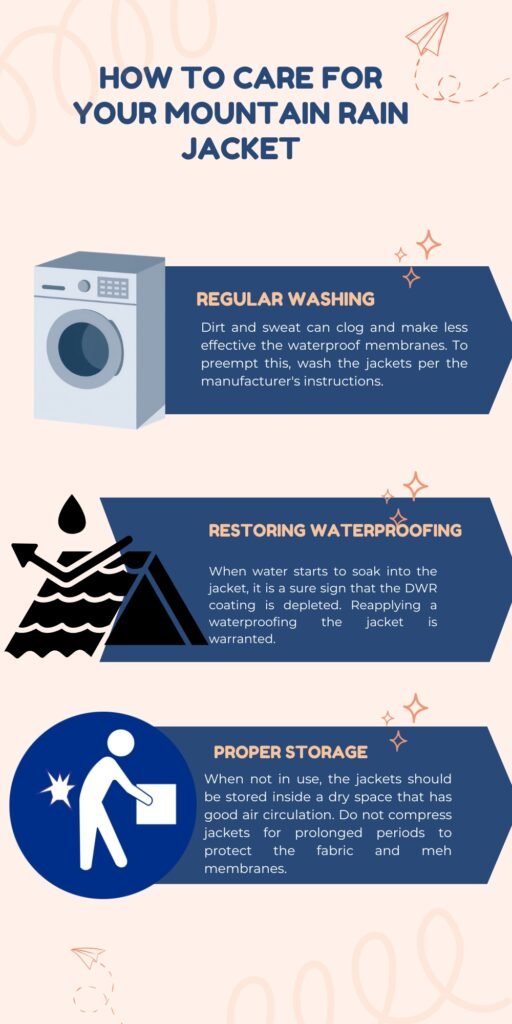
Regular Washing
Dirt and sweat can clog and make less effective the waterproof membranes. To preempt this, wash the jackets per the manufacturer’s instructions.
Washing instructions usually recommend mild detergents, and to use no fabric softener.
Restoring Waterproofing
When water starts to soak into the jacket, it is a sure sign that the DWR coating is depleted. Reapplying a waterproofing the jacket is warranted.
Proper Storage
When not in use, the jackets should be stored inside a dry space that has good air circulation. Do not compress jackets for prolonged periods to protect the fabric and meh membranes.
Eco-Friendly and Sustainable Options
Outdoor gear brands are increasingly becoming sustainably focused. Fabrics that are recycled, waterproof coatings that are free of PFCs, and ethical production are becoming the norm.
Choosing eco-friendly options when purchasing mountain rain jackets greatly reduces the negative environmental impacts without sacrificing jacket performance.
Mountain Rain Jackets Adapted for Every Season
Summer
When summer comes, rain jackets should be lightweight and have good ventilation to improve breathability and comfort, helping keep you cool while you’re working harder.
Winter
Winter comes, rain jackets often need to be worn as outer shells. Because you primarily will need rain jackets as outer shells, it is most important for outer shell jackets to be durable and weather resistant.
Versatile for All Seasons
Select jackets are specially designed to be worn year round. These selective jackets are specially designed to be worn year round by being adaptable to varying climates.
Pitfalls to Avoid
Overlooking breathability ratings
Not layering because the jacket is too small
Not seam sealed to be truly waterproof
Wearing selected jackets designed for year round use to avoid layering.
Final thoughts
Purchasing a mountain rain jacket involves a great deal of consideration. Proper care can keep them from being a nuisance to the user and help keep bad weather inviting. Knowing the features is important as bad weather won’t go away, age will.
No matter where you go, from hiking to dangerous mountains, a good mountain rain jacket will always be a wise choice.
FAQs
What is a mountain rain jacket used for?
A mountain rain jacket protects against rain, wind, and cold during hiking, trekking, and alpine adventures.
Are mountain rain jackets fully waterproof?
Yes, most mountain rain jackets use waterproof membranes and sealed seams for complete rain protection.
Are mountain rain jackets breathable?
High-quality jackets are breathable, allowing sweat to escape while keeping rain out.