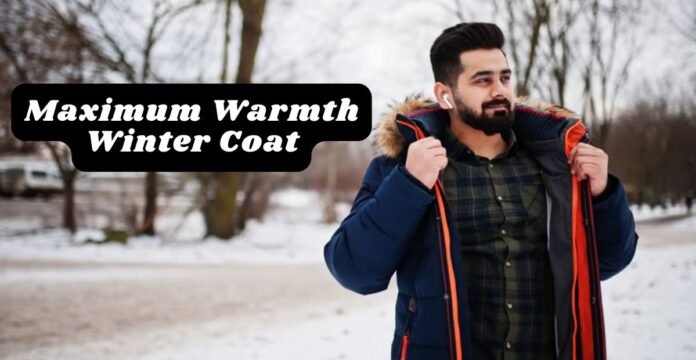
A maximum warmth winter coat is a heavy-duty outerwear piece designed for harsh cold. It focuses on keeping body heat inside even in freezing wind. Unlike regular jackets, it uses advanced insulation and weather protection layers. It also includes extra features like storm flaps and heat-lock cuffs. Many coats in this category are built for sub-zero temperatures. Therefore, they perform better in snow, ice, and extreme winter storms.Maximum Warmth Winter Coat Explained:
People who live in very cold regions need this type of coat the most. Outdoor workers also depend on it for long winter shifts. Travelers going to snowy destinations benefit from strong warmth protection. In addition, hikers and campers often choose it for survival-level insulation. A good coat prevents frostbite and dangerous heat loss. That is why choosing the right one matters for safety and comfort.
Since this article is Maximum Warmth Winter Coat Explained, you will learn every important detail. You will also understand which features make a coat truly warm.
History Of Maximum Warmth Winter
Maximum warmth winter coats have a long history that connects directly to human survival in harsh winter climates. Long before modern insulation technology existed, people living in cold regions relied on animal skins, fur, and thick wool Fabric garments to stay warm.Maximum Warmth Winter Coat Explained: Early Arctic communities, including Inuit groups, used layered fur clothing made from caribou and seal because these materials trapped heat naturally and blocked icy winds. These early coats were not designed for fashion, but they provided life-saving warmth in freezing temperatures.
As trade and textile development increased, wool became one of the most important winter materials in Europe and other cold regions. Maximum Warmth Winter Coat Explained: During the Middle Ages, heavy wool cloaks and long coats were common because they offered both warmth and weather resistance. Although these coats were bulky, they helped protect travelers and workers from harsh winter winds.Maximum Warmth Winter Coat Explained: Over time, tailoring improved, and winter coats became more fitted and practical for daily use.

What Makes a Winter Coat Provide Maximum Warmth?
A coat provides maximum warmth when it traps heat efficiently. It must also block cold air from entering the body space. Most importantly, it must manage moisture properly to avoid chilling. Many people ignore these factors, but they decide real performance.Maximum Warmth Winter Coat Explained: Therefore, understanding warmth basics helps you buy the right coat.
The first major factor is insulation type and thickness. Thick insulation traps more air, which stores heat. However, insulation must stay evenly spread across the coat. If insulation shifts, cold spots develop quickly. That is why premium coats use baffles and quilting designs.
Another key factor is heat retention technology. Maximum Warmth Winter Coat Explained: Some coats include reflective linings that push heat back. Others use thermal layers that reduce heat escape. In addition, wind and moisture protection improves warmth dramatically. Wind strips away body heat faster than cold air alone. So, a windproof shell becomes a serious advantage.
Fit also plays an important role in warmth. A coat must leave enough room for light layers. However, it should not feel loose or open at the bottom. A proper fit seals warmth while allowing movement.
Best Insulation Types for Maximum Warmth
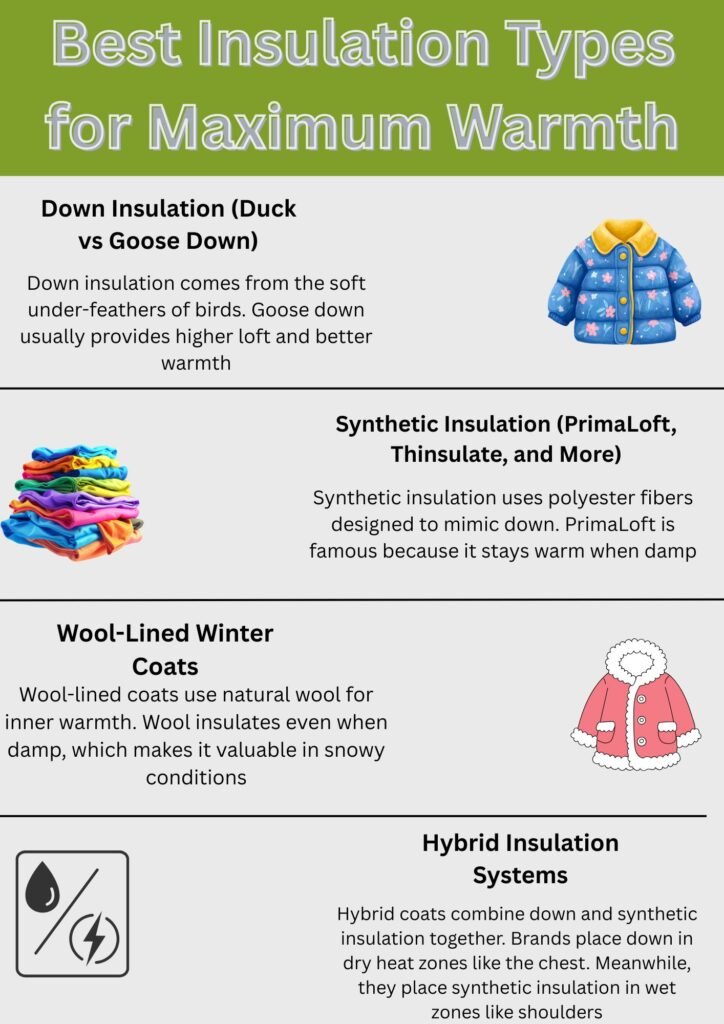
Insulation is the heart of maximum warmth outerwear. Without good insulation, even the best shell feels useless. Different insulation materials offer different warmth levels. Some insulations perform better in wet conditions. Others provide unbeatable warmth in dry cold. Therefore, knowing insulation types is essential in this Maximum Warmth Winter Coat Explained guide.
Down Insulation (Duck vs Goose Down)
Down insulation comes from the soft under-feathers of birds. Goose down usually provides higher loft and better warmth. Duck down is still warm but often slightly less efficient. Down insulation traps a huge amount of air, which creates strong heat retention. That is why it works well in Arctic-style cold.Maximum Warmth Winter Coat Explained:
Synthetic Insulation (PrimaLoft, Thinsulate, and More)
Synthetic insulation uses polyester fibers designed to mimic down. PrimaLoft is famous because it stays warm when damp. Thinsulate works well because it offers warmth without too much bulk. Synthetic insulation also dries faster than down. Therefore, it suits wet snow climates and rainy winters.
Wool-Lined Winter Coats
Wool-lined coats use natural wool for inner warmth. Wool insulates even when damp, which makes it valuable in snowy conditions. It also feels breathable and comfortable on long wear. In addition, wool reduces odor and improves natural temperature control.
Hybrid Insulation Systems
Hybrid coats combine down and synthetic insulation together. Brands place down in dry heat zones like the chest. Meanwhile, they place synthetic insulation in wet zones like shoulders. This design improves performance in changing weather. Therefore, hybrid coats have become very popular in modern winter gear.
Temperature Ratings Explained (°C / °F)
Temperature ratings help buyers understand coat warmth levels. However, these ratings do not always follow a universal standard. Brands often test coats differently depending on conditions. Still, temperature ratings provide a useful guideline for buyers. Maximum Warmth Winter Coat Explained: Therefore, this section is a key part of Maximum Warmth Winter Coat Explained.
Temperature ratings usually show the lowest safe temperature for comfort. Some ratings assume you are walking actively. Others assume you are standing still in the cold. That is why two coats rated “-20°C” may feel different. Wind speed and humidity also affect real warmth.
Brands calculate warmth levels using insulation thickness and lab testing. Some use thermal manikin testing, which measures heat loss. Others rely on field testing in cold environments. Better brands also include wind resistance and moisture resistance in testing.Maximum Warmth Winter Coat Explained:
Best Winter Coats for Mild Cold (0 to -10°C / 32 to 14°F)
For mild cold, a medium-insulated jacket works well. You do not need a heavy parka for this range. A synthetic insulated coat with wind protection performs great. Down coats also work well if conditions stay dry.
Best Winter Coats for Extreme Cold (-10 to -30°C / 14 to -22°F)
This range demands serious insulation and weather sealing. A long parka style works better than a short jacket. High-fill down or thick synthetic insulation is necessary. Windproof shells also become extremely important in this zone.
Best Winter Coats for Arctic Temperatures (-30°C and Below / -22°F and Below)
At this level, safety becomes a real concern. Maximum Warmth Winter Coat Explained: You need expedition-grade insulation and full storm protection. Goose down with high fill power often works best here. A long-length coat with sealed seams performs much better. Frostbite risk rises fast, so you must choose wisely.
Maximum Warmth vs Regular Winter Coats
Many buyers confuse regular winter coats with maximum warmth coats. However, both categories serve different weather needs. Regular coats handle everyday cold but not extreme storms. Maximum warmth coats focus on survival-level insulation and protection.Maximum Warmth Winter Coat Explained: Therefore, understanding the difference helps you avoid costly mistakes.
A maximum warmth coat uses thicker insulation and better sealing. It often includes advanced fabrics and storm-blocking features. Regular coats may look similar but usually lack deep insulation layers. Also, maximum warmth coats cover more body length. That reduces heat loss through the waist and hips.
Comparison Table: Maximum Warmth vs Regular Winter Coats
| Feature | Maximum Warmth Winter Coat | Regular Winter Coat |
|---|---|---|
| Insulation Thickness | Very thick, high loft | Medium or light |
| Weight and Bulk | Heavier, bulkier | Lightweight options common |
| Wind Resistance | Strong windproof shell | Often moderate |
| Water Resistance | Waterproof or highly resistant | Water-resistant only |
| Best Use Case | Arctic cold, storms, outdoor work | Daily city use, mild winters |
Although maximum warmth coats cost more, they provide stronger protection. Therefore, they are worth it for extreme cold climates.
Key Features to Look for in a Maximum Warmth Winter Coat Explained
A true maximum warmth coat is not just thick. It must also control wind, snow, and moisture. The best models include smart design features that trap heat better.Maximum Warmth Winter Coat Explained: That is why features matter as much as insulation.
Insulated Hoods and Faux-Fur Trims
An insulated hood protects your head from heat loss. Since the body loses heat quickly through the head, this matters. Faux-fur trims reduce wind impact around the face. They also improve comfort during blizzards and snowstorms.
Windproof and Waterproof Shells
A windproof shell blocks cold gusts from stripping warmth. Maximum Warmth Winter Coat Explained: Waterproof shells prevent melting snow from soaking insulation. Without this layer, warmth drops quickly in wet weather. Therefore, shell protection is essential for maximum warmth performance.
Adjustable Cuffs and Hems
Adjustable cuffs keep cold air from entering the sleeves. Tight hems seal warmth inside the coat. These features also help during strong winds. As a result, your coat feels warmer without extra insulation.
High Collars and Storm Flaps
High collars protect your neck and lower face. Storm flaps cover zippers and prevent wind leaks. Since zippers often cause cold spots, flaps improve insulation. Maximum Warmth Winter Coat Explained: This design also blocks snow from entering through openings.
Heat-Reflective Linings
Heat-reflective linings reflect body heat back inward. They work well for people who stand still in the cold. Many modern winter brands use silver-dot thermal technology.Maximum Warmth Winter Coat Explained: This feature improves warmth without adding weight.
Best Fabrics Used in Maximum Warmth Winter Coats
Fabric technology plays a huge role in winter warmth. Even the best insulation fails if fabric lets wind enter. Therefore, outer shell fabrics must provide protection and durability. This is another major part of Maximum Warmth Winter Coat Explained.
Gore-Tex and Similar Membranes
Gore-Tex is a waterproof and breathable membrane.Maximum Warmth Winter Coat Explained: It blocks water while allowing sweat vapor to escape. Similar membranes include eVent and Dermizax. These materials help prevent overheating and dampness. That balance improves warmth and comfort during activity.
Nylon vs Polyester Shells
Nylon shells feel strong and abrasion-resistant. They work well for rugged outdoor use. Polyester shells often resist UV damage and hold color better. Both fabrics can be treated with water-repellent coatings. Therefore, both are common in winter coats.Maximum Warmth Winter Coat Explained:
Breathable Waterproof Fabrics
Breathability matters because trapped sweat turns into cold moisture. Waterproof breathable fabrics reduce internal dampness. As a result, the coat stays warmer for longer hours. This is especially important for hiking and skiing.
Inner Lining Materials
Inner linings often use fleece, taffeta, or brushed polyester. Fleece feels warm and soft against the skin. Taffeta allows easy layering without friction. Brushed linings also improve comfort and heat retention.
How Layering Works with Maximum Warmth Winter Coats
Layering helps the body stay warm by trapping heat in stages. A proper winter system includes a base layer, mid-layer, and outer layer. However, a maximum warmth coat reduces how much layering you need. That is why it is so valuable for harsh climates.
The base layer should remove sweat from the skin. Maximum Warmth Winter Coat Explained: Merino wool and synthetic base layers work best for this purpose. Cotton should be avoided because it holds moisture. Once cotton gets wet, it cools the body quickly.
The mid-layer provides extra insulation. Maximum Warmth Winter Coat Explained: Fleece jackets and light down sweaters work well here. However, if your coat is extremely warm, you can skip thick mid-layers. That improves comfort and mobility.
Common layering mistakes include wearing too many tight layers. Tight clothing reduces blood circulation, which makes you colder. Another mistake is ignoring ventilation during activity. If you sweat heavily, you may feel colder later. Therefore, smart layering always matters.
Maximum Warmth Winter Coats for Different Activities
Not every maximum warmth coat fits every lifestyle. Some coats focus on extreme outdoor survival. Others focus on daily comfort in cities. Therefore, you should match coat design to your activity needs.
For Extreme Cold Climates
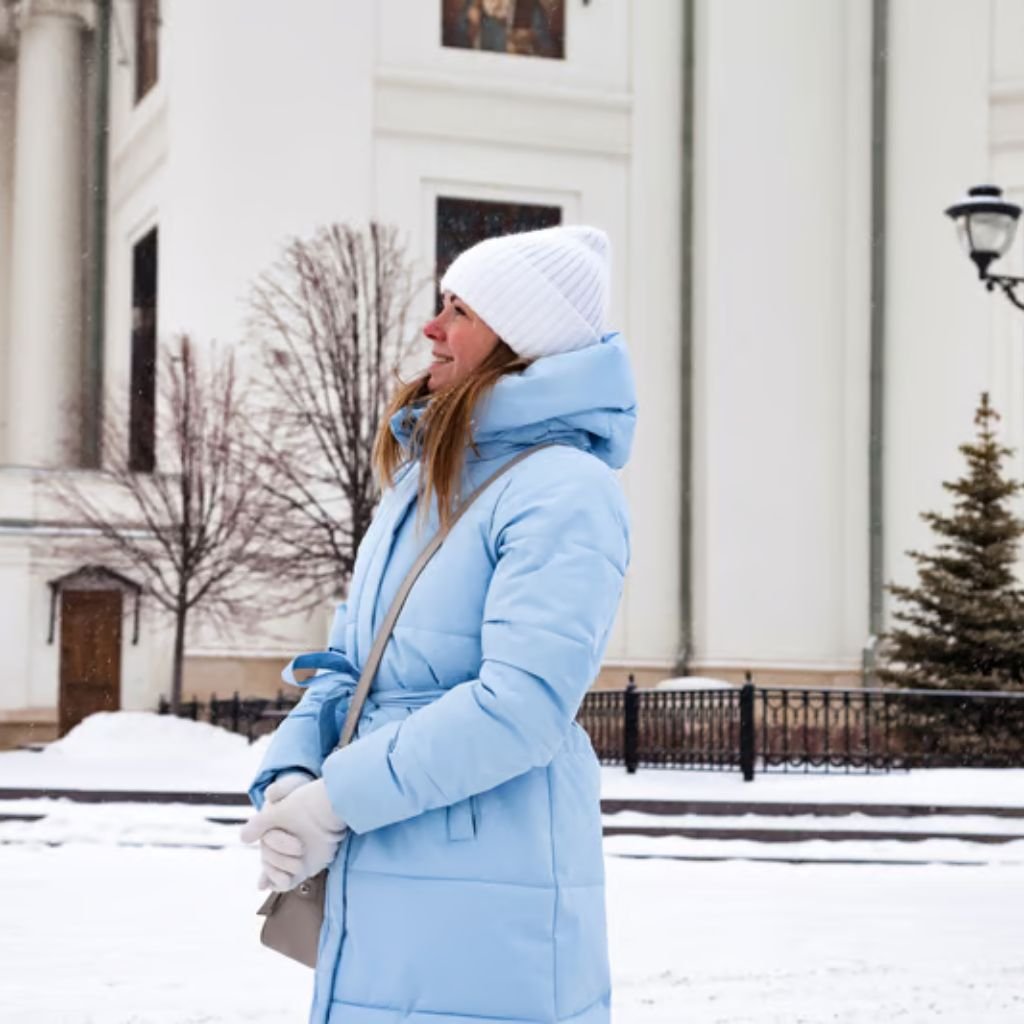
Extreme cold coats usually come in long parka styles. They include thick insulation and deep storm protection. Many also have reinforced shoulders for durability. These coats work best in places with heavy snowfall.
For Skiing and Snowboarding
Ski coats need warmth but also need movement freedom. They often use breathable waterproof shells and lighter insulation. Many include snow skirts and helmet-compatible hoods. Therefore, they keep snow out during falls.
For Hiking and Outdoor Work
Outdoor work coats focus on durability and moisture control. Synthetic insulation often works best for this use. Reinforced elbows and tough fabric shells add long-term value. These coats must also handle sweat and repeated movement.
For Daily Urban Use
Urban winter coats focus on style and comfort. They often use moderate insulation and sleek designs. However, many still include windproof shells and insulated hoods. This makes them practical for city winters.
For Travel and Expeditions
Travel coats must balance warmth and packability. Lightweight down parkas often work well for this purpose. Expedition coats focus on extreme protection and emergency-level warmth. Therefore, travelers should choose based on destination climate.
How to Choose the Right Maximum Warmth Winter Coat
First, consider your climate and lowest winter temperatures. If your winters stay around -5°C, you do not need expedition gear.Maximum Warmth Winter Coat Explained: However, if temperatures drop below -25°C, you need a serious parka. Always consider wind chill because it makes cold feel worse.
Next, think about your activity level. Maximum Warmth Winter Coat Explained: Active people generate more body heat while walking or hiking. Standing workers need more insulation because they produce less heat. Therefore, your lifestyle should guide insulation thickness.
Body length also matters for warmth. Parkas cover the thighs and trap heat better. Short jackets provide better mobility but less warmth. Fit also affects comfort because tight coats restrict movement. You should always test arm movement before buying.
Common Myths About Maximum Warmth Winter Coats
Many winter coat myths confuse buyers and lead to bad purchases. However, the truth is usually simpler. Therefore, clearing myths is important in this Maximum Warmth Winter Coat Explained article.
Myth 1: Heavier Coats Are Always Warmer
Weight does not always mean warmth. Some heavy coats use poor insulation materials. Meanwhile, high-fill down coats can feel light but extremely warm. Warmth depends on trapped air, not weight.
Myth 2: Down Is Useless When Wet
Down loses warmth when soaked, but modern down coats use water-resistant treatments. Many also use waterproof shells to prevent wetting. Therefore, down still works well in snow climates. Proper care also improves performance.
Myth 3: One Coat Works for All Winters
Different winters require different protection. A coat for mild city cold may fail in mountain storms. Also, activity level changes warmth needs. That is why many people own two winter coats.
Are Maximum Warmth Winter Coats Worth the Investment?
Maximum warmth coats often cost more than regular winter jackets. However, they deliver stronger protection and longer durability. Therefore, many buyers consider them a smart investment. Especially in extreme cold, a cheap coat can become dangerous.
Cost should be compared with long-term value. A premium coat can last five to ten winters with proper care. A cheap coat may lose insulation after two seasons. In addition, better coats resist tearing and water damage. That reduces replacement costs.
Performance benefits also matter for daily comfort. Maximum Warmth Winter Coat Explained: A warm coat reduces the need for heavy layering. It also protects you better during storms and wind chills. Most importantly, it improves safety in freezing conditions. Therefore, for cold climates, the investment is often worth it.
Care and Maintenance Tips to Maintain Warmth (Maximum Warmth Winter Coat Explained)
Taking proper care of a winter coat is just as important as buying a high-quality one.Maximum Warmth Winter Coat Explained: Even the best insulation can lose its performance if you wash it incorrectly or store it the wrong way. A maximum warmth winter coat depends on loft, fabric strength, and moisture control to keep you warm. Therefore, regular maintenance helps the coat retain its original heat-trapping ability for many seasons.
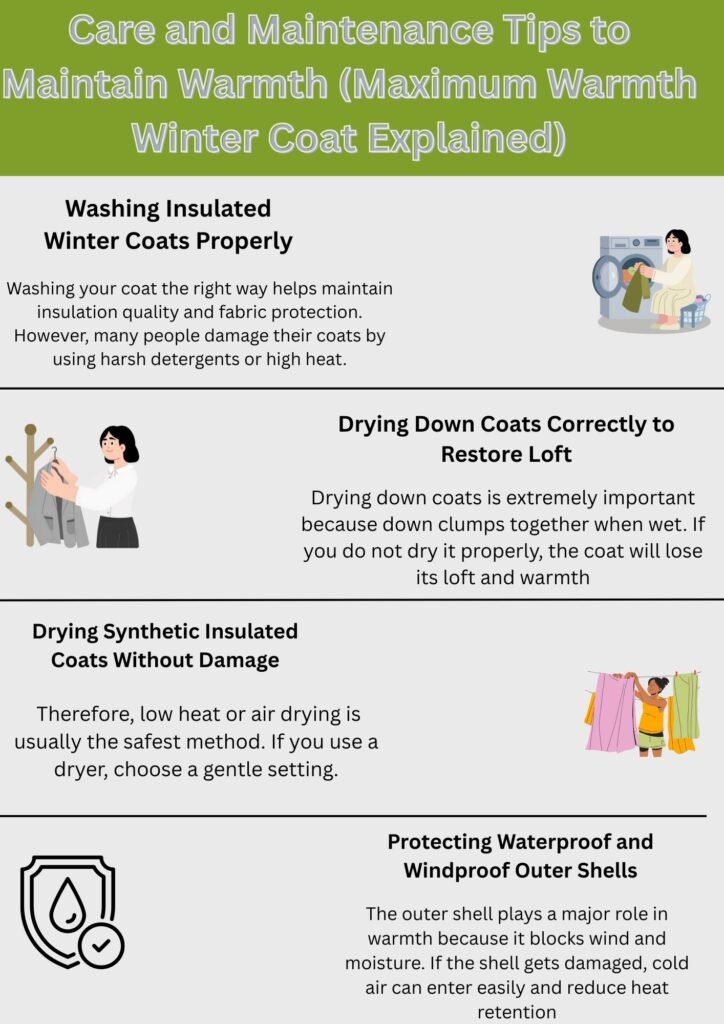
Washing Insulated Winter Coats Properly
Washing your coat the right way helps maintain insulation quality and fabric protection. However, many people damage their coats by using harsh detergents or high heat. Always check the care label first because different insulation types require different washing methods. A gentle wash cycle works best for most winter coats.
Drying Down Coats Correctly to Restore Loft
Drying down coats is extremely important because down clumps together when wet. If you do not dry it properly, the coat will lose its loft and warmth.Maximum Warmth Winter Coat Explained: Therefore, always dry down coats on low heat in a tumble dryer. High heat can damage down feathers and ruin the fabric lining.
Drying Synthetic Insulated Coats Without Damage
Synthetic insulation is easier to maintain than down, but it still needs careful drying. Most synthetic coats dry faster, but high heat can melt or weaken the fibers. Therefore, low heat or air drying is usually the safest method. If you use a dryer, choose a gentle setting.
Protecting Waterproof and Windproof Outer Shells
The outer shell plays a major role in warmth because it blocks wind and moisture. If the shell gets damaged, cold air can enter easily and reduce heat retention. Maximum Warmth Winter Coat Explained: Therefore, you should avoid harsh scrubbing while cleaning the coat. Instead, spot-clean stains with a soft cloth and mild soap.
Conclusion
A maximum warmth winter coat is the best choice for deep cold and harsh winds. It protects your body by trapping heat and blocking winter moisture. It also reduces the need for heavy layering and thick sweaters. Therefore, it improves comfort, mobility, and safety during freezing weather.
If you live in a cold region or travel to snowy destinations, you should consider one. Outdoor workers, hikers, and winter commuters benefit the most. These coats also provide long-term value because they last longer. That is why many people treat them as a serious investment.
FAQs
What is the warmest winter coat available?
The warmest coats are expedition-grade parkas with high-fill goose down. Many also include heat-reflective lining and windproof shells. These coats are designed for Arctic temperatures and survival conditions.
Are down coats warmer than synthetic ones?
Down coats usually provide more warmth for less weight. However, synthetic insulation performs better in wet conditions. Therefore, down is warmer in dry cold, while synthetic is safer in damp snow climates.
How warm is warm enough for winter?
Warm enough depends on your local climate and activity level. For mild winters, a coat rated around -10°C works well. For extreme winters, you may need -30°C protection. Always consider wind chill and humidity.