
A Maximum Warmth Winter Coat is more than just cold-weather clothing.It is a protective layer designed to shield the body from harsh winter extremes.This type of coat focuses on trapping body heat while blocking icy wind and snow.Unlike ordinary winter jackets, it delivers consistent warmth in severe conditions.It is engineered for environments where cold becomes uncomfortable or dangerous.Because of this, it stands as a critical winter essential.The meaning of maximum warmth goes beyond thickness alone.It refers to advanced insulation, smart layering, and controlled heat retention.A true maximum warmth winter coat reduces heat loss from every angle.It protects the core, arms, neck, and even the lower body effectively.
History of the Maximum Warmth Winter Coat
The history of the Maximum Warmth Winter Coat is deeply connected to human survival.From the earliest times, people searched for ways to protect themselves from cold.Ancient humans used animal skins and thick furs to stay warm in harsh climates.These early garments focused on insulation rather than style or comfort.Warmth was necessary for survival during long winters.This need laid the foundation for modern winter coats.As civilizations developed, winter clothing also improvedOver time, layered clothing became more common.This approach helped trap body heat more efficiently.It marked an important step toward maximum warmth designs.During the nineteenth century, winter coats became more structured.Tailoring improved the fit and coverage of cold-weather garments.Heavy fabrics and long silhouettes offered better protection.

Types of Maximum Warmth Winter Coats
Maximum warmth winter coats come in several styles, each designed for specific needs.Understanding these types helps buyers choose a coat that matches their lifestyle and climate.Modern coats balance insulation, mobility, and weather protection.Even subtle design differences affect heat retention and comfort.Below are the main types and what makes each unique.
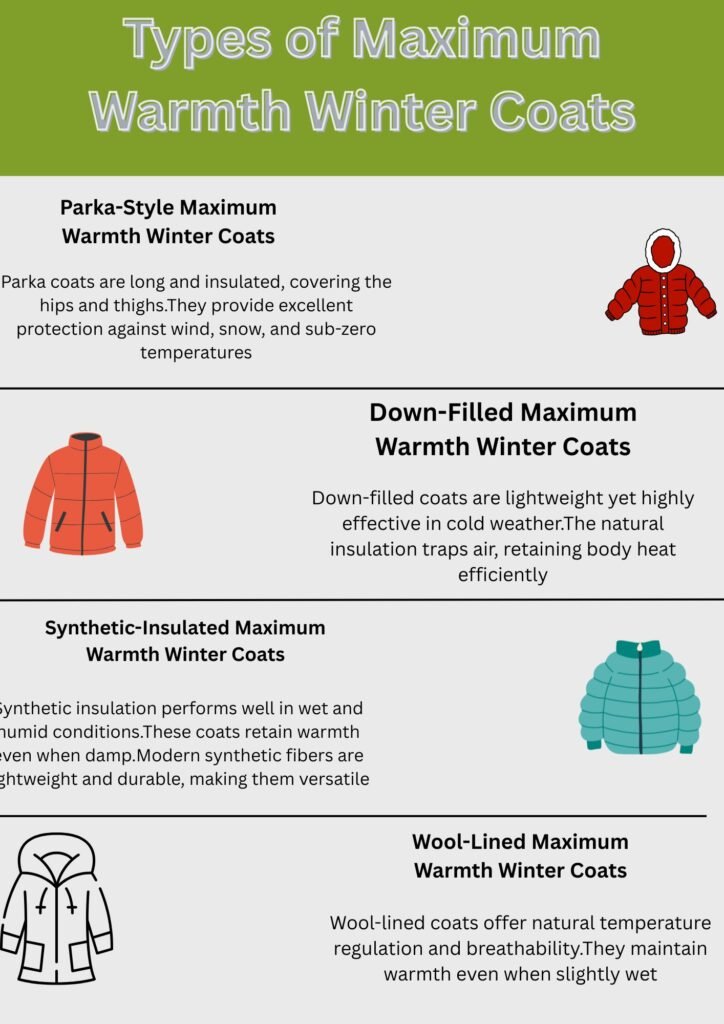
Parka-Style Maximum Warmth Winter Coats
Parka coats are long and insulated, covering the hips and thighs.They provide excellent protection against wind, snow, and sub-zero temperatures.The extended length reduces heat loss from the lower body.Parka coats often include fur-lined hoods and adjustable features for better fit.These coats are ideal for extreme winter conditions or outdoor activities.They offer a combination of durability, comfort, and maximum thermal protection.
Down-Filled Maximum Warmth Winter Coats
Down-filled coats are lightweight yet highly effective in cold weather.The natural insulation traps air, retaining body heat efficiently.These coats compress easily for storage or travel without losing warmth.However, they require protection from moisture to maintain performance.Down-filled coats are perfect for both daily use and outdoor adventures.They represent a blend of warmth, comfort, and portability.
Synthetic-Insulated Maximum Warmth Winter Coats
Synthetic insulation performs well in wet and humid conditions.These coats retain warmth even when damp.Modern synthetic fibers are lightweight and durable, making them versatile.They are ideal for outdoor workers or frequent travelers.Synthetic coats require less maintenance than down.They provide reliable insulation at an affordable cost.
Wool-Lined Maximum Warmth Winter Coats
Wool-lined coats offer natural temperature regulation and breathability.They maintain warmth even when slightly wet.These coats feel soft against the skin and allow some airflow.They are suitable for variable climates and everyday wear.Wool-lined coats blend elegance with thermal protection.They provide a classic option for winter without compromising warmth.
What Makes a Winter Coat Provide Maximum Warmth?
A winter coat provides maximum warmth through smart construction.Every layer plays a specific role in heat management.The outer shell blocks wind and moisture effectively.The inner layers trap warm air close to the body.Meanwhile, modern linings reflect body heat inward.Together, these elements reduce heat loss significantly.Insulation type remains the most important factor.Fill power determines how efficiently warmth is trapped.Thickness also affects how much heat stays inside.Windproof materials prevent cold air penetration.Thermal barriers maintain consistent body temperature.Because of this combination, maximum warmth jackets outperform standard coats.
Best Insulation Materials for Maximum Warmth
Insulation is the heart of a Maximum Warmth Winter Coat.It determines how well the coat traps heat and blocks cold air.The right insulation keeps the body warm without excessive bulk.Different materials perform differently in cold environments.Climate, moisture, and activity level affect insulation choice.Understanding these materials helps buyers choose wisely.
Down Insulation for Maximum Warmth Winter Coats
Down insulation is one of the warmest options available.It uses fine feathers to trap air and retain body heat.This structure creates excellent insulation with very little weight.Because of this, down coats feel warm yet comfortable.However, down loses efficiency when exposed to moisture.Modern shells now protect down from wet snow and rain.
Synthetic Insulation for Extreme Cold Performance
Synthetic insulation is designed for harsh and wet winters.It continues to provide warmth even when damp.This makes it suitable for unpredictable weather conditions.Synthetic fibers also dry faster than natural insulation.They are easier to maintain and more durable.Many extreme cold winter coats rely on advanced synthetic fills.
Wool Insulation for Natural Temperature Control
Wool insulation offers natural warmth and breathability.It regulates body temperature effectively in cold climates.Wool remains warm even when exposed to moisture.This quality makes it ideal for changing winter conditions.It also allows air circulation to prevent overheating.Some maximum warmth winter coats include wool linings for comfort.
Fleece and Thermal Linings for Added Heat Retention
Fleece and thermal linings enhance inner comfort.They create an extra layer that traps warmth close to the body.These linings feel soft and reduce cold spots inside the coat.They also improve insulation efficiency without adding weight.When combined with outer insulation, they boost performance.This layering approach defines a high warmth jacket.
Temperature Ratings: How Warm Is “Maximum Warmth”?
Temperature ratings help explain how a Maximum Warmth Winter Coat performs in cold weather.These ratings show the lowest temperature the coat can handle comfortably.Manufacturers test coats under controlled winter conditions.The results help buyers choose the right level of insulation.However, personal tolerance also affects warmth perception.Still, temperature ratings remain an essential guide.
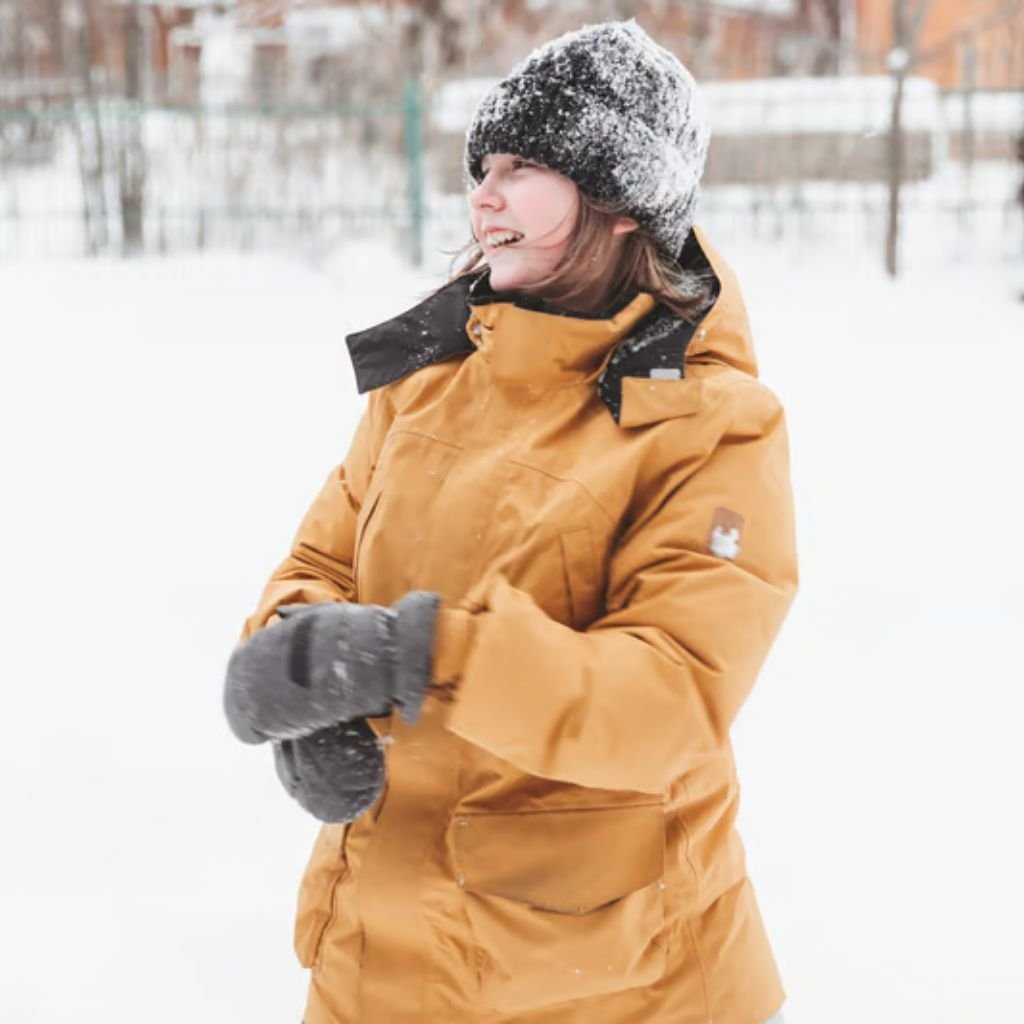
Understanding Temperature Ratings in Winter Coats
Temperature ratings usually appear in Celsius or Fahrenheit.Lower numbers indicate stronger warmth protection.These ratings reflect heat retention during low activity levels.Wind chill and humidity can affect real-world performance.Therefore, users should consider local climate conditions.A well-rated coat ensures better winter safety.
Temperature Ratings for Mild Winter Conditions
Mild winter climates require moderate insulation.Coats rated around freezing temperatures feel comfortable.They provide warmth without overheating.These ratings suit daily wear and city environments.Breathability becomes more important in mild cold.A balanced Maximum Warmth Winter Coat works best here.
Temperature Ratings for Heavy Snow and Cold Regions
Snowy regions demand stronger thermal protection.Coats rated below freezing perform better in these conditions.They block wind and trap body heat effectively.Such ratings support long outdoor exposure.Snowstorms require reliable insulation systems.These coats offer consistent warmth during severe weather.
Temperature Ratings for Extreme Sub-Zero Environments
Extreme cold climates require maximum insulation.Coats rated for sub-zero temperatures ensure survival.They protect against frostbite and heat loss.These ratings suit Arctic and high-altitude regions.Advanced insulation systems support long wear.A true Maximum Warmth Winter Coat excels in such conditions.
Key Features to Look for in a Maximum Warmth Winter Coat
The features of a Maximum Warmth Winter Coat determine how well it performs in harsh cold.Warmth alone is not enough without proper design support.Each feature works together to protect the body from freezing conditions.When these elements combine, the coat delivers reliable thermal comfort.Understanding these features helps buyers avoid poor choices.A well-designed coat ensures long-lasting winter protection.A properly shaped hood protects the head and face from icy wind.Adjustable hoods allow a snug fit that prevents heat escape.Fur-lined or insulated hoods add an extra barrier against cold air.Longer coats cover more of the body and reduce heat loss.They protect the hips and thighs from freezing air.This added coverage improves overall thermal efficiency.Shorter coats allow more freedom of movement.
Maximum Warmth Winter Coat vs Regular Winter Coat
A Maximum Warmth Winter Coat is built for severe cold conditions.A regular winter coat focuses on moderate warmth and everyday comfort.Although both serve winter needs, their performance differs greatly.Understanding these differences helps buyers make better choices.Climate, activity level, and exposure time matter greatly.The right coat depends on how cold your environment becomes.
Warmth and Insulation Performance
A maximum warmth winter coat uses high-level insulation systems.It traps body heat efficiently and reduces heat loss.This makes it suitable for freezing and sub-zero temperatures.A regular winter coat provides limited insulation.It works best in mild to moderate cold.Extreme weather quickly exposes its limitations.
Weight and Comfort Differences
Maximum warmth winter coats often feel heavier.The extra insulation adds weight but improves protection.Modern designs now reduce bulk significantly.Regular winter coats remain lighter and easier to wear.They suit short outdoor exposure.Comfort depends on intended use.
Breathability and Temperature Control
Breathability plays an important role in comfort.Maximum warmth winter coats use advanced breathable layers.They release moisture while keeping heat inside.Regular coats offer basic airflow.They may feel uncomfortable during activity.Proper breathability improves long-term wear.
Best Use Cases for Each Coat Type
A maximum warmth winter coat suits extreme climates.It supports long outdoor work and travel.A regular winter coat fits daily city wear.It works well for short commutes.Choosing the correct coat prevents discomfort.Purpose defines the best option.
Best Maximum Warmth Winter Coats for Extreme Cold (2026 Guide)
Extreme winter conditions demand advanced protection.A Maximum Warmth Winter Coat becomes essential in such environments.In 2026, winter coat technology focuses on insulation efficiency and comfort.Manufacturers now balance warmth, mobility, and durability.Coats are designed to handle intense cold exposure.This guide highlights the most effective performance categories.
Maximum Warmth Winter Coats for Heavy Snowstorms
Winter coats designed for snowstorms prioritize weather resistance.They feature insulated cores with protective outer shells.These coats block snow, wind, and freezing rain effectively.Heat retention remains stable during long storms.Such designs suit regions with frequent blizzards.They provide dependable protection in unpredictable weather.
Maximum Warmth Winter Coats for Arctic-Level Cold
Arctic-level cold requires the highest insulation standards.These maximum warmth winter coats use advanced thermal systems.They maintain body heat in sub-zero temperatures.Designs often include extended length for full coverage.Cold air penetration stays minimal.These coats support survival in extreme environments.
Lightweight Maximum Warmth Winter Coats
Lightweight designs focus on efficient insulation rather than bulk.They use modern materials to trap heat effectively.These coats allow easy movement and flexibility.They suit active winter lifestyles.Despite lighter weight, warmth remains reliable.This balance appeals to modern users.
Budget-Friendly Maximum Warmth Winter Coats
Affordable maximum warmth winter coats now offer strong performance.Manufacturers use durable synthetic insulation.These coats deliver dependable warmth in severe cold.They reduce cost without sacrificing essential protection.Budget designs suit daily winter use.They prove that warmth does not always require high expense.
How to Choose the Right Maximum Warmth Winter Coat
Choosing the right coat requires thoughtful evaluation.Climate remains the most important factor.Daily wear needs differ from outdoor activities.Fit also affects warmth retention.Proper layering space improves comfort.Gender-specific cuts enhance mobility.Cold regions require stronger insulation.Active users need breathable designs.City wear benefits from balanced warmth.A snug fit prevents heat loss.However, tight coats reduce layering ability.The right choice ensures long-term satisfaction.

Are Maximum Warmth Winter Coats Breathable?
Many people believe warm coats lack breathability.Modern designs prove this belief wrong.Advanced materials allow moisture escape.This prevents sweat buildup inside the coat.Comfort improves during long wear.Breathability now complements insulation.Moisture-wicking layers move sweat outward.Breathable membranes regulate airflow.This balance keeps the body dry.Dry warmth feels more comfortable.Therefore, breathability enhances overall performance.It is no longer sacrificed for warmth.
Sustainable and Eco-Friendly Maximum Warmth Coats
Sustainability shapes modern winter fashion.Manufacturers now reduce environmental impact.Eco-friendly insulation matches traditional warmth.Ethical sourcing improves industry standards.Consumers increasingly demand responsible options.This shift benefits the planet.Recycled materials reduce waste.Ethical down protects animal welfare.Durable coats reduce fast fashion consumption.Long-lasting warmth lowers replacement needs.Sustainable coats offer long-term value.They prove warmth and responsibility can coexist.
How to Style a Maximum Warmth Winter Coat
Style remains important during winter.Modern coats combine fashion and function.Designs suit various lifestyles easily.Styling improves confidence and comfort.Layering enhances warmth and appearance.Coats now complement everyday outfits.Casual looks pair well with parkas.Workwear styling favors clean silhouettes.Travel outfits focus on comfort.Outdoor styling emphasizes performance.Accessories complete winter looks.Style no longer sacrifices warmth.
Common Myths About Maximum Warmth Winter Coats
Misconceptions often confuse buyers.Myths lead to poor purchasing decisions.Understanding facts improves satisfaction.Truth helps identify quality designs.Let us address common misunderstandings.Knowledge empowers smarter choices.Heavier coats do not guarantee warmth.Down insulation works well with protection.Long coats allow flexible movement.Design matters more than weight.Technology defines warmth efficiency.
Myths should never guide purchases.
Care and Maintenance Tips to Retain Maximum Warmth
Proper care is essential for preserving the performance of a Maximum Warmth Winter Coat.Even the best insulation can lose efficiency without correct maintenance.Dirt, moisture, and compression reduce heat retention over time.Good care habits help maintain insulation loft and structure.They also extend the life of the coat.Consistent maintenance ensures reliable warmth every winter.
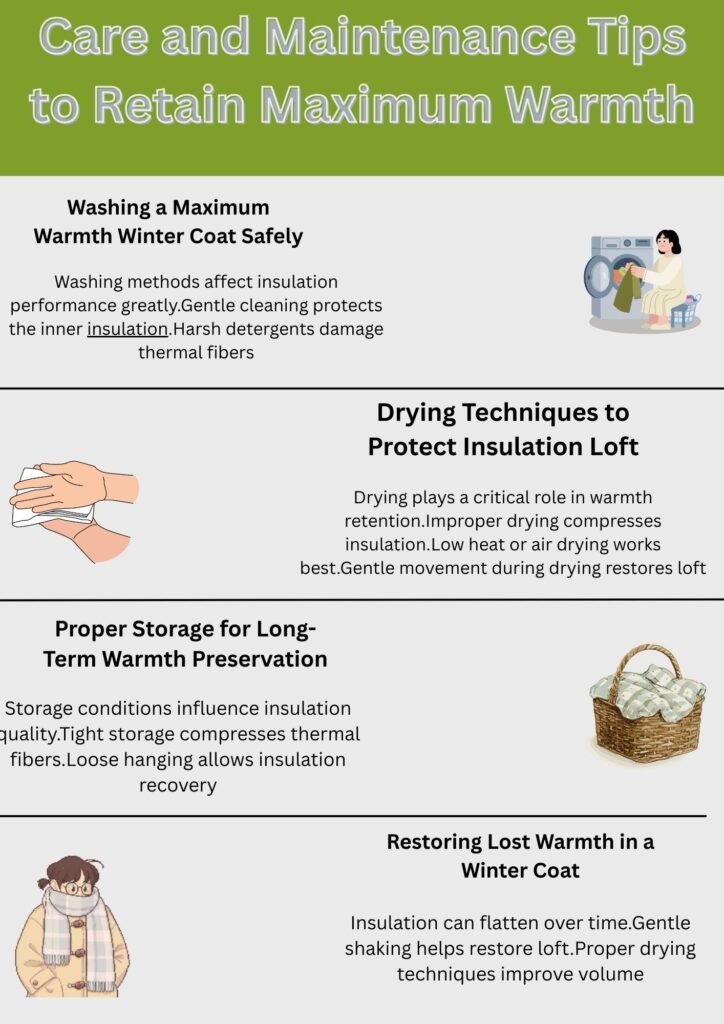
Washing a Maximum Warmth Winter Coat Safely
Washing methods affect insulation performance greatly.Gentle cleaning protects the inner insulation.Harsh detergents damage thermal fibers.Mild cleaners preserve fabric strength.Cold water prevents material stress.Careful washing maintains long-term warmth.
Drying Techniques to Protect Insulation Loft
Drying plays a critical role in warmth retention.Improper drying compresses insulation.Low heat or air drying works best.Gentle movement during drying restores loft.Fully dry insulation performs better.Moisture left inside reduces warmth.
Proper Storage for Long-Term Warmth Preservation
Storage conditions influence insulation quality.Tight storage compresses thermal fibers.Loose hanging allows insulation recovery.Dry environments prevent moisture damage.Breathable storage protects fabric health.Good storage habits preserve warmth.
Restoring Lost Warmth in a Winter Coat
Insulation can flatten over time.Gentle shaking helps restore loft.Proper drying techniques improve volume.Occasional professional cleaning may help.Restored insulation traps heat better.These steps revive coat performance.
Conclusion: Is a Maximum Warmth Winter Coat Worth It?
A Maximum Warmth Winter Coat delivers superior cold protection.It combines insulation, smart design, and durability.Therefore, it becomes essential in harsh climates.It improves comfort and safety significantly.Although the initial cost may be higher, value lasts longer.Investing in warmth protects health and well-being.If winters feel unforgiving, choose wisely.The right coat changes everything.
FAQs
What is the warmest winter coat material?
The warmest material for a Maximum Warmth Winter Coat is down insulation. Down traps air efficiently and keeps the body warm without adding much weight. Modern down coats often include water-resistant shells to protect the feathers. Synthetic insulation is also effective, especially in wet conditions, because it retains warmth even when damp. Wool and thermal linings provide additional options, offering natural heat retention for moderate winter climates. The right material depends on your climate and activity level, but down remains the top choice for extreme cold.
Are maximum warmth winter coats good for daily use?
Yes, maximum warmth winter coats can be suitable for daily use. Modern designs focus on balancing warmth, mobility, and breathability. For city environments with mild winters, lightweight down or synthetic coats work well. In colder regions, longer parkas and heavily insulated coats are better for daily outdoor wear. Even with heavy insulation, these coats allow reasonable movement and comfort. Layering under the coat can adjust warmth for different activities. With the correct style, a maximum warmth winter coat is practical for everyday life.
How much should a maximum warmth winter coat weigh?
The weight of a Maximum Warmth Winter Coat varies depending on insulation and design. Down-filled coats are generally lighter while still offering high warmth. Synthetic or blended insulation tends to add more weight, but it performs better in wet conditions. The goal is to balance warmth with wearability. A coat that is too heavy can cause fatigue during long periods of use. Modern manufacturing techniques reduce unnecessary bulk while keeping insulation effective, ensuring comfort without sacrificing protection.