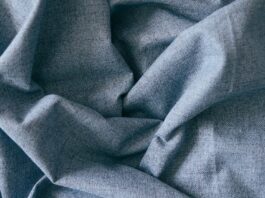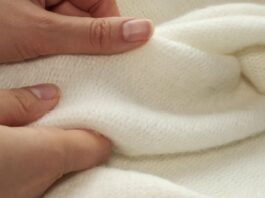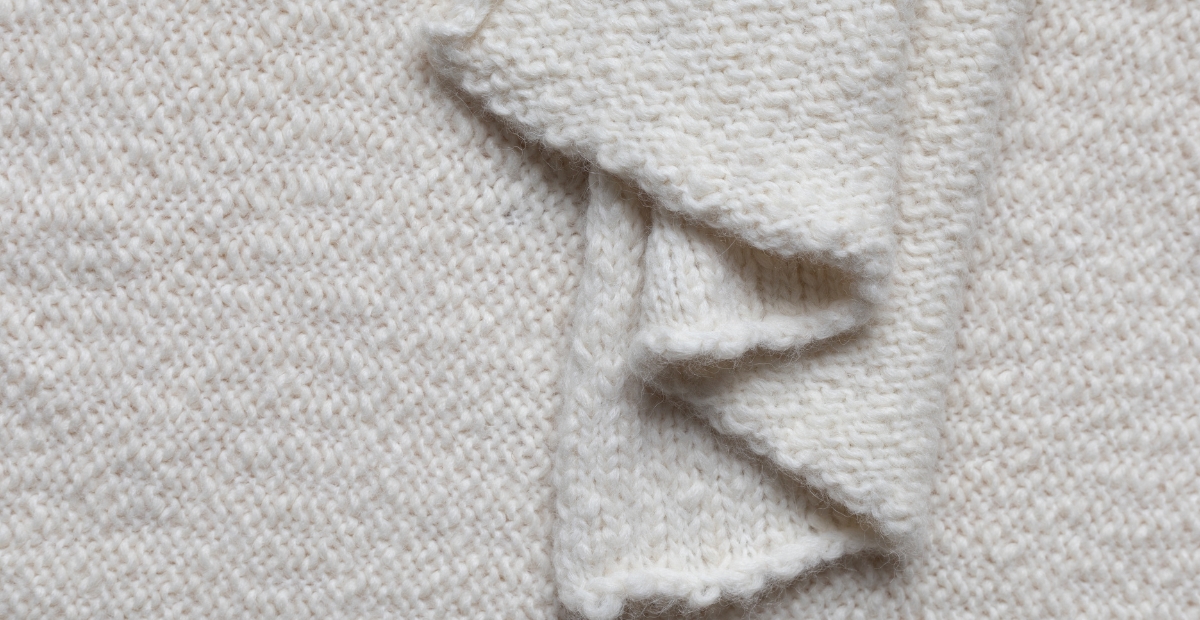
Sustainability is not an option in today’s fashion world. Sustainability has now become synonymous with quality and responsibility. The Lightweight Recycled Cashmere Fabric wool is a beautiful example of this transformation. It not only preserves the elegance of cashmere but also has a significant reduction in environmental impact. It is a wise choice for designers, brands and environmentally conscious consumers.
Lightweight Recycled Cashmere Fabric materials is soft, breathable, and versatile. At the same, waste is minimized, resources are conserved and luxury is reinvented responsibly. This fabric is being used for more and more premium clothing collections around the world.
What is Lightweight Recycled cashmere fabric?
Lightweight Recycled Cashmere Fabric scraps from post-consumer and post-industrial sources allows for the creation of lightweight recycled cashmere fabrics. Old sweaters, factory scraps and surplus yarns, for example, are collected, sorted and processed carefully. The fibers are then cleaned, respun and woven into new Lightweight Recycled Cashmere Fabric.
Cashmere is traditionally obtained from the undercoats of cashmere goats. Cashmere recycled is made by reusing existing fibers, rather than harvesting a new raw material. Water usage, grazing pressure, and carbon emission are reduced.
Lightweight versions provide comfort without being heavy. The fabric is light and warm due to the finer yarn count. It is therefore ideal for layering and transitional seasons.
The Sustainable Advantage
1. Reduced environmental impact
Lightweight Recycled Cashmere Fabric from old garments conserves resources. Overgrazing can be prevented since no new goat fibre is needed. During production, water is also used to the minimum.
Lightweight Recycled Cashmere Fabric is a natural fiber that requires a lot of water and land. Recycled fibers can be repurposed and waste is reduced significantly. So, the environmental footprint is reduced.
2. Reduce Carbon Emissions
The energy needed to process cashmere recycled is also often less than that required to produce new fibers. In turn, greenhouse gasses are reduced. Eco-conscious brands are prioritizing sustainable fabrics because climate change is a major concern.
3. Waste Reduction
Textile waste is a major global problem. Using lightweight cashmere fabrics, discarded clothing can be transformed into high-quality materials. Circular fashion principles and a reduction in landfill accumulation are thus supported.
Lightweight Recycled Cashmere Fabric: Key Features
Recycled cashmere fabric is lightweight and has remarkable properties. It retains the softness and adaptability of traditional cashmere.
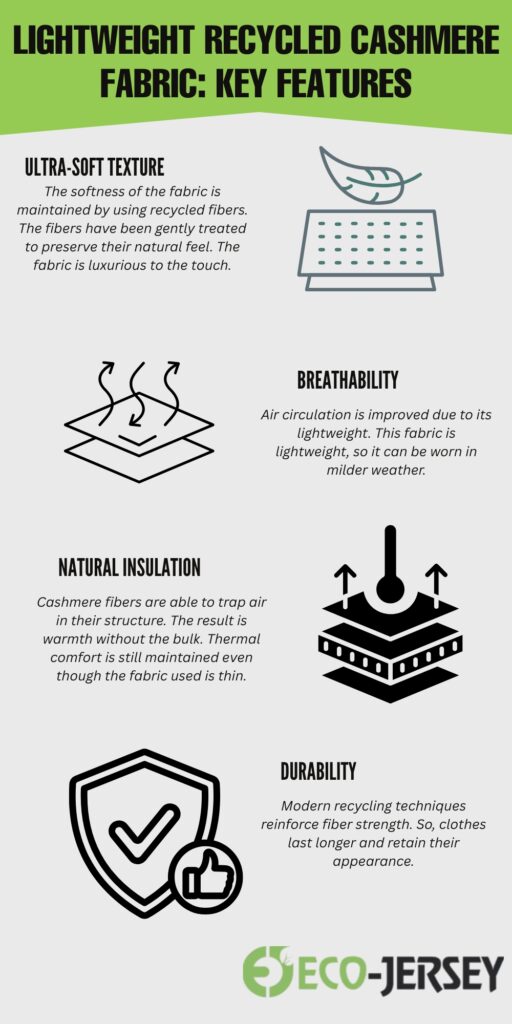
Ultra-Soft Texture
The softness of the fabric is maintained by using recycled fibers. The fibers have been gently treated to preserve their natural feel. The fabric is luxurious to the touch.
Breathability
Air circulation is improved due to its lightweight. This fabric is lightweight, so it can be worn in milder weather.
Natural Insulation
Cashmere fibers are able to trap air in their structure. The result is warmth without the bulk. Thermal comfort is still maintained even though the fabric used is thin.
Durability
Modern recycling techniques reinforce fiber strength. So, clothes last longer and retain their appearance.
The Manufacturing of Lightweight Recycled Cashmere Fabric
Cashmere recycling is a technical process that also takes into consideration the environment.
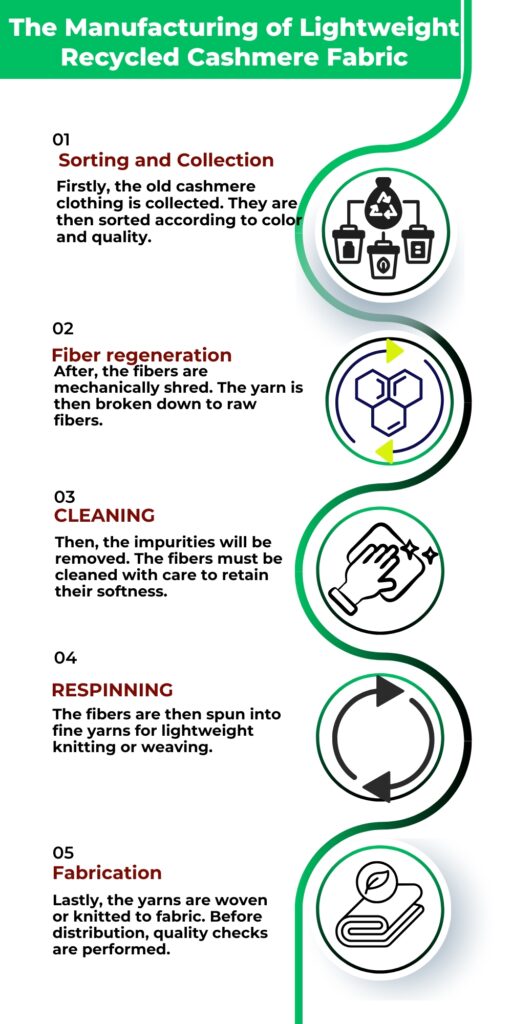
- Sorting and Collection
Firstly, the old cashmere clothing is collected. They are then sorted according to color and quality. - Fiber regeneration
After, the fibers are mechanically shred. The yarn is then broken down to raw fibers. - Cleaning
Then, the impurities will be removed. The fibers must be cleaned with care to retain their softness. - Respinning
The fibers are then spun into fine yarns for lightweight knitting or weaving. - Fabrication
Lastly, the yarns are woven or knitted to fabric. Before distribution, quality checks are performed.
During this process, the use of chemicals and water is reduced. Sustainability goals are therefore consistently met.
Lightweight Recycled Cashmere Fabric
This fabric is used widely in fashion and accessories because of its versatility.
Sweaters, Cardigans and other Clothing
Spring and autumn are the seasons when lightweight sweaters become popular. Cashmere blends can be used to create a variety of layering pieces.
Scarves and Shawls
Soft scarves can be made from light yarns. The result is warmth without the weight.
Luxury Tops and T-Shirts
Cashmere blend T-shirts are increasingly being introduced by premium brands. Luxury is now available in everyday life.
Travel Wear
The fabric is lightweight and compact. It is perfect for travel garments. Blending with other fibers improves wrinkle resistance.
Blends and Innovations
Blending lightweight recycled cashmere with other fibers can enhance performance.
- Cashmere & Silk Adds shine and smoothness.
- Cashmere & Organic Cotton– Increases breathability.
- Cashmere & Wool– Improves durability and structure.
By blending fabrics, the strength of the fabric is increased while maintaining its softness. Designers gain more creative freedom.
Benefits to Fashion Brands
Transparency has been a consumer demand in recent years. Sustainable materials are therefore becoming more important.
Enhance Brand Reputation
Recycled fabrics are seen as environmentally friendly. As a result, the customer’s trust is increased.
Cost Efficiency
Production costs can be better managed because raw material prices are lower.
Differentiation of the Market
Sustainability is a competitive advantage. Lightweight recycled cashmere collection stand out on the market.
How to Care for Lightweight Cashmere
The life of your garments can be extended significantly with proper care.
- Handwash in cold water
- Use mild detergent.
- Avoid wringing.
- Dry flat by laying flat.
- Fold the clothes instead of hanging them.
When properly cared for, clothing can last many years. The longevity of garments is a way to reinforce sustainability.
Why lightweight matters
It is not always necessary to use heavy fabrics. Modern lifestyles require flexibility. Lightweight recycled Cashmere Offers:
- Easy layering
- Comfortable indoor wear
- Breathable insulation
- Travel convenience
It is therefore perfectly aligned with the needs of contemporary fashion.
Global Market Demand and Trends
Globally, the sustainable fashion industry is growing rapidly. Recycled luxury fibers have become increasingly popular.
The ethical production of products is becoming more popular among consumers. Certifications and traceability also take priority. The lightweight recycled cashmere fabrics are gaining popularity in Europe, North America and Asia.
Online retail platforms also highlight eco-friendly labelling. Visibility and demand continue to increase.
Challenges and Solutions
Despite the many benefits of recycled cashmere, there are still challenges.
Fiber Shortening
Fibers can be made shorter during recycling. Advanced spinning technology, however, has improved the strength of yarns.
Color Limitations
Dyeing is limited when garments are sorted according to color. Natural colors are still appreciated.
Quality Variability
Quality control is crucial. Suppliers who are reputable invest in rigorous inspection processes.
Lightweight Recycled cashmere: The Future of Cashmere
The textile industry will continue to be shaped by sustainability. Innovation in recycling technology will also enhance fiber quality.
Circular fashion is expanding. Brands are now introducing take-back programmes. The old garments are collected and reprocessed. Waste cycles are reduced.
Additionally, the consumer is becoming more educated. Transparency in manufacturing and sourcing is more important than ever.
SEO Focus: Why choose lightweight recycled cashmere fabric?
Cashmere recycled lightweight is a great choice for luxury fabrics that are sustainable. It is soft, environmentally friendly and supports ethical production.
Keywords for SEO:
- Cashmere recycled fabric lightweight
- Sustainable cashmere textile
- Eco-friendly luxury fabrics
- Cashmere recycled material
- Fashion fabric that is ethical
These keywords are aligned with the search intent of consumers, which increases their visibility online.
The conclusion of the article is:
The future of luxury is sustainable lightweight recycled cashmere. Although traditional cashmere is still admired, recycled alternatives have become more popular. Resources are conserved and waste is reduced, minimizing environmental damage.
Softness, breathability and versatility are also maintained. Designers can therefore create high-end garments without compromising their ethics.
FAQs
What is lightweight recycled cashmere fabric?
Lightweight recycled cashmere fabric is made from reclaimed cashmere fibers that are reprocessed and spun into fine yarns. As a result, it delivers the softness of traditional cashmere while reducing environmental impact.
Is recycled cashmere as soft as virgin cashmere?
Yes, recycled cashmere is designed to retain its natural softness. Although fibers are regenerated, advanced processing techniques are used so that the luxurious feel is preserved.
How sustainable is lightweight recycled cashmere?
Lightweight recycled cashmere is highly sustainable. Because existing fibers are reused, water consumption is reduced, waste is minimized, and carbon emissions are lowered. Therefore, it supports circular fashion initiatives.