Pure wool has been one of the most preferred winter clothes, domestic fabrics, and luxurious clothes since several centuries. It is a unique fabric because it can be worn natural, breathed, and it is durable, making it one of the fabrics that keep on appealing to buyers. Is Pure Wool Worth It? is a question that remains with many people due to the increased cost price. But it is all explained when we realize what pure wool can offer.
Pure wool is one of the best as it is not blended with syntheses that come out of animal fleece. Thus, it offers superior softness, performance and flexibility. Also, it is adjustable to the change in temperature, which is why it fits into most climates. The admirers of wool like it to be able to keep warm, not to have any smell and to wear many years. In addition to that it minimizes environmental impact since it is easily renewable.
History of Pure Wool Why It was a Valuable Material Centuries.
The history of wool can be traced back to 10,000 years. Civilizations that existed earlier on utilized wool as it was warm, comfortable and strong. Clothes made of wool became essential in colder areas where individuals required some insulation. As time passed, the various cultures enhanced the way wool is given more refined and better quality materials.
Wool turned out to be one of the most valuable trade materials in Europe in the Middle Ages. Nations depended on wool exports in order to grow economically and trade with other nations. With the advancement of craftsmanship, people came up with new varieties such as Merino and Cashmere. Such varieties were more luxurious, soft and high quality to the textile industry.
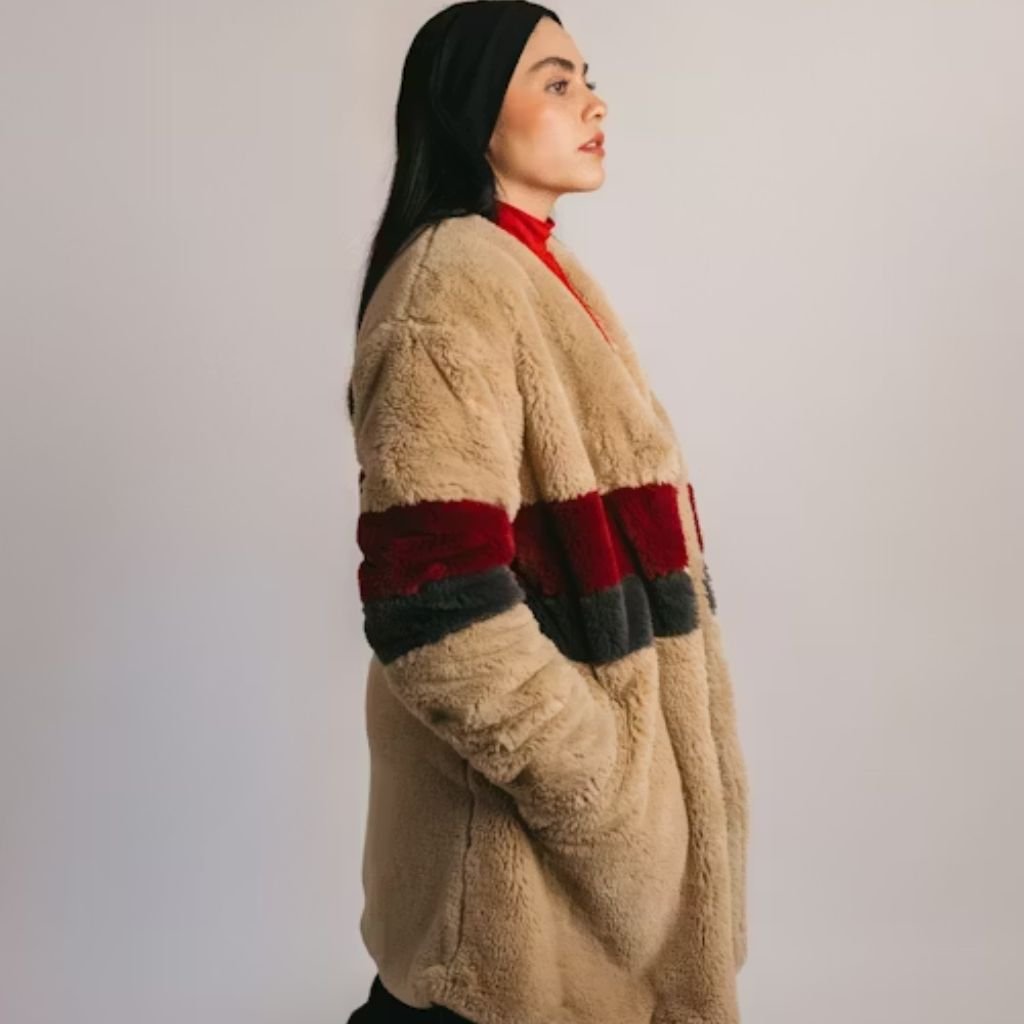
Types of Pure Wool (Detailed & Long Explanation)
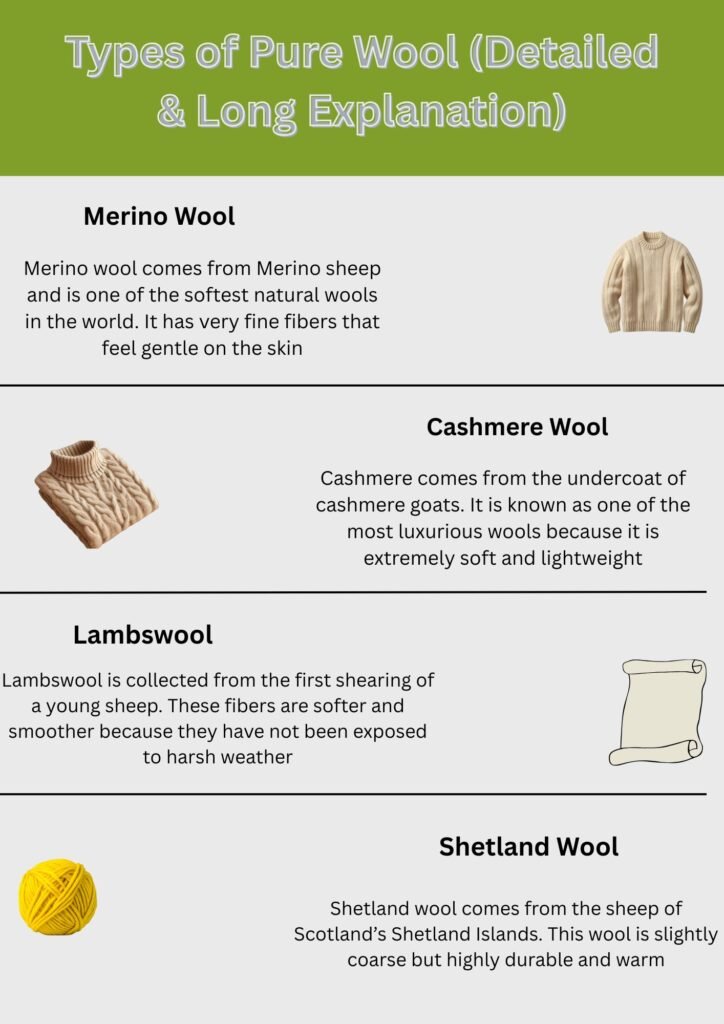
Pure wool comes from natural animal fibers, and each type has its own feel, durability, warmth level, and unique qualities. Below are the most popular and widely used types of pure wool, explained in detail so you can understand their strengths and purposes.
Merino Wool
Merino wool comes from Merino sheep and is one of the softest natural wools in the world. It has very fine fibers that feel gentle on the skin. Because of its softness, many people wear it without any inner layer. Merino wool is also highly breathable, so it controls body temperature in different climates.
Cashmere Wool
Cashmere comes from the undercoat of cashmere goats. It is known as one of the most luxurious wools because it is extremely soft and lightweight. Even though it is light, cashmere provides excellent warmth. Its fibers are rare and require careful combing, which is why pure cashmere products are expensive. Cashmere has a silky touch and drapes beautifully, giving clothes a high-end finish.
Lambswool
Lambswool is collected from the first shearing of a young sheep. These fibers are softer and smoother because they have not been exposed to harsh weather. Lambswool is naturally breathable and warm, yet it is less expensive than cashmere or Merino. It offers excellent insulation and feels gentle on the skin, making it great for people who want warm clothing without heaviness.
Shetland Wool
Shetland wool comes from the sheep of Scotland’s Shetland Islands. This wool is slightly coarse but highly durable and warm. It is well-known for its ability to trap heat in very cold climates. Shetland wool also holds dyes beautifully, so it is used in colorful knit patterns like Fair Isle sweaters. Even though it is not as soft as Merino, it provides strong insulation and lasts for many years.
Is Pure Wool Worth It to wear Every Day? Benefits of Pure Wool.
Pure wool has a number of valuable qualities that make it valuable. The knowledge of these characteristics assists to resolve the question Is Pure Wool Worth It?
Natural Insulation
Pure wool traps the air in its fibers to generate natural insulation. It makes you quite warm even in extreme cold conditions. This insulation is effective even when the fabric is a bit wet. Thus, wool will keep you warm in outdoor or traveling or on a winter day.
Breathability
Wool is better than synthetic fabrics as far as breathing is concerned. It helps in the passage of air and controlling of the body temperature. Consequently, wool is not overheating and will make you comfortable all day long.
Moisture-Wicking Ability
Wool takes away the moisture of your skin and gives it away to air. This will ensure that your body is dry because the sweat does not accumulate. Hence, wool is good in long working hours or action.
Odor Resistance
Wool is odor resistant by nature due to its ability to release moisture and breathe. Wool is a material that you can wear a few days without it being stinking. That is why it is perfect in times of travel, outdoor activities, or long-term work in the office.
Prolonged Life and Strength.
The life of pure wool is many years due to the fact that the fibers are naturally tough. The fabric is stretchable and it can be restored easily. It is not easily torn, and it can be used on a daily basis.
Sustainability and Biodegradability.
Renewable resources are used to obtain pure wool. It is a natural biodegradation and less pollutant. Synthetic materials also do not consume a lot of energy to produce wool. Thus, the green conscious consumers choose pure wool.
Pure Wool vs Wool Blends- Pure Wool-Is it Worth the Quality?
Pure wool is compared to the blends to enable the buyers make the right choice.
Warmth Comparison
Wool is more insulating and will keep you longer (pure wool). Blends are very cozy but have no natural power to keep one warm as wool does.
Price Difference
The price of pure wool is higher as it needs to be treated with much care. Blends are cheaper but not very long lasting.
Longevity and Pilling
Well made pure wool pills less. Combines pill more quickly and degenerate shape.
Comfort and Softness
Blends are not as soft and breathable as pure wool. Blends are heavier and less supple.
Is Pure Wool Worth the Price?
The cost of pure wool is higher due to the natural mode of production. Nevertheless, it has a long life and performance that qualifies it to be worth it.
Why Pure Wool Is Expensive
Pure wool production takes manual labor, sorting and slow processing. These measures enhance quality but the cost is also increased.
Price Payoff
Pure wool has a long life span and takes long time to appear used. The cost per wear will be low in the long run.
Who Shall Invest in Pure Wool
Pure wool suits individuals who appreciate durable, warm and sustainable apparels.

Cases When Pure Wool has to be used.
Pure wool is quite effective in numerous cases.
Winter Clothing
Wool is comfortable and warm, and it is used in sweaters and coats, jackets.
Outdoor Activities
Merino wool is an ideal hiking, camping, and traveling one.
Business and Smart Wear
Strauss wool suits appear smooth and remain clean all day.
Sensitive Skin Types
Alpaca wool and cashmere are soft and are less irritating.
Eco-Conscious Buyers
Wool is biodegradable, natural and recyclable.
Common Uses of Pure Wool (Long & Detailed Explanation)
Pure wool is one of the most versatile natural fibers in the world, and people have used it for centuries. It offers warmth, breathability, and long-lasting comfort, which makes it suitable for many products. Because it adjusts to temperature and absorbs moisture, pure wool works well in both indoor and outdoor environments.
Winter Clothing
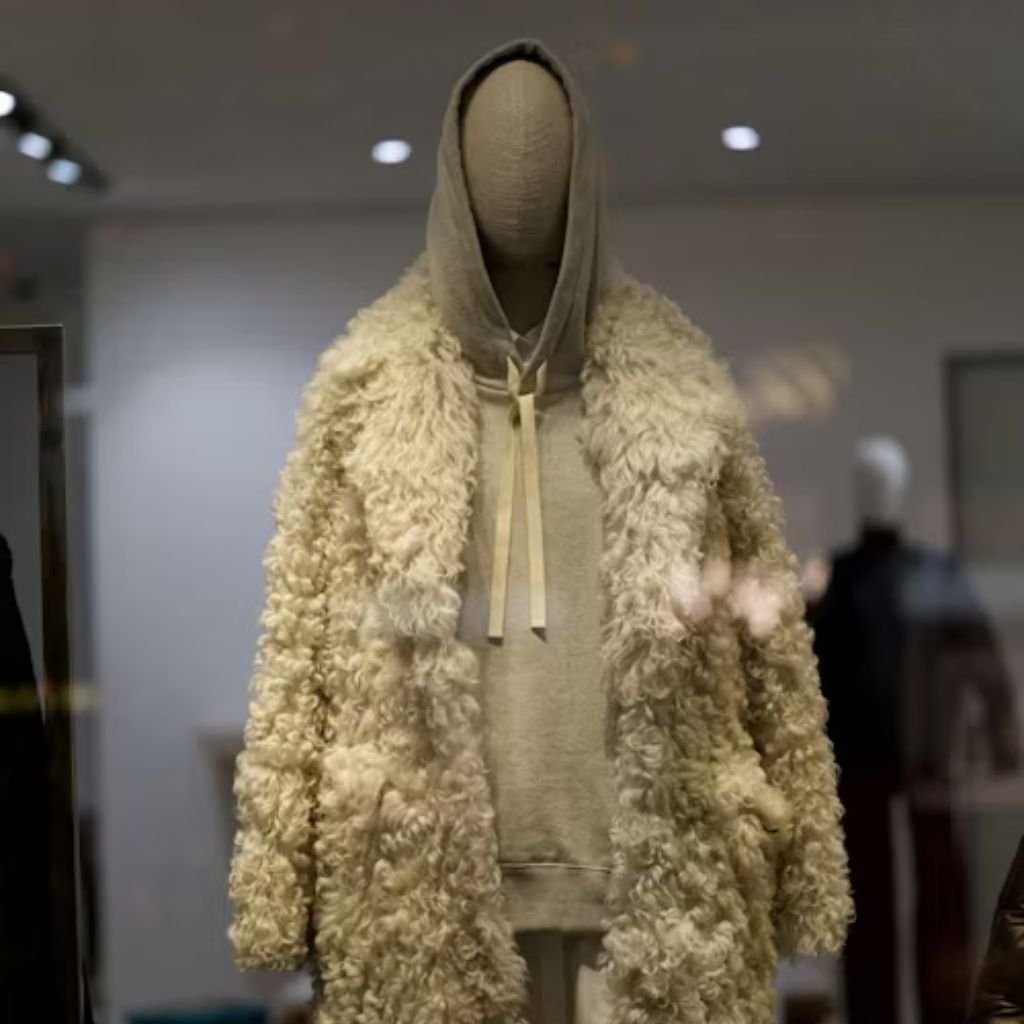
Pure wool is widely used for winter wear because it provides natural insulation. Sweaters, coats, jackets, and cardigans made from wool trap heat effectively, yet they allow airflow to prevent discomfort. Because wool regulates body temperature, people stay warm without feeling sweaty. Many luxury brands rely on Merino, cashmere, and alpaca wool to produce premium winter outfits.
Business and Formal Wear
Wool is a top choice for tailored clothing, especially suits and blazers. Its structure allows garments to hold their shape while still offering comfort. Wool suits drape smoothly and resist wrinkles, which makes them ideal for business professionals. Many choose worsted wool for formal settings because it feels smooth, strong, and elegant. Wool trousers and skirts also maintain a polished look throughout the day.
Downsides of Pure Wool (Expanded & Detailed)
Pure wool offers many valuable benefits, yet it also comes with a few drawbacks that buyers should consider. These downsides do not reduce wool’s overall quality, but they help people make better decisions. Although pure wool is warm, durable, and natural, it still requires careful handling and thoughtful use. Therefore, understanding these limitations helps people choose the right wool type for their needs.
Higher Cost
Pure wool costs more because it requires careful and time-consuming production. Farmers must raise sheep under healthy conditions, and workers must shear fleece gently. After that, processors clean, sort, and spin fibers with great care. As a result, each step adds cost and increases the final price. Many luxury types like Merino and Cashmere are even more expensive because of their softness and rarity.
Requires Gentle Washing and Special Care
Pure wool demands delicate handling because its fibers react to heat, friction, and strong detergents. When exposed to these factors, the fabric may shrink, harden, or lose softness. Therefore, people need to wash wool in cold water with mild detergent. Even then, wool must be laid flat to dry so it keeps its shape. Many users find this extra care time-consuming, especially when compared to machine-wash synthetic fabrics.
Possible Itchiness Depending on Wool Type
Some wool types feel itchy on the skin, especially if the fibers are coarse. Shetland wool, for example, has slightly rough fibers that may irritate sensitive skin. People often feel this itchiness on the neck, wrists, or arms where the fabric touches directly. As a result, many avoid wearing certain wool garments without an inner layer. Although softer types like Merino and Cashmere feel smooth and gentle, not all wool provides the same comfort.
Not Ideal for Very Hot Climates
Pure wool traps heat, which makes it a perfect winter fabric. However, this same quality makes it uncomfortable in very hot climates. Wool may feel too warm in regions where temperatures stay high throughout the year. Although Merino wool works better because it breathes well, thicker wool types still feel heavy and warm. Therefore, people living in hot areas may use wool only during cooler months.
How to Identify Genuine Pure Wool (Expanded & Detailed)
Identifying genuine pure wool is very important because the market carries many blends and synthetic products that look similar. Many sellers mix wool with polyester, nylon, or acrylic to cut costs. These blends appear warm and soft but do not match the performance of real wool. Because of this, people often feel confused when shopping for wool garments. Therefore, learning a few simple tests helps you confirm authenticity easily. These tests also protect your money, especially when buying sweaters, scarves, coats, or blankets.
Below are the most reliable ways to identify real pure wool. Each method is safe, simple, and beginner-friendly. With these techniques, you can shop smarter and avoid synthetic imitations. As a result, you will always choose genuine wool that offers warmth, breathability, and quality.
The Woolmark Label The Most Trusted Indicator
The Woolmark label is one of the most reliable signs of genuine pure wool. This official certification mark appears on many premium wool products. When you see the Woolmark logo, you know the item has passed strict quality tests. These tests check fiber purity, softness, strength, and processing standards. As a result, you can trust the product without any doubt.
The Burn Test A Classic but Careful Method
The burn test is a traditional method used to identify genuine wool. Wool behaves differently from synthetic fibers when exposed to flame. Pure wool burns slowly and curls away from the fire. It smells like burnt hair because both contain protein. After burning, wool leaves behind a small black ash ball that crushes easily into powder. This residue confirms the presence of natural wool.
Texture and Feel Soft, Springy, and Warm
Touch is one of the easiest ways to identify pure wool. When you press wool between your fingers, it feels soft, warm, and slightly springy. The fibers return to shape easily because wool retains elasticity. Moreover, pure wool feels warm even before you wear it because it insulates naturally. This warmth instantly sets it apart from synthetics.
The Crimp Test Checking Natural Fiber Waves
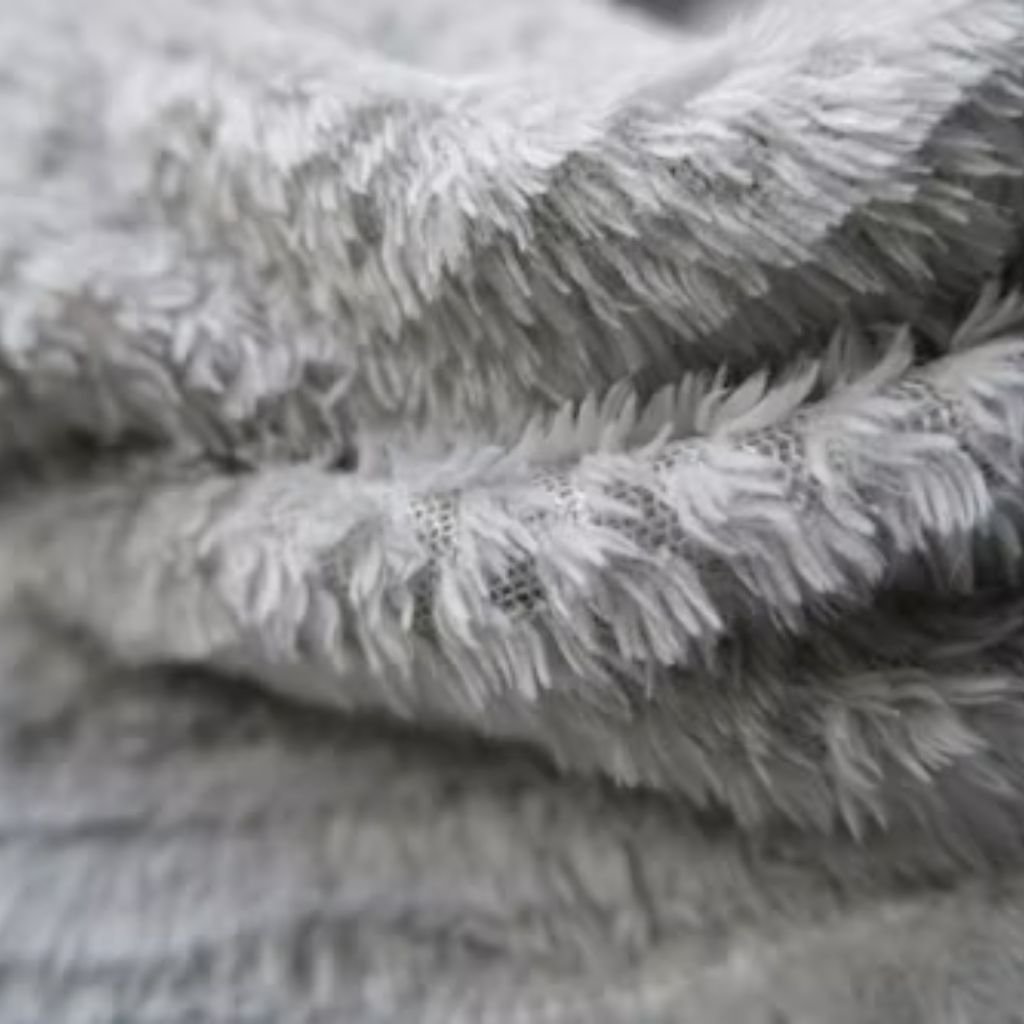
Pure wool fibers have natural crimps or waves. These crimps help wool trap air, stay warm, and stretch naturally. You can see crimps especially in thicker wool types. If you pull a strand gently, you will notice tiny waves along the fiber. These waves confirm that the fiber is natural wool.
The Price Indicator Extremely Low Prices Are a Warning
Pure wool costs more because production takes time and care. Therefore, an extremely low price often signals that the product is not pure wool. Synthetic blends cost far less, so sellers offer them at cheaper rates. While discounts exist, genuine high-quality wool rarely sells at very low prices. This is especially true for Cashmere, Merino, and Alpaca wool.

Care & Maintenance Tips for Pure Wool (Expanded & Detailed)
Caring for pure wool is very important because the fabric reacts to heat, friction, and strong detergents. Pure wool lasts longer when treated gently, and proper care protects its softness and natural strength. Although wool is durable, it still needs thoughtful handling to prevent shrinking, stretching, or damage. Therefore, learning a few simple techniques makes a huge difference. With the right methods, wool garments stay warm, fresh, and beautiful for many years.
Washing Guidelines Keep Wool Soft and Safe
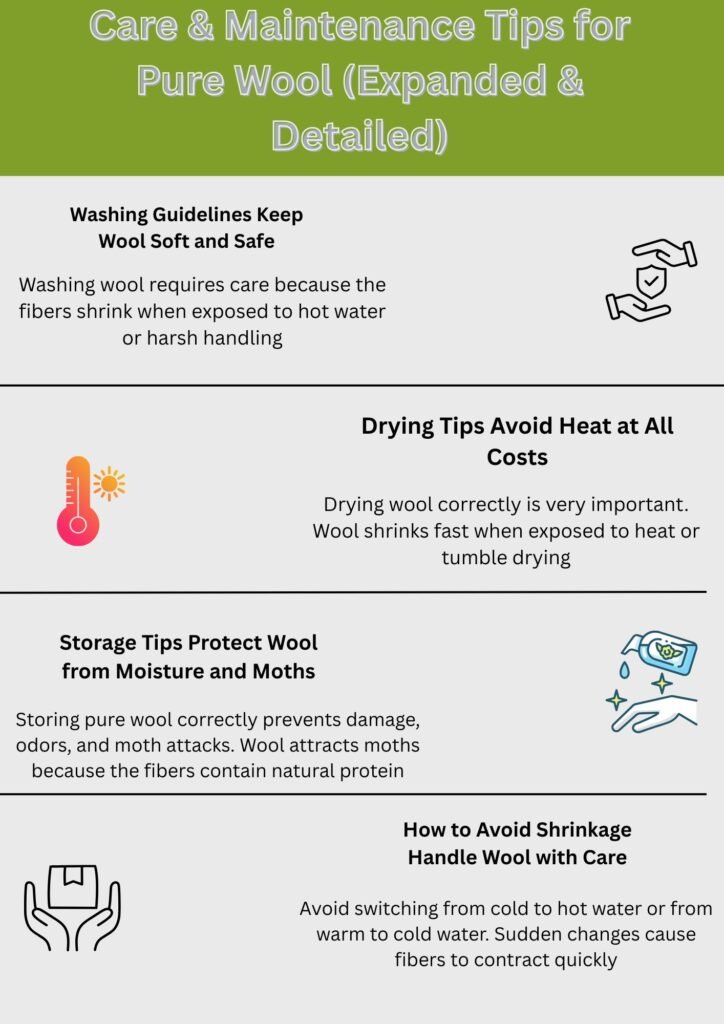
Washing wool requires care because the fibers shrink when exposed to hot water or harsh handling. Therefore, it is always better to wash wool in cold or lukewarm water. You should use a mild, wool-safe detergent to protect the fibers. These detergents clean the fabric gently without removing natural oils. Strong detergents or bleach can damage the fibers and make the wool rough or weak.
Drying Tips Avoid Heat at All Costs
Drying wool correctly is very important. Wool shrinks fast when exposed to heat or tumble drying. Therefore, you must never use a dryer for pure wool. Instead, place the garment on a flat surface. Use a clean towel underneath the wool to absorb extra water. You can also roll the towel gently to reduce moisture without twisting.
Storage Tips Protect Wool from Moisture and Moths
Storing pure wool correctly prevents damage, odors, and moth attacks. Wool attracts moths because the fibers contain natural protein. Therefore, clean wool items before storing them. Moths prefer dirty or sweaty garments. After cleaning, fold wool carefully and keep it in breathable cotton bags or sealed boxes. Avoid plastic bags because they trap moisture and cause a musty smell.
How to Avoid Shrinkage Handle Wool with Care
Shrinkage is one of wool’s biggest challenges, but you can prevent it easily. Wool shrinks when exposed to sudden temperature changes. Therefore, always wash and rinse wool at similar temperatures. Avoid switching from cold to hot water or from warm to cold water. Sudden changes cause fibers to contract quickly.
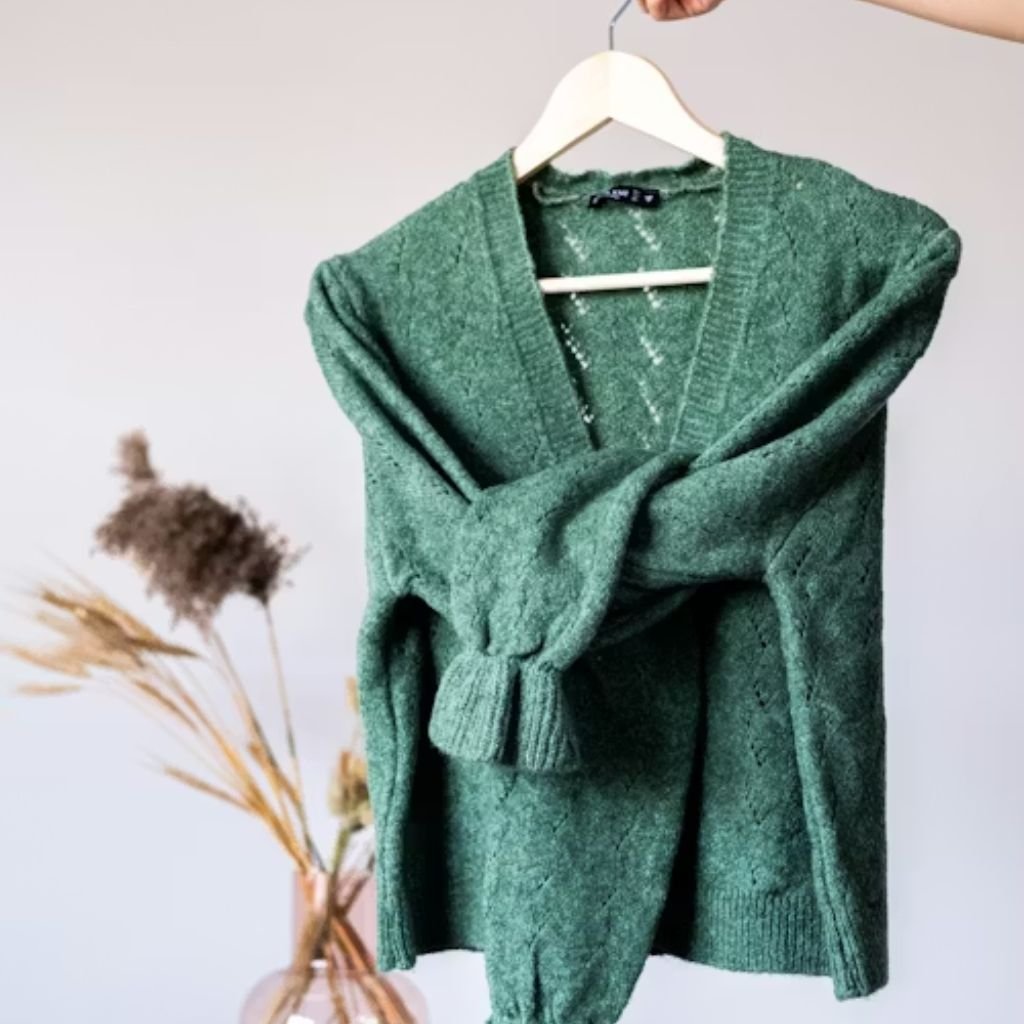
Conclusion
Pure wool remains one of the most valuable natural fabrics available. Its warmth, durability, breathability, and eco-friendly nature make it a smart investment. While it costs more, it provides long-term value and comfort. Pure wool suits many needs, from winter wear to luxury garments. Therefore, the answer to the question Is Pure Wool Worth It? is yes. It is worth it for people who value comfort, quality, and sustainability.
FAQs
Is pure wool better than synthetic fabrics?
Yes, wool offers better warmth, breathability, and durability.
Does pure wool shrink easily?
It may shrink if washed in hot water.
Is pure wool too warm for everyday use?
Light Merino works well for daily wear.
Is pure wool itchy?
Soft types like cashmere and Merino are not itchy.
How long does pure wool last?
Pure wool can last for many years with proper care.