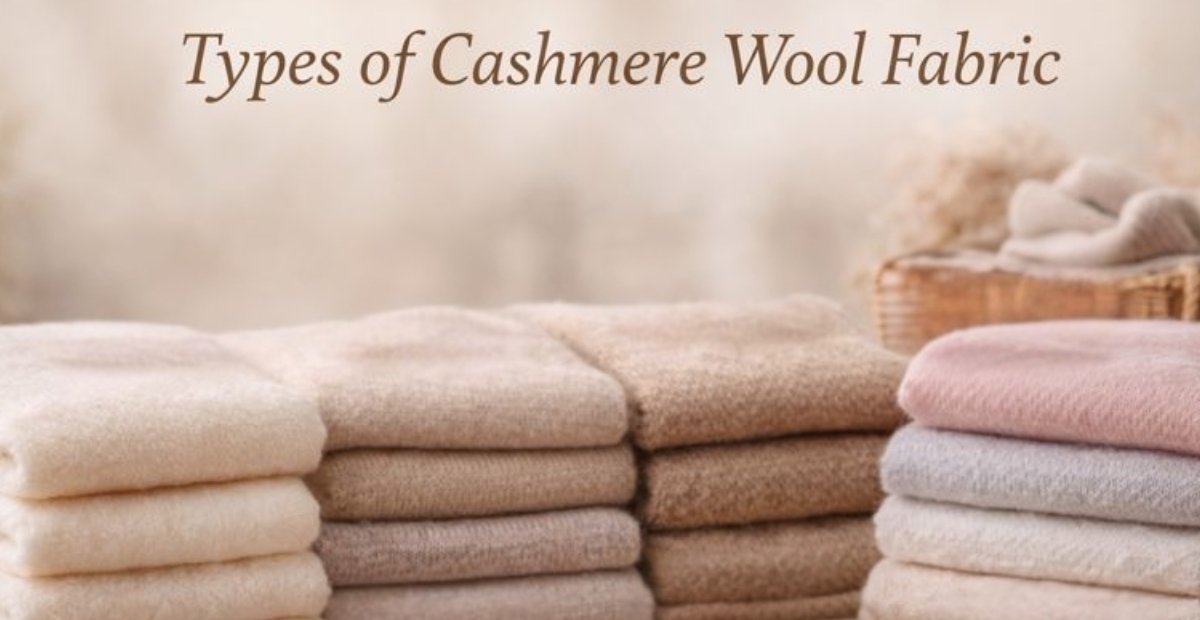
Cashmere is known for its softness, warmth and elegance. Cashmere is not the same. While Grade A Cashmere is often the focus, Grade C cashmere wool fabric provides an excellent balance of luxury and affordability. It is a favorite among designers, manufacturers and conscious consumers.
Cashmere Grade B is renowned for its fine texture, durability and versatility. It may not be ultra-fine like Grade A but it is still a premium natural fibre. For those who are looking for comfort and value, but without the high price tag, grade B cashmere is a great investment.
This guide will explore the benefits, uses and care of Grade A cashmere. Comparing Grade B cashmere to other grades of cashmere will also help you make a more informed decision.
What is Grade B Cashmere wool fabric?
The soft undercoat fibers from cashmere goats are used to produce Grade B cashmere fabric. These fibers, while slightly thicker than those of Grade A, are still incredibly soft and warm. The fiber diameter is usually between 15 and 18 microns. This still puts it in the luxury category.
Cashmere Grade B is sorted and processed with care, unlike lower-graded wool. The result is a fabric that is smooth and consistent. Although there may be a slight variation in the texture, overall appearance is elegant and refined.
Cashmere of Grade B is also often blended with silk or wool to increase strength and durability. It is used widely in clothing and home textiles.
What makes Grade B Cashmere Different from Other Grades?
Understanding cashmere grade helps buyers select the best fabric for their needs. Cashmere is classified as Grades A, B, and C according to the length and fineness of the fiber.
Grade A vs. Grade B Cashmere
Cashmere Grade A is made from the finest and longest fibres. It is therefore extremely soft and light. It is also significantly more expensive.
Cashmere grade B is slightly thicker. It still has a softness and warmth that is impressive. It may pill over time but with proper care, this can be reduced. Cashmere of Grade B is therefore often chosen for luxury clothing.
Grade B vs. Grade C Cashmere
Cashmere grade C is made with much coarser fibres. It is less soft, and can irritate sensitive skin. Cashmere Grade B, on the other hand, is more durable and provides a better structure.
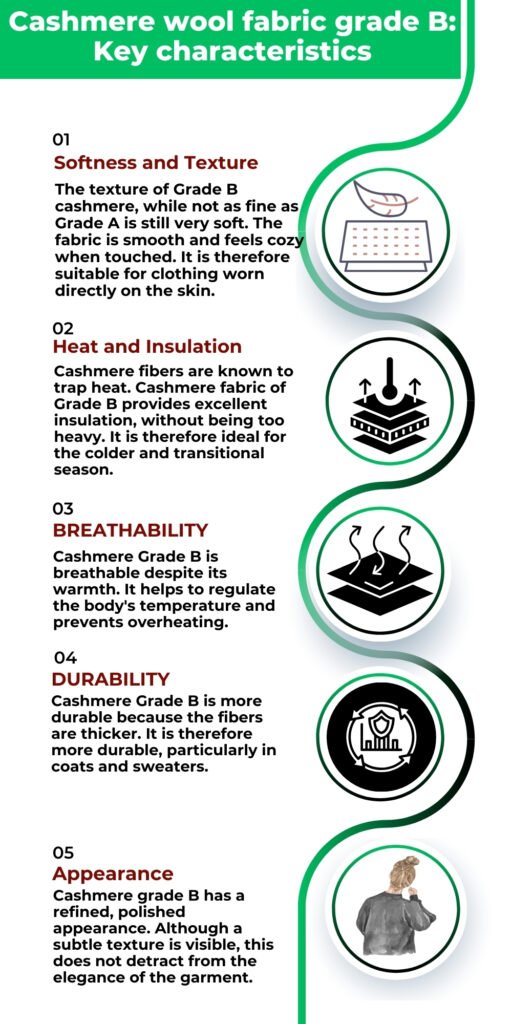
Cashmere wool fabric grade B: Key characteristics
Softness and Texture
The texture of Grade B Cashmere Wool Fabric, while not as fine as Grade A is still very soft. The fabric is smooth and feels cozy when touched. It is therefore suitable for clothing worn directly on the skin.
Heat and Insulation
Cashmere fibers are known to trap heat. Cashmere fabric of Grade B provides excellent insulation, without being too heavy. It is therefore ideal for the colder and transitional season.
Breathability
Cashmere Grade B is breathable despite its warmth. It helps to regulate the body’s temperature and prevents overheating.
Durability
Cashmere Grade B is more durable because the fibers are thicker. It is therefore more durable, particularly in coats and sweaters.
Appearance
Cashmere grade B has a refined, polished appearance. Although a subtle texture is visible, this does not detract from the elegance of the garment.
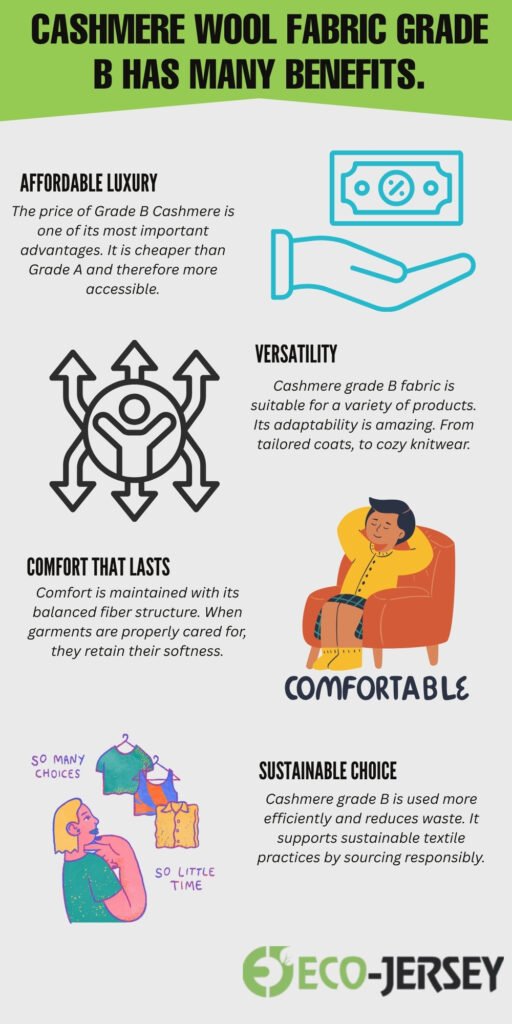
Cashmere wool fabric grade B has many benefits.
Affordable Luxury
The price of Grade B Cashmere is one of its most important advantages. It is cheaper than Grade A and therefore more accessible.
Versatility
Cashmere grade B fabric is suitable for a variety of products. Its adaptability is amazing. From tailored coats, to cozy knitwear.
Comfort that Lasts
Comfort is maintained with its balanced fiber structure. When garments are properly cared for, they retain their softness.
Sustainable Choice
Cashmere grade B is used more efficiently and reduces waste. It supports sustainable textile practices by sourcing responsibly.
Cashmere wool fabric grade B is used for a variety of purposes.
Outerwear
trench coats, overcoats and pea coats are often made from grade B cashmere. The durability and warmth of cashmere make it perfect for everyday wear in winter.
Knitwear
Cashmere sweaters, cardigans and scarves of Grade B provide a softness that is enhanced by their resilience. They are therefore perfect for both casual and semi-formal attire.
Blended fabrics
Cashmere Grade B is frequently blended with synthetic, wool, and silk fibers to improve performance. Strength, elasticity and cost efficiency are enhanced.
Home textiles
Cashmere Grade B is soft and warm, making it ideal for blankets, throws and upholstery fabrics. Interiors are given a subtle touch of luxury.
The Manufacturing Process for Grade B Cashmere Fabric
Fiber Collection
Grade B Cashmere Wool Fabric fibres are harvested by combing goats in their natural molting period. The fibers are kept soft and intact by using this method.
Sorting and Grading
After collection, the fibers are sorted according to length and fineness. To maintain consistency, Grade B fibers must be separated with care.
Cleaning and Dehairing
After washing, the fibers are cleaned to remove oil and dirt. The coarse guard hairs will then be removed. This step is essential for achieving smooth texture.
Spinning and Weaving
After cleaning, the fibers are spun to yarn and then woven or knitted together into fabric. Quality checks are conducted to ensure uniformity.
Cashmere Wool Fabric Grade B in the Fashion Industry
Grade B Cashmere Wool Fabric is popular in the fashion industry because of its versatility. Designers prefer it in ready-to wear collections. It is a good choice for mid-range brands and premium brands because it provides luxury at an affordable price.
Many brands also choose Grade B Cashmere to make structured garments. The slightly thicker fibres help to maintain the shape better. Coats and jackets retain their shape over time.
How to care for Cashmere Wool Fabric Grade B
Cashmere is delicate and requires special care.
Washing
It is best to wash by hand. Use cold water with a mild detergent designed specifically for wool. Dry cleaning is an alternative for structured garments.
Drying
Drying garments on a flat surface is recommended. It is not recommended to hang clothes because they may stretch.
Stores
Grade B Cashmere Wool Fabric is best stored in a folded position, not hanging. Also, it is recommended to use breathable garment bags as well as natural moth repellents.
Pilling Management
It is possible to see some pilling. Cashmere combs can remove the pills and restore the fabric’s look.
The advantages of using wool instead of traditional wool
Grade B Cashmere Wool Fabric Grade B is softer than regular wool. It also provides better insulation while being lighter. Cashmere is softer than traditional wool, which can itch.
Grade B Cashmere Wool Fabric drapes better. The garments will look refined and polished.
What is the Grade B Cashmere worth buying?
The answer to this question is “yes” for most consumers. Cashmere of Grade B is a great compromise between luxury and functionality. It may not have the ultra-fine texture of Grade A but it compensates for this with durability and affordability.
Cashmere Grade B is often better for everyday wear. It is therefore the perfect choice for anyone who values comfort, durability, and affordability.
Sustainability and ethical considerations
Sustainability in cashmere production has become increasingly important. When responsibly sourced,Grade B Cashmere Wool Fabric supports ethical herding. Moreover, fibers are used more efficiently to reduce waste.
Grade B Cashmere Wool Fabric are encouraged to select brands that place animal welfare and environmental responsibility as a priority.
Style Tips for Cashmere Wool Fabric Grade B
Everyday Wear
For a casual, refined look, pair a cashmere sweater of Grade B with denims or chinos.
Office Wear
Cashmere blend blazers, coats and jackets add elegance to professional attire while maintaining comfort.
Layering
Grade B Cashmere Wool Fabric is breathable and therefore works well with layers. It can therefore be worn in multiple seasons.
Cashmere Grade B for Different Climates
Cashmere grade B is a good choice for cold climates because of its insulation. It can also adapt to milder weather due to its breathability. It is comfortable all day long.
Cost vs. value analysis
Grade B Cashmere Wool Fabric is more expensive than wool standard, but its durability justifies the cost. Over time, less replacements will be needed. In this way, value is gained over the long term.
Cashmere Grade B: High Quality Cashmere
Look for cashmere with a tight weave, a uniform texture and brands that are reputable when purchasing Grade B. Check the labels to see what fibers are used and where they come from.
The Future of Cashmere Wool Fabric Grade B
Grade B Cashmere Wool Fabric is expected to grow in popularity as consumers become more price-conscious. Softness and durability will be further enhanced by innovations in processing. Its role in the textile sector will therefore continue to grow.
The conclusion
Cashmere fabric grade B is a blend of elegance, comfort and affordability. It may not be of the highest quality, but it is a reliable fabric with enduring appeal. It is a popular choice for fashion and home textiles.
Cashmere Grade B is a luxurious fabric that will last for years with the right care. For those who are looking for premium quality at a reasonable price, the Grade B Cashmere Wool Fabric is a great option.
FAQs
What is Grade B cashmere wool fabric?
Grade B cashmere wool fabric is made from slightly thicker cashmere fibers than Grade A. However, it still offers excellent softness, warmth, and durability, making it a cost-effective luxury fabric.
Is Grade B cashmere real cashmere?
Yes, Grade B Cashmere Wool Fabric is 100% real cashmere. It is sourced from the undercoat of cashmere goats and carefully processed to maintain comfort, insulation, and quality.
How soft is Grade B cashmere compared to Grade A?
Grade B Cashmere Wool Fabric is slightly less soft than Grade A due to thicker fibers. Nevertheless, it remains smooth, comfortable, and suitable for everyday wear.