Winter clothing has changed a lot in recent years. People now want warmth without heavy layers. They also want comfort, flexibility, and breathable protection. Because of these demands, Frost Core Insulated Fabric has become a major trend in winter apparel.
Frost Core Insulated Fabric is designed to provide powerful insulation while staying lightweight. It keeps heat close to the body and reduces cold air penetration. At the same time, it helps release moisture and sweat during movement. Therefore, it suits both daily wear and high-performance winter sports.
Many winter fabrics fail in extreme conditions. However, Frost Core insulation material focuses on thermal efficiency and modern comfort. That is why brands and manufacturers are adopting it quickly. Moreover, outdoor lovers now prefer it for long winter adventures.
This fabric is useful for winter clothing brands, textile manufacturers, and buyers. It also benefits consumers who need warmth in harsh climates. If you want a winter fabric that balances warmth and breathability, Frost Core can be a smart solution.
What Is Frost Core Insulated Fabric?
Frost Core Insulated Fabric is a modern thermal insulated fabric created for cold environments. It combines insulation fibers with advanced thermal layers. This structure traps body heat and blocks winter air. As a result, it helps maintain stable body temperature.
The core technology behind Frost Core focuses on heat retention. It uses micro-structured fibers that hold warm air pockets. These trapped air pockets act as a thermal barrier. Therefore, heat stays inside instead of escaping.
Unlike regular winter fabrics, Frost Core does not rely only on thickness. Instead, it uses engineered insulation layers for performance. Traditional fabrics may feel heavy and stiff. However, Frost Core remains lighter and more flexible for active use.
Manufacturers often create Frost Core fabric using polyester blends. They also include microfibers, thermal cores, and stretch yarns. This combination improves durability and softness. Additionally, it increases resistance against wind and cold moisture.
Because of its design, it is also called a winter performance textile. Many brands use it as a cold weather insulation material for premium winter clothing. It fits well in both fashion wear and professional outdoor gear.
History of Frost Core Insulated Fabric (Evolution of Winter Insulation)
Winter fabrics have existed for centuries. In the past, people used animal fur and heavy wool. These materials worked well, but they were bulky and hard to maintain. Over time, textile innovation introduced cotton blends and layered garments.
During the 20th century, synthetic fibers changed the industry. Polyester and nylon became popular because they were lightweight. They also dried faster than natural fabrics. However, early synthetic winter fabrics lacked proper insulation performance.
Later, advanced thermal fabrics entered the market. Manufacturers started using microfibers and thermal lining systems. These designs improved heat retention and reduced weight. As a result, winter clothing became easier to wear.
The idea of Frost Core insulation developed from this evolution. It follows the same modern approach of engineered warmth. Instead of using thick layers, it uses smart thermal structures. Therefore, it delivers warmth with better mobility.
Today, Frost Core Insulated Fabric represents the latest stage of winter textile progress. It meets modern expectations of warmth, breathability, and durability. That is why it continues trending in winter apparel industries worldwide.
Types of Frost Core Insulated Fabric (With Subheadings)
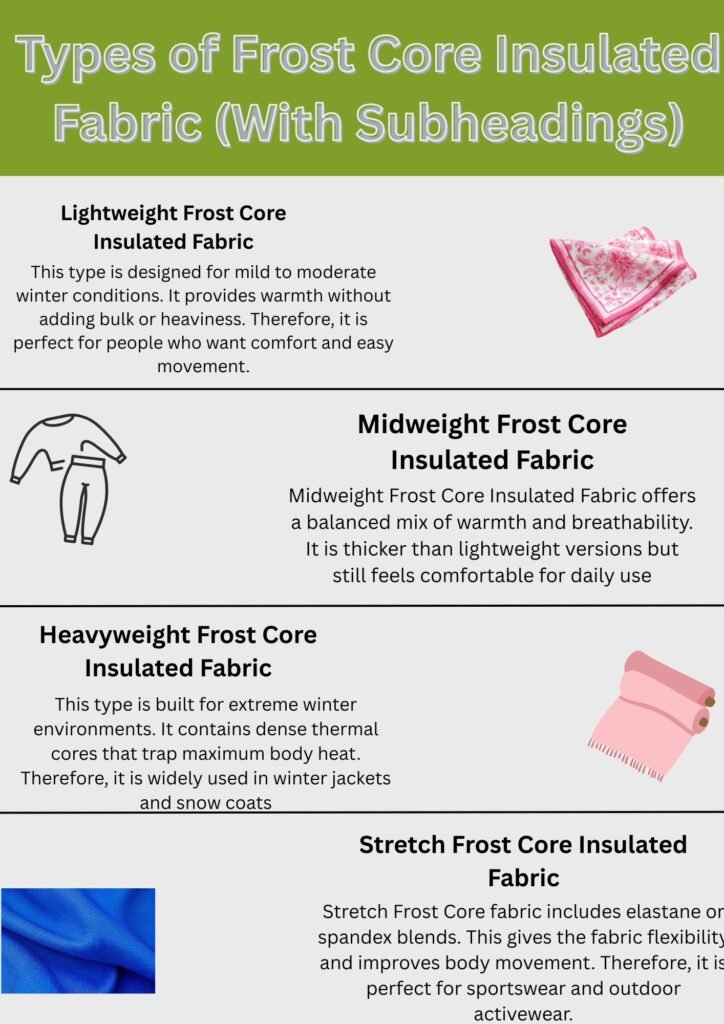
Lightweight Frost Core Insulated Fabric
This type is designed for mild to moderate winter conditions. It provides warmth without adding bulk or heaviness. Therefore, it is perfect for people who want comfort and easy movement. It is commonly used in thermal shirts, inner linings, and casual winter wear. Moreover, it works well for layering under jackets. Many brands prefer it for slim-fit winter collections.
Midweight Frost Core Insulated Fabric
Midweight Frost Core Insulated Fabric offers a balanced mix of warmth and breathability. It is thicker than lightweight versions but still feels comfortable for daily use. As a result, it is ideal for hoodies, sweatshirts, and winter pants. It also performs well in windy outdoor conditions. Additionally, it suits travelers and commuters who face cold weather regularly. This type is one of the most popular in winter apparel production.
Heavyweight Frost Core Insulated Fabric
This type is built for extreme winter environments. It contains dense thermal cores that trap maximum body heat. Therefore, it is widely used in winter jackets and snow coats. It also provides strong protection against freezing winds. Moreover, it works well for mountain and polar conditions. Many industrial and military uniforms use this version. It is best for people who face harsh outdoor climates.
Stretch Frost Core Insulated Fabric
Stretch Frost Core fabric includes elastane or spandex blends. This gives the fabric flexibility and improves body movement. Therefore, it is perfect for sportswear and outdoor activewear. It is often used in ski suits, trekking pants, and climbing jackets. Additionally, it feels more comfortable for long-term wear. This type also helps improve fitting and shape retention. It is highly demanded in performance winter fashion.
How Frost Core Insulated Fabric Works
Frost Core Insulated Fabric works by trapping warm air inside its fiber structure. The fabric creates tiny air chambers within the insulation layer. These chambers reduce heat loss and prevent cold penetration. Therefore, the body stays warmer for longer periods.
Another important function is moisture control. Frost Core fabric often includes moisture-wicking fibers. These fibers pull sweat away from the skin surface. As a result, the wearer feels dry even during activity.
Breathability also plays a key role in this fabric. Many winter textiles trap heat but cause overheating. However, Frost Core balances airflow and insulation. It allows excess heat to escape while maintaining warmth.
Wind resistance is another strong advantage. Cold wind usually removes body heat quickly. Frost Core includes a tightly woven outer structure that blocks airflow. Therefore, it improves thermal comfort in windy climates.
Because of these features, Frost Core is suitable for extreme cold weather clothing. It works well for sportswear, casual winter outfits, and technical outdoor uniforms. It provides stable insulation without compromising comfort.
Key Features of Frost Core Insulated Fabric
Frost Core is considered a premium thermal insulated fabric because it combines multiple features in one textile. It is engineered for both comfort and performance. That is why brands use it for winter gear that requires reliability.
Below are the most important features of Frost Core Insulated Fabric:
- Advanced thermal locking system
- Lightweight but high insulation power
- Moisture control technology
- Stretch flexibility for movement
- High durability in extreme cold
- Quick-dry performance for active users
- Wind-blocking fabric construction
- Soft inner feel for skin comfort
Each feature supports winter comfort in a different way. Together, they create a strong winter performance textile. Therefore, Frost Core becomes a complete insulation solution for harsh weather.
Benefits of Frost Core Insulated Fabric
The biggest benefit of Frost Core Insulated Fabric is its excellent warmth. It keeps body heat trapped inside the insulation layer. Therefore, it helps people stay comfortable in freezing temperatures. This makes it ideal for snowy regions and winter storms.
At the same time, it prevents overheating during physical activity. Many winter jackets become uncomfortable during sports. However, Frost Core releases excess heat through breathable fiber channels. As a result, the wearer stays warm but not sweaty.
This fabric is also perfect for outdoor sports. Skiing, trekking, and hiking require flexible winter clothing. Frost Core supports free movement because it is lightweight. Additionally, its stretch performance improves comfort.
Long wear comfort is another key advantage. Heavy fabrics often cause fatigue and stiffness. However, Frost Core stays soft and smooth. Therefore, it works well for long travel and daily winter use.
It also improves energy efficiency in insulation. Since it traps heat effectively, the body spends less energy staying warm. This benefit is useful in extreme cold environments. That is why professionals and military teams often prefer such fabrics.
Applications of Frost Core Insulated Fabric
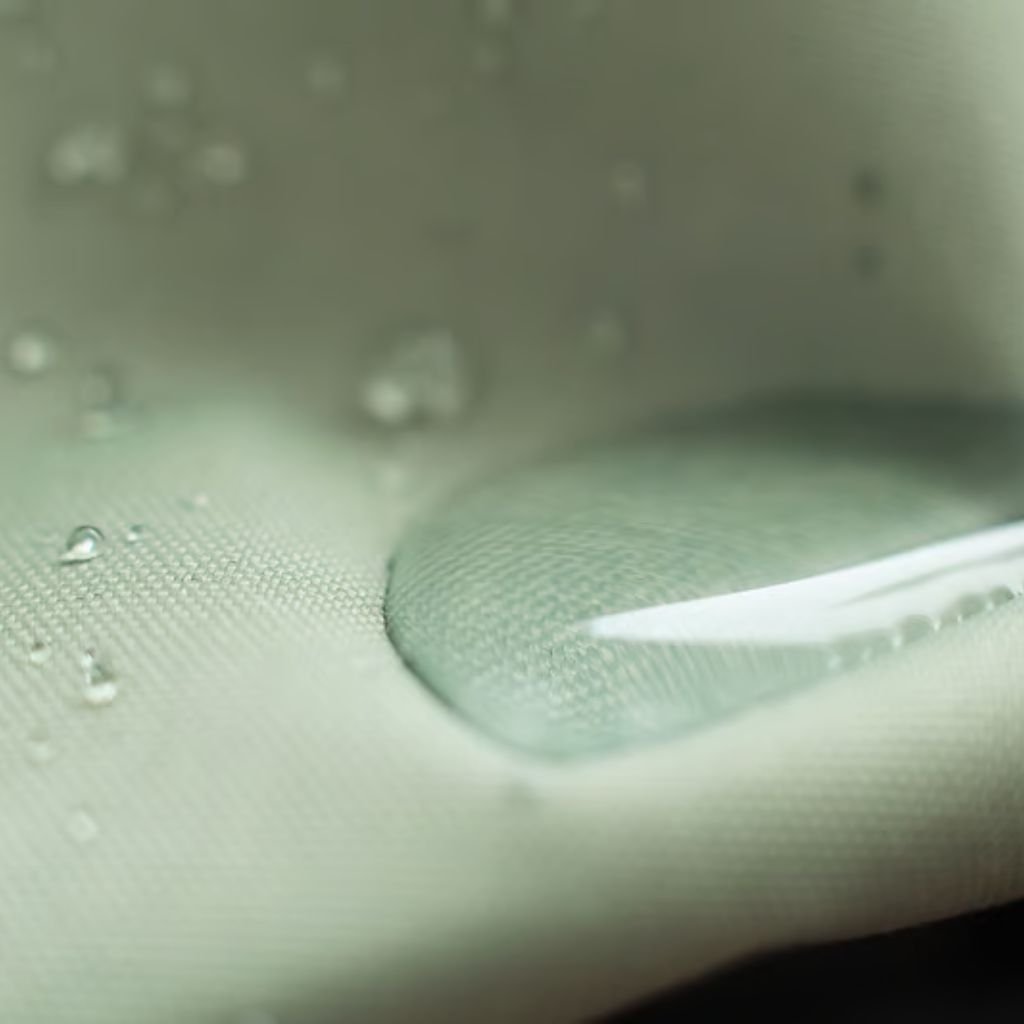
Frost Core Insulated Fabric is widely used across winter clothing categories. It suits both fashion garments and technical sportswear. Since it offers warmth without bulk, designers can create slim winter outfits. Therefore, it is popular in modern winter collections.
Winter jackets are one of its main uses. Brands use Frost Core for insulation panels and full-body lining. It helps jackets stay warm without feeling heavy. Additionally, it improves comfort for daily commuting.
Thermal wear is another important application. Frost Core works well for base layers and thermal shirts. It keeps heat close to the skin and removes sweat. As a result, it improves comfort during winter workouts.
Ski apparel also benefits from this fabric. Ski suits require insulation, flexibility, and wind protection. Frost Core offers all these properties. Therefore, it is suitable for skiing and snowboarding gear.
Outdoor sportswear like trekking pants and hoodies also uses Frost Core. Hikers need lightweight warmth for long journeys. This fabric supports movement and reduces fatigue. That is why many premium hiking brands adopt it.
Military and industrial cold-weather uniforms also rely on advanced insulation. Frost Core provides reliable warmth and durability. Therefore, it works well in professional uniforms used in harsh climates.
Is Frost Core Insulated Fabric Waterproof?
Many people ask if Frost Core Insulated Fabric is waterproof. The simple answer is that it depends on the outer layer. Frost Core itself focuses on insulation, not full waterproofing. However, it often includes water-resistant coatings.
Water-resistant fabric can repel light rain and snow. It stops moisture from quickly soaking into the textile. Therefore, Frost Core performs well in snowy conditions. It also protects against mild winter drizzle.
Waterproof fabric is different because it blocks water completely. For full waterproof performance, manufacturers combine Frost Core with membrane layers. These layers include TPU or PU coatings. As a result, the final garment becomes waterproof and insulated.
Frost Core works best when used with proper layering. It can be paired with waterproof shells for heavy snowstorms. Therefore, it is an excellent mid-layer or insulated lining. It improves warmth without reducing protection.
Sustainability & Eco-Friendliness
Sustainability is now an important topic in textile manufacturing. Many brands want eco-friendly winter fabrics. Therefore, they are exploring recycled fiber insulation solutions. Frost Core fabric also has potential in this area.
Some manufacturers produce Frost Core Insulated Fabric using recycled polyester. This reduces plastic waste and supports circular fashion. Additionally, recycled fibers maintain strong durability and insulation quality.
Eco-production methods also improve sustainability. Modern factories reduce water waste and chemical usage. They also focus on cleaner dyeing methods. As a result, Frost Core production becomes more environmentally responsible.
Compared to natural insulation like down, Frost Core offers cruelty-free benefits. It does not require animal products. Therefore, it supports vegan winter fashion trends.
However, not all Frost Core fabrics are fully recyclable. Some blended versions include mixed fibers. This makes recycling harder. Still, brands are improving fabric designs to support better recycling systems.
Buying Guide: How to Choose the Best Frost Core Fabric
Choosing the right Frost Core Insulated Fabric depends on your intended use. Some people need lightweight warmth for daily life. Others need heavy insulation for extreme winter adventures. Therefore, you should consider fabric specifications carefully.
GSM weight is one of the most important factors. Low GSM fabrics feel lighter and suit thermal wear. Medium GSM works well for hoodies and winter pants. High GSM is best for jackets and industrial uniforms.
Thickness is another key detail. Thicker Frost Core fabrics provide stronger insulation. However, thinner fabrics offer better flexibility and layering. Therefore, you should choose based on weather conditions.
Stretch percentage also matters for sportswear. If you need movement, select Frost Core with elastane blends. This improves comfort during skiing or trekking. Additionally, stretch fabrics fit better on the body.
Always consider your climate needs. For mild winters, a medium insulation Frost Core is enough. For extreme winters, choose high-density insulation. Also, look for wind-resistant and water-resistant outer finishes for added safety.
Why Frost Core Insulated Fabric Is Trending in Winter Apparel

The winter apparel market is changing fast. People want warmth but also want lightweight clothing. Frost Core meets these demands perfectly. Therefore, it has gained popularity in modern winter collections.
It also supports active lifestyles. Many consumers hike, ski, or travel during winter. They need breathable and moisture-free comfort. Frost Core helps them stay warm without sweat buildup.
Brands also prefer it because it is versatile. They can use it for jackets, pants, gloves, and base layers. It also supports modern slim-fit designs. As a result, it fits both fashion and technical markets.
Its durability is another reason for its growing demand. Many winter fabrics lose performance after repeated washing. However, Frost Core maintains structure and warmth. Therefore, it is considered a long-term investment.
Care and Maintenance of Frost Core Insulated Fabric (Complete Guide)
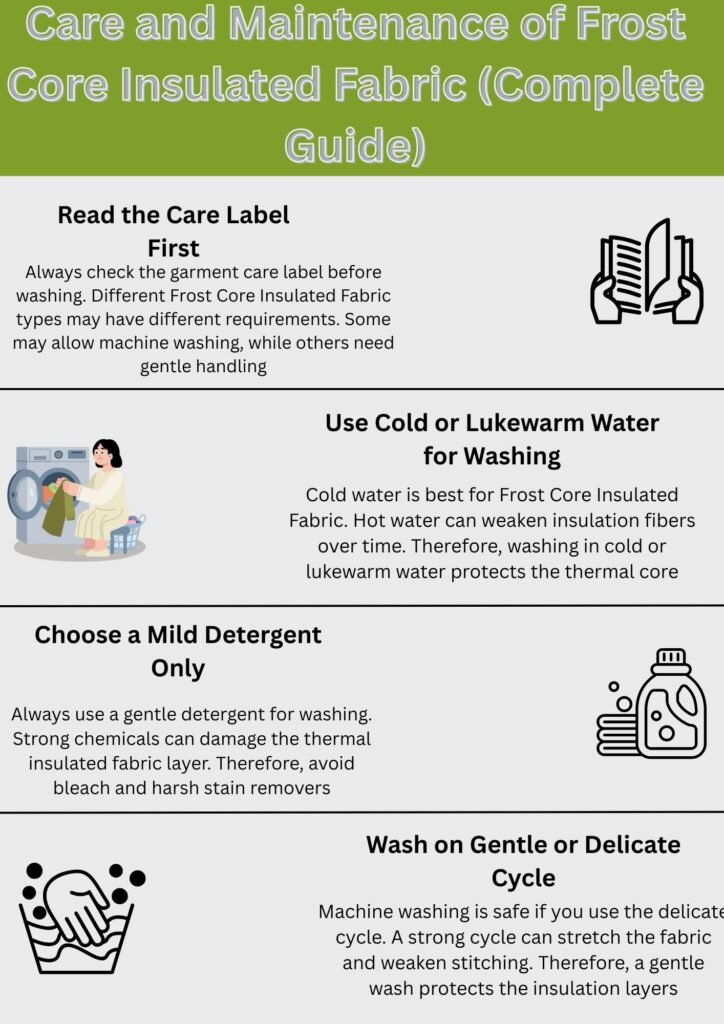
Read the Care Label First
Always check the garment care label before washing. Different Frost Core Insulated Fabric types may have different requirements. Some may allow machine washing, while others need gentle handling. Therefore, the label gives the safest cleaning instructions. It also helps prevent shrinkage or fiber damage. Following the label increases fabric life. It also keeps insulation performance strong.
Use Cold or Lukewarm Water for Washing
Cold water is best for Frost Core Insulated Fabric. Hot water can weaken insulation fibers over time. Therefore, washing in cold or lukewarm water protects the thermal core. It also helps maintain fabric softness and elasticity. Additionally, cold washing reduces color fading. This method is also eco-friendly. It keeps the fabric fresh without damaging its structure.
Choose a Mild Detergent Only
Always use a gentle detergent for washing. Strong chemicals can damage the thermal insulated fabric layer. Therefore, avoid bleach and harsh stain removers. Mild detergent keeps fibers smooth and strong. It also prevents insulation clumping in some fabric types. Additionally, it maintains the fabric’s moisture-wicking ability. This ensures long-term performance in winter conditions.
Wash on Gentle or Delicate Cycle
Machine washing is safe if you use the delicate cycle. A strong cycle can stretch the fabric and weaken stitching. Therefore, a gentle wash protects the insulation layers. It also reduces friction damage inside the drum. Moreover, delicate washing keeps the fabric shape stable. This is important for jackets and thermal wear. It improves the overall life of the garment.
Conclusion
Frost Core Insulated Fabric is one of the most advanced winter insulation solutions available today. It offers warmth, breathability, and durability in one lightweight textile. Therefore, it suits both fashion winterwear and performance outdoor gear.It also competes strongly against fleece, wool, and down. In many cases, it performs better in moisture and wind conditions. Additionally, it is easier to maintain and more comfortable for long wear.
If you want a modern thermal insulated fabric for winter clothing production, Frost Core is a smart choice. It delivers reliable protection, better comfort, and long-term performance. That is why it continues growing as a premium winter performance textile.
FAQs
Is Frost Core Insulated Fabric good for extreme winter?
Yes, Frost Core Insulated Fabric works well in extreme cold. It traps heat efficiently and blocks wind. Therefore, it performs better than many regular winter textiles.
Is Frost Core better than fleece?
In most cases, yes. Frost Core provides better insulation and wind resistance. Fleece feels soft but struggles in strong cold winds. Therefore, Frost Core is better for harsh winters.
Can Frost Core Insulated Fabric be used for sportswear?
Yes, it is ideal for sportswear. It offers warmth, flexibility, and moisture control. Therefore, it works well for skiing, trekking, and outdoor training.