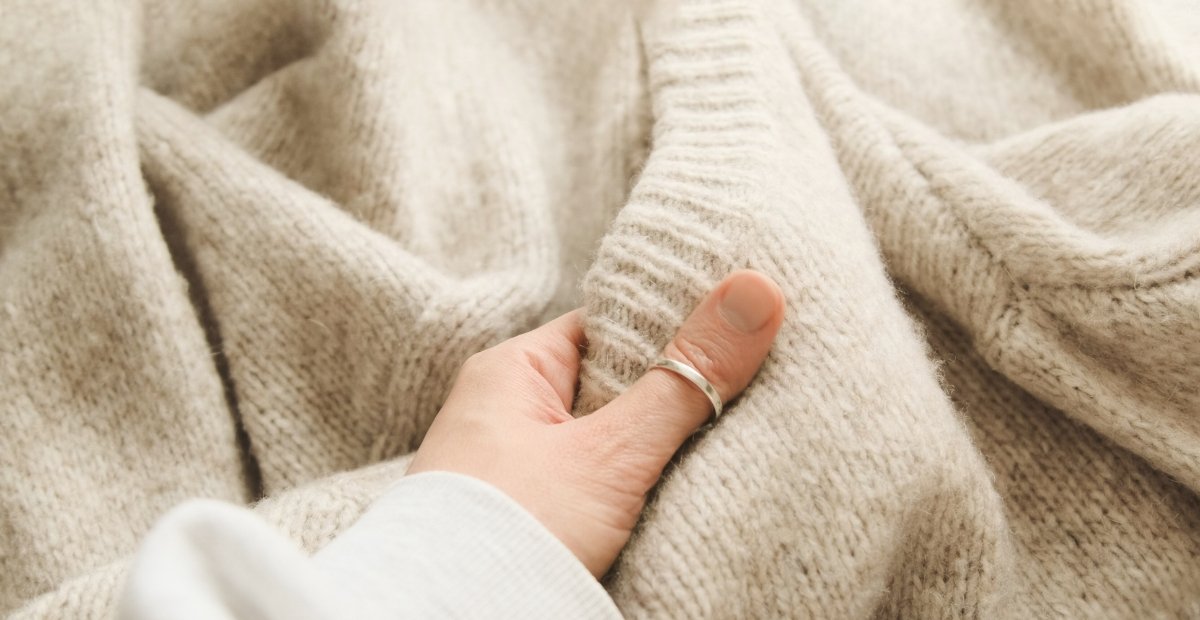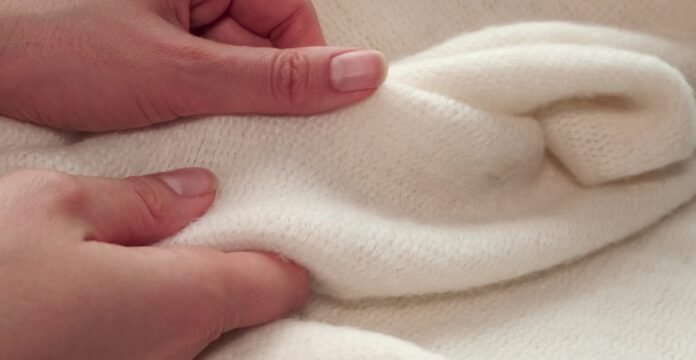
Felted Grade B Cashmere Fabric wool is the perfect combination of luxury and durability. This version of cashmere, which is usually associated with delicateness, has a more robust structure and still maintains its signature softness. It is now increasingly popular for fashion, interior textiles and winter wear collections. The material is also more versatile because it has a higher density, greater warmth and better resistance due to the felting of the fibers.
Innovation is a constant in the textile industry. Cashmere felted is a great example of how the processing can improve performance. It not only provides comfort but also increases longevity. Designers, manufacturers and consumers all benefit from this.
What is Felted Grade B Cashmere Fabric?
The felting process is controlled and the fibers are medium grade cashmere. Heat, moisture and pressure are used to interlock the fibers. The fabric is denser and compacted as a result.
Cashmere Grade B fibers, although slightly thicker than those of Grade A, still have a luxurious feel. After felting the material, it becomes stronger and less likely to pill. It is therefore widely used for garments requiring both elegance and durability.
The surface also develops a matte yet smooth finish. The fabric feels cozy and looks elegant. Insulation is also increased, making it perfect for clothing in cold weather.
Characteristics of Felted Grade B Cashmere Fabric
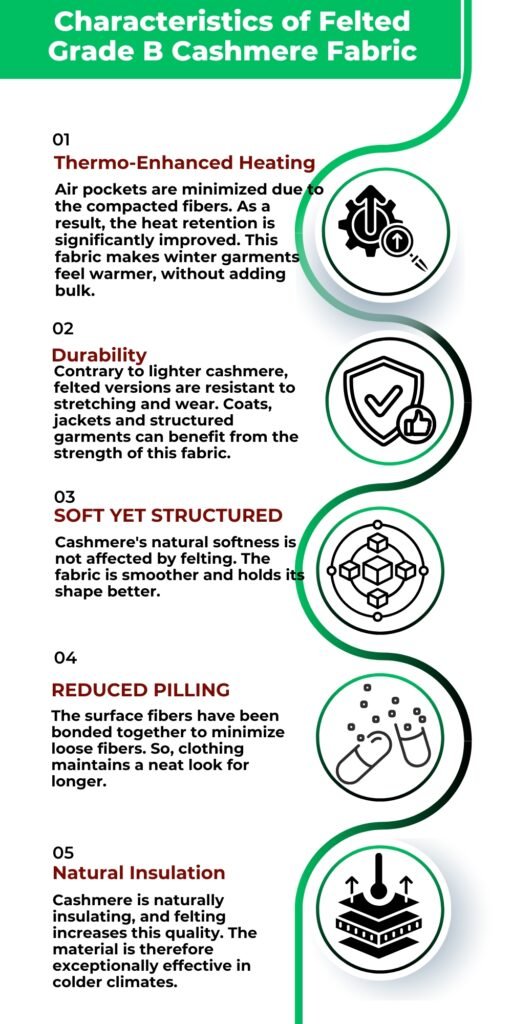
1. Thermo-Enhanced Heating
Air pockets are minimized due to the compacted fibers. As a result, the heat retention is significantly improved. This fabric makes winter garments feel warmer, without adding bulk.
2. Durability
Contrary to lighter cashmere, felted versions are resistant to stretching and wear. Coats, jackets and structured garments can benefit from the strength of this fabric.
3. Soft yet Structured
Cashmere’s natural softness is not affected by felting. The fabric is smoother and holds its shape better.
4. Reduced Pilling
The surface fibers have been bonded together to minimize loose fibers. So, clothing maintains a neat look for longer.
5. Natural Insulation
Cashmere is naturally insulating, and felting increases this quality. The material is therefore exceptionally effective in colder climates.
Manufacturing Process of Felted Grade B Cashmere Fabric
The process of making Felted Grade B Cashmere Fabric requires several stages that are carefully monitored.
The fibers of Grade B are first cleaned and sorted. They are then spun into yarn. The fabric is then exposed to heat, moisture and friction after weaving or knitting. Fibers contract and become glued together. Final finishing treatments smooth out the surface.
It is possible to control shrinkage, but it is not expected. The fabric is kept uniform in thickness and texture. To ensure uniformity, the fabric is also subjected to quality checks.
Advantages Over Regular Cashmere
Felted Grade B Cashmere Fabric has a reputation for being light, but felted cashmere is more substantial. It is therefore more suitable for outerwear. The denser construction also provides greater wind resistance.
The Felted Grade B Cashmere Fabric are also tightly bound, making maintenance easier. Garments will be less likely to lose their shape. They last longer, and need fewer replacements.
Fashion
Felted Grade B Cashmere Fabric has been used in more than just sweaters. It is now used for:
- Coats and Overcoats
- Winter jackets
- Shawls and scarves
- Hats and gloves
- Structured dresses
- Blazers
Designers prefer it because it is elegant and resilient.
Home Textile Uses
Interior design is not only about fashion, but it also has benefits. You can, for example:
- Luxury Cushions
- Warm Throws
- Upholstery Accents
The material’s density provides visual depth and warmth. Interiors will feel more rich and inviting.
Why Grade B works well for felting
The ultra-fine fibers in Felted Grade B Cashmere Fabric cause excessive softness when felting. Grade B fibers, however, have a little more body. They are therefore better suited to felting and produce stronger fabrics.
Comfort and wearability
The fabric is still breathable, despite its density. It prevents overheating. Its smooth texture also reduces irritation. Even sensitive users find it comfortable.
Sustainability Factors
Cashmere can be recycled and is biodegradable. The felt fabrics are also more durable, reducing waste. This material is therefore a good choice for sustainable fashion.
Care Instructions
The longevity of your car is dependent on the care you give it.
- Handwash in cold water
- Use mild detergent
- Avoid wringing
- Dry flat
It is best to avoid machine washing, even though it may seem tempting. A lot of agitation may cause the fabric to be distorted.
Market Demand
Customers are increasingly looking for durable luxury. Cashmere felted has become increasingly popular. Brands also value its combination of premium appearance and practicality.
Texture and Aesthetic Appeal
Surface appears velvety and smooth. This makes garments appear polished. The matte texture also enhances sophisticated design.
Thermal Performance
The fiber density improves heat retention. The wearer is kept warm even in extreme conditions.
Comparison to Wool Felt
Cashmere felt is soft, while wool felt is coarser. Cashmere felt is softer than wool, so it provides more comfort without compromising warmth.
Production Challenges
It is important to control shrinkage. Over-felting can cause stiffness. Skilled handling is therefore essential.
Cost Considerations
It is still luxurious, even though it’s more affordable. It is therefore a great value.
Global Market Trends
Luxury consumers prefer fabrics that last a long time. Cashmere felted has become popular in Europe and Asia.
Future of Felted Cashmere
The development of eco-friendly processes continues. The fabric is therefore expected to gain in popularity.
Conclusion
The Felted Grade B Cashmere Fabric is a blend of refinement and resilience. It is rooted in tradition but meets modern demands. It is a great choice for both designers and consumers. It is a textile that combines warmth, durability and elegance.
FAQs
What is Felted Grade B Cashmere Fabric?
Felted Grade B cashmere is a medium-grade cashmere fabric that has been treated with heat, moisture, and pressure so fibers interlock, creating a dense, warm, and durable textile.
Is felted cashmere warmer than regular cashmere?
Yes, because the fibers are compacted during felting, insulation is increased and more warmth is retained compared to standard lightweight cashmere fabrics.
Why is Grade B cashmere used for felting?
Grade B fibers are slightly thicker, so they respond better to the felting process. As a result, stronger and more structured fabrics are produced.