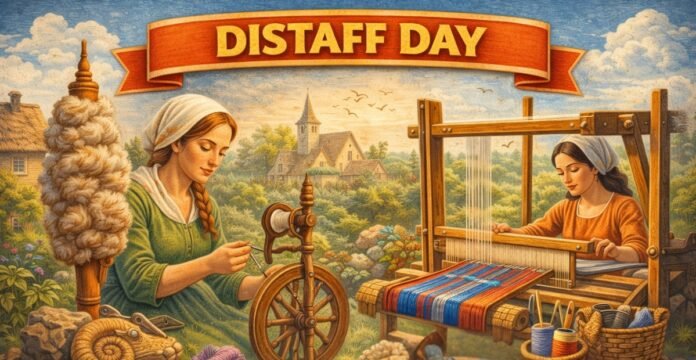
Observance of Distaff Day takes place on 7 January. Distaff is a tribute to women and their labor, particularly in the areas of spinning and other fiber arts. Women have played an instrumental role in the formation of families and society, and this day provides recognition for that.
Distaff is a celebration of dexterity, industriousness, and imagination.
What Is Distaff Day?
The term “Distaff” originates from a specific tool known as the distaff. This tool held significant importance in the historical process of textile production. Its primary function was to aid in the transformation of raw fleece, the woolly coat of sheep or similar animals, into usable threads or yarn. These threads, once created, could then be woven into cloth or used for other textile purposes. In earlier times, the activity of spinning, which involved using tools like the distaff to create thread, was traditionally and almost exclusively carried out by women. It was a task deeply associated with the female role in society and household economies.
This contribution is what Distaff honors.
History of Distaff Day
The history of Distaff can be traced back to the medieval period in Europe. During this era, spinning was a common task for women, and this activity was deeply interwoven with the rhythms of daily life. Specifically, the period following the Christmas festivities marked a return to these essential duties. Once the holiday celebrations had concluded, women would resume their spinning work with diligence. Over time, this widespread custom became so ingrained in the culture that it eventually evolved into what is now known as Distaff Day, a specific day that recognized and commemorated this traditional female occupation.
This day eventually took on a more abstract meaning.
Distaff Day and the History of Textiles
Textiles have had a revolutionary impact on societies across the globe. Distaff delves into the multifaceted world of clothing, exploring its production, distribution, and consumption. It also examines the intricate networks of trade that have arisen around textiles and the skilled craftsmanship involved in their creation. Furthermore, Distaff highlights the pivotal and often overlooked contributions of women throughout history in these vital sectors, emphasizing their central role in the creation, trade, and artistry of textiles. Their involvement has been essential to the development and evolution of textile industries and related commercial activities.
Distaff Day and the Value of Women’s Work
Distaff recognizes:
- Women’s craft
- The work done in the home
- The work done in the community
These contributions are often invisible.
Distaff Day in the Present Context
Distaff is an organization dedicated to the empowerment of women, acknowledging and celebrating the multifaceted contributions women make to society. It recognizes that women have historically held, and continue to hold, significant roles both within the domestic sphere and as active participants in the broader community. This recognition of women’s dual roles, encompassing their responsibilities at home and their engagement in community life, is central to Distaff’s mission. Furthermore, Distaff, under Day’s advocacy, strongly supports the principle of equal rights for women in all aspects of life.
Distaff and the Celebration of Spinning and Weaving
In the past, spinning and weaving were thought of as highly creative practices. Day celebrates the creativity that is involved in the use of textiles.
Observing Distaff Today
Distaff can be celebrated by:
- Learning a craft that involves textiles
- Buying from women who are artisans
- Telling the stories of women who have done important things
Conclusion
Distaff expresses the idea that the work we do on a daily basis can change the world. It is a Day that celebrates the strength, creativity, and the patience of women. Read more: Old Rock Day and Orthodox Christmas Day