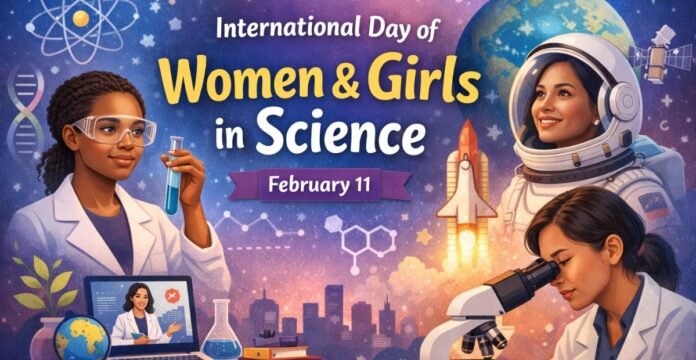
Every year on February 11, the International Day of Women and Girls in Science is celebrated. It is a day to recognize and celebrate the achievements of women and girls in the fields of STEM – Science, Technology, Engineering, and Mathematics.
There are still many young girls around the world that are facing hurdles in getting access to education in the field of science. This day serves to remind us that achieving gender equity in STEM is and will always be a global and social imperative that needs to be achieved.
Let’s discuss the significance of the International Day of Women and Girls in Science and the ways we can help.
What is the International Day of Women and Girls in Science?
In 2015, the International Day of Women and Girls in Science was declared an official United Nations International Day. Consequently, it has been celebrated annually on February 11.
The goal of this day is simple. It includes:
- Everyone having the same rights to a science education
- Everyone having the same chance at a STEM job
- Women being fully active in scientific research
- Women having the same role in being innovative and in leadership as men
This means that this day encourages women to have big dreams and pursue a career in science.
Significance of the International Day of Women and Girls in Science
Science is fundamental to the functioning of the world. It produces vaccines. It builds tech. It provides solutions to climate challenges. Unfortunately, women have fewer representatives in these aspects of science.
International reports highlight the fact that women are a minority of research participants in all disciplines. The disparity is even wider in some disciplines like engineering and computer science.
This disparity in the research fields affects the world negatively. The fewer women in science:
- Research is done from a single point of view.
- There is little to no innovation.
- The world continues to experience gender inequality.
- The world continues to experience a stagnation of economic growth.
This is the reason the International Day of Women and Girls in Science is celebrated. It is a call for more inclusive research, and change is being recognized.
Difficulties for Women and Girls in Science
The same is true for all fields of life. Women and girls in science continue to face these challenges.
1. Stereotypes
Many people continue to think that science is a “male field.” This discourages girls from a young age, resulting in less girls opting for STEM subjects in school.
2. Lack of Role Models
Girls usually do not see enough female scientists in textbooks and media. Without role models, it is more difficult to envision a career in science.
3. Limited Opportunities
In some parts of the world, girls do not have good education. Financial limitations also hinder a lot of girls from going to college.
4. Workplace Inequality
Women who enter science don’t always have the same opportunities. There can be wage gaps, discrimination, and a lack of higher positions.
This is the reason that the International Day of Women and Girls in Science exists. It aims to inform more people about this issue.
Great Women in Science
Many women have changed science for the better during their time.
- Marie Curie did the first research on radioactivity and was awarded 2 Nobel Prizes.
- Rosalind Franklin helped discover how DNA was structured.
- Katherine Johnson was a key component of sending the first astronauts to space.
- Tu Youyou discovered a cure for malaria
Today, women are still breaking barriers in science, especially in the fields of medicine, artificial intelligence, climate research, and space exploration.
It is a fact that talent has no gender.
How schools can support girls in science.
Schools help encourage girls in a few major ways.
First, STEM teachers can improve classroom participation.
Second, schools can create coding workshops and science fairs specifically for girls.
Third, teachers can bring in female scientists to talk to students.
Lastly, schools need to eliminate gender bias in class activities and textbooks.
Support girls early in their school years, and kids build their confidence. More confidence means more ambitious and ultimately more successful.
How governments and organizations can help
The International Day of Women and Girls in Science is also a day to call for policy changes.
What can governments do?
- Use public money to fund STEM scholarships for girls.
- Establish mentorship programs.
- Support researchers with maternity leave policies.
- Enforce equal pay laws.
Companies can foster inclusive cultures and promote workplace flexibility.
Real change is possible when organizations take action.
How you can celebrate International Day of Women and Girls in Science
It is important to support this day and you don’t need to be a scientist. We can celebrate together by:
- Sharing stories about women scientists on social media
- Watching documtaries about women in STEM
- Encouraging young girls to explore science kits
- Supporting girls education initiatives
- Going to science events
The Future of Women and Girls in Science
The future is looking bright. A lot of women are now leading teams. More girls are signing up for STEM. Technology is decreasing the gap.
The work is not done.
We need to promote education, safe work spaces, and inclusive environments. We need to promote a safe inclusive work environment. We need to eliminate stereotypes.
The International Day of Women and Girls in Science is a reminder that progress is a team effort.
When girls succeed in science, the whole world wins.
Final Thoughts
The International Day of Women and Girls in Science is a celebration but it is also a call to action.
Science and Innovation both need Diversity and Inclusion.
When women and girls succeed in STEM, the world, and humanity, wins. Learn About: International Days And National Black HIV/AIDS Awareness Day And International Days