
Cold-Blocking Fabric is a special textile designed to stop cold air from reaching your skin. It focuses on reducing heat loss caused by wind and low temperatures. Unlike basic winter fabrics, it uses advanced layers and tighter construction. As a result, it creates a protective barrier against icy air.
Cold protection matters because wind chill can drop body temperature very quickly. Even if the weather seems mild, strong wind can make it feel freezing. Therefore, winter clothing must block airflow and trap warmth. This is where cold-blocking materials become essential for comfort and safety.
Cold-blocking fabric differs from regular winter fabric because it combines wind resistance and insulation. Regular winter fabric may only feel thick or soft. However, it often allows cold air to pass through small gaps. Cold-blocking fabric reduces those gaps and improves heat retention.
In addition, many cold-blocking textiles manage moisture better than standard fabrics. They reduce sweat buildup, which can cause sudden cooling. Because of this, they work well for both casual wear and outdoor activities.
Most importantly, Cold-Blocking Fabric does not rely only on thickness. Instead, it uses smart design, layered construction, and engineered fibers. That is why modern winter jackets use these fabrics for serious protection.
History Of Cold-Blocking Fabric
Cold-blocking fabric has a long history that connects directly to human survival in harsh winter climates. Since ancient times, people have searched for materials that could stop cold air and protect body heat. Early civilizations living in snowy regions quickly learned that simple cloth was not enough. Therefore, they began using animal hides, fur, and thick wool because these materials naturally trapped warm air and reduced wind exposure. In cold mountains and northern lands, fur-lined clothing became one of the first forms of cold-blocking fabric because it created a natural barrier against icy wind.
How Cold-Blocking Fabric Works
Cold-Blocking Fabric works by slowing down heat transfer from your body. It also blocks cold air from moving through the fabric. Wind is one of the biggest reasons people feel colder outdoors. Therefore, stopping airflow is the first step in winter protection.
Science Behind Blocking Cold Air
The science is simple but effective. Cold air moves through loose fabric weaves and steals warmth. Cold-blocking fabric uses tight weaves or laminated layers. This structure reduces air penetration and keeps warmth inside.
In many cases, brands add windproof membranes between layers. These membranes contain microscopic pores. The pores allow water vapor to escape. However, they prevent cold air from entering. That balance makes the fabric both protective and wearable.
Role of Insulation and Wind Resistance
Insulation traps warm air close to the body. Wind resistance prevents that warm air from escaping. Therefore, both features must work together. If wind enters the jacket, insulation loses its power quickly.
Cold air blocking material often includes synthetic fibers or natural down. These materials create small air pockets. Those pockets hold heat and slow down cooling. Because of this, your body stays warmer for longer periods.
Heat Retention vs Heat Generation
Cold-blocking fabrics do not create heat. Instead, they retain the heat your body produces naturally. This is an important difference. Many people think winter fabric “generates warmth,” but that is not true.
Your body creates heat through movement and metabolism. The fabric simply keeps that heat from escaping. Therefore, the better the fabric design, the warmer you feel.
Breathability and Moisture Control
Breathability is essential in winter clothing. When you sweat, moisture builds up inside your jacket. If the moisture stays trapped, it cools your body fast. That can cause discomfort and even hypothermia.
Cold-Blocking Fabric often uses breathable membranes to release sweat vapor. At the same time, it blocks outside wind. This combination makes it ideal for winter hiking, skiing, and outdoor work.
LSI keywords included naturally: how cold-blocking fabric works, cold air blocking material.
Key Features of Cold-Blocking Fabric
Cold-Blocking Fabric includes multiple features that work together. Each feature supports warmth, comfort, and weather protection. That is why these fabrics perform better than normal winter textiles.
Windproof Outer Layers
A windproof outer layer stops harsh wind from penetrating clothing. It often uses nylon, polyester, or laminated shells. Because wind chill increases cold exposure, this layer becomes essential.
Many windproof shells also resist abrasion. Therefore, they work well for outdoor sports and workwear. They also help jackets last longer in rough conditions.
Thermal Insulation (Synthetic vs Natural)
Insulation is the warmth engine of cold-blocking clothing. Synthetic insulation works even when damp. It dries quickly and keeps its shape. Therefore, it suits wet and snowy climates.
Natural insulation, such as down, offers excellent warmth-to-weight ratio. However, it loses performance when soaked. That is why many brands treat down with water-resistant coatings.
Multi-Layer Construction
Cold-blocking textiles often use 2-layer or 3-layer construction. Each layer has a purpose. The outer layer blocks wind and water. The middle layer insulates. The inner layer improves comfort and moisture movement.
This design creates better warmth without heavy bulk. Therefore, you can move easily while staying protected.
Water Resistance or Waterproof Coating
Water resistance matters because wet fabric loses warmth quickly. Many cold-blocking fabrics use DWR coating. This coating makes water bead and roll off.
Some fabrics go further and become fully waterproof. They use sealed membranes and taped seams. As a result, they handle snowstorms and freezing rain better.
Breathable Membranes
Breathable membranes allow sweat vapor to escape. They reduce dampness inside the jacket. Therefore, they prevent sudden cooling during rest periods.
Many premium jackets use membranes like windproof laminates. These membranes improve warmth while keeping airflow controlled.
Lightweight vs Heavyweight Designs
Lightweight cold-blocking fabric works well for active sports. It offers warmth without restricting movement. Heavyweight designs provide stronger insulation and are better for extreme cold.
However, weight alone does not guarantee warmth. Smart layering and fabric structure matter more.
Types of Cold-Blocking Fabrics
Cold-Blocking Fabric comes in many types. Each type fits different climates and activity needs. Choosing the right one improves comfort and performance.
Softshell Cold-Blocking Fabric
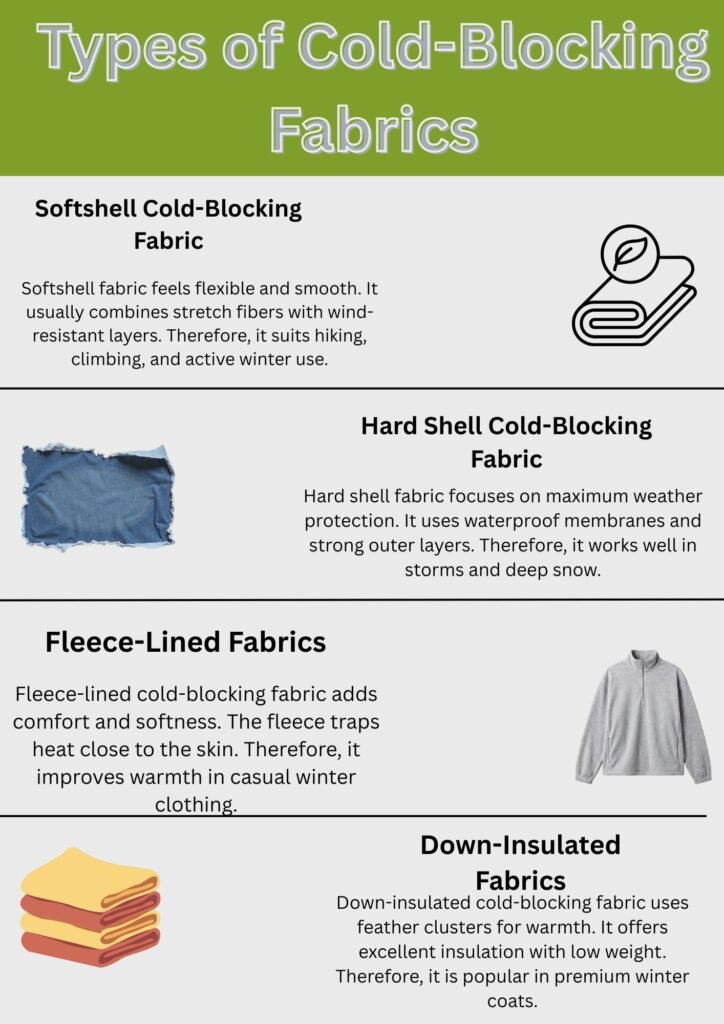
Softshell fabric feels flexible and smooth. It usually combines stretch fibers with wind-resistant layers. Therefore, it suits hiking, climbing, and active winter use.
Softshell cold-blocking fabric is not fully waterproof. However, it often resists light snow and drizzle. It also breathes better than many hard shells.
Hard Shell Cold-Blocking Fabric
Hard shell fabric focuses on maximum weather protection. It uses waterproof membranes and strong outer layers. Therefore, it works well in storms and deep snow.
Hard shells block wind extremely well. However, they may feel stiff compared to softshells. That is why people often wear insulation layers underneath.
Fleece-Lined Fabrics
Fleece-lined cold-blocking fabric adds comfort and softness. The fleece traps heat close to the skin. Therefore, it improves warmth in casual winter clothing.
Many fleece-lined jackets also include windproof panels. This makes them a great everyday winter option.
Down-Insulated Fabrics
Down-insulated cold-blocking fabric uses feather clusters for warmth. It offers excellent insulation with low weight. Therefore, it is popular in premium winter coats.
However, down needs protection from moisture. That is why many jackets use water-resistant shells.
Comparison Table: Types of Cold-Blocking Fabric
| Fabric Type | Wind Blocking | Waterproof Level | Best For | Comfort Level |
|---|---|---|---|---|
| Softshell | High | Medium | Hiking, trekking | Very high |
| Hard shell | Very high | Very high | Storms, skiing | Medium |
| Fleece-lined | Medium | Low | Casual wear | Very high |
| Down-insulated | High | Medium | Extreme cold | High |
| Synthetic insulated | High | Medium | Wet winter climates | High |
| Membrane laminate | Very high | Medium to high | Technical winter sports | Medium |
Cold-Blocking Fabric vs Insulated Fabric
Cold-blocking fabric vs insulated fabric is a common comparison. Many people think they are the same. However, they focus on different functions.
Cold-Blocking Fabric focuses on stopping wind and reducing air penetration. It reduces heat loss caused by airflow. Insulated fabric focuses on trapping heat using thick padding. Therefore, insulation alone does not always block wind.
In extreme cold, cold-blocking fabric often performs better when combined with insulation. If wind enters your jacket, insulation becomes less effective. That is why windproof shells are critical in freezing weather.
Insulated fabric works best in calm cold conditions. It provides warmth when wind is low. However, in strong wind, it may not protect enough. Cold-blocking materials handle that problem better.
Use cases differ as well. Insulated fabric works well for city winter wear. Cold-blocking fabric works better for outdoor sports and open environments. Therefore, the best choice depends on climate and activity level.
Benefits of Cold-Blocking Fabric
Cold-Blocking Fabric provides several strong advantages. These benefits make it a smart choice for modern winter clothing.
Superior Wind Protection
Wind protection is the biggest benefit. Cold-blocking materials stop icy air from cutting through clothing. Therefore, you feel warmer even in strong wind.
This is important because wind chill can reduce body warmth rapidly. A windproof layer can make winter feel much easier to handle.
Improved Warmth Retention
Cold-blocking textiles hold warm air close to your body. They reduce heat escape through fabric pores. As a result, you stay warm with less layering.
This also improves energy efficiency for your body. You feel comfortable without constant shivering.
Comfort in Harsh Winter Conditions
Cold weather often causes discomfort and stiffness. Cold-blocking fabric reduces exposure and protects sensitive areas. Therefore, your body stays relaxed in winter conditions.
This comfort matters for long outdoor trips. It also improves everyday winter routines.
Better Performance for Outdoor Activities
Outdoor sports require movement and temperature balance. Cold-blocking fabric reduces wind chill while staying breathable. Therefore, you can stay active without overheating.
It also keeps sweat under control. This prevents sudden cooling after activity stops.
Long-Term Durability
Many cold-blocking fabrics use strong outer shells. They resist tearing, friction, and rough use. Therefore, they last longer than basic winter materials.
This makes them a good investment for frequent winter users.
Best Uses of Cold-Blocking Fabric
Cold-Blocking Fabric works across many winter clothing categories. It protects both casual users and serious outdoor workers.
Winter Jackets and Coats
Most winter jackets use cold-blocking layers for protection. These fabrics prevent cold wind from entering. Therefore, they improve daily comfort during winter travel.
Coats with windproof shells feel warmer than thick coats without wind resistance.
Outdoor Sportswear
Sportswear needs flexibility and protection. Cold-blocking fabric keeps athletes warm without adding bulk. Therefore, it works well for running and winter training.
It also improves endurance by reducing cold exposure.
Hiking and Trekking Apparel
Hikers face strong wind at higher elevations. Cold air blocking material becomes essential in these conditions. Therefore, softshell and membrane fabrics are popular for trekking.
They allow movement while keeping wind out.
Ski and Snowboarding Gear
Ski gear must block wind at high speeds. Hard shell cold-blocking fabric works best here. It also protects against snow and ice.
Therefore, ski jackets often use waterproof membranes and insulation together.
Workwear for Cold Environments
Workers in construction, delivery, and outdoor security need long-lasting warmth. Cold-blocking workwear reduces wind exposure during long shifts. Therefore, it improves safety and comfort.
Many brands add reinforced panels for durability.
Everyday Winter Clothing
Cold-blocking fabric also works for casual wear. Hoodies, parkas, and winter pants benefit from wind-resistant shells. Therefore, even city users enjoy better warmth.
How to Choose the Best Cold-Blocking Fabric
Choosing the best cold-blocking fabric depends on climate, activity, and budget. A smart choice improves comfort and prevents wasted money.
Climate Considerations
If you live in windy areas, windproof fabric matters most. If your climate is wet, waterproof coating becomes essential. Therefore, always consider your local weather pattern.
Dry cold climates allow down insulation. Wet climates often require synthetic insulation.
Activity Level (Casual vs Extreme Outdoor Use)
Casual users can choose fleece-lined or insulated softshell fabric. Outdoor athletes need breathable membranes. Therefore, match fabric choice with your activity needs.
High activity requires better ventilation. Low activity requires stronger insulation.
Fabric Weight and Thickness
Heavyweight fabric offers stronger protection for extreme cold. Lightweight fabric works better for movement and layering. Therefore, you should avoid choosing only by thickness.
Smart construction often beats simple bulk.
Layering Compatibility
Cold-blocking fabric works best with layering. If you plan to wear base layers, choose a slightly roomy jacket. Therefore, fit matters as much as material.
Layering also helps regulate body temperature easily.
Budget vs Performance
Premium cold-blocking fabrics cost more due to membranes and coatings. However, they also last longer. Therefore, frequent winter users benefit from higher quality.
For mild winters, mid-range options work fine.
Buying-intent keywords included: best cold-blocking fabric, cold-blocking fabric for winter.
Cold-Blocking Fabric for Extreme Cold Conditions
Extreme cold requires more than basic winter clothing. Cold-Blocking Fabric becomes essential when temperatures drop below freezing.
Temperature Ratings Explained
Some winter gear includes temperature ratings. These ratings estimate comfort in specific conditions. However, they vary between brands. Therefore, you should treat ratings as general guidance only.
Wind chill also changes the real temperature impact. That is why cold-blocking features matter.
Recommended Fabric Combinations
For extreme cold, a windproof shell plus insulation works best. Hard shell fabric combined with synthetic insulation performs well. Down insulation also works if moisture is controlled.
Many winter experts recommend a 3-layer system. This includes base, mid, and outer layers.
Layering Strategies for Sub-Zero Weather
Layering helps manage warmth without overheating. Start with a moisture-wicking base layer. Then add a fleece or insulated mid-layer. Finally, wear a cold-blocking outer shell.
This system traps heat while blocking wind. Therefore, it works well in sub-zero climates.
Care and Maintenance Tips
Cold-Blocking Fabric needs proper care to maintain performance. Wrong washing can damage coatings and membranes. Therefore, care is essential for long-term durability.
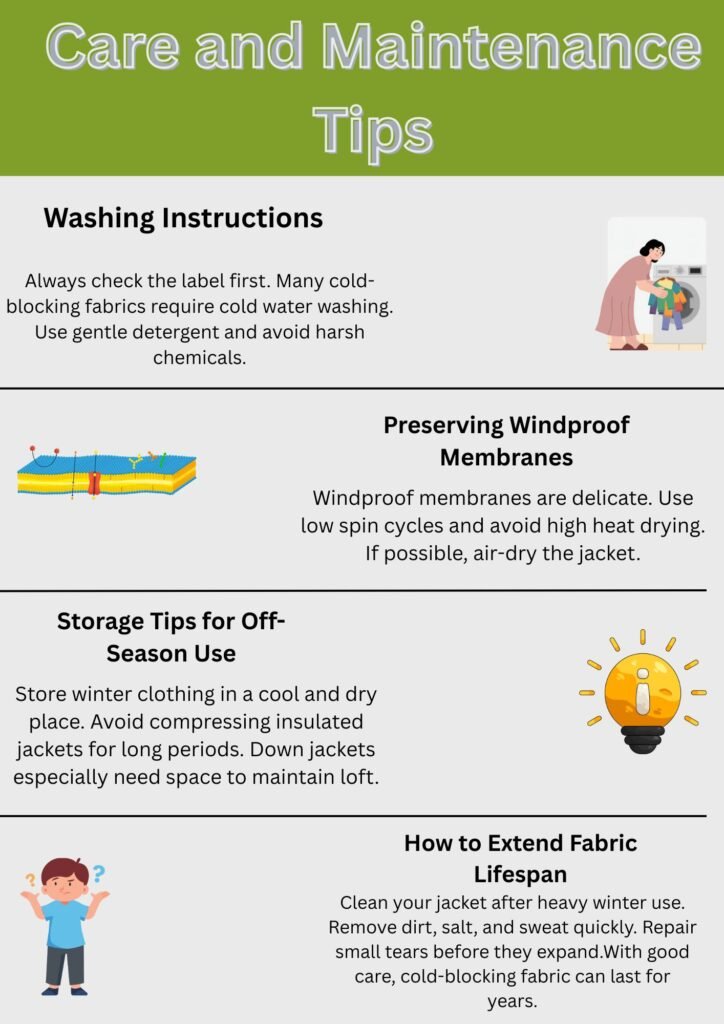
Washing Instructions
Always check the label first. Many cold-blocking fabrics require cold water washing. Use gentle detergent and avoid harsh chemicals.
Do not use fabric softener because it clogs breathable pores. This reduces performance over time.
Preserving Windproof Membranes
Windproof membranes are delicate. Use low spin cycles and avoid high heat drying. If possible, air-dry the jacket.
Some fabrics need occasional reproofing sprays. This restores water resistance and improves protection.
Storage Tips for Off-Season Use
Store winter clothing in a cool and dry place. Avoid compressing insulated jackets for long periods. Down jackets especially need space to maintain loft.
Use breathable storage bags instead of plastic. This prevents moisture buildup.
How to Extend Fabric Lifespan
Clean your jacket after heavy winter use. Remove dirt, salt, and sweat quickly. Repair small tears before they expand.
With good care, cold-blocking fabric can last for years.
Sustainability and Eco-Friendly Cold-Blocking Fabrics
Sustainability is becoming important in winter clothing. Many brands now produce Cold-Blocking Fabric using recycled materials. This reduces waste and lowers environmental impact.
Recycled Insulation Materials
Recycled polyester insulation is common today. It offers strong warmth and reduces plastic waste. Therefore, it is a smart eco-friendly alternative.
Some brands also use recycled nylon shells. These materials perform well while reducing pollution.
Sustainable Manufacturing Processes
Many manufacturers reduce water usage and chemical treatments. They also improve factory working conditions. Therefore, sustainable cold-blocking fabrics support better production practices.
Eco-friendly dyeing also reduces toxic runoff.
Certifications to Look For
Look for certifications like Bluesign, OEKO-TEX, and GRS. These certifications indicate safer production and material sourcing. Therefore, they help buyers trust the product.
Responsible Down Standard is also important for down insulation.
Eco-Conscious Brands (Optional)
Some brands focus heavily on sustainable winter clothing. They use recycled insulation and ethical sourcing. Therefore, eco-conscious shoppers have more options than ever.
Common Myths About Cold-Blocking Fabric
Many myths confuse buyers. Understanding the truth helps you choose the right winter gear.
“Thicker Fabric Is Always Warmer”
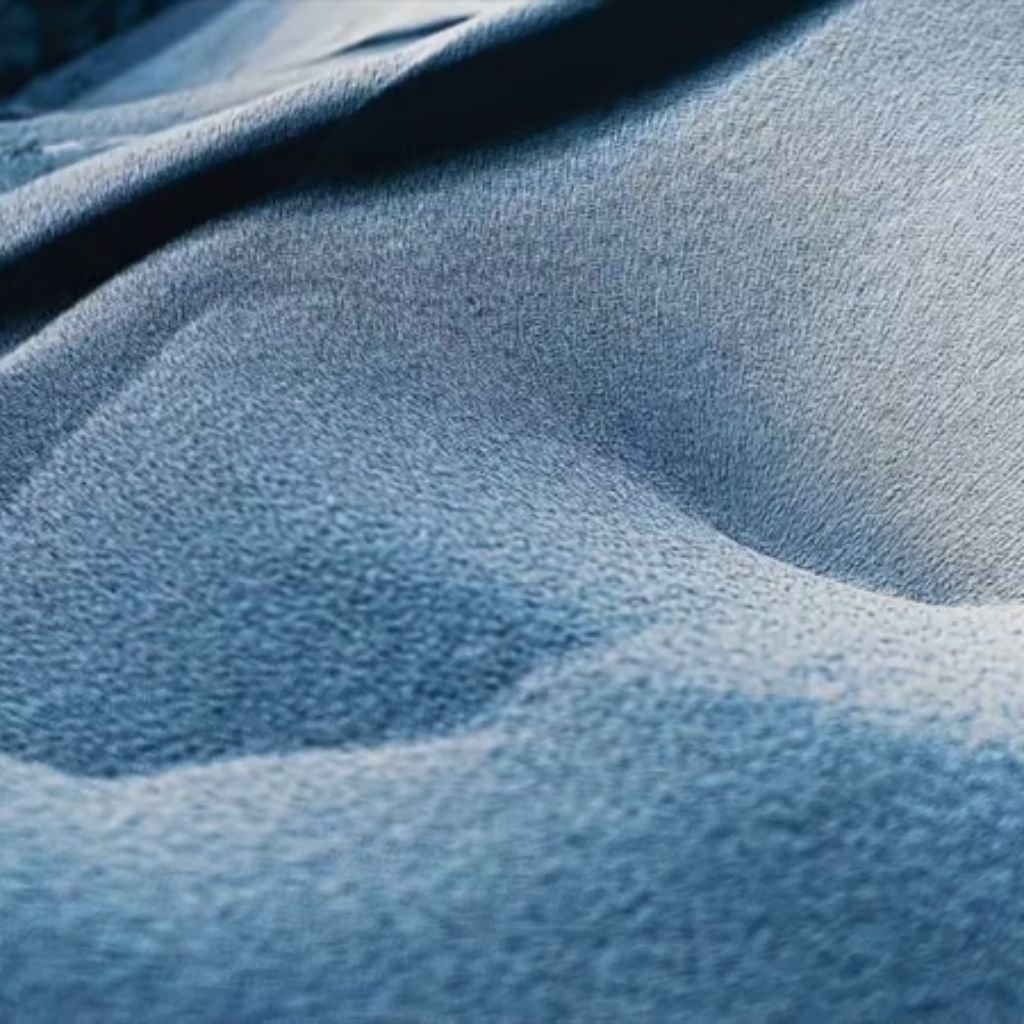
Thickness alone does not guarantee warmth. Wind can pass through thick fabric if it lacks a barrier. Therefore, cold-blocking design matters more than bulk.
A thin windproof shell can feel warmer than a thick sweater.
“Windproof Means Not Breathable”
This is not always true. Modern membranes block wind while releasing moisture vapor. Therefore, many cold-blocking fabrics remain breathable.
However, cheap windproof layers may trap sweat.
“Cold-Blocking Fabric Is Only for Extreme Cold”
Cold-blocking fabric helps even in mild winters. Windy days can feel much colder than expected. Therefore, these fabrics improve daily comfort too.
They are useful for commuting, travel, and outdoor errands.
Conclusion
Cold-Blocking Fabric is absolutely worth it for winter protection. It blocks icy wind, traps body heat, and improves comfort. Unlike basic winter materials, it uses advanced construction and smart layering. Therefore, it delivers stronger performance in real winter conditions.
If you live in windy areas, this fabric becomes a must-have. If you enjoy hiking, skiing, or outdoor work, it also offers major benefits. In addition, it improves durability and long-term value.
FAQs
Is cold-blocking fabric waterproof?
Cold-blocking fabric can be water-resistant or waterproof. Many types include DWR coatings. However, not all are fully waterproof. Hard shell versions usually offer the best waterproof protection.
Is it suitable for mild winters?
Yes, cold-blocking fabric works well in mild winters. Windy conditions often cause discomfort even in moderate cold. Therefore, these fabrics improve everyday warmth and comfort.
Can cold-blocking fabric be breathable?
Yes, many cold-blocking fabrics are breathable. They use membranes that allow sweat vapor to escape. Therefore, they help prevent overheating during activity.