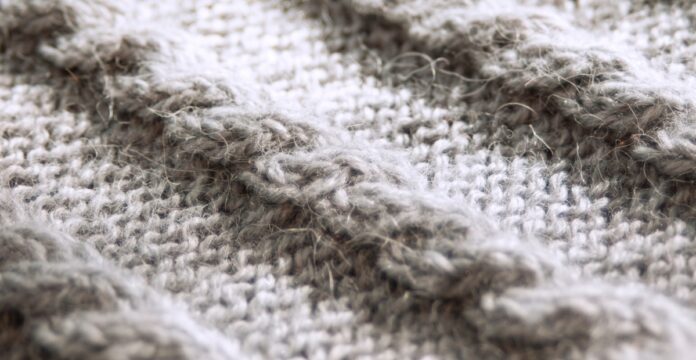
Cashmere wool is synonymous with warmth, luxury and elegance. Cashmere Twill Fabric Guide is one of the premium variations that stands out because of its unique texture, durability and sophisticated appearance. This fabric is a combination of soft cashmere and the structure and strength of the twill weaving, resulting in a luxurious and practical material.
Cashmere twill has become increasingly popular in the fashion and textile industries. Fashion designers, manufacturers and enthusiasts love its refined and versatile look. It is also durable and offers exceptional comfort, which makes it ideal for high-end clothing and accessories.
This comprehensive guide will cover everything you need know about Cashmere Twill fabric including its features, production process and benefits. We’ll also discuss how to care for it. You will also learn why this fabric is still a popular choice for high-end fashion products.
What is Cashmere Twill Fabric Guide?
Cashmere Twill Fabric Guide is a type fabric created by weaving fibers of cashmere with a pattern of twill weave. This weaving technique involves the yarn passing over and under the threads in a pattern that creates diagonal lines on the surface of fabric.
The fabric then develops an unusual diagonal texture, which makes it stand out from plain weaves. The twill weave also makes the fabric stronger, and less likely to wrinkle. Cashmere twill is soft and durable.
Twill cashmere is more structured than traditional plain-woven fabrics. Cashmere retains its luxurious softness. It is therefore widely used for premium clothing and accessories.
Cashmere fibers are a natural product.
Cashmere Twill Fabric Guide is derived from the undercoat of cashmere goats. These goats are mainly found in Mongolia and Central Asia. The goats create a thin insulating coat to protect them from the cold.
The Cashmere Twill Fabric Guide goats naturally shed their soft undercoat every spring. Farmers collect fibers by combing or shearing. The fibers are then cleaned, sorted and processed, before they are spun into yarn.
Cashmere is made by a laborious process. Cashmere is made from the fleece of multiple goats. Cashmere fabrics are therefore considered premium textiles.
Understanding Twill Weave
Understanding the weave structure is crucial to fully appreciate the cashmere twill. Twill weaving produces a diagonal pattern of ribs on the surface of fabric.
This method involves the weft passing over two or three warps, and then underneath another two or three warps. The pattern changes slightly with every row to form the recognizable diagonal pattern.
Cashmere Twill Fabric Guide have several benefits.
- Greater durability
- Better drape
- Increased resistance to wrinkles
- Surfaces with a more textured texture
Due to these qualities, twill weave is used widely for fabrics like denim, gabardine and luxury wool textiles.
Cashmere fibers woven into this pattern create a fabric that combines elegance and practicality.
Cashmere Twill Fabric Guide: Key Characteristics
Cashmere twill fabric is a unique fabric in the textile industry. Understanding its characteristics will help both manufacturers and consumers to appreciate its value.
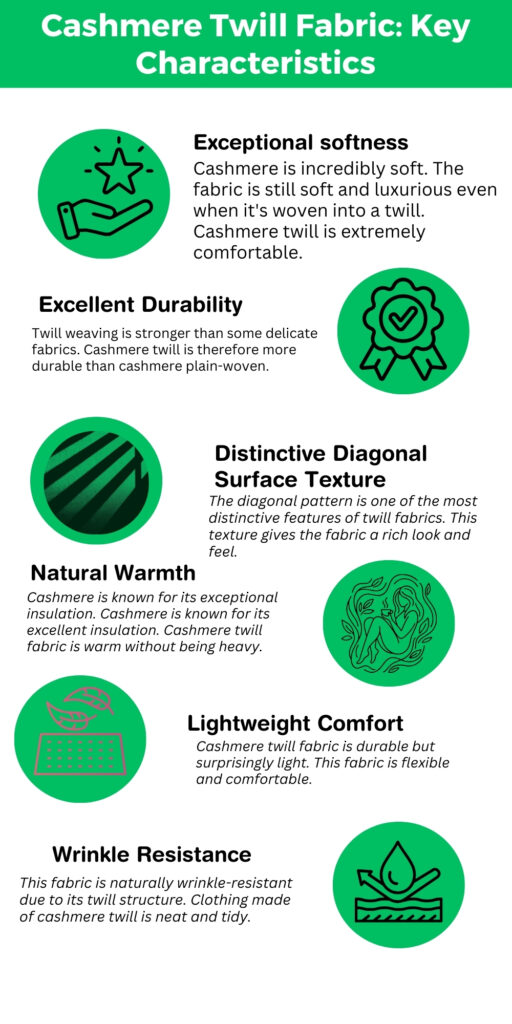
1. Exceptional softness
Cashmere is incredibly soft. The fabric is still soft and luxurious even when it’s woven into a twill. Cashmere twill is extremely comfortable.
2. Excellent Durability
Twill weaving is stronger than some delicate fabrics. Cashmere twill is therefore more durable than cashmere plain-woven.
It is ideal for clothing that requires long-lasting quality.
3. Distinctive Diagonal Surface Texture
The diagonal pattern is one of the most distinctive features of twill fabrics. This texture gives the fabric a rich look and feel.
The pattern also enhances the fabric’s aesthetic appeal and makes it ideal for sophisticated designs.
4. Natural Warmth
Cashmere is known for its exceptional insulation. Cashmere is known for its excellent insulation. Cashmere twill fabric is warm without being heavy.
It is perfect for clothing that needs to be worn in cold weather.
5. Lightweight Comfort
Cashmere twill fabric is durable but surprisingly light. This fabric is flexible and comfortable.
6. Wrinkle Resistance
This fabric is naturally wrinkle-resistant due to its twill structure. Clothing made of cashmere twill is neat and tidy.
Cashmere Twill Fabric Manufacturing Process
Cashmere Twill Fabric Guide production involves several steps. Each step contributes to the final luxury and quality of the fabric.
1. Fiber Collection
Cashmere goats’ undercoat is first collected. Farmers typically comb goats when they molt.
After collection, fibers are cleaned according to their quality and then sorted.
2. Dehairing and Cleaning
Cashmere fibres are raw and contain coarse guard hairs. These must be removed. Specialized machines separate soft fibers from rough fibers.
The final yarn will be smooth and comfortable.
3. Spinning Yarn
The purified fibers of cashmere are then spun into fine yarn. To maintain softness and strength, this step requires precision.
4. Twill Weaving
The yarn is then prepared and woven using the twill technique. Textile manufacturers who are skilled in the art carefully control the pattern, creating the characteristic diagonal texture.
5. The Finishing Process
The fabric is then finished with washing, brushing and pressing. These steps improve the appearance and softness of the fabric.
Cashmere Twill Fabric: Benefits
Cashmere twill offers many benefits, which makes it a popular fabric in the fashion world.
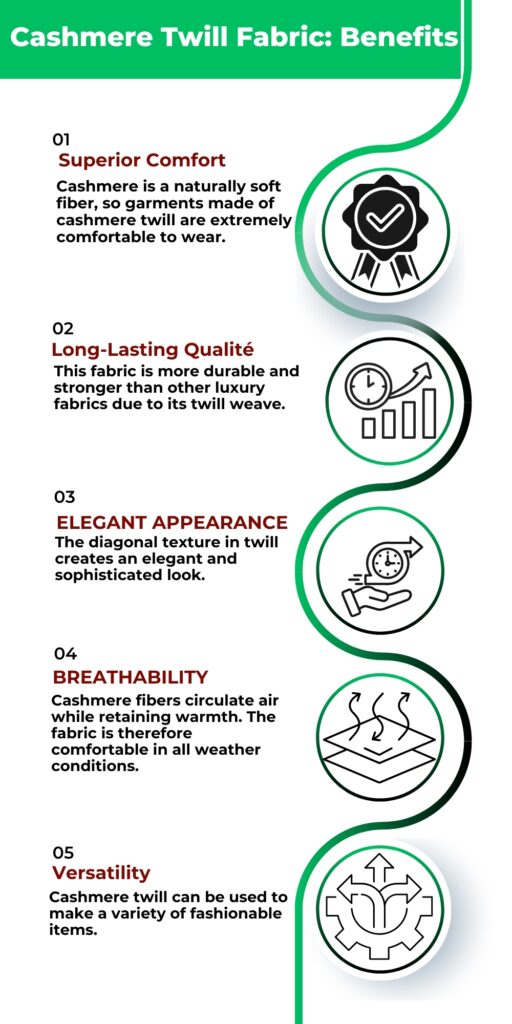
Superior Comfort
Cashmere is a naturally soft fiber, so garments made of cashmere twill are extremely comfortable to wear.
Long-Lasting Qualité
This fabric is more durable and stronger than other luxury fabrics due to its twill weave.
Elegant Appearance
The diagonal texture in twill creates an elegant and sophisticated look.
Breathability
Cashmere fibers circulate air while retaining warmth. The fabric is therefore comfortable in all weather conditions.
Versatility
Cashmere twill can be used to make a variety of fashionable items.
Cashmere Twill Fabric Guide: Common uses
Cashmere twill fabric, with its luxurious qualities is used in many fashion applications and textiles.
1. Luxury Coats & Jackets
Cashmere twill is often used by designers to create high-end jackets and coats. The fabric is warm and elegant.
2. Scarves & Shawls
Cashmere twill scarfs are very popular, as they provide warmth and softness with a refined look.
3. Premium Trousers
Cashmere twill is used by some luxury fashion brands to create tailored trousers and sophisticated garments.
4. Designer Dresses
Cashmere twill is also suitable for elegant dresses and skirts due to its smooth drape.
5. Accessories
Fabric is also used to make accessories, such as wraps or fashion items.
Cashmere Twill and Other Cashmere Fabrics
Cashmere Twill Fabric Guide is woven differently, each producing a different type of fabric.
Twill vs Plain Weave
Cashmere plain weave fabrics are lightweight and smooth. They may not last as long as twill fabrics.
Cashmere twill fabrics are more durable and have a textured look.
Cashmere vs Twill
Knitted fabrics of cashmere are soft and stretchy. Cashmere fabrics woven in twill provide greater structure and strength.
For tailored garments, twill fabric is often the preferred choice.
Sustainability and ethical considerations
Cashmere Twill Fabric Guide is a sustainable product. Cashmere goats overgrazing can damage grasslands and ecosystems.
Many manufacturers adopting sustainable practices. These include:
- Responsible goat farming
- Eco-friendly Processing Methods
- Cashmere recycling production
Customers are increasingly choosing brands that place a high priority on ethical sourcing, environmental responsibility and other factors.
Cashmere Twill Fabric Guide: How to care for it
Cashmere twill clothing should be properly cared for to ensure their beauty and durability.
Gently Washing
Cashmere Twill Fabric Guide clothing should be hand washed with mild detergent. Dry cleaning by professionals is also an option.
Avoid Harsh Chemicals
Cashmere is delicate and can be damaged by strong detergents or bleach.
Drying Properly
To dry cashmere, lay the garments flat. The fabric may be stretched if they are hung.
Store with Care
Cashmere should be stored in a dry, cool place. Use breathable garment bags to protect your cashmere from dust and moths.
Why Cashmere Twill Fabric Is a Premium Option
Cashmere Twill Fabric Guide is the perfect combination of luxury and functionality. Softness, durability and an elegant appearance are what make this fabric so desirable in the fashion industry.
The twill weave also increases the strength of fabric without compromising on comfort. Designers and consumers appreciate the fabric’s versatility.
Cashmere textiles can also be responsibly produced with the increasing focus on sustainable production. Cashmere textiles are valued and reputaion is maintained by this development.
Cashmere Twill Fabric Guide: The future of cashmere
Cashmere twill looks to have a bright future. Manufacturers continue to innovate on fiber processing and weaving technology in response to the increasing demand for luxury sustainable textiles.
Designers are also exploring new ways of incorporating cashmere twill in modern fashion collections. The possibilities are endless, from high-end coats and elegant accessories to high-end jackets.
Cashmere twill will remain a symbol for luxury and sophistication as consumers continue to appreciate quality and craftsmanship.
Conclusion:
Cashmere Twill Fabric Guide is a fabric that offers luxury, durability and timeless elegance. Cashmere twill fabric is a beautiful and functional fabric created by combining the softness of the cashmere fibers, with the strength of a twill weave.
Its distinctive diagonal texture gives garments a sophisticated look, and its warmth makes it ideal for winter fashion. The fabric is durable, allowing high-quality garments to last many years.
FAQs
What is Cashmere Twill Fabric?
Cashmere Twill Fabric Guide is a luxurious textile made from cashmere fibers woven in a twill pattern that creates diagonal lines and improves durability.
Why is Cashmere Twill Fabric considered premium?
It is considered premium because it combines the softness of cashmere with the Cashmere Twill Fabric Guide strength and texture of the twill weave, offering both comfort and durability.
What are the main features of Cashmere Twill Fabric?
The key features include softness, warmth, durability, wrinkle resistance, and a distinctive diagonal texture.