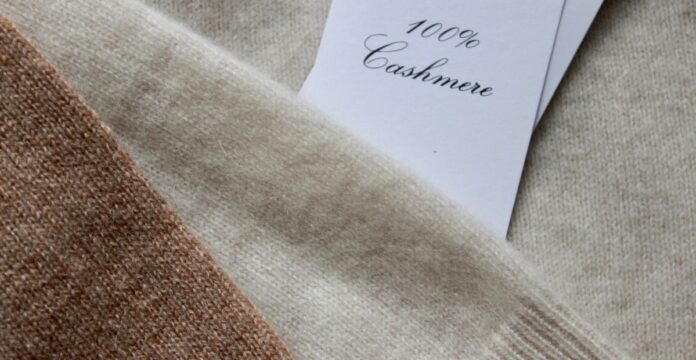
Cashmere Blended Fabric wool is one of the most popular textiles for modern interior design and fashion. Cashmere, while admired for warmth and softness, can be made more durable and affordable by blending with other fibers. Cashmere Blended Fabric are increasingly popular among designers, manufacturers and consumers for clothing, home textiles and accessories.
This Cashmere Blended Fabric is a perfect balance of elegance and functionality. The fabric retains its premium feel while adding strength, flexibility and durability from complementary fibers. Understanding cashmere blend fabric allows buyers to make informed decisions and understand why it is a staple of contemporary textiles.
What is cashmere blended fabric?
Cashmere Blended Fabric is a textile created by combining cashmere with other fibers, such as cotton, silk or polyester. Cashmere percentages vary depending on cost, performance, intended use and other factors.
The blending process can be carefully designed to preserve the softness and resilience of cashmere while adding additional fibers for structure and resilience. These blends are often luxurious, yet wearable for everyday use.
It is important to note that fibers are typically spun before they are woven or knitted. This ensures consistency in texture, durability and appearance of the fabric.
Cashmere is blended with other fibers
Cashmere has its limitations, even though it is highly valued. It can be expensive, delicate and prone to pilling. Blending becomes a solution.
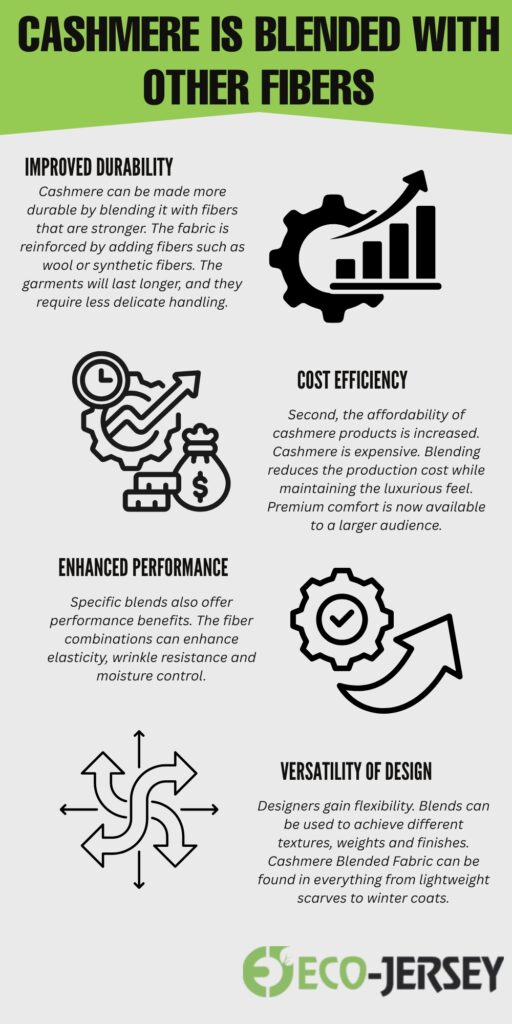
1. Improved Durability
Cashmere can be made more durable by blending it with fibers that are stronger. The fabric is reinforced by adding fibers such as wool or synthetic fibers. The garments will last longer, and they require less delicate handling.
2. Cost Efficiency
Second, the affordability of cashmere products is increased. Cashmere is expensive. Blending reduces the production cost while maintaining the luxurious feel. Premium comfort is now available to a larger audience.
3. Enhanced Performance
Specific blends also offer performance benefits. The fiber combinations can enhance elasticity, wrinkle resistance and moisture control.
4. Versatility of Design
Designers gain flexibility. Blends can be used to achieve different textures, weights and finishes. Cashmere Blended Fabric can be found in everything from lightweight scarves to winter coats.
Cashmere blends: Common types
Cashmere Blended Fabric is a versatile fiber that can be blended in many ways. Each blend has its own unique characteristics.
Cashmere and wool blend
This blend is probably the most popular. Cashmere and wool are both softening materials. This combination is often found in coats, suits, and sweaters.
Cashmere and Silk Blend
Silk is known for its sheen, smoothness and lightness. This blend is often used in scarves and luxury knitwear.
Cashmere and Cotton Blend
Cotton is breathable and suitable for transitional climates. This mix is commonly used in casual clothing and lightweight sweaters.
Cashmere and Synthetic fibers
For durability and shape preservation, polyester, acrylic or viscose can be used. Synthetic blends can be a good alternative to natural fibers.
Cashmere blended fabric manufacturing process
Cashmere Blended Fabric is produced in several steps that are carefully monitored. The raw cashmere fibres are first cleaned, sorted and dehaired. This step ensures softness and purity.
The fibers are then mixed in exact proportions with complementary materials. The blend is spun into yarn. This phase ensures uniform distribution so the fabric’s quality remains consistent.
Depending on the final product, weaving or knitting is done. Then, finishing treatments such as brushing, washing or steaming are applied. The result is a textile that blends luxury and performance.
Cashmere Blended Fabric: Benefits
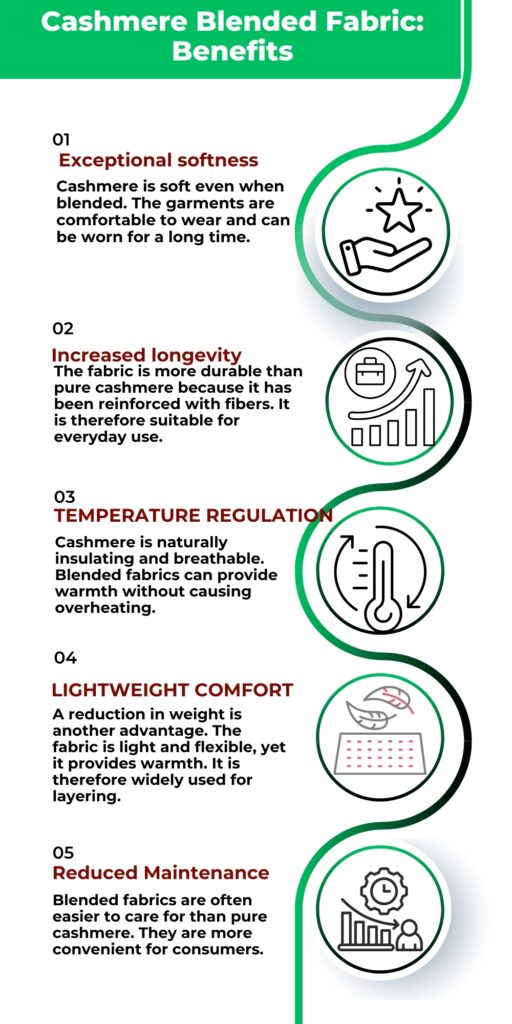
Exceptional softness
Cashmere is soft even when blended. The garments are comfortable to wear and can be worn for a long time.
Increased longevity
The fabric is more durable than pure cashmere because it has been reinforced with fibers. It is therefore suitable for everyday use.
Temperature Regulation
Cashmere is naturally insulating and breathable. Blended fabrics can provide warmth without causing overheating.
Lightweight Comfort
A reduction in weight is another advantage. The fabric is light and flexible, yet it provides warmth. It is therefore widely used for layering.
Reduced Maintenance
Blended fabrics are often easier to care for than pure cashmere. They are more convenient for consumers.
Fashion Applications
Modern fashion is dominated by cashmere blend fabrics. Designers love its adaptability while consumers appreciate its comfort.
Knitwear
Blends are often used in sweaters, cardigans and pullovers. These garments are soft and warm, but still maintain their shape.
Outerwear
Wool or synthetics add strength to coats and jackets. They are stylish and functional.
Accessories
Blends are often used in scarves, shawls and gloves to provide comfort and durability. These luxury items are also more affordable.
Formal Wear
In suits and dresses, blended fabrics are becoming more popular. This allows for elegance without sacrificing functionality.
Role of Sustainable Fashion
Cashmere Blended Fabric can help support sustainability. Combining fibers from responsibly sourced sources can reduce the environmental impact.
In addition, recycled fibers can be incorporated into blends. In this way, resources are conserved and waste is reduced.
Moreover, garments that last longer also contribute to a reduction in consumption. Blended fabrics tend to last longer and require less frequent replacement.
Care and Maintenance Tips
Cashmere Blended Fabric will last longer if they are properly cared for.
First, it is important to wash gently. Hand washing and delicate cycles can help maintain fiber integrity.
Second, use mild detergents because harsh chemicals may damage the fibers.
Drying should also be done on a flat surface, not by hanging. This prevents the fabric from stretching.
Lastly, storing your garments in breathable bags will protect them from dust and moths. The fabric will remain in great condition.
Cashmere blends: How to identify quality cashmere blends
Attention to detail is required for a blend of high quality.
Fiber Content Label
Check the composition percentage. Cashmere is softening when it contains more.
Texture Test
The consistency and smoothness of a quality blend is important. The roughness of the fibers may indicate a lower-grade blend.
Weave Density
Cloths that are tightly woven tend to last longer. Density is a good indicator of durability.
Brand Reputation
Often, trusted manufacturers maintain higher quality standards. Their products perform better.
Cashmere Blends vs Pure Cashmere
Both options offer distinct advantages.
Cashmere Blended Fabric is a luxurious fabric that offers unparalleled softness. Cashmere can be delicate and expensive.
Blended fabrics, on the other hand, offer durability, affordability and versatility. They are therefore more suitable for everyday wear.
The choice ultimately depends on your personal preferences, budget and intended usage.
Textile Industry: Its Economic Importance
Cashmere blend fabrics are a significant contributor to the global textile market. Demand continues to increase because they combine luxury and affordability.
Reduced costs benefit manufacturers while maintaining premium appeal. Consumers can now buy high-quality textiles for a lower price.
Innovation in fiber blends also drives technological progress. The textile industry is evolving.
Style Tips for Cashmere Blended Clothing
Style these fabrics to enhance comfort and elegance.
Layering is a great way to go. Layering lighter blends with heavier clothing can give you a versatile look for any season.
Second, neutral shades often bring out the texture of a luxurious fabric. Bold shades can make a fashion statement, but they are not the only way to do so.
Accessories made of blends are also a great addition to formal and casual outfits. This increases wardrobe versatility.
Cashmere Blended Fabric: Future Trends
This fabric has a bright future.
Sustainable sourcing has become a priority. Eco-friendly blends will therefore gain in popularity.
Innovations in technology are also on the rise. Integrating performance fibers can enhance moisture control, durability, and elasticity.
A growing awareness among consumers is also a factor. The demand for high-quality, ethically produced blends will likely increase.
Common Myths
Cashmere Blended Fabric are often misunderstood.
Blends are considered inferior by some people. Many blends are engineered to perform better.
Some people think that all blends are cheap. Premium blends are still expensive because of their quality.
Some people also think that blends are too hard. High-cashmere blended blends are still exceptionally soft.
Buying Guide for Consumers
Consider several factors when purchasing cashmere blend fabric products.
Determine the intended use. Layering is best done with lighter blends, while heavier blends are better for outerwear in winter.
Second, pay attention to the percentage of fibers. Cashmere is generally associated with luxury.
Thirdly, check the stitching and finish. Construction of high quality is essential for longevity.
Compare brands and customer reviews. So, you can make informed decisions.
The conclusion of the article is:
Cashmere Blended Fabric is a perfect fusion between luxury and functionality. Cashmere blended fabric offers comfort, durability and versatility by combining softness with strength. Cashmere has therefore become a staple in fashion and textiles of today.
Its affordability, compared with pure cashmere, makes it more accessible without sacrificing its elegance. Its appeal is further enhanced by its sustainability, technological advances, and changing consumer preferences.
FAQs
What is cashmere blended fabric?
Cashmere blended fabric is made by combining cashmere wool with other fibers like wool, silk, cotton, or synthetics to improve durability, affordability, and versatility.
Is cashmere blended fabric as soft as pure cashmere?
Yes, it remains very soft, especially when the cashmere percentage is high, though pure cashmere may feel slightly more luxurious.
Why is cashmere often blended with other fibers?
Blending increases durability, lowers cost, improves performance, and makes the fabric easier to maintain while preserving softness.