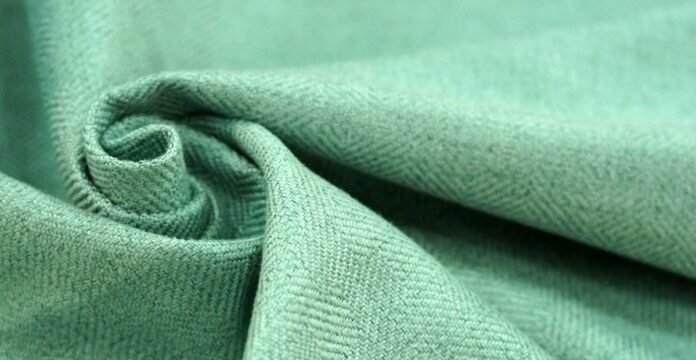
The Brushed Grade C cashmere fabric wool is an affordable entry to the world of Cashmere. It offers softness, warmth and a pleasing visual appeal. The Grade C Cashmere Fabric is a lower grade than Grade A or Grade B, but it offers impressive comfort when it’s processed properly. When brushing techniques are used, the fabric gets a more luxurious finish, a greater texture and loft. This appeals to designers as well as consumers.
On today’s highly competitive textile market, affordability is important. Quality cannot be overlooked. Brushed Grade C Cashmere Fabric is a good solution for achieving a balance. It is soft at a lower cost, which makes it perfect for fashion brands, home textiles and seasonal collections.
Understanding Grade C Cashmere
Cashmere can be classified into different grades according to its fiber length, overall purity, and diameter. Cashmere Grade C is typically characterized by slightly shorter fibers, and a slightly coarser micron number compared to Grade B or A. It is therefore more affordable.
Cashmere of Grade C still has natural insulation and softness. Many premium items are made with Grade A material, but many stylish and practical items are also produced using Grade C. When finishing processes such as brushing are applied, texture is noticeably softened.
Manufacturers prefer Grade C Cashmere to mass-produce because:
- Reduces production costs
- When recycled, it supports sustainable sourcing
- Blends are flexible
- The product is suitable for brushing, finishing and other techniques.
What is brushing in cashmere fabric?
The surface fibers are lifted by fine brushes during the brushing process. A soft, fuzzy texture is created. This process increases warmth retention, and gives the product a luxurious look.
Brushing also helps to hide minor irregularities in the fibers, which are often present in cashmere of Grade C. The fabric will feel smoother and refined as a result.
Brushing your teeth has many benefits.
- Softening Enhanced
- Thermal insulation: Improved
- Rich texture and depth
- Cozy visual appeal
- Better drape
Brushed Grade C Cashmere Fabric has many advantages and is used widely in winter fashion, lifestyle products and other items.
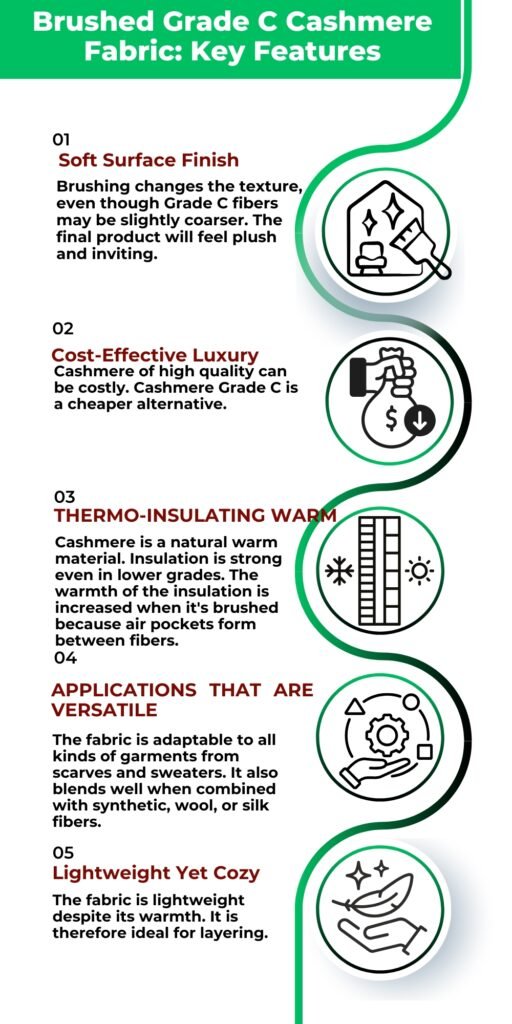
Brushed Grade C Cashmere Fabric: Key Features
1. Soft Surface Finish
Brushing changes the texture, even though Grade C fibers may be slightly coarser. The final product will feel plush and inviting.
2. Cost-Effective Luxury
Cashmere of high quality can be costly. Cashmere Grade C is a cheaper alternative.
3. Thermo-insulating Warm
Cashmere is a natural warm material. Insulation is strong even in lower grades. The warmth of the insulation is increased when it’s brushed because air pockets form between fibers.
4. Applications that are versatile
The fabric is adaptable to all kinds of garments from scarves and sweaters. It also blends well when combined with synthetic, wool, or silk fibers.
5. Lightweight Yet Cozy
The fabric is lightweight despite its warmth. It is therefore ideal for layering.
The Brushed Grade C Cashmere Fabric Manufacturing Process
Brushed Grade C Cashmere Fabric goes through several steps.
Step 1: Collection of Fiber
Cashmere is collected from goats in the molting period. These fibers are sorted according to length and quality.
Step 2: Cleaning & Dehairing
The coarse guard hairs and impurities are removed. Even though Grade C fibers can contain shorter strands of fiber, careful processing ensures consistency.
Step 3: Spinning
The fibers are spun to yarn. Blending is sometimes done to increase strength and lower cost.
Step 4: Weaving and Knitting
Fabric is made from the yarn. The yarn is converted into fabric.
Step 5: Buffing the Finish
The final step is to brush the surface. The surface is now soft and velvety.
Brushed Grade C Cashmere Fabric
This fabric is popular because it offers a balance between comfort and affordability.
Fashion Industry
- Winter sweaters
- Cardigans
- Shawls
- Scarves
- Ponchos
Home textiles
- Lightweight blankets
- Throws
- Cushion covers
Accessories
- Gloves
- Caps
- Travel Wraps
A lower cost of production is another reason why fast fashion brands choose this fabric to create seasonal collections.
The advantages of Cashmere over other grades
Although Grade A cashmere is soft, it is also more expensive. The Grade C brushed Cashmere offers:
- Price accessibility
- Soft enough for everyday wear
- Durability suitable for frequent use
- Flexible blending potential
Brands that target mid-range markets choose this option.
Sustainability and ethical considerations
In the textile industry, sustainability is becoming more important. Many suppliers are now focused on responsible sourcing.
Cashmere Grade C is often made from recycled fibers. The environmental impact of cashmere is therefore reduced. Reputable producers also implement ethical standards for animal treatment.
Blended with recycled wool and eco-friendly fibres, Grade C brushed cashmere is even more sustainable.
Brushed Grade C Cashmere Fabric Care Instructions
Proper care extends lifespan.
- Handwash in cold water
- Use mild detergent
- Avoid wringing
- Dry flat
- Fold and store instead of hanging
Even though the fabric is durable it should not be subjected to excessive friction as this can cause pilling.
Market Demand and SEO Value
The global textile market continues to grow in popularity of Brushed Grade C Cashmere Fabric. Budget-conscious brands are particularly fond of its affordability.
The number of online searches for cashmere fabric at affordable prices, brushed Cashmere Material, and Grade C Cashmere Suppliers is increasing. Businesses that optimize their product listings by adding SEO-friendly descriptions to the description can increase visibility.
Include keywords like:
- Wholesale Brushed Cashmere Fabric
- Affordable cashmere material
- Grade C cashmere textile
- Cashmere soft brushed fabric
Can enhance digital reach
Compare Brushed Grade C Cashmere to Wool
Wool is less expensive, but it can feel heavier and less supple. Cashmere Grade C brushed offers:
- Soft texture
- Lighter weight
- Improved insulation to weight ratio
- More premium aesthetic
Wool may be more durable. It is therefore common to mix both materials.
Blended Brushed Cashmere Grade C
Blending improves performance. Blending improves performance.
- Cashmere + Wool – Improved durability
- Cashmere + Silk for enhanced smoothness
- Cashmere + acrylic – lower cost
Designers gain more flexibility with pricing and design.
Texture and Aesthetic Appeal
The surface is brushed to create a velvety, matte look. Raised fibers also improve color absorption. Rich hues are therefore deeper and warmer.
The fabric is ideal for the autumn and winter collection.
Common Challenges
There are still some challenges to the system, despite its many advantages.
- Risk of higher pilling
- Softness slightly lower than Grade A
- Requires gentle maintenance
Proper finishing techniques can reduce these problems.
Why choose Brushed Grade C Cashmere Fabric
This fabric is a great choice if you want to achieve luxury at an affordable price. This fabric provides warmth, softness and elegance at a reasonable price.
Moreover, it supports versatile design possibilities. The material is adaptable to a variety of applications, from fashion clothing to home décor.
It has therefore become the preferred choice of emerging brands and wholesalers.
Conclusion
The perfect blend of comfort and affordability is Brushed Grade C Cashmere Fabric. Modern brushing techniques enhance the feel and appearance of this fabric, even though it isn’t the highest grade.
Its versatility, warmth and affordability also make it suitable for many applications. It is a durable product that will last for years.
FAQs
What is Brushed Grade C Cashmere Fabric?
Brushed Grade C Cashmere Fabric is a cost-effective cashmere material made from slightly shorter and coarser fibers. However, a brushing process is applied to enhance softness, texture, and warmth.
Why is brushing important in cashmere fabric?
Brushing lifts surface fibers. As a result, the fabric becomes softer, warmer, and more visually appealing. Additionally, it improves insulation by creating air pockets.
What products are made from Brushed Grade C Cashmere?
It is commonly used for sweaters, scarves, shawls, ponchos, blankets, gloves, and winter accessories.