The Blended Grade B Cashmere Fabric wool is the perfect balance between luxury and functionality. Blended Grade A options are available in both soft and durable blends, without compromising on comfort. This guide explores the benefits and uses of this versatile material, helping consumers, designers and retailers make informed decisions.
Understanding blended Grade B Cashmere fabric
Blended Grade-B Cashmere is made by combining the cashmere fibers with other yarns such as silk, wool or synthetic fibers. This blend increases the strength and elasticity of the fabric, while maintaining its luxurious feel.
Characteristics and Composition
- 30-70% of cashmere fibers.
- For durability, the remaining portion can include nylon, polyester or wool.
- Cashmere is softer than wool, but not as delicate as Grade A.
The Benefits of Blended Grade B Cashmere Fabric
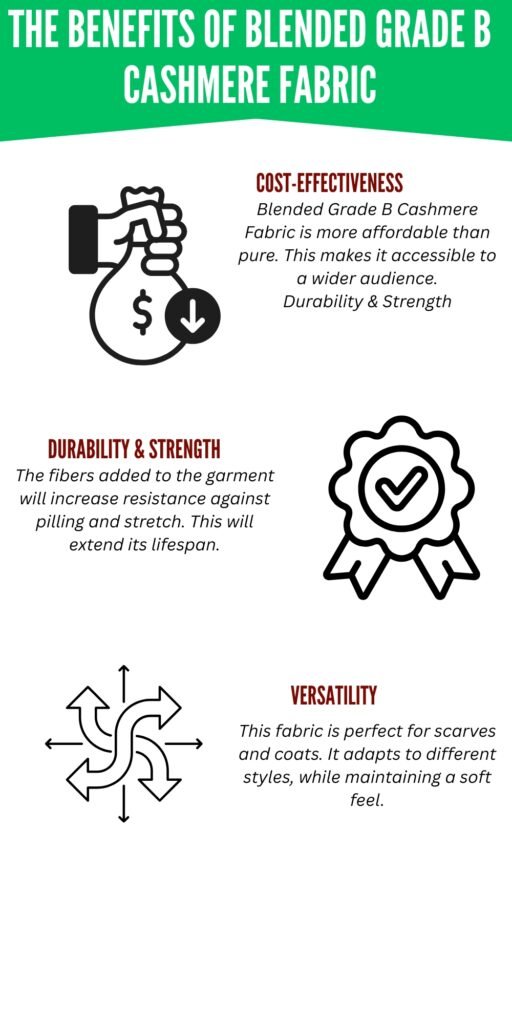
Cost-Effectiveness
Blended Grade B Cashmere Fabric is more affordable than pure. This makes it accessible to a wider audience.
Durability & Strength
The fibers added to the garment will increase resistance against pilling and stretch. This will extend its lifespan.
Versatility
This fabric is perfect for scarves and coats. It adapts to different styles, while maintaining a soft feel.
Fashion and Home Textiles
Fashion Industry
Designers use blended Grade B cashmere to make:
- Knitwear: sweaters, cardigans, pullovers
- Accessories: Scarves, gloves and hats
- Outerwear: jackets and coats
Home Furnishings
The fabric can also be used to:
- Throws and blankets
- Cushion covers
- Upholstery for stylish interiors
How to Care for Your Longevity
The fabric will retain its softness and appearance with proper maintenance.
- Wash your hands in cold water, or run a gentle cycle on the machine.
- Avoid fiber damage by using mild detergent.
- Do not wring, but gently press the water.
- Flat that dries flat to keep its shape and prevent stretching
- Avoid direct sunlight when storing.
Sustainability and ethical considerations
If sourced responsibly, blended Grade B cashmere can be environmentally friendly. There are many manufacturers:
- Recycled fibers
- Humane treatment for goats
- Implement eco-conscious production techniques
By choosing blends made with ethically-produced materials, you can support fashion that is sustainable and comfort that lasts.
Cashmere Blends Grade B: How to Choose the Best Cashmere Blend
Consider these factors when selecting fabric:
- Fiber Ratio: A higher cashmere content provides a softer touch.
- Weave and knit affect durability and stretch.
- Colorfastness: Ensures vibrant, long-lasting color.
- Purpose: Fashion vs. home textile use
Myth: Cashmere blended is inferior
While its softness may not be as good as Grade A, ‘s durability and affordability makes it a practical product for everyday use.
Myth: Blends Lose Warmth
Blended Grade A still offers substantial insulation and is perfect for cooler climates.
Future Trends for Blended Cashmere Fabrics
Cashmere blends are becoming more popular due to the following reasons:
- Sustainable blending techniques
- Innovative Knitting Patterns
- Trends in affordable luxury fashion
Blended grade B Cashmere Fabric will dominate the mid-range fashion market as consumers become more aware of quality and price.
Conclusion
Blended Grade-B Cashmere Fabric is a mix of luxury, durability and affordability . Designers and consumers can make stylish and informed choices by understanding its characteristics, application, and care. This versatile fabric is perfect for both fashion and home.
FAQs
What is Blended Grade B Cashmere Fabric?
It’s Blended Grade B Cashmere Fabric cashmere combined with other fibers like wool or synthetic yarns for durability, softness, and affordability.
How do I care for Blended Grade B Cashmere?
Blended Grade B Cashmere Fabric Hand wash with mild detergent, air dry flat, and store away from direct sunlight to maintain softness.
Is Blended Grade B Cashmere warm?
Yes,Blended Grade B Cashmere Fabric it provides substantial warmth suitable for cool climates, though slightly less soft than Grade A.