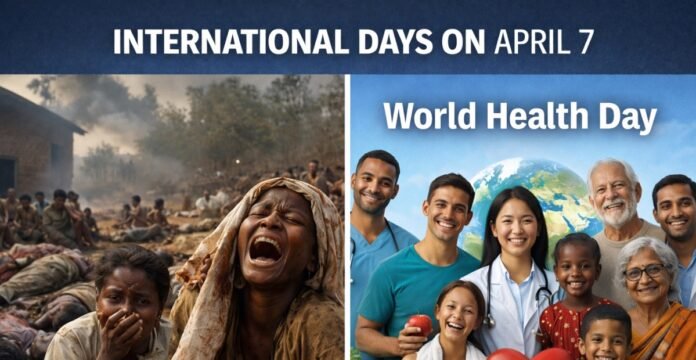
Every year, April 7 highlights important global issues. This day focuses on health, awareness, and remembrance. Two major international observances take place today: World Health Day and the International Day of Reflection on the 1994 Genocide Against the Tutsi in Rwanda.
These observances remind us to care for our health and learn from history.
World Health Day
World Health Day is celebrated every year on April 7. It is organized by the World Health Organization (WHO). This date marks the founding of the WHO in 1948.World Health Day provides an opportunity to raise awareness of specific health issues and promote actions to improve health and well-being around the world. Each year has a different theme, highlighting a priority area of concern for WHO. These themes range from universal health coverage to food safety, and antimicrobial resistance. Through various events and campaigns, WHO and its partners aim to engage governments, organizations, and individuals in efforts to address global health challenges and build a healthier future for all.
Purpose of World Health Day
The main goal is to spread awareness about global health issues. It also encourages people to live healthier lives.It achieves this through various campaigns and educational programs. By providing access to reliable information and resources, it empowers individuals to make informed decisions about their health and well-being. Furthermore, it advocates for policies that promote health equity and address the social determinants of health.
Why Health Matters
Good health is the foundation of a happy life. Without it, daily activities become difficult. Therefore, this day reminds us to take care of both physical and mental health.Regular exercise, a balanced diet, and sufficient sleep are crucial. Equally important is managing stress and nurturing positive relationships. Let’s use this day to reflect on our habits and make conscious choices that promote well-being. A healthy body and mind enable us to fully engage in life’s joys and overcome its challenges.
Key Focus Areas
- Healthy eating habits
- Regular physical activity
- Mental well-being
- Access to healthcare services
- Disease prevention
How You Can Participate
You can take small steps to improve your health:
- Eat balanced meals
- Exercise daily
- Drink clean water
- Get enough sleep
- Support health awareness campaigns
International Day of Reflection on the 1994 Genocide Against the Tutsi in Rwanda
This important day honors the victims of the Rwandan Genocide. It is observed globally on April 7.The day serves as a reminder of the devastating consequences of hatred and violence, and it is an opportunity to reflect on the importance of preventing such atrocities from happening again.
What Happened in 1994?
In April 7 1994, Rwanda experienced a tragic genocide. Within about 100 days, hundreds of thousands of people were killed. Most victims were from the Tutsi community.
Purpose of This Day
This day is dedicated to:
- Remembering the victims
- Supporting survivors
- Promoting peace and unity
- Preventing future genocides
Kwibuka – “To Remember”
The remembrance period is called Kwibuka, which means “remember.” People light candles, hold ceremonies, and share stories to honor those lost.
Why This Day Matters
Learning from history helps prevent future tragedies. It teaches us the importance of tolerance, respect, and human rights.
Importance of April 7 International Days
April 7 combines two powerful messages:
- Health is essential for life
- Remembrance is essential for humanity
Together, these observances encourage people to build a healthier and more peaceful world.
Conclusion
The international days on April 7 remind us of both life and loss. On one hand, World Health Day encourages us to live better and healthier lives. On the other hand, the Rwanda remembrance day teaches us to never forget history.
By understanding these observances, we can take small steps toward a better future. We can care for our health and promote peace in our communities.