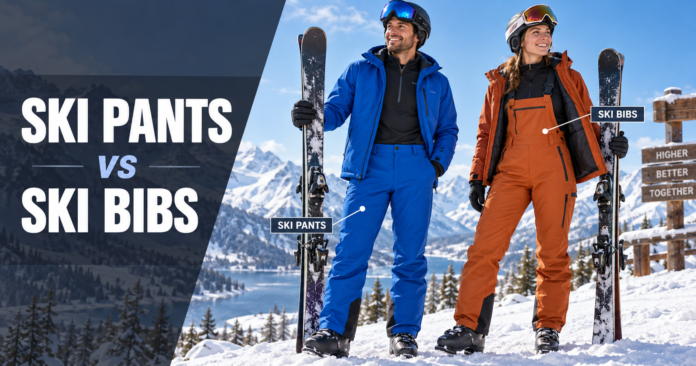
Ski pants vs ski bibs mainly differ in coverage and how they stay in place. Ski pants finish at the waist and use a waistband, belt, or adjusters for support. Ski bibs extend over the torso and use shoulder straps, providing more coverage against snow and cold air.
Neither option is better for every skier. Pants feel familiar and convenient, while bibs offer secure coverage and storage. The right choice depends on weather, skiing style, fit, and exposure to deep snow.
What Are Ski Pants?
Ski pants are weather-resistant trousers for skiing and snowboarding. Most combine a durable face fabric with a waterproof layer, insulation, lining, and reinforced lower legs. Common features include zippered pockets, adjustable waists, articulated knees, and internal boot gaiters.
Their greatest advantage is simplicity. They are easy to put on, remove, and adjust throughout the day. A well-fitted pair of ski pants works comfortably with different jackets and base layers. However, the waistband can create pressure, and snow may enter at the waist during a fall.
What Are Ski Bibs?
Ski bibs combine snow pants with panels that rise above the waist. Adjustable suspenders hold the garment up, so a tight waistband is unnecessary. Many include chest pockets, side openings, ventilation zippers, and drop-seat zippers.
The higher design blocks snow when skiing powder, sitting on a wet chairlift, or falling. Bibs also remain secure during movement. However, they may feel warmer, take longer to remove, and be less convenient during restroom breaks.
Ski Pants vs Ski Bibs: Key Differences
The clearest difference is coverage. Pants protect from the waist down, whereas bibs continue over part of the torso. This extra panel reduces gaps between the jacket and lower garment. Suspenders distribute support across the shoulders, while pants rely mainly on the waist. Bibs may therefore feel more secure for people whose pants tend to slide.
These practical differences can guide your decision:
- Coverage: Bibs protect more of the torso.
- Snow control: Bibs better block deep powder.
- Convenience: Pants are quicker to remove.
- Fit: Bibs reduce pressure around the waist.
- Warmth: Bibs add another torso layer.
- Storage: Bibs often include chest pockets.
- Versatility: Pants pair easily with more jackets.
Which Option Offers Better Snow Protection?
Bibs generally offer better protection in deep powder because their upper section creates a taller barrier. If a jacket lifts during movement or a fall, the bib still covers the lower back and abdomen. This benefit matters for snowboarders, beginners who fall regularly, and skiers exploring ungroomed terrain.
Pants still protect well when the waist fits securely and the jacket includes a powder skirt. High-rise designs further reduce exposed space. Understanding how garments overlap helps create a complete ski system for cold, snowy, and windy conditions.
Comfort, Fit, and Freedom of Movement
In the ski pants vs ski bibs comparison, comfort depends heavily on body shape and garment fit. Pants should remain secure without pinching the waist when sitting or bending. Bibs remove much of this waistband pressure, but their straps must be adjusted correctly. Straps that are too short may pull upward, while loose straps allow the bib to sag.
Both styles need space for a base layer and free movement through the hips and knees. Articulated shaping, stretch panels, and gussets improve mobility. Brands can use an experienced outdoor manufacturer to plan fit, grading, reinforcements, and weather-resistant construction.
Warmth and Breathability
Bibs often feel warmer because they cover more of the torso and reduce drafts at the waist. This can be helpful in very cold conditions, but active skiers may overheat if the fabric or insulation is too heavy. Side zippers, thigh vents, and breathable shell materials help release excess warmth during demanding runs.
Pants usually provide slightly less torso insulation, making them easier to combine with different upper-body layers. Insulated versions suit cold resort days, while uninsulated shells offer flexibility for changing conditions. The outer jacket also matters, and this jacket guide explains the differences between insulated and shell designs.
Which Should You Choose?
Choose ski pants if you prefer a familiar trouser fit, quick changes, and easy pairing with different jackets. They suit groomed resort skiing, mild conditions, and people who rarely struggle with a slipping waistband. Look for suitable waterproofing, boot gaiters, ventilation, reinforced cuffs, and enough room for movement.
Choose bibs if you want maximum snow coverage, less pressure at the waist, and additional storage. They are especially useful for powder skiing, snowboarding, and long days in stormy weather. When deciding between ski pants vs ski bibs, try both with your usual layers and copy the movements you make on the slope.
Conclusion
The ski pants vs ski bibs decision comes down to coverage, convenience, and personal comfort. Pants are simple, versatile, and easy to remove. Bibs stay secure and provide better protection in deep snow.
Consider your usual conditions, then check fit, ventilation, waterproofing, and mobility. The garment should protect you without restricting turns, sitting, or walking. Choosing by real use creates a more reliable winter setup.
FAQs
Are ski bibs warmer than ski pants?
Usually, yes. Their upper panels add coverage and reduce cold drafts, although insulation and fabric weight also affect warmth.
Do beginners need ski bibs?
Beginners do not need them, but the extra snow protection can be helpful when falls are frequent.
Can you wear a belt with ski pants?
Yes, if the pants include belt loops. Built-in waist adjusters or suspenders may feel more comfortable while skiing.
Are ski bibs suitable for resort skiing?
Yes. Bibs work for resort skiing, powder, snowboarding, and backcountry use when their insulation and ventilation suit the conditions.