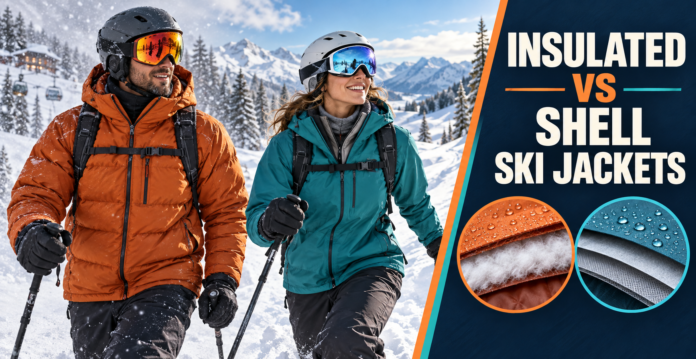
Ski jackets generally fall into two main categories: insulated jackets and shell jackets. An insulated jacket combines weather protection with built-in warmth, while a shell focuses on blocking wind and snow without adding much insulation. Both can perform well, but they suit different temperatures, activity levels, and layering preferences.
An insulated design offers simple, dependable warmth for cold resort days. A shell provides greater flexibility because the skier controls warmth through separate mid-layers. Understanding waterproofing, breathability, fit, and construction makes it easier to choose a jacket that remains comfortable throughout changing mountain conditions.
What Is an Insulated Ski Jacket?
An insulated ski jacket contains a weather-resistant outer fabric plus down or synthetic fill. The insulation traps warm air around the body, reducing the need for a thick mid-layer. These jackets are convenient for beginners, resort skiers, and people who spend long periods sitting on exposed lifts in cold weather.
Synthetic fill is common because it retains useful warmth when damp and dries more quickly than untreated down. Down provides excellent warmth for its weight but needs protection from moisture. Insulation levels vary, so one jacket may suit mild winter days while another targets very low temperatures. The product description should identify the type and amount of fill.
What Is a Shell Ski Jacket?
A shell ski jacket is a protective outer layer without substantial built-in insulation. Its main purpose is to block snow, wind, and outside moisture while allowing internal water vapor to escape. Hard shells use waterproof membranes and sealed seams, whereas softshell garments prioritize stretch and breathability but provide less protection during heavy snowfall.
Because a shell supplies little warmth by itself, it must be combined with suitable base and mid-layers. This makes the system highly adaptable across different seasons. Skiers can wear thin fleece in mild weather, heavier insulation during cold spells, or carry an extra layer for breaks. Eco Jersey’s shell maker page covers technical laminates and ski-shell construction.
Insulated vs Shell Jackets
Insulated jackets are easy to use because warmth and protection come in one garment. They reduce the number of clothing decisions and often feel comfortable during slow resort days. However, fixed insulation can become too warm during intense skiing, sunny afternoons, or warmer spring conditions. The wearer can open vents but cannot remove the insulation.
Shells separate weather protection from warmth, giving the skier more control. They suit changing forecasts, ski touring, and people who already own several mid-layers. The tradeoff is that the complete system requires more planning and may cost more. This jacket guide explains the wider differences between waterproof jackets and technical hard shells.
Waterproofing and Breathability
Good ski jackets need waterproof fabric, protected closures, and sealed seams in exposed areas. Waterproof ratings show how much water pressure a material can resist, but design also matters. An excellent membrane cannot prevent leakage through unsealed seams or poorly protected zippers. A water-repellent surface finish helps snow bead and roll away.
Breathability allows perspiration vapor to move outward. This matters because skiing can produce significant heat, even in cold air. Underarm vents give the wearer another way to release warmth quickly. Three-layer shells usually offer strong durability and weather protection, while lighter constructions may reduce weight. This layer guide compares common waterproof constructions.
Choosing a Jacket for Different Skiing Styles
Resort skiers who experience cold weather and frequent lift rides may prefer insulated ski jackets. Beginners also spend time standing during lessons, so built-in warmth can be helpful. Skiers in mild climates may choose light insulation rather than a jacket designed for severe cold. Personal temperature preference remains important because some people naturally feel warmer.
Touring and highly active skiers often benefit from breathable shells because they generate heat during climbs and demanding movement. A shell also works across a wider temperature range when paired with different mid-layers. A well-designed ski coat should still provide comfortable movement, weather protection, useful storage, and adjustable coverage.
Important Ski-Jacket Features
Fit and construction details affect everyday comfort as much as insulation. Test the jacket over the layers you expect to wear. Bend forward, rotate the shoulders, and raise the arms. The hem should remain covered, while the sleeves should reach the wrists without pulling tightly across the back.
Look for these practical features:
- Fully or critically sealed seams
- Adjustable helmet-compatible hood
- Underarm ventilation zips
- Powder skirt and secure hem
- Adjustable cuffs and wrist gaiters
- Ski-pass and internal goggle pockets
- Durable, protected front zipper
Conclusion
Insulated ski jackets combine warmth and weather protection, making them convenient for cold resort skiing. Shell jackets provide more layering freedom and usually suit active skiers or changing conditions. Neither option is universally better because performance depends on climate, effort, and the garments worn underneath.
Choose an insulated jacket when dependable built-in warmth is the priority. Choose a shell when flexibility, breathability, and control matter more. In both cases, check waterproof construction, ventilation, fit, hood design, cuffs, and useful ski-specific features before making a decision.
FAQs
Are insulated ski jackets warmer than shells?
Yes. Insulated jackets contain built-in fill, while shells provide little warmth unless combined with insulating mid-layers.
Can I ski in a shell jacket?
Yes. Wear a moisture-managing base layer and add suitable insulation beneath the shell according to the temperature.
Is down or synthetic insulation better?
Down offers better warmth for its weight, while synthetic insulation performs more reliably when damp and usually dries faster.
Should a ski jacket fit loosely?
It should leave room for layers and movement without feeling excessively loose. Test the complete outfit before skiing.