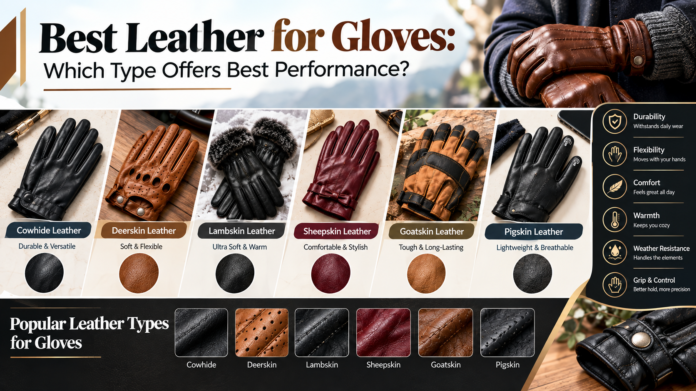
There’s no single answer to what makes the Best Leather for Gloves, since the right hide depends entirely on what the glove needs to do. A hide that performs brilliantly for heavy-duty work gloves would feel stiff and clumsy in a driving glove, while a soft, supple leather ideal for dress gloves wouldn’t survive a single shift on a construction site, no matter how well it’s constructed.
Understanding how different hides compare in durability, flexibility, and grip makes it much easier to judge whether a glove is actually built for its intended purpose. In this guide, we’ll break down how the most common glove leathers perform against one another, and help you identify the best leather for gloves based on your specific needs, whether that’s heavy labor, cold weather, or everyday polish.
Cowhide: The Standard for Durability
Cowhide remains the most widely used leather for gloves that need to survive serious abrasion and daily wear. Its thick, dense fiber structure gives it excellent resistance to cuts, punctures, and general wear and tear, which is exactly why it dominates the work glove category across construction, warehousing, and manufacturing, where gloves face constant contact with rough materials.
The trade-off is flexibility. Cowhide is naturally stiffer than thinner hides, requiring a break-in period before it fully conforms to the hand and moves naturally with the fingers. For tasks where raw durability matters more than fine dexterity, this trade-off is almost always worth making, since the alternative is gloves that wear through far too quickly.
Goatskin: Natural Water Resistance and Flexibility
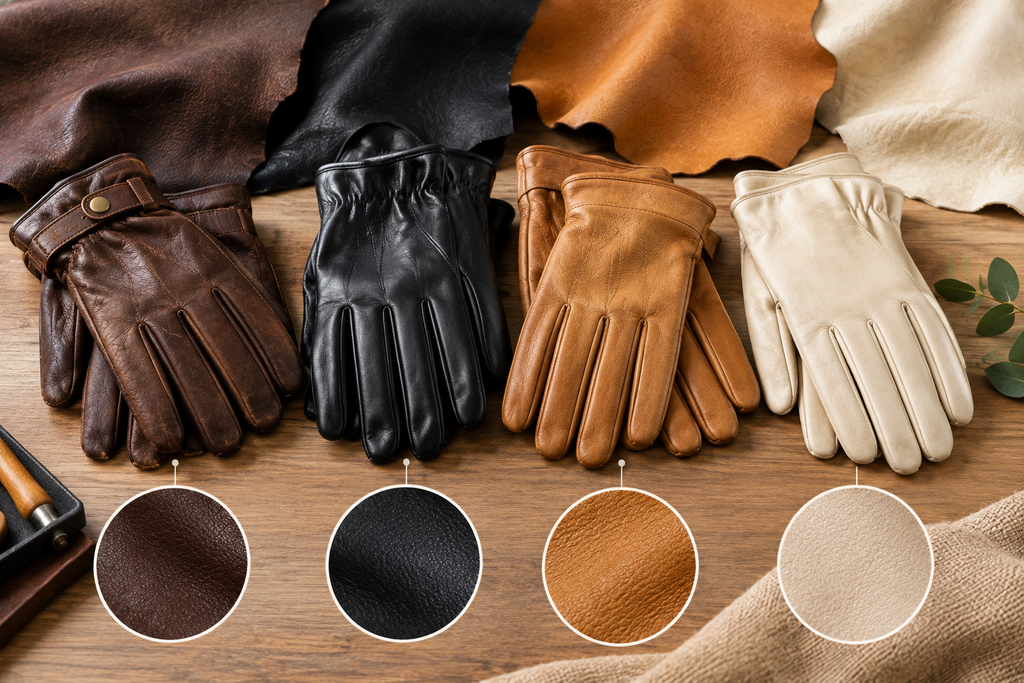
Goatskin offers a compelling middle ground for gloves that need both durability and comfort. Natural lanolin in the hide gives goatskin gloves a degree of water resistance that cowhide doesn’t have on its own, while remaining noticeably more flexible and comfortable for extended wear throughout a full day.
This combination makes goatskin a popular choice for gloves used in outdoor or variable conditions, including some military and tactical gloves, where a balance of protection and dexterity matters more than maximum abrasion resistance alone. It’s often the practical compromise for anyone who needs a glove that performs reasonably well across several different demands at once.
Deerskin: Exceptional Softness and Dexterity
Deerskin is prized in glove-making for its unusually soft, supple texture combined with surprising strength for its weight. This combination makes it a favorite for driving gloves and other applications where fine motor control and tactile feedback matter more than raw toughness, particularly for tasks requiring a precise, natural grip.
Because deerskin naturally conforms to the hand with minimal break-in, gloves made from it tend to feel comfortable almost immediately, unlike stiffer hides that need repeated wear to soften. This comes at a cost, since deerskin is generally more expensive and less abrasion-resistant than cowhide, making it better suited to lighter, more controlled use than heavy manual labor.
Lambskin: The Softest Option for Comfort
Lambskin is the softest commonly used glove leather, valued for its fine, almost fabric-like texture against the skin. This makes it a popular choice for dress gloves and lined winter gloves, where comfort and a refined feel matter more than heavy-duty performance, particularly for gloves worn alongside formal outerwear.
Lambskin’s fine fiber structure does mean it’s more prone to tearing and surface wear than thicker hides, so it’s generally reserved for gloves that won’t face regular abrasion or rough handling, rather than work or protective applications where durability takes priority over softness.
Pigskin: Breathable and Naturally Durable
Pigskin is less commonly discussed but offers a genuinely useful combination of qualities for certain glove types. Its naturally porous structure makes it more breathable than many other hides, while remaining fairly resistant to abrasion, even after repeated wetting and drying, which is why it’s sometimes used in work and outdoor gloves in specific markets where breathability matters as much as durability.
Pigskin’s slightly coarser texture and grain pattern make it less common in dress or luxury glove lines, where a smoother, more refined surface is typically preferred over practical breathability.
Measuring Performance: Standards Worth Knowing
Beyond hide type, glove performance can be objectively measured through standards like EN 388, the European standard for mechanical hazard protection. This standard rates gloves on abrasion resistance, cut resistance, tear resistance, and puncture resistance, giving buyers a way to compare performance across different leather types and constructions rather than relying on hide type alone or marketing claims.
A cowhide work glove and a goatskin tactical glove might both perform well under EN 388 testing despite being built from different leathers, which is a useful reminder that hide type is only one factor in overall glove performance construction and finishing matter just as much, and a poorly constructed cowhide glove can underperform a well-made goatskin alternative.
Best Leather for Gloves at a Glance
Here’s a quick summary of how the most common glove leathers compare on key performance qualities:
- Cowhide:Highest abrasion resistance; stiffer, needs a break-in period
- Goatskin:Naturally water-resistant and flexible; balanced durability and comfort
- Deerskin:Exceptional softness and dexterity; less abrasion-resistant, higher cost
- Lambskin:Softest option for comfort; least durable for heavy use
- Pigskin:Breathable and reasonably durable; coarser texture than other hides
Choosing the Right Leather for Your Glove Needs
For anyone prioritizing durability above all else, cowhide remains the most reliable choice, which is reflected in options like men’s leather gloves built for everyday handling and wear. Buyers weighing softness and warmth against durability can compare options across our full leather gloves range to see how different hide types and linings perform side by side before making a final decision.
For a broader breakdown of the different glove styles built around these hides, our guide on the types of leather gloves covers how work, driving, dress, and winter gloves each apply these materials differently depending on their intended use, giving a fuller picture beyond hide type alone.
The Role of Custom Manufacturing in Leather Gloves
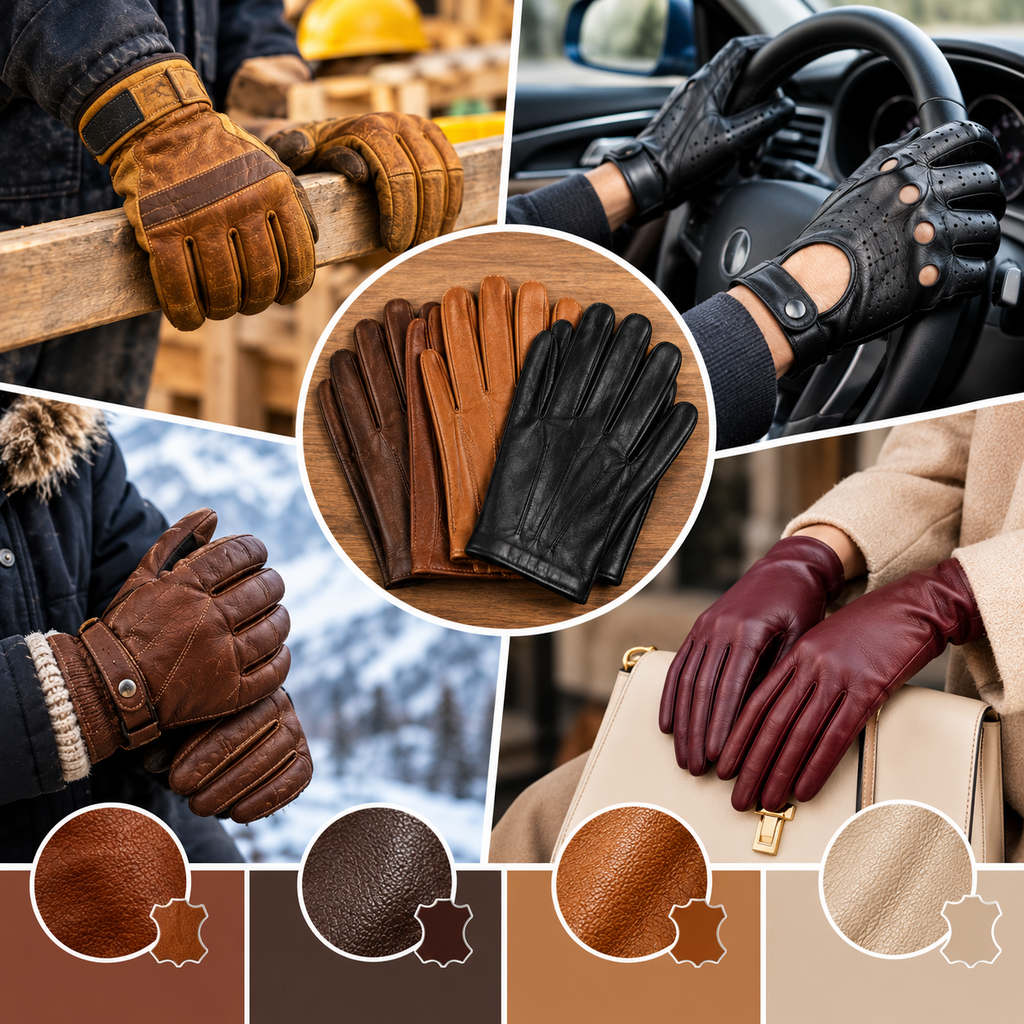
As demand grows for gloves matched precisely to their intended use, more businesses are turning to custom manufacturers who understand how hide selection affects durability, dexterity, and comfort, rather than relying on generic sourcing that doesn’t specify leather type clearly or account for real-world conditions.
At ECO-JERSEY, we manufacture and supply custom apparel including leather gloves and accessories to businesses around the world. Whether a company needs the rugged durability of cowhide or the refined softness of lambskin, our team works directly with clients to produce gloves that match their exact specifications, down to the exact hide and lining.
Conclusion
There’s no universal answer to the Best Leather for Gloves question, since the right hide depends entirely on how the gloves will be used. Cowhide delivers unmatched durability for heavy-duty work, goatskin balances flexibility with natural water resistance, deerskin and lambskin prioritize softness and dexterity, and pigskin offers a breathable, practical middle ground. Matching hide type to actual use is what determines real-world performance more than any single “best” material, regardless of how a glove is marketed.
For businesses looking to source reliable leather gloves whether for industrial use or branded professional wear working with an experienced manufacturer like ECO-JERSEY ensures every pair is built with the right leather for the job.
FAQs
What is the best leather for work gloves?
Cowhide is generally the best leather for work gloves, since its thick, dense structure offers superior resistance to abrasion, punctures, and general wear compared to thinner hides.
What is the most durable leather for gloves overall?
Cowhide is typically the most durable option for gloves, though goatskin offers a strong balance of durability and flexibility for gloves that also need to stay comfortable during extended wear.
Which leather is softest for gloves?
Lambskin is generally the softest leather used in gloves, making it a popular choice for dress gloves and lined winter gloves where comfort matters more than heavy-duty durability.
Is goatskin or cowhide better for gloves?
It depends on the priority: cowhide offers greater abrasion resistance for heavy-duty use, while goatskin offers more flexibility and natural water resistance for lighter, more comfortable wear.