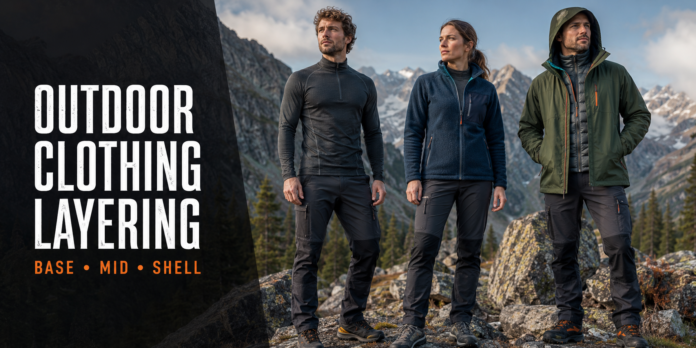
Dressing for the outdoors isn’t about wearing the thickest jacket you own. It’s about building a system — three deliberate layers that work together to manage moisture, retain warmth, and block weather simultaneously. Outdoor clothing layering is the foundation of every serious outdoor wardrobe, and understanding how each layer functions transforms how you experience every activity you take it into.
Why Layering Works Better Than Single Thick Garments
A single heavy jacket does one thing — it provides insulation. It cannot manage the moisture your body generates during physical activity. It cannot adapt when your activity intensity changes. And it cannot be removed and replaced when conditions shift throughout the day.
A three-layer system does all of these things simultaneously. Each layer handles one specific job — and together they create an adaptable clothing environment that responds to your body and the conditions around it. This is why serious hikers, mountaineers, and outdoor professionals universally use layering systems rather than relying on any single garment regardless of how technically impressive that garment appears.
Layer 1 — The Base Layer: Moisture Management Foundation
The base layer sits directly against your skin — and its entire function is keeping that skin dry. During physical activity, your body produces perspiration continuously. If that moisture stays against your skin, you become cold, uncomfortable, and — in serious conditions — at genuine risk of hypothermia.
Quality base layers use merino wool or moisture-wicking synthetic fabrics that actively pull perspiration away from skin surfaces and move it outward toward the fabric’s exterior face where evaporation removes it. This keeps skin surface dry throughout sustained physical effort — maintaining the comfortable, warm skin environment that everything above it depends on.
Merino wool suits multi-day outdoor use particularly well — its natural odor resistance allows extended wear without washing, and its natural temperature regulation keeps you comfortable across wider temperature ranges than synthetic alternatives manage. Synthetic base layers suit high-intensity activities where maximum moisture wicking speed matters more than odor resistance across single-day use.
Understanding how to choose the right base layer construction makes an enormous practical difference across extended outdoor use — and our dedicated hiking clothing page covers the full range of base layer and active clothing solutions available for trail-specific outdoor applications.
Layer 2 — The Mid Layer: Warmth Retention
The mid layer provides the insulation your base layer cannot — trapping warm air and retaining body heat during rest periods, cold conditions, and low-intensity activity where body heat generation drops below the level that maintains comfortable core temperature without assistance.
Fleece mid layers are the most versatile choice — providing reliable warmth with excellent breathability that allows moisture vapor from the base layer to continue moving outward rather than accumulating within the layering system. Heavyweight fleece suits genuinely cold conditions. Lightweight fleece suits active hiking where breathability matters alongside warmth.
Insulated mid layers — using down or synthetic fill — provide higher warmth-to-weight ratios than fleece for the coldest conditions. Down suits dry cold environments. Synthetic insulation maintains warmth when wet — making it more reliable for damp outdoor environments where internal moisture from perspiration regularly dampens insulation layers during sustained active use.
The mid layer is the most adjustable component of your system — removed during high-intensity uphill sections and replaced during rest stops and cold exposure — actively managing your thermal environment rather than passively accepting whatever temperature conditions create around you.
Layer 3 — The Shell Layer: Weather Protection
The shell layer is your barrier against the external environment — wind, rain, snow, and cold air that would penetrate and destroy the thermal environment your base and mid layers create. Without an effective shell, every other layer in your system becomes compromised the moment weather arrives.
Hardshell jackets provide maximum waterproof wind protection using membrane technologies that block rain penetration completely while maintaining enough breathability to prevent internal moisture accumulation during active use. For a deeper understanding of what makes shell fabrics genuinely perform, this softshell guide explains exactly how different shell constructions serve different activity needs across varied outdoor conditions.
Softshell shells sacrifice some weather protection for significantly improved stretch and breathability — suiting high-intensity activities in dry cold conditions where movement freedom and moisture management matter more than maximum rain protection. The types of jackets guide covers the complete spectrum of outdoor shell options — helping you match the right construction to your specific outdoor activity and environment.
How the Three Layers Work Together
Outdoor clothing layering achieves its full performance potential when all three layers work as a coordinated system rather than independent garments thrown together. The base layer keeps skin dry. The mid layer keeps that dry skin warm. The shell layer keeps weather from penetrating and destroying the environment the inner layers created.
Moisture moves from base layer to mid layer to shell exterior — then evaporates into the environment. Heat stays trapped within the mid layer insulation — maintaining core temperature across changing activity levels and external conditions. Weather stays outside the shell — never reaching the layers below that depend on staying dry to perform their functions correctly.
Adjusting Your System to Conditions
The real power of outdoor clothing layering is adaptability. Ascending a steep trail in cold weather — remove the mid layer to prevent overheating. Reaching the summit in wind — add the shell over everything for immediate wind protection. Stopping for lunch in cold conditions — add the mid layer back over the base layer for warmth retention during the stationary rest period.
This constant adjustment throughout an outdoor day is what layering enables — and what any single-garment approach cannot replicate regardless of how technically sophisticated that garment might be. For brands looking to build layering products specifically, quality fleece apparel represents one of the most commercially important mid-layer categories — serving recreational outdoor consumers across hiking, camping, and mountain activities throughout the colder seasons.
Conclusion
Outdoor clothing layering is not complicated — but it does require understanding what each layer actually does and choosing each one appropriately for your activity and conditions. Base layer managing moisture, mid layer retaining warmth, and shell layer blocking weather together create a system that adapts to your body and environment simultaneously. Master this system and every outdoor adventure becomes more comfortable, more enjoyable, and genuinely safer across every condition you encounter.
FAQs
Can I skip the mid layer during warm weather outdoor activities?
Yes. In warm conditions, a moisture-wicking base layer and lightweight shell provide sufficient protection without mid-layer insulation causing uncomfortable heat accumulation during active outdoor use.
What is the most important layer in the outdoor clothing system?
The base layer is arguably most critical — because wet skin against the body is the starting point for discomfort and hypothermia risk that no outer layer can adequately compensate for once it occurs.
Should all three layers be from the same brand?
No — layers from different manufacturers work perfectly together provided each one performs its specific function correctly. Focus on performance properties rather than brand matching when building your layering system.
Can outdoor layering clothing be produced under a private label?
Yes. Professional outdoor apparel manufacturers produce complete private label layering systems across base, mid, and shell categories with custom fabrics, colors, and branding giving outdoor brands full creative control.