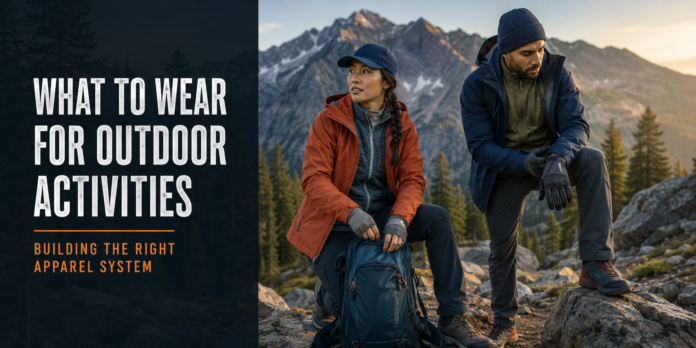
Stepping into the outdoors without the right clothing is one of the most common mistakes outdoor enthusiasts make. Weather changes fast. Temperatures drop unexpectedly. Rain arrives without warning. Knowing what to wear for outdoor activities — and understanding how to build a complete, adaptable apparel system — transforms every outdoor experience from potentially uncomfortable to genuinely enjoyable and safe.
The Three-Layer System — Your Foundation
Every effective outdoor apparel system builds from the same foundational principle. Three layers working together — each serving a specific function — create adaptable protection that any single garment cannot provide alone.
Layer 1 — Base Layer: Sits directly against skin and manages moisture continuously throughout activity. Merino wool and moisture-wicking synthetics are the strongest performers here — keeping skin dry during physical effort and preventing the cold clammy sensation that wet fabric creates against the body.
Layer 2 — Mid Layer: Provides insulation and warmth retention. Fleece and insulated garments trap warm air and maintain body temperature during rest periods, cold mornings, and temperature drops that outdoor environments create throughout the day.
Layer 3 — Outer Shell: Protects against wind, rain, and external weather. Waterproof breathable membrane construction keeps external moisture out while allowing internal moisture vapor to escape — the critical dual function that genuine outdoor outerwear must deliver simultaneously across all activity intensities.
Choosing the Right Outer Layer
Your outer layer choice depends entirely on what your specific outdoor activity demands. For demanding mountain conditions, lightweight outdoor jackets offer reliable wind and weather protection in a packable construction — perfect for hikers and travelers who need dependable coverage without unnecessary weight penalty across long active days outdoors.
Bottom Layer — Pants and Shorts Selection
Lower body clothing receives less attention than upper body in most outdoor planning — but cold or restricted legs undermine performance as seriously as any upper body clothing failure. Choosing the right construction for your specific trail demands matters enormously — and understanding exactly hiking pants selection covers every factor from fabric weight through fit and feature requirements that different trail conditions create.
For wet terrain specifically, waterproof lower body protection becomes non-negotiable. Understanding the fabric technologies behind waterproof outdoor clothing helps brands and buyers make genuinely informed decisions — and this hardshell fabrics guide explains exactly what separates performance construction from inadequate alternatives across demanding outdoor environments.
Activity-Specific Clothing Priorities
What to wear for outdoor activities varies significantly by specific demands. Camping prioritizes comfort, layering flexibility, and versatility across temperature swings throughout the day and night. Hiking prioritizes moisture management, durability, and movement freedom across sustained physical effort on varied terrain. Skiing demands waterproof insulated outer layers and performance base layers for complete cold weather protection. Hunting requires silent fabric constructions and weather protection matched specifically to field conditions and seasons.
Exploring the full outdoor apparel manufacturing range helps brands understand every category available for building complete, commercially strong outdoor collections.
Conclusion
Knowing what to wear for outdoor activities means building a complete layering system matched to your specific activity, environment, and conditions. Base layer managing moisture, mid-layer retaining warmth, outer shell blocking weather, and appropriate bottom layers covering lower body needs together create the outdoor apparel kit that genuinely serves every adventure safely and comfortably from the very first day outdoors.
FAQs
Do I always need all three layers for outdoor activities?
Not always. Warm weather hiking may need only a base layer and light outer shell. Cold alpine conditions demand all three layers working together for complete protection.
What fabric matters most in outdoor clothing?
Moisture-wicking quick-dry fabrics matter most — keeping skin dry from perspiration is the single most important comfort and safety function outdoor clothing performs across every activity type.
Can outdoor apparel be produced under a private label?
Yes. Professional outdoor apparel manufacturers offer complete private label production across all categories with custom fabrics, performance treatments, colors, and branding giving brands full control.
How do I choose between hardshell and softshell for outdoor activities?
Choose hardshell when sustained rain and severe weather are likely. Choose softshell when high-intensity dry-condition activity makes breathability and movement freedom more important than maximum weather protection.