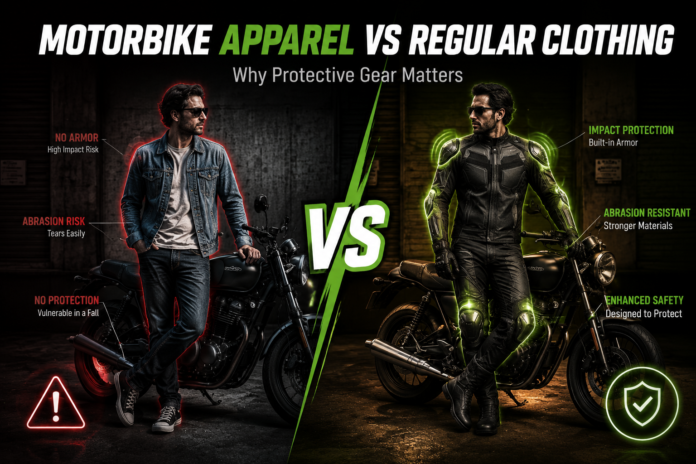
The two jackets can appear very similar, but perform completely differently when a rider touches the pavement. When comparing motorbike clothing to regular clothes, you can see how much technology is hidden beneath. Gear that protects a rider and not just looks protective actually has a lot of engineering.
Before sourcing and marketing products as riding gear, clothing companies or retailers should understand the difference between motorbike clothing and regular clothing. The guide explains the differences between motorbike apparel and regular clothing, as well as why this distinction is important for brands selling in this market.
The Difference Between Motorbike Clothing and Regular Clothing
The assumption that a thick jacket or a pair of heavy jeans will provide reasonable protection from crashing is not supported by crash science. When comparing motorbike clothing to regular clothing, consumers are surprised by the difference. Regular fabric is not designed for slipping across asphalt while speeding.
Brands that market apparel for motorcycles have a duty to be aware of this difference, as misrepresenting clothing as protective equipment can create a real safety risk and liability. It is important to make this distinction for new brands that enter the motorcycle apparel category via private labeling. The temptation to simply rebrand casual clothing can easily cross the line into misleading marketing.
Abrasion resistance: the core difference
Motorbike clothing is different from regular clothing in that it has a higher abrasion resistant under friction. The fabrics of regular clothing, such as denim or standard cotton blends fail to protect the skin within fractions of seconds of contact with pavement at high speeds.
The materials used in genuine motorbike clothing are reinforced to keep their integrity over several seconds, rather than failing instantly. The gap between jeans and motorcycle pants is the reason why, in low-speed falls a rider can get serious road rash.
Armor or Nothing?
Motorbike clothing and regular clothing differ sharply in terms of impact protection. Normal clothing provides little protection against blunt force impacts. A motorcycle coat, or a full suit, however, integrates armor inserts in the shoulder, elbow, hip, and knee areas to disperse and absorb crash energy.
It’s not a marketing tool; this is tested, rated and certified equipment that reduces fracture and joint injuries in the exact impact of a fall. Motorbike apparel brands should consider armor certification a must-have feature, not an upgrade. It’s the difference between genuine riding gear and casual clothing.
Seam Strength and Construction
Motorbike clothing and regular clothing are clearly different in terms of fabric, armor, and garment construction. Clothing seams were designed for normal wear and tear. They are not built to withstand the tensile force that a slip or an impact can place on them.
Genuine riding equipment uses reinforced seams that are often triple or double stitched in high stress points. These were designed to stay together and not split apart during an accident. Even a jacket with standard stitching from the garment industry can fail in a catastrophic way when its fabric strength is most important.
Designing a Riding that is Functional and Fit for You
Motorbike clothing differs from regular clothing in more than just protection. It also differs by how it is constructed and cut for riding positions. The regular clothing of everyday life is designed to fit a standing or sitting posture, whereas riding gear accommodates the extended arms and forward leaning position that riders maintain for long periods.
It affects the alignment of armor pockets with joints, sleeve length and more. This is because a rider sits on their bike instead of standing up. When sourcing motorcycle apparel, brands should ensure that the fit is tested in an actual riding position. Gear that looks good standing upright can move armor completely out of place once a rider sits on a bike.
The Key Differences Between Genuine and Non-Genuine Riding Gear
When deciding whether or not a motorbike garment is a real motorcycle apparel and not just rebranded clothing, brands should verify the following.
- Abrasion resistant fabric that is certified for its sliding properties rather than durability.
- CE certified armor inserts for shoulders, elbows and hips, depending on the garment type
- Reinforced Seam Construction is built to resist crash-level tension stress, rather than standard stitches
- Fit for riding that accounts for the forward-leaning position and joint alignment of the bike
- Materials that are weather-appropriate. Since genuine riding gear is designed to perform in real riding conditions and not only showroom displays.
- Test documentation is available upon request, rather than using general marketing terminology.
The Meaning of This Comparison for Sourcing Determinations
The brand’s approach to manufacturing partners should be shaped by its understanding of motorbike clothing vs. regular clothing. Even if a supplier has experience in the production of general clothing, they may not understand armor certification or riding-specific design, even though their motorcycle jacket looks convincing.
This category is fundamentally different than standard workwear or casual wear, as the consequences of a mistake are far greater. It is equally important to protect your hands and feet when you are supporting motorbike gear, such as gloves and boots. It is more important to review a manufacturer’s test documentation and experience in riding-specific garment construction than it would be for any other category of apparel.
FAQs
Does regular clothing offer any protection when riding a motorbike? No, it does not. Regular clothing is less protective than genuine motorcycle apparel because they tend to fail quickly due to sliding friction. They also lack any impact protection.
Which is the greatest risk associated with marketing standard clothing for motorcycles? By misrepresenting regular clothing for protective riding gear, brands are exposed to both liability and safety risks.
Do motorbike clothing and regular clothing have to be different? No, not necessarily. Many riding jackets, pants, and other apparel are designed to resemble everyday wear. However, their fabric and armor need to meet different engineering standards.
What can brands do to confirm that a motorbike garment is real? They should ask the manufacturer for abrasion tests, CE certification and details of construction, rather than just relying solely on its visual similarities with existing gear.
The two jackets can appear very similar, but perform completely differently when a rider touches the pavement. When comparing motorbike clothing to regular clothes, you can see how much technology is hidden beneath. Gear that protects a rider and not just looks protective actually has a lot of engineering.
Before sourcing and marketing products as riding gear, clothing companies or retailers should understand the difference between motorbike clothing and regular clothing. The guide explains the differences between motorbike apparel and regular clothing, as well as why this distinction is important for brands selling in this market.
The Difference Between Motorbike Clothing and Regular Clothing
The assumption that a thick jacket or a pair of heavy jeans will provide reasonable protection from crashing is not supported by crash science. When comparing motorbike clothing to regular clothing, consumers are surprised by the difference. Regular fabric is not designed for slipping across asphalt while speeding.
Brands that market apparel for motorcycles have a duty to be aware of this difference, as misrepresenting clothing as protective equipment can create a real safety risk and liability. It is important to make this distinction for new brands that enter the motorcycle apparel category via private labeling. The temptation to simply rebrand casual clothing can easily cross the line into misleading marketing.
Abrasion resistance: the core difference
Motorbike clothing is different from regular clothing in that it has a higher abrasion resistant under friction. The fabrics of regular clothing, such as denim or standard cotton blends fail to protect the skin within fractions of seconds of contact with pavement at high speeds.
The materials used in genuine motorbike clothing are reinforced to keep their integrity over several seconds, rather than failing instantly. The gap between jeans and motorcycle pants is the reason why, in low-speed falls a rider can get serious road rash.
Armor or Nothing?
Motorbike clothing and regular clothing differ sharply in terms of impact protection. Normal clothing provides little protection against blunt force impacts. A motorcycle coat, or a full suit, however, integrates armor inserts in the shoulder, elbow, hip, and knee areas to disperse and absorb crash energy.
It’s not a marketing tool; this is tested, rated and certified equipment that reduces fracture and joint injuries in the exact impact of a fall. Motorbike apparel brands should consider armor certification a must-have feature, not an upgrade. It’s the difference between genuine riding gear and casual clothing.
Seam Strength and Construction
Motorbike clothing and regular clothing are clearly different in terms of fabric, armor, and garment construction. Clothing seams were designed for normal wear and tear. They are not built to withstand the tensile force that a slip or an impact can place on them.
Genuine riding equipment uses reinforced seams that are often triple or double stitched in high stress points. These were designed to stay together and not split apart during an accident. Even a jacket with standard stitching from the garment industry can fail in a catastrophic way when its fabric strength is most important.
Designing a Riding that is Functional and Fit for You
Motorbike clothing differs from regular clothing in more than just protection. It also differs by how it is constructed and cut for riding positions. The regular clothing of everyday life is designed to fit a standing or sitting posture, whereas riding gear accommodates the extended arms and forward leaning position that riders maintain for long periods.
It affects the alignment of armor pockets with joints, sleeve length and more. This is because a rider sits on their bike instead of standing up. When sourcing motorcycle apparel, brands should ensure that the fit is tested in an actual riding position. Gear that looks good standing upright can move armor completely out of place once a rider sits on a bike.
The Key Differences Between Genuine and Non-Genuine Riding Gear
When deciding whether or not a motorbike garment is a real motorcycle apparel and not just rebranded clothing, brands should verify the following.
- Abrasion resistant fabric that is certified for its sliding properties rather than durability.
- CE certified armor inserts for shoulders, elbows and hips, depending on the garment type
- Reinforced Seam Construction is built to resist crash-level tension stress, rather than standard stitches
- Fit for riding that accounts for the forward-leaning position and joint alignment of the bike
- Materials that are weather-appropriate. Since genuine riding gear is designed to perform in real riding conditions and not only showroom displays.
- Test documentation is available upon request, rather than using general marketing terminology.
The Meaning of This Comparison for Sourcing Determinations
The brand’s approach to manufacturing partners should be shaped by its understanding of motorbike clothing vs. regular clothing. Even if a supplier has experience in the production of general clothing, they may not understand armor certification or riding-specific design, even though their motorcycle jacket looks convincing.
This category is fundamentally different than standard workwear or casual wear, as the consequences of a mistake are far greater. It is equally important to protect your hands and feet when you are supporting motorbike gear, such as gloves and boots. It is more important to review a manufacturer’s test documentation and experience in riding-specific garment construction than it would be for any other category of apparel.
Last Thoughts
It’s not just a matter of marketing. Motorbike clothing differs from regular clothing in terms of abrasion-resistance, armor certification, and build quality that will last when the rider is most vulnerable. The brands that enter this market responsibly know the garments’ protective claims need to be supported by actual testing and not only a similar shape as established riding gear.
Eco-Jersey produces genuine motorcycle apparel that is certified for abrasion resistant and armor in jackets, pants and complete suits. Browse the motorcycle catalog, or ask for a consultation on sourcing to create gear that protects riders.
FAQs
By misrepresenting regular clothing for protective riding gear, brands are exposed to both liability and safety risks.
Do motorbike clothing and regular clothing have to be different? No, not necessarily. Many riding jackets, pants, and other apparel are designed to resemble everyday wear. However, their fabric and armor need to meet different engineering standards.
What can brands do to confirm that a motorbike garment is real? They should ask the manufacturer for abrasion tests, CE certification and details of construction, rather than just relying solely on its visual similarities with existing gear.
Does regular clothing offer any protection when riding a motorbike?
No, it does not. Regular clothing is less protective than genuine motorcycle apparel because they tend to fail quickly due to sliding friction. They also lack any impact protection.