
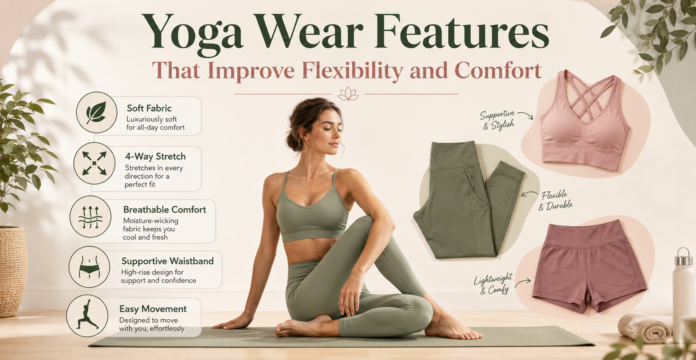
When it comes to yoga clothing, there are particular features that matter because of how much yoga involves slow movements and deep stretch positions. Regular clothing may look fine, but they can pull at the knees, tighten around the waist, and restrict at the shoulders, and be uncomfortable from the floor. The best yoga clothing moves with the body and isn’t against the body. This is why the buyers need to know the yoga wear features before buying any yoga wear for practice or for daily activities. The best features for yoga wear features make you feel the most comfortable, and the most flexible, and at the same time, the most confident.
Yoga Wear Features Basics
Yoga wear features start with fabric, fit, stretch, coverage, and construction. A full yoga wear collection can include leggings, yoga pants, yoga shorts, sports bras, crop tops, tank tops, and relaxed activewear pieces.Products may vary, but the design process should strive for the same outcome. That is ease of movement and the comfort of the end user. Potential buyers should be prompted to examine the garment while practicing every day movements such as sitting and standing as well as bending, stretching and walking. Ideal apparel for all levels of yoga practitioners should possess the same fundamental qualities. Beginners need comfort because they are still learning. Durability for regular users is required because of frequent use.
Soft Fabric for Skin Comfort
One key characteristic of yoga clothing is the fabric softness. Since yoga apparel is body hugging, clothing is made to last through multiple wears. A person is likely to sit, lay, stretch, and move through different yoga poses. If the fabric is rough or rigid, the person is definitely going to be focused on the fabric and not the yoga. Fabrics that have a soft hand feel don’t distract from the yoga and help the person remain focused. Yoga clothing should have fabric that feels light yet is not flimsy. Keeping fabric that looks and feels smooth is extremely necessary. Features of good yoga clothing can also positively affect daily life garment.
Four-Way Stretch for Better Flexibility
Four-way stretch is essential in yoga wear features because yoga practice involves movement in many different directions. Fabrics need to stretch enough to allow bending forward, opening hips, bending knees, lifting arms, and twisting the torso, or any combination of those. If your fabric only stretches in one direction, it may be pulling and/or restricting some body parts. Four-way stretch reveals more about the fabric, and encourages all-around flexibility and movement. Stretch is also very much about recovery. After the yogi is done submerging into various poses, the fabric needs to go back to its original state something similar to shape and to hold the fabric in place, and also so it doesn’t start sagging.
Waistband Support and Yoga Pants
Waistband support is key for yoga bottoms. Being able to bend over without the pants rolling down or feeling the waistband shift during stretches is important. However, too tight of a waistband can cause discomfort during longer seated poses. The right balance of being supportive enough to not shift but also not too tight is ideal in a yoga waistband.A product like wide leg yoga pants can be helpful for buyers who want relaxed movement, easier leg flow, and comfortable styling. Yoga wear features in pants should include a secure waistband, flexible fabric, clean seams, and good shape balance. Wide leg styles should not feel heavy or drag during movement. Fitted yoga bottoms should not feel restrictive.
Breathability and Moisture Comfort
Breathable fabrics improve comfort during both light and intense yoga sessions. Strong fabrics are essential to keep the garment from feeling weak and thin. Yoga can be practiced at a slow pace, and may be done in a calm environment, but yoga wear features can also be practiced in a warm classroom or (a warm) studio with flow movements that may not be done at a slow pace, and with repeated poses. When fabrics breathe, air can circulate through the garment and keep the wearer feeling fresher. When fabrics do not breathe, they can feel heavy and even sticky. Sweating during yoga can also affect comfort and the moisture of the fabric.
Coverage and Confidence During Poses
Coverage is a crucial feature of yoga apparel because it impacts a customer’s confidence. Many of the poses performed in yoga wear features involve the body moving in a variety of ways. These include bends and stretches, as well as movements that shift your body weight to a seated or even a supine position on the floor. The clothing that initially appeared decent and acceptable while standing may reveal more skin, appear unattractive, or generally uncomfortable once the body is in motion. Coverage should be checked where fabric billows, especially around the hips, thighs, waist, and chest when the fabric is stretched.A product like womens yoga shorts can work well for warm weather, studio sessions,
Sports Bra Support and Upper Body Comfort
An important consideration in women’s activewear is sports bra support in yoga dresses. A good yoga sports bra is secure but not overly tight. While yoga involves stretching, bending forward, movement and light training, the band should ideally not feel too tight and cause too much pressure. If the straps are loose, then the top can shift throughout yoga. Comfort lies in a good balance of support, stretch, and softness.A product like running sports bras shows how support-focused activewear can help buyers understand upper body comfort. yoga wear features wear features in sports bras should include smooth straps, soft elastic, breathable fabric, good coverage, and secure band support.
Simple One-Line Feature Checks
These simple checks make yoga wear features easier to review before buying or approving production.
- Check softness because yoga wear should feel smooth on the skin.
- Check stretch because the body needs free movement.
- Check recovery because fabric should return to shape.
- Check waistband support because bottoms should stay secure.
- Check coverage because confidence matters during poses.
- Check seams because rough stitching can irritate skin.
- Check breathability because yoga wear should stay comfortable.
These one-line checks help buyers understand yoga wear features without difficult garment terms. They also help brands explain product quality in a clear and simple way. A good yoga product should pass these checks in real movement, not only in product photos.
Seam Quality and Long-Term Durability
Seam quality impacts comfort and durability, affecting an important feature of yoga apparel. As yoga wear features clothing undergoes repetitive stretching, seams must withstand the movements without coming undone, rubbing, or twisting. During yoga, coarse seams may potentially damage the skin, and poor seams cause the garment to shorten its lifespan. Products with clean stitching provide a sense of finish and reliability. Recovery of the fabric, seam quality, and waistband durability impact the overall quality of yoga apparel. Durability of the yoga apparel features promotes washing and wearing without issue. Customers should be wary of the stitching in the waistbands, side seams, leg openings, straps, seams, hems, and panel seams.
Final Guide to Flexible and Comfortable Yoga Wear
The last part of our yoga wear features guide focuses on a few final features in yoga apparel. Pick clothes that are soft, flexible, supportive, breathable, and easy to move in. Your ideal yoga wear features should distract you as little as possible, but still support you during stretches, sitting, and balancing. It should also allow relaxed movement as well as not compromise the fabric’s integrity by rolling, pulling, or becoming see-through. Check out care instructions as well as stretch, recovery, comfort of seams and waistbands, and breathability and coverage of the fabric. With the right features, yoga apparel helps brands create more appealing product pages. Customers want specific features over general statements of being “high quality” or “comfortable.
FAQs
What are yoga wear features?
Yoga wear features are design details like stretch, soft fabric, support, coverage, and seam comfort.
Why is stretch important?
Stretch helps yoga clothing move with the body during bending, sitting, and full-body poses.
What makes yoga wear comfortable?
Soft fabric, secure fit, breathable material, smooth seams, and good waistband support improve comfort.
How should buyers check quality?
Buyers should check fabric, stretch recovery, stitching, coverage, waistband comfort, and care instructions.


