
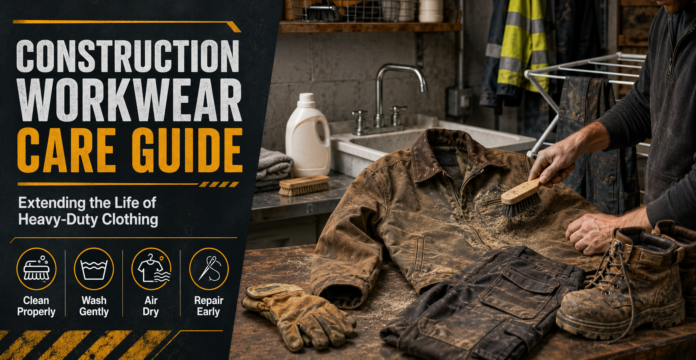
Construction clothing works harder than normal clothing because it faces dust, cement, mud, sweat, sharp surfaces, sun, rain, oil, and repeated movement. A good construction workwear care guide helps workers and companies protect their clothing before small damage becomes a big problem. Heavy-duty garments are made to last, but they still need the right washing, drying, storage, and repair routine. If workwear is washed with harsh chemicals, dried with too much heat, or stored while damp, the fabric can weaken faster. Zippers can jam, reflective tape can crack, seams can loosen, and waterproof layers can lose performance. This is why construction workwear care guide habits matter for daily use, not only for expensive uniforms. When workers treat jackets, pants, overalls, and safety vests correctly, the clothing keeps its shape, comfort, and protection for more shifts. Better care also saves money because teams do not need to replace garments too often.
Construction Workwear Care Guide for Daily Jobsite Use
A practical construction workwear care guide starts before washing. At the end of every shift, workers should shake off loose dust, brush away dried mud, empty all pockets, close zippers, fasten hook-and-loop closures, and check for cuts or loose stitching. This simple routine stops dirt from grinding into the fabric during washing. It also protects the machine from screws, nails, stones, and sharp tools left in pockets. For teams buying or planning uniforms, the general construction workwear collection is a useful place to understand how different garments are used on job sites, but care must still match each fabric label. A construction workwear care guide should also separate light dirt from heavy dirt because one muddy overall can spread grime across the whole load. Daily care may feel small, but it is the easiest way to extend garment life.
Sort Workwear Before Washing
Sorting is one of the most important steps in any construction workwear care guide because not all jobsite clothing carries the same dirt. Wash dusty shirts, heavy pants, safety vests, overalls, and outer jackets in separate groups when possible. Mud-covered garments should not be washed with bright safety clothing because dark soil can dull high-visibility colors. Oil-stained workwear should also be handled away from regular clothing, especially if the stain smells strong or feels greasy. Sorting by fabric weight is helpful too, because heavy pants and overalls can rub against lighter garments and cause faster surface wear. Teams that use many types of workwear can review a wider workwear range to plan separate care routines for jackets, pants, vests, and full-body garments. A construction workwear care guide should always make sorting easy enough for busy workers to follow after long shifts.
Pre-Treat Stains Without Damaging Fabric
A strong construction workwear care guide should explain stain care clearly because construction stains are not all the same. Mud, cement dust, grease, paint, sweat, and rust marks need different handling. Fresh mud should be allowed to dry and then brushed off before washing, because wet mud can spread deeper into the fabric. Grease should be blotted, not rubbed, so it does not move across a larger area. Mild detergent can be applied to dirty collars, cuffs, knees, pockets, and seat areas before washing. However, workers should avoid strong bleach unless the care label allows it, because bleach can damage fibers, weaken reflective tape, and fade safety colors. Cement and concrete dust should be removed as soon as possible because fine particles can feel rough inside the fabric. A construction workwear care guide should remind teams to test any stain remover on a hidden area first, especially on coated, waterproof, or hi-vis garments.
Wash With the Right Water Temperature and Cycle
Washing workwear too harshly can shorten its life, so a construction workwear care guide should keep the process simple and safe. Most heavy-duty clothing cleans well with a normal or heavy-duty cycle, but the care label should always come first. Warm water can help remove sweat and everyday dirt, while cold water is safer for bright colors, reflective trims, and some coated fabrics. Very hot water may shrink cotton blends, damage elastic parts, or weaken special finishes. Use enough detergent to clean the load, but do not use too much, because leftover soap can make fabric feel stiff and attract more dirt later. Avoid washing overloaded machines because garments need space to move and rinse properly. Turn printed or branded items inside out when possible to reduce surface rubbing. This construction workwear care guide method keeps uniforms clean without treating them so roughly that seams, pockets, and trims wear out too quickly.
Protect Jackets, Coatings, and Weather Layers
Construction jackets often carry extra features like insulation, water resistance, wind protection, reflective trims, lining, and reinforced panels. That means they need more careful handling than basic shirts. A construction workwear care guide should tell workers to close all zippers, secure flaps, and turn jackets inside out before washing when the label allows. Heavy soil should be brushed away first, especially around cuffs, hem areas, elbows, and pocket edges. Avoid fabric softener on water-resistant jackets because it can reduce surface performance and leave a coating that blocks breathability. If the garment is designed for rain or cold work, low heat or air drying is usually safer than high heat. For product planning, construction work jackets show why care matters: more panels, trims, and closures mean more parts to protect. A construction workwear care guide should treat jackets as protective gear, not just outer clothing.
Dry Workwear the Safe Way
Drying is where many workers damage strong clothing without realizing it. A construction workwear care guide should avoid the idea that high heat is always faster and better. High dryer heat can shrink fabrics, weaken elastic, crack reflective tape, damage prints, and make some coatings less effective. When possible, shake garments after washing, reshape them by hand, and hang them in a ventilated place away from direct harsh sunlight. Sunlight can help freshen clothing, but long exposure may fade dark colors and safety shades. Thick pants, overalls, and jackets need enough space to dry fully, especially around pockets, waistbands, cuffs, and seams. Never store workwear while it feels damp because trapped moisture can cause bad odor, mildew, and fabric weakness. If a dryer must be used, choose a lower heat setting and remove garments while slightly warm. This construction workwear care guide habit protects shape and finish.
Repair Small Damage Before It Spreads
Small damage becomes expensive when it is ignored. A complete construction workwear care guide should include quick repair checks after washing and before the next shift. Look closely at knees, elbows, pocket corners, crotch seams, hems, zipper areas, reflective tape edges, and tool-loop points. These areas get the most stress because workers bend, kneel, climb, carry tools, and move all day. A tiny seam opening can turn into a large tear if it catches on equipment. Loose buttons, weak snaps, and broken zipper pulls should be fixed early. Reinforcement patches can help high-wear areas, but they should not block movement or create uncomfortable hard spots. For company uniforms, repair standards should be clear so every garment still looks professional after repair. A construction workwear care guide does not only mean washing; it also means keeping the clothing safe, usable, and presentable through its full service life.
Store Workwear Correctly Between Shifts
Storage has a big effect on garment life, especially for crews working in wet, dusty, or outdoor conditions. A construction workwear care guide should tell workers not to throw dirty or damp clothing into closed bags for many hours. This traps sweat, mud, and odor inside the fabric. Instead, shake off loose dirt, hang damp garments where air can move, and keep clean workwear in a dry area away from chemicals, fuel, direct heat, and sharp tools. Jackets should be hung on strong hangers when possible so shoulders and linings keep their shape. Safety vests should be stored flat or hung loosely so reflective tape does not stay folded in the same place all the time. Pants and overalls should be folded only after they are fully dry. Good storage sounds basic, but it helps control odor, color fading, fabric stress, and hidden mildew. This construction workwear care guide step is easy to follow.
Quick Care Checklist for Construction Teams
A construction workwear care guide is easiest to follow when the team has a simple checklist. Workers do not need a complicated system; they need clear habits they can repeat.
- Shake off dust and dried mud before washing.
- Empty every pocket before putting garments in the machine.
- Close zippers, snaps, and hook-and-loop fasteners before washing.
- Sort hi-vis clothing, heavy pants, jackets, and oily garments separately.
- Pre-treat collars, cuffs, knees, and pocket areas with mild detergent.
- Avoid bleach and fabric softener unless the care label clearly allows them.
- Wash with enough room in the machine so clothing can rinse properly.
- Dry on low heat or air dry when possible.
- Repair loose seams, torn pockets, and damaged trims early.
- Store clean workwear only when it is fully dry.
This construction workwear care guide checklist is simple, but it covers the care mistakes that most often shorten the life of heavy-duty clothing.
When to Replace Construction Workwear
Even the best construction workwear care guide cannot make unsafe clothing last forever. Workwear should be replaced when damage affects safety, movement, visibility, or weather protection. If fabric is badly torn, thin at stress points, or no longer covers the body correctly, repair may not be enough. Hi-vis clothing should be replaced when the color looks dull or reflective tape no longer shines well in low light. Waterproof jackets should be reviewed when water quickly soaks through instead of rolling off the surface. Pants and overalls should be replaced if seams split again after repair or if pocket damage makes tool carrying unsafe. Odor that does not leave after proper washing can also mean deep soil buildup. A construction workwear care guide should help workers extend life, but it should never encourage using worn-out clothing when protection is reduced. Long life is useful only when the garment still performs its job.
Conclusion
A good construction workwear care guide protects money, safety, comfort, and professional appearance at the same time. Heavy-duty clothing is built for rough use, but rough care can still damage it faster than the job itself. The best routine is simple: remove loose dirt, sort garments, pre-treat stains, follow the care label, avoid harsh heat, dry fully, repair small damage early, and store clothing in a clean, dry place. When these habits become part of daily work, jackets, pants, overalls, and safety vests stay useful for longer. This construction workwear care guide also helps teams look more organized because clean and well-kept uniforms create a stronger impression on site. In the end, extending the life of construction workwear is not about doing extra work; it is about doing small care steps before damage becomes permanent.
FAQs
How often should construction workwear be washed?
Construction workwear should be washed when it becomes dirty, sweaty, smelly, or covered with jobsite dust. Daily washing may be needed for hot, muddy, or dusty work. Light-use garments can be washed after a few wears if they stay clean and dry.
Can I use bleach on construction workwear?
Bleach should only be used if the care label clearly allows it. It can fade colors, weaken fibers, and damage reflective tape. Mild detergent is usually safer for heavy-duty clothing.
How do I keep safety vests bright for longer?
Wash safety vests separately from muddy or dark garments. Avoid bleach, high heat, and rough washing. Hang them to dry when possible so reflective tape and bright fabric last longer.
Should workwear be repaired or replaced?
Repair small seam openings, loose buttons, and pocket damage early. Replace clothing when tears, faded visibility, weak fabric, or failed weather protection reduce safety. Workwear must still protect the worker properly.


