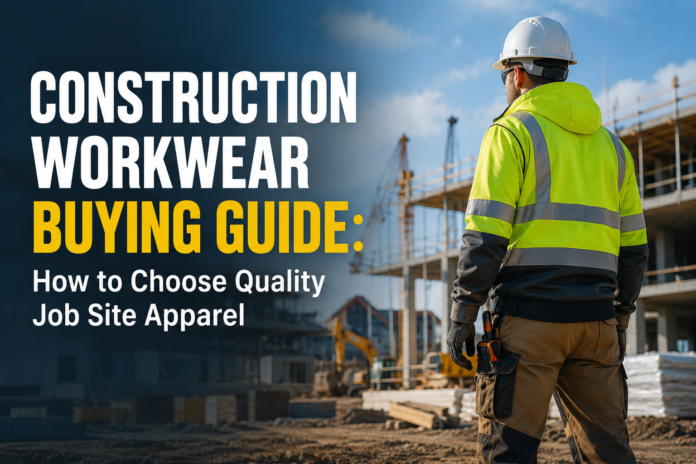
Choosing the right construction workwear is not only about looking professional on a job site. It is about safety, comfort, movement, and long-lasting value. Workers bend, lift, climb, kneel, carry tools, face rough surfaces, and work in different weather conditions. Poor workwear can tear quickly, feel too hot, restrict movement, or fail to protect the body during daily tasks. That is why this construction workwear buying guide focuses on practical choices, not confusing fashion talk. A good construction workwear buying guide should help you understand fabric strength, fit, visibility, pockets, stitching, layering, and weather protection in simple words. When you buy job site apparel, you should think about where it will be worn, how hard the work is, how long the shift is, and what hazards are around. Quality construction workwear should help workers move easily, stay safer, and feel comfortable through the full working day.
What Quality Construction Workwear Really Means
Quality construction workwear means the clothing can handle daily pressure without becoming uncomfortable or unsafe. A cheap garment may look fine at first, but it can lose shape, rip at stress points, fade fast, or feel heavy after a few washes. A strong construction workwear buying guide should always start with real job site needs. Workers need clothing that supports movement, manages sweat, protects the skin, and does not fail during hard tasks. For general job site clothing options, a broad workwear collection can help buyers compare different styles before choosing pieces for construction use. However, quality is not only about fabric thickness. It also includes strong seams, useful pockets, proper fit, safe visibility, and easy care. Good workwear should feel dependable, not delicate. If a worker feels distracted by tight sleeves, weak pants, poor ventilation, or loose safety clothing, productivity and safety can both suffer.
Construction Workwear Buying Guide for First-Time Buyers
This construction workwear buying guide is especially useful if you are buying job site apparel for the first time. Start by listing the main work conditions. Is the job mostly outdoor or indoor? Is the worker exposed to rain, dust, concrete, tools, machinery, or low-light areas? Then choose clothing based on the task, not only the price. A proper construction workwear category can make it easier to select garments made for rough site conditions instead of casual clothing that only looks similar. In a practical construction workwear buying guide, the first rule is simple: buy apparel that matches the risk level of the work. Lightweight clothing may be fine for warm indoor tasks, but outdoor building work often needs tougher layers. Heavy-duty jobs need reinforced areas, better abrasion resistance, and enough room for movement. The best construction workwear buying guide helps you avoid guessing and choose clothing with a clear purpose.
Choose Fabrics That Can Handle Rough Work
Fabric is one of the most important parts of any construction workwear buying guide because it decides how the garment feels and how long it lasts. Cotton is comfortable and breathable, but it can absorb sweat and dry slowly. Polyester blends are often stronger, dry faster, and resist shrinking better. Canvas, twill, and ripstop fabrics are useful when the job involves rough surfaces, tools, or repeated friction. Stretch blends can help workers bend, squat, and climb more easily. Still, too much stretch without enough structure can reduce durability. A balanced construction workwear buying guide should recommend fabric based on the worker’s task. For example, pants need more abrasion resistance than a light undershirt. Jackets need weather protection and strong outer fabric. Summer workwear should breathe well, while winter workwear should support layering. The right fabric is not always the thickest one. It is the fabric that gives the best mix of strength, comfort, breathability, and care.
Check Fit Before You Check Style
Fit can make or break job site comfort. Even the strongest clothing becomes a problem if it pulls at the shoulders, tightens at the knees, or hangs loose near tools and machinery. A useful construction workwear buying guide should explain that construction clothing must fit for movement, not only for standing still. Workers should be able to raise their arms, bend down, kneel, walk, climb, and lift without feeling blocked. Pants should not slide down or tighten too much when sitting or squatting. Jackets should allow room for a base layer but should not be so loose that they catch on equipment. Sleeves should cover the arms properly without covering the hands. The same rule applies to overalls, vests, shirts, and outer layers. The best construction workwear buying guide puts comfort and safe movement ahead of fashion. Good fit helps workers stay focused, move naturally, and avoid small clothing problems that become painful during long shifts.
Match Each Garment to the Job Site Task
Different construction tasks need different clothing. A person working with tools all day may need reinforced pants with practical pockets, while someone exposed to wind and light rain may need a stronger outer layer. For outdoor site protection, jackets for construction work can be useful when workers need coverage against changing weather while still moving freely. This construction workwear buying guide recommends matching each garment to the task instead of buying the same outfit for every worker. Pants should support kneeling and climbing. Overalls should protect more of the body and stay secure during active work. Shirts should manage sweat and feel comfortable under layers. Jackets should protect against wind, light rain, dust, and cold depending on the job site. Vests should improve visibility where vehicles or machinery are present. A smart construction workwear buying guide treats workwear as a system. Each piece should support the next piece and make the full outfit safer.
Do Not Ignore Visibility and Safety Details
Visibility is one of the most important safety features in construction workwear. On many job sites, workers move around vehicles, equipment, deliveries, and changing light conditions. A safety vest, reflective trim, or bright outer layer can help workers stay easier to see. This construction workwear buying guide recommends considering visibility even when the job does not seem dangerous at first. Low-light mornings, evening work, dust, rain, and shaded areas can reduce visibility quickly. In these conditions, a safety vest for construction wear can support safer movement around busy work areas. Safety details also include secure closures, strong zippers, covered seams, reinforced knees, and pockets that do not spill tools. A strong construction workwear buying guide should remind buyers that safety is not one single feature. It is a mix of visibility, fit, construction quality, fabric choice, and job-specific protection. Clothing should reduce risk, not create new problems.
Look at Stitching, Seams, and Reinforced Areas
Stitching is often ignored, but it is one of the clearest signs of quality. A construction workwear buying guide should always tell buyers to check stress points before buying. Common stress areas include knees, crotch seams, pocket corners, shoulders, elbows, cuffs, and zipper areas. If these points are weak, the garment may fail quickly during normal work. Reinforced knees are useful for workers who kneel often. Strong pocket stitching is important for workers who carry small tools, measuring tapes, gloves, or fasteners. Double stitching or bar tacks can improve strength in high-pressure areas. Smooth seams also matter because rough seams can rub the skin during long shifts. A practical construction workwear buying guide should not only ask, “Is the fabric strong?” It should also ask, “Is the garment built well?” Strong fabric with weak stitching is still a weak product. Good construction workwear should be tough in the places where workers put the most pressure.
Quick Buying Checklist for Construction Workwear
Use this construction workwear buying guide checklist before placing an order.
- Choose fabric that matches the job site conditions.
- Select a fit that allows bending, lifting, and climbing.
- Check reinforced knees, elbows, pockets, and stress points.
- Pick breathable clothing for hot or active work.
- Add warmer layers for cold or windy sites.
- Use high-visibility items where vehicles or machines are nearby.
- Avoid loose clothing that can catch on tools or equipment.
- Check zippers, buttons, seams, and pocket strength.
- Choose easy-care fabrics for frequent washing.
- Test samples before buying in bulk.
- Make sure each garment supports safety, comfort, and movement.
This simple construction workwear buying guide checklist helps buyers avoid weak clothing and focus on real job site value.
Think About Weather, Layers, and Daily Comfort
Weather can change the type of workwear a worker needs. In hot conditions, construction workwear should feel breathable and should not trap too much heat. In cold conditions, workers need layers that keep warmth close to the body without making movement difficult. In rainy or windy conditions, outer layers should protect the body while still allowing enough comfort for active work. A complete construction workwear buying guide should explain that one heavy garment is not always better than smart layering. A base layer manages sweat. A middle layer adds warmth. An outer layer protects against wind, rain, dust, or rough surfaces. Workers should be able to remove or add layers as the day changes. Comfort also affects performance. If clothing is too hot, too stiff, too heavy, or too loose, the worker may slow down or feel irritated. The best construction workwear buying guide helps buyers choose apparel that works through real shifts, not only in product photos.
Balance Price with Long-Term Value
Price matters, but the cheapest option is not always the best value. If pants rip after a few weeks, jackets lose shape, or vests fade quickly, the buyer pays more in the long run. A practical construction workwear buying guide should compare cost with durability, comfort, and safety. Good workwear may cost more at first, but it can last longer, wash better, and reduce replacement needs. Bulk buyers should ask about fabric weight, stitching quality, size range, customization options, and sample testing. Small details can save money later. For example, better pocket stitching may prevent early damage. Stronger fabric may reduce tearing. Better fit may reduce complaints from workers. This construction workwear buying guide also recommends checking whether the apparel matches the company image. Clean, consistent, and professional clothing can make a job site look more organized. Long-term value comes from workwear that protects workers, supports daily tasks, and stays useful after many wears.
Conclusion
A good construction workwear buying guide should make buying easier, not more confusing. The best job site apparel is strong, comfortable, safe, and matched to the work being done. Before choosing construction clothing, look at the work environment, fabric, fit, stitching, visibility, layering needs, and long-term value. Do not buy only because an item looks tough or has a low price. Buy because it solves real job site problems. This construction workwear buying guide shows that quality apparel helps workers move better, stay more comfortable, and work with fewer clothing issues during the day. Whether you are choosing pants, jackets, overalls, shirts, or safety vests, every piece should have a clear purpose. When construction workwear supports safety, movement, durability, and comfort together, it becomes a smart investment for workers and businesses.
FAQs
What is the most important thing in a construction workwear buying guide?
What is the most important thing in a construction workwear buying guide?
How should construction workwear fit?
Construction workwear should allow easy movement without being too loose. Workers should be able to bend, lift, kneel, climb, and reach comfortably.
Is thicker construction workwear always better?
No, thicker workwear is not always better. The best choice depends on the job, weather, fabric type, and how much movement the worker needs.
How many internal links should a construction blog use?
For a natural blog, two or three relevant internal links are often enough. Links should appear inside useful paragraphs, not forced at the end.