
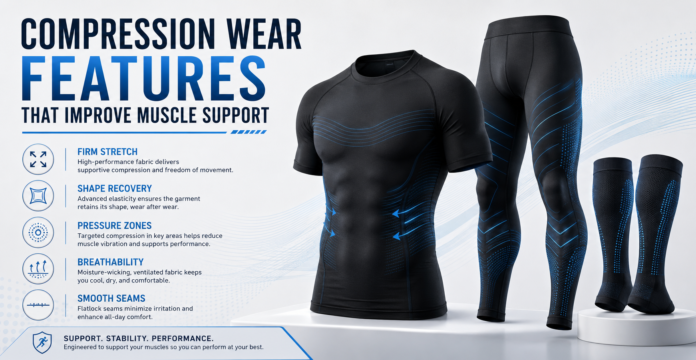
The compression wear is important, as it supports the body when moving. The garments are worn close to the body and create an airy, firm feeling. Compression clothing is used by many people for travel, daily support, and recovery. Poorly made garments may be too tight or roll down. They can also rub your skin and lose their shape. compression wear features is designed to support the muscles, without creating pain or discomfort. The buyer should consider more than just color or style. Fit, fabric, recovery, comfort, seams and fit are the real values.
Compression Wear Features Basics
Compression wear features include the fabric and design details that help a garment fit closely and perform well. A full category like the compression wear collection can include leggings, t-shirts, Hoodies, base layers, stockings and shorts. The main objective is the same for each product, which supports different parts of the body. The fabric should be firm, flexible and breathable. It also needs to feel smooth on the skin. The compression should not be felt as simple clothing. compression wear features should support daily movements by being designed with the right stretch, recovery and pressure control.
Firm Stretch Fabric
Compression clothing needs to move along with your body, so a firm stretch fabric is essential. Fabric should stretch when exercising, walking, bending over, sitting and running. It should not, however, stretch permanently. The fabric will not provide the proper support if it feels thin or loose. A good compression fabric will usually include elastic fibers to help keep the garment close to the skin. Stretch should be secure, but not painful. Firm stretch fabrics help compression wear features garments feel secure during exercise while still providing comfortable movement.
Strong Shape Recovery
Compression wear also includes shape recovery. After stretching, the fabric will return to its original form. It is crucial because compression garments will be used repeatedly. Leggings, T-shirts, and even stockings may lose their support if recovery is not good. A garment that recovers well will keep its shape after washing and movement. When buying fabric, buyers should test whether it bounces back when stretched. Compression clothing that has a good recovery will look and feel clean. If compression wear features garments are not properly recovered, they may initially look good but become unsupportive after prolonged use.
Targeted Pressure Zones
Advanced compression wear features garments have targeted pressure zones that support certain body parts. Some garments have firmer zones of fabric around the calves, thighs, waist, arms, and chest. They can provide a secure feeling during movements. These zones are great for training, fitness, or recovery. Pressure should balance out. Over-pressured people can be uncomfortable. However, too little pressure may not give enough support. A product like compression leggings often needs better support around the waist, hips, thighs, knees, and lower legs. Good zone planning improves comfort and function.
Smooth Seams for Anti-Chafe Comfort
Compression garments have smooth seams because they are close to the skin. Rough seams may cause irritation and rubbing during exercise. The garment will feel more comfortable if it has flat seams and is stitched with care. Leggings, T-shirts, and base layers are especially susceptible to this. The seams shouldn’t press into the skin, or cause discomfort as the body moves. A garment with a strong seam helps it to stretch. Before buying compression wear features clothing, buyers should inspect the side seams and crotch, shoulder, armholes hems and waistbands.
7. Breathability and Sweat Control
The ability to breathe is a very useful feature of compression clothing, as tight-fitting garments tend to trap heat. Under the fabric, sweat and heat from your body can build up during training. Material that breathes allows for more air to flow and helps the wearer stay fresh. A moisture-controlling fabric will also move sweat from your skin and reduce sticky irritation. A product like a compression t-shirt should feel breathable because it sits close to the chest, shoulders, and back. Good sweat control helps compression garments work better during gym sessions, running, travel, and long daily wear.
Secure Waistbands and Openings
Compression wear should have a secure waistband and opening. This helps the garment to stay in place. Leggings shouldn’t roll down when doing squats or running. T-shirts shouldn’t pull on the sleeves or neck. Stockings shouldn’t cut into skin. Base layers and hoodies should be able to move without twisting. The waistband of a good garment should be firm, but also comfortable. The cuffs and the openings of garments must be held gently, without being squeezed too hard. Poorly designed areas can cause the garment to slide, bunch or be uncomfortable. Improved edges make compression clothing feel more stable.
Simple One-Line Feature Checks
These checks make compression wear features easier to compare before buying or approving production.
- Check stretch because compression wear must move with the body.
- Check recovery because the fabric should return to shape.
- Check pressure zones because support should feel balanced.
- Check seams because rough stitching can cause rubbing.
- Check breathability because close-fit fabric can trap heat.
- Check waistbands because the garment should stay in place.
- Check care needs because elastic fibers require gentle handling.
These one-line checks help buyers understand compression support without difficult textile terms.
Lower-Leg and Daily Support Details
Compression wear is also important for lower-leg support. Base layers, stockings and leggings should fit snugly around calves, knees and ankles without causing pain. A product like compression stockings should be checked carefully for fit, stretch, recovery, and opening comfort. The garment should stay in place during walking, travel, standing, or light activity. It should not bunch behind the knees or dig into the skin. Good lower-leg support depends on balanced pressure, smooth fabric, and strong elastic recovery. These details improve both comfort and wearability.
Final Guide to Better Muscle Support
Choose garments that are comfortable and support your muscles. Customers should consider fabric strength, stretch recovery zones, seam comfort and breathability. They should also check the openings, support of the waistband, openings and care instructions. It should be firm, but not painful. It should be able to move with your body, regulate sweat, remain in place and maintain its shape even after washing. These details should be explained clearly by brands because customers are interested in knowing why one garment is better than another. A guide to compression wear features can improve product pages, build buyer trust and help customers make more confident choices when choosing supportive garments.
FAQs
What are compression wear features?
Compression wear features are fabric and design details that improve support, stretch, recovery, breathability, comfort, and garment performance.
Which compression wear feature improves muscle support most?
Firm stretch fabric, strong recovery, targeted pressure zones, and secure fit are some of the most important features for muscle support.
Why is shape recovery important in compression wear?
Shape recovery is important because compression garments must return to their original fit after stretching, movement, and washing.
How should compression wear feel on the body?
Compression wear should feel firm, smooth, and supportive, but it should not feel painful, restrictive, or difficult to move in.


