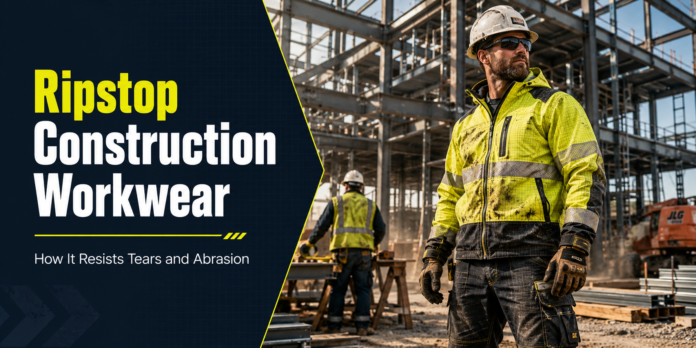
Ripstop construction workwear is made for people who work in rough places where clothes face pulling, rubbing, dust, sharp edges, and daily movement. On a construction site, normal clothing can tear when it rubs against timber, metal, bricks, tools, scaffolding, or concrete blocks. Ripstop fabric helps reduce this problem because it is woven with stronger threads in a small square pattern. These stronger threads help stop small cuts from spreading into large tears. This makes ripstop construction workwear useful for builders, site workers, electricians, plumbers, road workers, warehouse teams, and outdoor laborers. It is not magic fabric, and it can still get damaged under heavy force, but it gives better tear control than many plain woven fabrics. For workers, this means longer-lasting clothing, better comfort, fewer sudden rips, and a more professional look during hard work.
What Makes Ripstop Construction Workwear Different?
Ripstop construction workwear is different because the fabric is designed to fight tearing before it becomes a bigger problem. In regular fabric, one small cut can move along the yarns and open quickly. In ripstop fabric, stronger yarns are placed at regular spaces across the cloth, usually in a grid shape. This grid acts like a stop line. When the fabric gets a small cut, the stronger yarns help slow the tear and keep it from running too far. That is why ripstop construction workwear is popular in jobs where clothes are pulled, stretched, scraped, or rubbed many times a day. It can be used in jackets, pants, overalls, vests, and uniforms. The fabric may feel light, but it can still be tough. This balance matters because workers need clothing that protects them without feeling heavy, stiff, or uncomfortable during long shifts.
Why Tear Resistance Matters on Construction Sites
Tear resistance matters because construction work is full of small risks that can damage clothing fast. A worker may brush against rough brick, kneel on hard floors, carry sharp-edged materials, or climb through narrow spaces. These actions create pressure on fabric. When workwear tears too easily, the worker may feel uncomfortable, look less professional, and need replacement clothing sooner. Good ripstop construction workwear helps reduce waste because garments can stay useful for longer. For teams buying uniforms, this can also lower repeat buying costs. Companies that manage many workers often look at durable workwear options because strong garments support daily use and keep the team looking organized. The key point is simple: clothing on a jobsite should not fail after light rubbing or a small snag. Ripstop fabric gives workers a stronger base for daily tasks.
How Ripstop Fabric Resists Tears
Ripstop fabric resists tears because its structure is stronger than simple plain fabric. The small square pattern is not only for looks. It is part of the fabric’s strength system. When a tear starts, the reinforced threads meet the damaged area and help control it. This does not mean the fabric cannot rip at all. If the force is very strong, any fabric can break. However, ripstop construction workwear is made to reduce the chance of a small rip becoming a large opening. This is very important for pants, knees, elbows, pockets, and shoulder areas because these parts face more stress during work. Some ripstop fabrics are made from cotton blends, polyester blends, or nylon blends. Cotton can feel softer and breathable, while polyester or nylon can add strength, faster drying, and better abrasion control.
Abrasion Resistance and Daily Rubbing
Abrasion resistance means how well fabric handles rubbing. On construction sites, rubbing happens all day. Pants rub against knees, ladders, concrete floors, tool belts, and machinery. Jackets rub against walls, wood, metal, and equipment. If fabric has poor abrasion resistance, it becomes thin, fuzzy, weak, and then it tears. Ripstop construction workwear helps because the reinforced weave adds structure to the fabric. For example, workers who wear construction workwear often need clothing that can handle repeated movement without looking worn too soon. Abrasion resistance is not only about strength; it is also about comfort and appearance. A garment that holds its shape makes the worker feel more confident and keeps the uniform looking clean and professional. This matters for both safety and brand image on a busy jobsite.
Best Areas for Ripstop Construction Workwear
Ripstop construction workwear is most useful in areas where fabric faces the highest stress. Pants are one of the best examples because workers bend, kneel, climb, and carry tools throughout the day. Knee areas, thigh areas, and pocket corners can wear out quickly in weak fabrics. Jackets also benefit from ripstop fabric because sleeves, elbows, and shoulders rub against surfaces during lifting, reaching, and carrying. Overalls can be even better with ripstop because they cover more of the body and face more contact with tools and materials. Safety vests may not always need heavy ripstop fabric, but stronger fabric can help when vests are used daily in outdoor or rough job areas. The goal is not to make every garment heavy. The goal is to place strength where the worker needs it most.
Comfort Still Matters in Tough Workwear
Strong clothing is useful, but comfort is just as important. Workers wear construction clothing for long hours, so ripstop construction workwear must allow movement, airflow, and easy body motion. If the fabric is too stiff, workers may feel tired and restricted. If it is too heavy, it may feel hot, especially in warm weather. A good ripstop garment balances strength with comfort. It should allow bending, walking, lifting, climbing, and stretching without pulling too much on the body. Some workwear uses gussets, elastic panels, adjustable waists, breathable linings, or articulated knees to improve movement. Ripstop construction workwear becomes more useful when fabric strength is matched with smart garment design. A strong fabric in a poor fit will still feel bad. A good fit makes durable clothing easier to wear every day.
Choosing Jackets, Pants, and Overalls
When choosing ripstop construction workwear, the garment type should match the job. Jackets are better for outdoor workers, cold weather, wind, and upper-body protection. Pants are important for workers who kneel, bend, climb, and carry tools. Overalls are useful when workers need full-body coverage and extra protection over regular clothing. For example, a strong construction work jacket can help protect the upper body while still keeping the worker neat and ready for site tasks. Pants and overalls should have strong stitching, useful pockets, and reinforced stress points. The best choice depends on the worker’s role, weather, safety needs, and daily movement. A road worker, warehouse loader, roofer, and electrician may all need different garment features, even if they all benefit from ripstop fabric.
Key Features to Check Before Buying
Before buying ripstop construction workwear, check the fabric weight, weave strength, stitching quality, pocket placement, knee reinforcement, breathability, fit, and wash care.
- Choose fabric that feels strong but not too stiff.
- Check that seams are neat, tight, and reinforced.
- Look for pockets that are useful but not bulky.
- Pick pants with strong knees if workers kneel often.
- Choose jackets with easy arm movement.
- Make sure the garment is not too hot for the work climate.
- Check whether the workwear can handle regular washing.
- Choose sizes that allow bending and lifting.
- Avoid weak zippers, loose buttons, and poor stitching.
- Select ripstop construction workwear based on real jobsite tasks, not only appearance.
Common Mistakes When Choosing Ripstop Workwear
One common mistake is choosing ripstop construction workwear only because it looks tough. Fabric appearance is not enough. Buyers should check stitching, fit, pocket strength, and comfort. Another mistake is choosing fabric that is too heavy for the weather. Heavy clothing may last longer in some areas, but it can make workers hot and slow during long shifts. A third mistake is ignoring job type. A worker who climbs scaffolding may need flexible pants, while a worker standing near traffic may need high-visibility features. Some buyers also forget wash care. If garments shrink, fade, or lose shape after washing, they become less useful. Good ripstop construction workwear should match the real work environment. It should support safety, movement, durability, and daily comfort at the same time.
Maintenance Tips for Longer Life
Ripstop construction workwear lasts longer when it is washed and stored properly. Workers should avoid washing it with sharp items, loose tools, or heavy metal parts because these can damage the fabric. Very strong detergents may also weaken some fabrics over time, especially if used too often. Washing in the right water temperature helps protect color, shape, and stitching. Drying should also be done with care because very high heat can affect some synthetic blends. Small cuts should be repaired early before they grow larger. Pockets should not be overloaded every day because extra weight can stress the stitching. When teams care for their workwear properly, ripstop construction workwear can stay stronger, cleaner, and more comfortable for longer use.
Conclusion
Ripstop construction workwear is better for many construction jobs because it gives stronger tear control, better abrasion resistance, and longer daily use than many standard fabrics. It is especially useful for workers who kneel, climb, carry tools, move around rough surfaces, or work in outdoor conditions. The strong grid weave helps stop small cuts from spreading, while good design features help workers stay comfortable. However, the best choice is not only about fabric strength. Buyers should also check fit, stitching, breathability, garment type, pocket design, and washing needs. If you want workwear that can handle hard jobs without feeling too heavy, ripstop construction workwear is a smart option for jackets, pants, overalls, and other jobsite clothing.
FAQs
What is ripstop construction workwear?
Ripstop construction workwear is jobsite clothing made with a reinforced woven fabric that helps stop small tears from spreading. It is used for tough work clothing such as pants, jackets, overalls, and uniforms.
Is ripstop fabric fully tear-proof?
No, ripstop fabric is not fully tear-proof. It can still tear under strong force, sharp cuts, or heavy damage. However, ripstop construction workwear helps control small tears better than many regular fabrics.
Is ripstop construction workwear comfortable?
Yes, ripstop construction workwear can be comfortable if the fabric weight, fit, and garment design are right. Good workwear should allow bending, lifting, walking, and climbing without feeling too stiff.
Which workers need ripstop construction workwear most?
Builders, road workers, electricians, plumbers, warehouse teams, outdoor workers, and site laborers can benefit from ripstop construction workwear because their clothing faces rubbing, pulling, and rough surfaces every day.