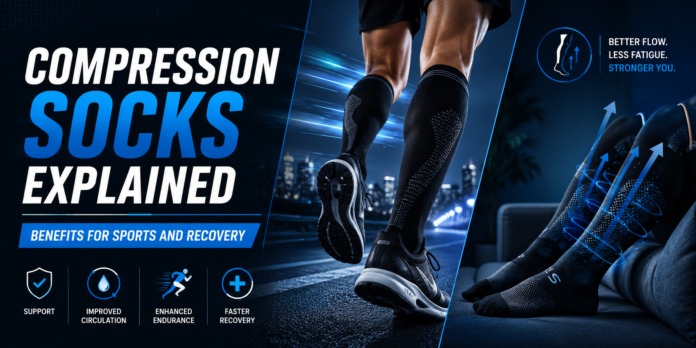
Compression socks are tight-fitting socks designed to apply gentle pressure around the feet, ankles, and lower legs. They are used by athletes, runners, gym users, travelers, workers, and people who spend long hours standing. In sports, compression socks may help the legs feel supported during movement. During recovery, they may help reduce heaviness, swelling, and post-workout discomfort. The main idea is simple: controlled pressure helps support blood movement in the lower legs, especially when the muscles are tired. Compression socks are not magic, and they do not replace training, rest, hydration, stretching, or medical care. However, when they fit well and are used correctly, they can be a useful part of a sports and recovery routine.
What Are Compression Socks?
Compression socks are special socks made with elastic fibers that create a snug feeling around the lower leg. They are usually tighter near the ankle and slightly less tight higher up the leg. This design is called graduated compression. It helps support natural blood flow from the lower legs back toward the heart. Regular socks mainly cover the foot and absorb sweat, but compression socks are built to give structured support. Many athletes use them during running, cycling, football, gym training, hiking, and long travel days. People also use them after exercise when their legs feel heavy or tired. If you already wear performance clothing, you can explore supportive training basics through activewear options because compression socks often work best when paired with breathable, flexible sportswear.
Why Compression Socks Matter in Sports
Compression socks matter in sports because the lower legs work hard during almost every movement. Running, jumping, sprinting, and changing direction put pressure on the calves, ankles, and feet. When muscles repeat the same movement again and again, they can feel tired, tight, or heavy. Compression socks give a stable feeling around the calf and ankle, which may help athletes feel more controlled during activity. They may also reduce small muscle vibrations during impact sports, especially in running or court games. This does not mean compression socks will automatically make someone faster, stronger, or more skilled. Training quality still matters most. But for many athletes, the steady support can make exercise feel more comfortable, especially during long sessions, endurance sports, or repeated workouts in the same week.
Compression Socks Benefits for Recovery
Compression socks are often used after training because recovery is when the body repairs itself. After a hard workout, the legs may feel sore because muscles have been stressed, fluids may build up, and circulation may slow when the body rests. Wearing compression socks after exercise may help some people feel less leg heaviness and stiffness. They can be useful after long runs, gym leg days, football matches, hiking, cycling, or standing all day after training. They are not a full recovery plan by themselves. Good sleep, water, protein, light movement, and rest days are still important. But compression socks can be a simple recovery tool for people who want extra lower-leg support. For people comparing different support garments, compression wear can help explain how compression is used across sports clothing.
How Compression Socks Support Blood Flow
Compression socks support blood flow by applying gentle pressure to the lower leg. The legs have to move blood upward against gravity, and this can become harder during long sitting, long standing, or tired muscles. Graduated compression gives firmer support near the ankle, where fluid often collects first. This pressure may help reduce swelling and make the legs feel lighter. In sports, better lower-leg comfort may help athletes stay consistent with training. In recovery, it may help the legs feel fresher the next day. However, compression must not feel painful, sharp, or numb. A sock that is too tight can cause discomfort instead of support. The best compression socks feel firm but wearable, and they should not leave deep marks, cause tingling, or make the feet cold.
One Simple Buying Checklist
When buying compression socks, do not choose only by color or style. The right pair should match your activity, size, comfort level, and recovery needs.
- Choose the correct size based on foot size and calf measurement.
- Pick breathable fabric for sports and warm weather.
- Choose graduated compression for better lower-leg support.
- Avoid socks that feel painful, numb, or too tight.
- Use lighter compression for general sports comfort.
- Ask a professional before using strong medical compression.
- Check the toe, heel, and calf stitching for comfort.
- Wash them gently so the elastic support lasts longer.
- Replace them when they become loose or stretched out.
- Wear them consistently if you want to judge real comfort.
Compression Socks vs Regular Sports Socks
Compression socks are different from regular sports socks because they are made for support, not just coverage. Regular sports socks usually focus on sweat control, cushioning, and preventing rubbing inside shoes. Compression socks also do those things, but their main feature is controlled pressure. This is why they feel tighter than normal socks. A runner may wear regular socks for short easy runs but choose compression socks for longer runs, recovery, or travel after a race. A gym user may wear them after leg training to reduce the heavy-leg feeling. A football player may use them when calves feel tired after repeated sprints. For people who need stronger lower-leg coverage, compression stockings are another related option, but the right choice depends on use, comfort, and support level.
When Should Athletes Wear Compression Socks?
Athletes can wear compression socks before, during, or after exercise, depending on their goal. Before exercise, some people wear them to feel supported and ready. During exercise, runners and players may wear them for calf stability and comfort. After exercise, many people use compression socks during recovery, especially after long sessions or competitions. They may also be helpful during travel because sitting for many hours can make the legs feel swollen or stiff. The timing depends on the person. Some athletes feel better wearing them during training, while others prefer using them only after workouts. The best method is to test them in normal training first, not on race day or match day. This helps you understand whether they feel useful, distracting, too warm, or comfortable.
Who Should Be Careful With Compression Socks?
Compression socks are safe for many people, but they are not right for everyone. People with serious circulation problems, suspected blood clots, severe artery disease, fragile skin, nerve problems, or unexplained leg swelling should speak to a doctor before using them. Strong compression should never be used casually without guidance. If compression socks cause pain, numbness, skin color change, cold toes, burning, or deep marks, they should be removed. Comfort is important because compression should support the leg, not block normal movement or blood flow. Athletes should also avoid thinking that compression socks can hide an injury. If calf pain is sharp, sudden, or one-sided, it should be checked properly. Compression socks are a support tool, not a cure for injury, disease, or poor training habits.
How to Use Compression Socks Properly
Compression socks work best when they are worn correctly. Put them on smoothly so there are no folds, twists, or tight rolls around the ankle or calf. A folded top band can create too much pressure in one place. The heel should sit in the correct position, and the sock should feel even from foot to calf. Do not pull them so high that the fabric becomes overstretched. After training, they can be worn for a few hours during recovery, depending on comfort. They should be washed after use, especially after sweaty sports sessions. Use gentle washing and avoid high heat because heat can damage elastic fibers. A good pair should keep its shape after repeated use. If compression socks become loose, stretched, or uneven, they will not give proper support.
Common Mistakes to Avoid
The most common mistake is buying compression socks without checking size. If the sock is too loose, it will not support the leg properly. If it is too tight, it can feel painful and uncomfortable. Another mistake is using medical-grade compression without advice. Sports compression and medical compression are not always the same. Some people also expect compression socks to remove soreness completely, but recovery depends on many things, including sleep, food, hydration, and training load. Wearing dirty socks again and again is also a bad habit because sweat and bacteria can irritate skin. Some athletes wear them for the first time during an important race, which is risky because new gear can rub or distract. Compression socks should be tested during normal training before serious use.
Conclusion
Compression socks can be a helpful choice for sports and recovery when they fit well, feel comfortable, and match the user’s activity level. They may support the lower legs, reduce heavy-leg feelings, and help athletes feel more comfortable after hard training. They are especially useful for running, gym recovery, long standing days, travel, and repeated sports sessions. However, compression socks should be used wisely. They do not replace proper training, rest, stretching, hydration, nutrition, or medical care. The safest approach is to choose the right size, start with comfortable compression, and stop using them if they cause pain or numbness. For everyday athletes, compression socks are best seen as a simple support tool that can make movement and recovery feel easier.
FAQs
Are compression socks good for sports?
Yes, compression socks can be good for sports because they support the lower legs and may help reduce heaviness during or after activity. They are commonly used in running, gym training, cycling, football, hiking, and long-distance sports. However, they do not guarantee better speed or performance.
Are compression socks good for sports?
Compression socks may help some people feel less soreness, swelling, or leg heaviness after exercise. They are most useful after long workouts, leg training, endurance sports, or matches. They should be used along with sleep, hydration, food, and rest.
How long should I wear compression socks after exercise?
Many people wear compression socks for a few hours after exercise, depending on comfort. They should not cause pain, numbness, cold toes, or deep pressure marks. If they feel uncomfortable, remove them and check the size.
Can I wear compression socks every day?
You can wear compression socks daily if they are comfortable and suitable for your needs. For normal sports use, light or moderate compression is common. If you need strong medical compression or have circulation problems, ask a healthcare professional first.