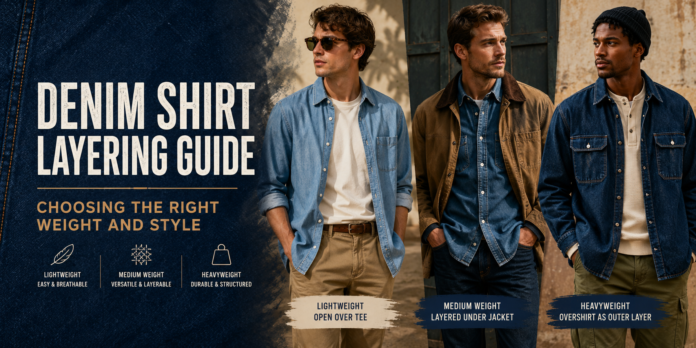
A denim shirt layering guide helps you choose the right denim shirt for each season, outfit, and comfort level. Denim shirts are easy to wear because they sit between casual and smart style. They can work as a light top layer, a middle layer under a jacket, or a strong base piece under knitwear. The main thing is to pick the right fabric weight, fit, color, and shirt style. A thin denim shirt feels better in warm weather, while a heavier denim shirt gives more shape and warmth in cooler months. This denim shirt layering guide will help you understand how to layer without looking bulky, stiff, or messy. The goal is simple: your denim shirt should look natural, feel comfortable, and match the rest of your clothes.
Why Denim Shirt Weight Matters
Weight is one of the most important parts of any denim shirt layering guide because it decides how the shirt feels on your body. A lightweight denim shirt is soft, breathable, and easier to tuck or wear under another layer. It is best for spring, summer evenings, and indoor outfits. A medium-weight denim shirt is more balanced. It gives structure but does not feel too heavy, so it works well for most daily outfits. A heavyweight denim shirt feels stronger and warmer, but it can become bulky if you wear it under tight jackets. When choosing from a good denim shirts collection, look at the fabric feel, collar shape, sleeve comfort, and how the shirt sits on the shoulders. The right weight makes layering easier and helps the outfit look clean.
Denim Shirt Layering Guide for Daily Outfits
This denim shirt layering guide is useful for daily outfits because denim shirts can be styled in many simple ways. For a clean everyday look, wear a denim shirt over a plain white or black T-shirt. Keep the shirt open if you want a relaxed style, or button it halfway for a smarter look. If the weather is cold, wear the denim shirt under a casual jacket or wool coat. The denim should not fight with the outer layer, so avoid too many thick pieces at once. A medium-blue denim shirt works with jeans, chinos, cargo pants, and casual trousers. A dark denim shirt looks more polished and can be worn with boots or clean sneakers. The best denim shirt layering guide always starts with balance: one strong denim piece, one simple base layer, and one clean outer layer.
Lightweight Denim Shirts for Warm Weather
A lightweight denim shirt is best when you want the denim look without extra heat. This type of shirt is soft, easy to move in, and better for warmer days. In summer, wear it open over a cotton T-shirt, or button it and roll the sleeves for a neat casual look. A short-sleeve style also works well when you want less fabric on the arms but still want the denim texture. For hot days, a short sleeve denim shirt can be layered over a vest or plain tee without feeling too heavy. This denim shirt layering guide recommends light blue, washed blue, and faded tones for warm weather because they look fresh and easy. Avoid very thick denim in summer because it can trap heat and make the outfit uncomfortable.
Medium-Weight Denim Shirts for All Seasons
A medium-weight denim shirt is the most useful choice for many people. It is not too thin and not too heavy, so it can work in spring, autumn, mild winter days, and cool summer nights. This is why every denim shirt layering guide should include medium-weight denim as the safest option. You can wear it closed like a normal shirt, open like a shirt jacket, or under a bomber jacket, field jacket, or blazer-style casual coat. Medium-weight denim also keeps its shape better than very thin denim, so the collar, chest, and cuffs look cleaner. If you want one denim shirt for many outfits, choose a medium-blue or dark-blue shade. It gives enough texture without looking too loud. It also works with light pants, dark pants, and even black jeans if the shades are different.
Heavyweight Denim Shirts for Cooler Days
A heavyweight denim shirt is better for cooler weather because it feels stronger, thicker, and more protective. It can work like an overshirt when worn over a thermal shirt, long-sleeve tee, or thin sweatshirt. In this denim shirt layering guide, heavyweight denim is best used as an outer layer, not as a tight inner layer. If you wear it under a jacket, the jacket should be roomy enough in the shoulders and sleeves. Heavy denim can look stylish with work boots, straight-leg jeans, canvas trousers, or cargo pants. It gives a rugged look, but it should still fit well. The shirt should not pull at the chest or bunch under the arms. A heavyweight denim shirt is a strong choice when you want warmth, durability, and a more structured outfit.
Button-Down Denim Shirts for Smart Casual Looks
A button-down denim shirt is a good choice when you want denim to look cleaner and more polished. This style works well for smart casual outfits because the collar stays neat and the front looks more structured. You can wear it under a light blazer, a cotton jacket, or a plain crew-neck sweater. In this denim shirt layering guide, a denim button down shirt is best for people who want a shirt that can move from casual daytime wear to a relaxed evening look. Choose a darker wash if you want a smarter outfit. Choose a softer washed tone if you want a relaxed weekend style. Keep the rest of the outfit simple, such as plain chinos, dark jeans, or clean sneakers, so the denim shirt remains the main piece.
Oversized Denim Shirts for Relaxed Layering
Oversized denim shirts are popular because they feel relaxed and give more room for layering. They work best when worn open over a T-shirt, hoodie, or fitted long-sleeve top. This denim shirt layering guide recommends oversized denim when the rest of the outfit is more controlled. For example, wear an oversized denim shirt with straight or slim pants so the full outfit does not look too wide. The shoulder drop should look intentional, not sloppy. The sleeves can be rolled if they feel too long. Oversized denim shirts are also good for streetwear-inspired outfits, especially with plain tees, cargo pants, and sneakers. However, avoid wearing a very oversized denim shirt under a tight jacket because it can bunch up and feel uncomfortable. Let the oversized shirt act as the top layer whenever possible.
Choosing Colors for Better Layering
Color makes a big difference in how clean your layers look. A light-blue denim shirt feels casual, fresh, and easy for daytime outfits. A mid-blue denim shirt is the most flexible because it works with many pants and outer layers. A dark-blue denim shirt looks more serious and can be used for smart casual outfits. A black denim shirt gives a modern look and works well with grey, white, olive, beige, and black clothing. This denim shirt layering guide suggests avoiding denim shades that are too close when wearing denim on denim. If your shirt is light blue, wear darker jeans or neutral trousers. If your shirt is dark, wear lighter pants or a different texture. The outfit should show contrast. Good contrast makes each layer easy to see and stops the outfit from looking flat.
Built-In Points for Quick Denim Shirt Layering
This denim shirt layering guide becomes easier when you follow a few simple rules.
- Wear thin denim under jackets and heavy denim over T-shirts.
- Keep one layer fitted if the denim shirt is oversized.
- Use light denim for warm days and dark denim for smarter outfits.
- Avoid wearing too many thick layers at the same time.
- Roll the sleeves when the outfit feels too stiff.
- Choose plain base layers so the denim texture stands out.
- Use contrast when wearing denim with denim.
- Keep the collar neat when layering under sweaters or jackets.
- Leave the shirt open for relaxed outfits and button it for cleaner looks.
- Pick comfort first because good layering should feel easy all day.
Common Denim Shirt Layering Mistakes
Many people make layering mistakes because they focus only on the shirt and forget the full outfit. One common mistake is wearing a heavyweight denim shirt under a slim jacket. This makes the arms feel tight and creates wrinkles. Another mistake is choosing the same denim shade for both shirt and jeans, which can make the outfit look dull. A better denim shirt layering guide always uses contrast, comfort, and clean shape. Another mistake is wearing loud prints under a denim shirt when the denim already has strong texture. Plain white, black, grey, navy, or beige layers usually work better. Some people also button every layer too tightly, which makes the outfit look stiff. Leave space where needed. A relaxed denim shirt should look easy, not forced. The best outfits look simple because every layer has a clear purpose.
Conclusion
A good denim shirt layering guide helps you dress better without making the outfit complicated. The main rule is to match the shirt weight with the weather and the layers around it. Lightweight denim is best for warm days, medium-weight denim is the most flexible, and heavyweight denim works better as an outer layer in cool weather. Style also matters. Button-down denim shirts look cleaner, oversized denim shirts feel relaxed, and short-sleeve denim shirts work well in summer. Keep your base layers simple, choose colors with contrast, and avoid too much bulk. When the denim shirt fits well and feels comfortable, it becomes one of the easiest pieces to wear in many seasons. This denim shirt layering guide is about simple choices that make your outfit look natural, clean, and useful.
FAQs
What is the best denim shirt weight for layering?
Medium-weight denim is the best choice for most people. It is light enough to wear under jackets and strong enough to wear as a top layer. This makes it useful in many seasons.
Can I wear a denim shirt with jeans?
Yes, you can wear a denim shirt with jeans, but the colors should not be exactly the same. A light denim shirt works better with dark jeans, and a dark denim shirt works better with lighter pants.
Is a denim shirt good for summer layering?
Yes, a lightweight or short-sleeve denim shirt is good for summer layering. Wear it open over a plain T-shirt and choose softer, lighter denim so the outfit feels cool.
How do I make a denim shirt look smart casual?
Choose a dark or clean button-down denim shirt. Wear it with chinos, dark trousers, a simple jacket, or clean shoes. Keep the fit neat and avoid too many bold layers.