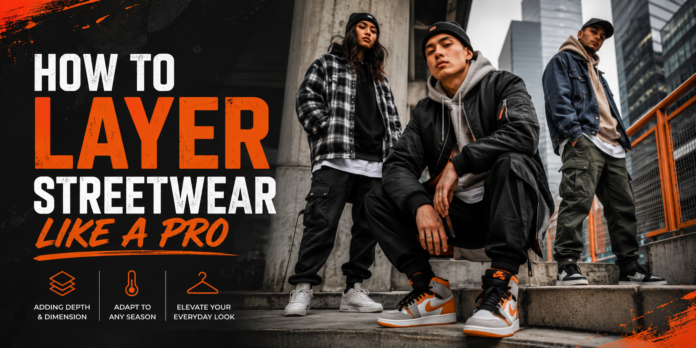
Layering is one of those things that looks effortless when done right — but takes real thought to pull off consistently. Anyone can throw on a hoodie over a tee, but knowing how to layer streetwear in a way that looks intentional, balanced, and genuinely stylish is a skill worth developing.
The good news? Once you understand the core principles behind streetwear layering, it becomes second nature. You stop second-guessing your outfits and start building looks that feel cohesive, creative, and completely your own. Let’s break it all down.
What Does Layering Streetwear Actually Mean?
Layering in streetwear isn’t just about staying warm. It’s a deliberate styling technique — using multiple garments together to create visual depth, textural contrast, and a more interesting overall silhouette than any single piece could deliver on its own.
Understanding how to layer streetwear means thinking about your outfit as a system rather than a collection of individual pieces. Each layer serves a purpose — either functional, visual, or both. When every layer is chosen deliberately, the result looks put-together and confident. When layers are thrown together randomly, even expensive pieces can look sloppy.
Why It Matters — Key Benefits
Mastering streetwear layering unlocks a genuinely impressive range of styling benefits. Here’s why it’s worth learning properly:
- More outfits from fewer pieces — Layering multiplies the number of distinct outfits you can build from the same core wardrobe pieces.
- Year-round wearability — Layers adapt your wardrobe to changing temperatures without requiring a completely different set of clothes each season.
- Visual depth and interest — Layered outfits look more considered and dynamic than single-piece combinations — even when using simple individual pieces.
- Creative self-expression — Layering gives you more opportunities to combine colors, textures, and silhouettes in ways that reflect your personal style.
- Practical temperature regulation — Adding and removing layers throughout the day keeps you comfortable without sacrificing your look.
- Stronger personal style identity — Consistent, thoughtful layering builds a recognizable aesthetic that feels distinctly yours over time.
- Elevated everyday outfits — Even the most basic pieces look more intentional and styled when incorporated into a well-executed layered look.
Start With the Right Foundation
Before thinking about anything else, the foundation layer is everything. This is the piece closest to your body — and it sets the tone for everything that goes on top. In streetwear, the foundation is usually a simple graphic tee, a plain cotton tee in a neutral color, or a fitted long-sleeve shirt.
The foundation layer should be relatively simple. Bold graphics and strong colors can work at this level, but they need to be considered alongside everything going on top. A plain white, black, or grey tee is the most universally flexible foundation because it works under virtually any combination of layers without creating color or pattern conflicts.
Fit matters at this stage too. The foundation doesn’t need to be skin-tight — but it should be closer fitting than the layers going over it. This creates the visual contrast between layers that makes the overall look feel intentional rather than accidental.
The Middle Layer: Where the Personality Lives
If the foundation is the blank canvas, the middle layer is where how to layer streetwear really starts to express itself. This is typically the most visually dominant layer — the hoodie, the flannel shirt, the zip-up, the overshirt, or the crewneck sweatshirt that defines the overall character of the outfit.
In streetwear, the middle layer is often oversized — deliberately generous in its proportions relative to both the foundation beneath and any outer layer on top. This deliberate size contrast between layers is a core principle of streetwear layering — it creates the kind of depth and dimension that makes an outfit look carefully constructed rather than casually assembled.
Don’t be afraid to let the middle layer do the talking here. A bold graphic hoodie, a heavyweight crewneck in a strong color, or a textured zip-up in an interesting fabric can all serve as the centerpiece of the layered look. Keep the foundation and outer layers simpler when the middle layer is making a strong statement.
The Outer Layer: Finishing the Look
The outer layer is what ties the entire streetwear layering system together. In colder weather, this might be a puffer jacket, a coach jacket, an oversized denim jacket, or a technical outerwear piece. In milder conditions, an unbuttoned flannel shirt or an open overshirt can serve as a lightweight outer layer that adds visual interest without significant warmth.
The key principle for the outer layer in how to layer streetwear is proportion awareness. If the middle layer is already generous and oversized, the outer layer needs to be large enough to sit comfortably on top without bunching or pulling — but not so oversized that the entire outfit becomes shapeless and unreadable as a deliberate style choice.
Coach jackets and bomber jackets work particularly well as streetwear outer layers because their structured cut adds definition and shape to an otherwise relaxed, oversized silhouette beneath. Puffer jackets create a different kind of volume — bold, statement-making, and visually dominant — which works best when the layers beneath are kept relatively simple and understated.
Proportion Is Everything
If there’s one principle that separates people who genuinely know how to layer streetwear from those who are still figuring it out, it’s proportion. Getting the relationship between the sizes of different layers right is what makes a layered outfit look intentional rather than accidental.
The most reliable approach in streetwear layering is graduating the silhouette from fitted to oversized as you add layers. A fitted base, a slightly roomier middle layer, and a generous outer layer creates a visually coherent progression that looks deliberately styled. Alternatively, an oversized middle layer worn under a structured outer layer creates an interesting contrast that can work just as effectively when the pieces are chosen carefully.
What almost never works is wearing everything at the same size — multiple fitted layers or multiple equally oversized layers worn together without any variation tends to read as either too tight or too shapeless, depending on the direction. Variety in proportion is the key.
Bottoms Matter More Than You Think
A common mistake people make when learning how to layer streetwear is putting all their thought into the upper body and treating the bottom half as an afterthought. But the bottoms you choose have a massive impact on how the entire layered look comes together.
Baggy jeans are one of the strongest bottom choices for layered streetwear — their generous proportions naturally complement the oversized silhouettes common in upper body layering. Our hip hop baggy jeans are designed with exactly the kind of wide-leg, relaxed fit that grounds oversized layered tops without competing for visual attention.
For warmer weather or a slightly different vibe, baggy jeans shorts bring the same relaxed proportion to a more season-appropriate silhouette. The generous cut works naturally with oversized or layered upper bodies, creating a cohesive oversized aesthetic from head to toe.
When the upper body layering is particularly generous and oversized, slightly more tapered or fitted bottoms can create a useful visual balance — giving the eye a cleaner, more defined lower half to anchor against the volume on top.
Color and Texture in Layered Outfits
Knowing how to layer streetwear means understanding how to handle color and texture across multiple garments without creating visual chaos. The simplest and most reliable approach is anchoring the outfit in neutrals — black, white, grey, navy, and olive — and introducing one or two accent colors through individual layers or accessories.
Neutral-dominant layering creates outfits that feel cohesive and considered rather than random. A black tee under a grey hoodie under a navy puffer creates a tonal, monochromatic effect that looks deliberate and clean. Adding a single color accent — a red accessory, an olive green outer layer, or a bold graphic on the foundation tee — gives the look a focal point without overwhelming the overall coherence.
Texture mixing is an underused but highly effective tool in streetwear layering. Combining different fabric textures across layers — smooth cotton under a terry-cloth hoodie under a nylon jacket, for example — creates visual and tactile depth that makes an outfit genuinely interesting even when the color palette is kept relatively simple and neutral.
Layering for Women in Streetwear
The principles of how to layer streetwear apply across genders — but there are some specific approaches that work particularly well for women’s streetwear styling. Layering a cropped hoodie or sweatshirt over a longer tee or fitted long-sleeve creates an interesting length contrast that draws the eye and adds visual structure to an oversized outfit.
Wearing an oversized streetwear piece like a hoodie or bomber jacket over a more feminine silhouette — a slip dress, an off the shoulder dress, or a skirt — creates one of the most compelling contrasts in contemporary streetwear. The deliberate tension between relaxed, oversized outerwear and a more delicate or feminine piece beneath is a styling move that feels genuinely fresh and creative rather than simply following an existing formula.
Belting an oversized outer layer at the waist is another effective women’s streetwear layering technique — it adds shape and definition to what might otherwise feel like a shapeless silhouette, creating a more structured and intentional overall look.
Layering Across Seasons
One of the great practical benefits of mastering how to layer streetwear is that the same core wardrobe pieces can be reconfigured across every season without requiring a completely different wardrobe for each time of year.
In autumn and winter, full three-layer systems — tee, hoodie, and heavy outerwear — deliver genuine warmth while maintaining a strong streetwear aesthetic. In spring and early autumn, dropping the heavy outer layer and wearing the hoodie or overshirt as the final layer works perfectly as temperatures become milder. In summer, the foundation tee worn alone or with a very lightweight overshirt or unbuttoned shirt creates a relaxed, minimal take on the layered look that doesn’t overheat.
This seasonal adaptability is one of the core practical advantages of building a wardrobe around layering principles — the same investments serve you year-round rather than sitting unworn for half the year. Our full fashion wear collection includes pieces designed with this cross-season versatility in mind.
Common Layering Mistakes to Avoid
Even when you understand the principles of how to layer streetwear, a few common mistakes can undermine an otherwise well-constructed outfit. The most frequent is choosing layers that are all the same length — when every layer ends at the same point, the outfit looks flat and one-dimensional. Deliberately varying the lengths of different layers — letting a longer tee peek below a shorter hoodie, for example — creates visual interest and depth.
Ignoring collar and neckline interaction is another common oversight. When layering multiple pieces, the necklines of different layers interact visually and need to work together. A crew neck over a crew neck with no visible distinction between them looks monotonous. A tee collar visible above a hoodie neckline, or a long-sleeve visible at the cuffs below a jacket sleeve, creates the kind of layering detail that signals genuine intentionality.
Finally, over-layering — adding too many pieces without a clear sense of which layer is doing what — creates visual confusion rather than depth. Three layers is usually the maximum for a cohesive streetwear look. Beyond that, the outfit tends to overwhelm rather than impress.
Conclusion
Knowing how to layer streetwear properly transforms the way you dress — giving you more creativity, more outfit options, and a stronger personal style with the same wardrobe you already own. Foundation, middle layer, outer layer, proportion, color, and texture — these are the building blocks of every great layered streetwear look.
At Eco Jersey, we manufacture streetwear pieces designed to work together in exactly these layered combinations — quality construction, considered proportions, and styles that integrate naturally into a layered wardrobe. Ready to build your collection? Browse our complete streetwear collection and find the pieces that complete your look today.
FAQs
How many layers should a streetwear outfit have?
Three layers is the sweet spot for most streetwear outfits — a foundation layer, a middle layer, and an outer layer. Beyond three layers, outfits tend to become visually overwhelming and practically uncomfortable for most everyday situations.
What is the most important principle in streetwear layering?
Proportion is the single most important principle. Varying the fit and silhouette across different layers — rather than wearing everything at the same size — is what makes a layered streetwear outfit look intentional and stylish rather than accidental.
Can women layer streetwear in the same way as men?
The core layering principles apply across genders, but women’s streetwear layering also has its own specific approaches — like layering oversized pieces over feminine silhouettes, or belting oversized outerwear for added shape. Both approaches work beautifully when executed with attention to proportion and contrast.
How do I keep a layered streetwear outfit from looking too bulky?
Vary your proportions deliberately — pair oversized upper layers with more tapered bottoms, or balance a generous outer layer with a slimmer middle layer beneath. Keeping the color palette relatively simple and neutral also helps a multi-layer outfit read as considered rather than chaotic.