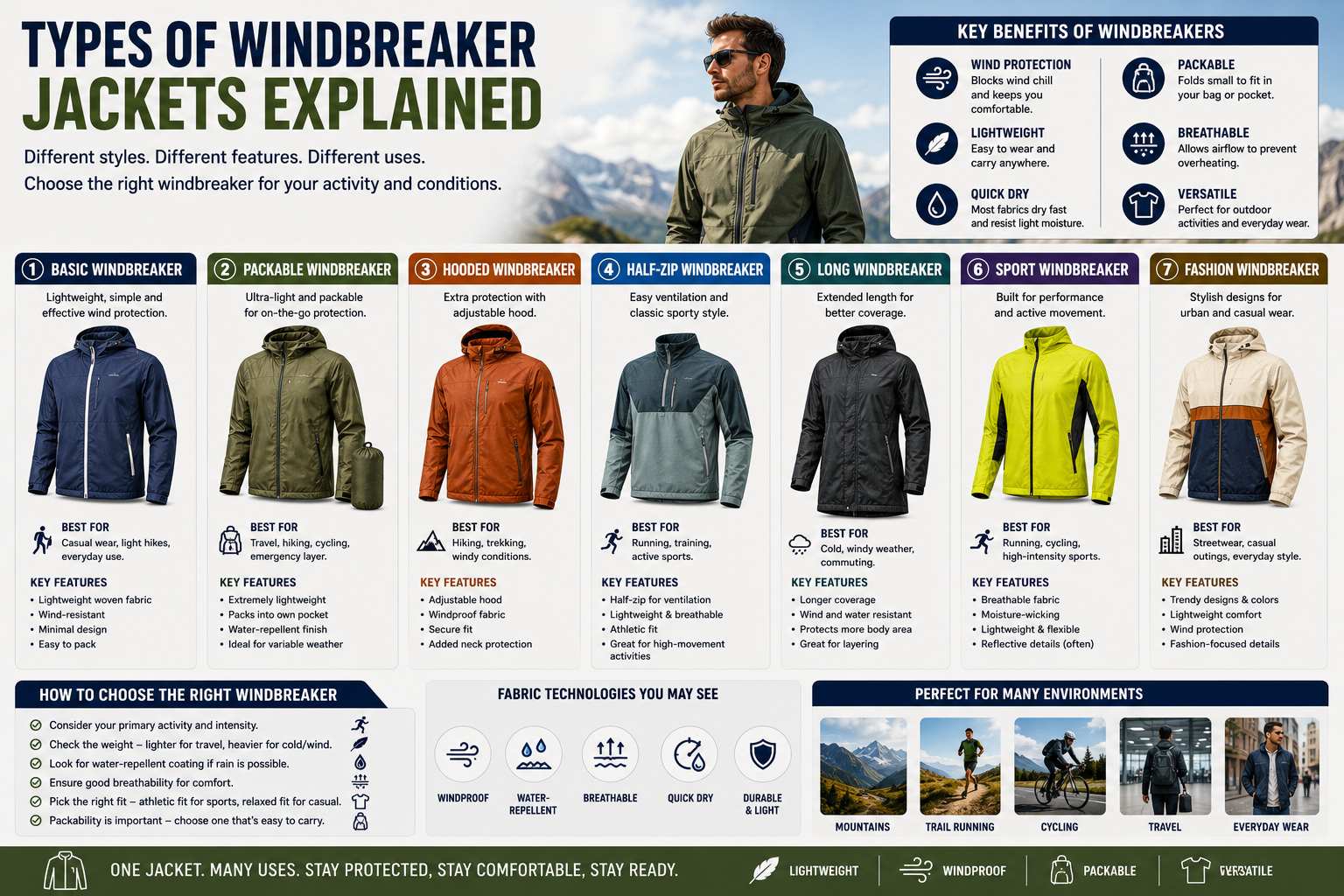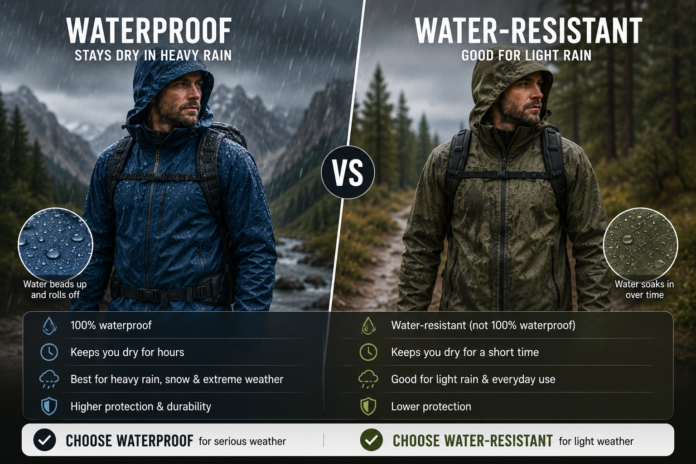
The two terms you see most often when buying new Waterproof vs Water-Resistant Clothing. Although similar, these two terms are distinct. Say you find yourself outside during a very heavy rain. A water-resistant jacket will keep you dry on a short walk to the car but will be ineffective for anything past that. A waterproof jacket will keep you dry for many hours, even during a heavy rainstorm. This distinction is quite significant while buying outdoor gear. Choosing the wrong jacket can leave you cold and soaking wet. This guide will explain these differences in a way that a sixth grader is able to understand.
What Does Water-Resistant Mean?
Waterproof vs Water-Resistant Clothing is made to fight off light rain or a little snow. Think of it like a shield that works for a short time. These clothes have a special coating on the fabric. This coating makes water form into small beads. The beads then roll off the surface. For example, a softshell jacket is often water-resistant. It is great for windy days or a light drizzle. But if the rain becomes very heavy, the water will eventually soak through. You can find great Waterproof vs Water-Resistant Clothing options for different weather needs. To see how a durable softshell is made, check out this softshell jackets manufacturer. They build jackets that are perfect for dry and windy conditions.
What Does Waterproof Mean?
Waterproof gear offers the best protection from the elements. There are some gear items that are perfect for heavy downpours or for trekking in the snow. There are waterproof zippers that the manufacturers use in addition to fabrics and seam sealers. Waterproof vs Water-Resistant Clothing gear is ideal for those that are always outside or enjoy the outdoors in the rain. A great example of waterproof gear is a hardshell jacket. A hardshell jacket is waterproof, fully and can be breathable. If gear can be breathable, then it can be waterproof and allow your sweat escape from from it as to not leave you feeling sticky. Learn more about durable waterproof clothing manufacturer options for your brand.
The Key Difference in Rain
The main thing that differentiates Waterproof vs Water-Resistant Clothing gear is the duration of protection. Waterproof gear provides protection against heavy moisture while water-resistant gear protects against light moisture. If it is light rain when you are camping, a water-resistant jacket will suffice for about 15 minutes and then you will be wet. A waterproof jacket will maintain dryness for the duration of the rain. Water resistant gear can have exposed seams, while waterproof gear will have seams that are taped. For those that are hiking on a water-resistant gear will suffice. But for a camping apparel manufacturer, they will always suggest waterproof for sleeping bags or outer shells.
Which One is Better for Hiking?
Weather can be unpredictable. At times you can be hiking in the sun, only to be caught in the rain moments later. What do you do in this scenario? For a quick thirty minute to hour hike a water resistant windbreaker would suffice. It’s lightweight, and easy to carry. For a longer hike that lasts all day, a completely waterproof jacket would be a better choice. If you’re hiking in the mountains it’s important to note that mountain weather can change quickly. The best strategy is to layer your clothes. This strategy helps you stay dry and warm. Many hiking clothing manufacturer experts build these systems specifically for long trails.
Understanding “Breathability”
The biggest problem you’ll have with rain gear is sweat. Breathability is a big part of outdoor gear. The breathability of a fabric is measured in grams, and the higher the metric is, the more sweat that can escape the fabric. Water resistant fabrics are very breathable, since they are thin and lightweight. They do run the risk of getting wet, however, if you need warmth, then they will be damp. For gear that will be used in high activity, such as skiing, breathability becomes very important, since you will be up to high speeds and will be working up quite the sweat. A ski wear manufacturer focuses a lot on this balance.
When to Choose Water-Resistant
You should choose Waterproof vs Water-Resistant Clothing in these situations:
- Light Drizzle: Walking in the city or a light shower.
- High Energy Sports: Running or climbing where you sweat a lot.
- Dry Snow: Very cold snow that is dry and does not melt.
- Wind Protection: Stopping cold wind on a dry day.
Water-resistant gear is usually cheaper and softer. It feels more like a normal shirt. For example, a fleece jacket is often water-resistant. It keeps you warm and blocks a little mist. A outdoor fleece manufacturer makes these for chilly, dry days. They are very comfortable for casual wear.
When to Choose Waterproof
You must choose Waterproof vs Water-Resistant Clothing for these activities:
- Heavy Rain: Farming, fishing, or standing in a storm.
- Snow Sports: Skiing or snowboarding where you sit in snow.
- Water Sports: Boating or kayaking where water splashes a lot.
- Long Exposure: Hiking for 4+ hours in unknown weather.
Waterproof gear uses membranes like Gore-Tex. It is tougher and lasts longer. The zippers are special “aqua guard” zippers. The hoods have stiff peaks to keep rain off your face. If you are a hunter sitting still in the rain, you need total silence and dryness. A hunting apparel manufacturer understands this need for absolute protection from wetness.
How to Care for Your Gear
The longevity of care for your clothing relies heavily on washing practices. Dirt will always damage a clothing item’s waterproof coating. Under no circumstance should regular soap be used. Traditional soap boundaries will attract water. To prevent this, a “Tech Wash” will be your best option. Keep in mind that Waterproof vs Water-Resistant Clothing will wear out and be completely damaged and ineffective after a period of washing. There is a spray available to “reactivate” water resistance. For waterproof clothing, especially jackets, never store them wet. Simply hang them to dry. A tactical outdoor apparel manufacturer often uses very strong fabrics that need gentle care to last for years.
Conclusion
Knowing the difference between Waterproof vs Water-Resistant Clothing will help you become an educated consumer in jacket buying. It is imperative to know that water-resistant clothing can only stand up to a light rain of very short duration. Differently, waterproof clothing can withstand a downpour of long duration. It is always best to consider your situation. If you live in a rainy city and work on a boat, a water-resistant jacket is sufficient. If you are an outdoor climber that is a waterproof jacket is necessary. You should consider your situation and the breaks of water that you will be facing and be cognizant of the clothing you are purchasing.
FAQs
Can I make a water-resistant jacket waterproof?
No, you cannot make it fully waterproof. You can spray it with a DWR coating to improve the beading effect, but the seams and zippers will still let water in during heavy rain.
Is waterproof clothing hot to wear?
Not if you buy breathable types. Good waterproof jackets have vents or membranes that let sweat vapor out. However, they are usually warmer than a simple cotton shirt because they trap body heat.
How do I know if my jacket is waterproof?
Look at the label. It should say “waterproof” and list a rating (like 10,000mm). This number means how tall a water column can sit on the fabric before it leaks. A 5,000mm rating is good for light rain, while 20,000mm is for storms.